


Funded by the UK’s Foreign Commonwealth and Development Office (FCDO), PENDA complements their inclusion strategy to address fundamental gaps in the inclusion of people with disabilities in mainstream development. PENDA is working with the FCDO funded Disability Inclusive Development programme, led by Sightsavers, to evaluate which of their inclusion interventions have the greatest impact on the lives of people with disabilities.
The programme is generating knowledge on what works in Disability Inclusive Development (DID) in relation to education, health, livelihoods, and reduced stigma. This includes conducting Randomised Control Trials (RCTs) or impact evaluations in LMICs. The programme is also focused on engaging new and existing researchers in the field by commissioning a further series of impact evaluations on the subject.
The programme is working on improved research capacity on DID through 1) Collaboration and support with Southern academic partners, 2) Training Southern Academics through a PhD scheme, in particular researchers with disabilities, 3) Training people with disabilities to be participants in data collection and analysis, 4) Building the reputation of Southern partners in DID research.
The programme is developing and validating tools to help assess what does and doesn't work in DID. This includes quantitative indicators and qualitative approaches, which are being included in trials for testing.
PENDA is a consortium led by the International Centre for Evidence in Disability (ICED), based at the London School of Hygiene & Tropical Medicine (LSHTM), funded by the Foreign Commonwealth and Development Office (FCDO), in partnership with CBM, ADD International, and Help Age International.
The programme will primarily evaluate the question: What Works in Disability Inclusive Development? This will be the primary focus of the ICED team, with support in country from Organisations of Persons with Disabilities (OPDs). To help encourage new evidence and ways of thinking about DID, a component of the programme hopes to engage new and existing researchers in the field, commissioning further studies throughout the life of the programme. This will be a competitive call for applications, which will be assessed independently by an Evaluation Advisory Group.
The programme will also help to build capacity in disability research in low- and middle-income countries (LMICs), by collaborating with local academic institutions and supporting individual PhD students in these settings.
Programme team
Hannah Kuper
Co-Director of ICED & Professor of Epidemiology, Co-Programme Lead
Tom Shakespeare
Co-Director of ICED & Professor of Disability, Co-Programme Lead
Morgon Banks
Associate Professor ICED
Shaffa Hameed
Assistant Professor
Mark Carew
Assistant Professor
Sara Rotenberg
Research Fellow
Sarah Marks
Research Fellow
Nathaniel Scherer
Research Fellow
Georgie Gaskell
PENDA Programme Manager
Sabrina Dogbe
ICED Project Coordinator
Programme management and governance
In addition to the programme team, PENDA receives technical advice and direction from groups and committee's to ensure we deliver the best possible evidence, with input from voices in the field.
- Steering Committee
The Steering Committee members are representatives from FCDO, ADD International, Sightsavers, CBM and Help Age International. Their primary role is to ensure the PENDA research is focused on where it is needed, to deliver high quality results for the sector.
- Evaluation Advisory Group
PENDA has established an Evaluation Advisory Group which is made up of five senior researchers at LSHTM:
- Professor Allen Foster – DID expert
- Dr Giulia Greco – Health Economist
- Professor James Hargreaves – Evaluation Scientist
- Professor Janet Seeley – Qualitative Researcher
- Professor Helen Weiss – Statistician
The aim of the group is to provide an independent review of all proposed research by PENDA, and oversee the grant commissioning component of the programme.
- International Disabled People Advisory Committee
PENDA has also engaged an advisory committee primarily, but not exclusively of persons with disabilities from the global south. The members will meet virtually twice a year to discuss the research and focus of the programme, advising the PENDA team and helping ensure the research is meeting it's objectives.
The committee is made up of:
- Ola Abu Alghaib (Wheelchair user, NGO leader, UK but originally Palestinian Territory)
- Catalina Devandas (Wheelchair user, Lawyer, UN Special Rapporteur on Disability, Costa Rica)
- Mosharraf Hussein (Wheelchair user, NGO leader, UK but originally Bangladesh)
- Diane Kingston (Disability policy expert, lived experience of mental and physical impairments, UK)
- Yetnebersh Ngussie (Blind inclusion advocate, Ethiopia)
- Liz Sayce (Mental health advocate, NGO leader, UK)
- Faustina Urassa (Wheelchair user, Community activist, Tanzania)
- Joana Passos (Mother of a disabled child, Community activist, Brazil)
PhD Studentships in Kenya, Uganda and Zambia
The PENDA Consortium supports three full-time studentships for researchers with disabilities to research to improve the evidence surrounding Disability Inclusive Development. The Consortium has been committed to building the capacity of researchers with disabilities from LMICs, and so is currently funding studentships in Kenya, Uganda and Zambia.
The studentships are a partnership between LSHTM and University of Nairobi, Makerere University and Zambart in collaboration with the University of Zambia. One PhD will be based at each University with additional support and supervision from the International Centre for Evidence in Disability at the London School of Hygiene & Tropical Medicine.
The PENDA studentship is providing the opportunity for researchers to build their knowledge and experience in disability inclusive research over the course of three years and work to the completion of a PhD. The studentship provides funds for the researcher to study at one of these universities with additional supervision provided by LSHTM in London. The studentship includes a stipend to enable the candidate to study full time for three years, provide some research field work costs, provide for reasonable adjustments and spend up to three months of the PhD in London, based at LSHTM.
For more information please email: [email protected]
Uganda
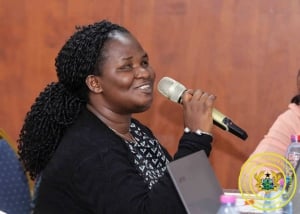
Florence Ndagire is the recipient of the PhD studentship in Uganda.
Florence Ndagire, is the first visually impaired female lawyer in Uganda. She holds a bachelor of laws from Makerere University. She was awarded a scholarship by the open Society foundation that enabled her to complete her Master of Law in international and European human rights law at the University of Leeds, United Kingdom. Her PhD topic researched access to health services and facilities for persons with disabilities in Uganda.
After 4 years, Florence's funding support has ended under the PENDA programme. Her PhD thesis is currently under examination for completion.
Zambia
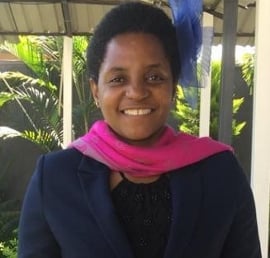
Queen Seketi is the recipient of the PhD studentship in Zambia.
Queen was been selected to receive the PENDA supported PhD studentship in Zambia to complete a PhD in disability inclusive research. Holder of a Bachelor of Arts Degree in Development Studies and a Master of Public Health (MPH) in Population Studies from the University of Zambia, Queen previously worked as a national United Nations Volunteer, with District AIDS Coordination Advisor (DACA) as a functional title. This was under the United Nations Development Programme / Multisectoral Response Initiative project and later for the National AIDS/STI/TB/Leprosy Council in the same capacity. She has more than 15 years of work experience in the HIV and AIDS sector, to plan, build capacity and facilitate the multisectoral responses to HIV and AIDS at district level.
The PENDA Scholarship from the London School of Hygiene and Tropical Medicine to pursue PhD Study, at the University of Zambia is from 2020 to 2024. Her investigation will focus on disability inclusion in the COVID -19 Response Strategy in Zambia.
Kenya
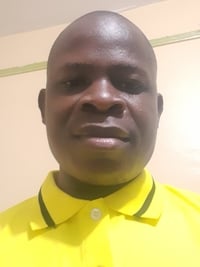
Stephene Maende is the recipient of the PhD studentship in Kenya.
Stephene is a physically impaired Kenyan who holds a Bachelor of Arts (Economics major) from Kenyatta University and Masters of Arts (Economics) from the University of Nairobi. In addition, he has acquired skills in Evaluation of Public Policy from Laval University (Canada) and basic accounting skills from KASNEB.
The PENDA Scholarship from the London School of Hygiene and Tropical Medicine to pursue PhD Study, at the University of Nairobi is from 2020 to 2024. His PhD focussed on the impact of Covid-19 on the well-being of Persons with Disability in Kenya: Lessons for Disability Inclusion Development. Currently, Stephene's PhD thesis is under examination for completion.
We are engaging in multiple studies across the programme. We now have 13 studies up and running, working with a wide range of partners. Stay up to date on what we are doing below.
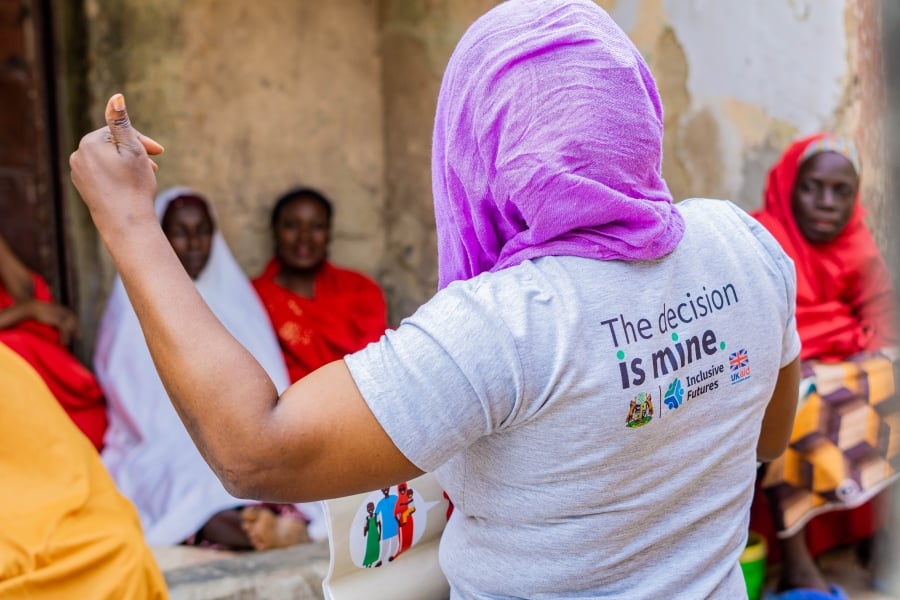
Health
People with disabilities often have higher health care needs, but may find it more difficult to access relevant services. PENDA is generating and evaluating evidence on various disability-inclusive health interventions around the world.
- Inclusive family planning in Nigeria
Question trial aims to answer: Does inclusive family planning increase access for women with disabilities?
Overview: Globally, women with disabilities are less likely to have access to family planning services compared to their peers without disabilities. However, evidence of effective interventions for promoting their sexual and reproductive health and rights remains limited. The PENDA programme is evaluating a range of community and facility-based interventions delivered as part of Sightsavers’ Inclusive Family Planning (IFPLAN) project that aims to promote inclusive sexual and reproductive health and rights for women with disabilities in Kaduna city, Nigeria. The evidence generated through this cluster randomised controlled trial with integrated process evaluation will inform implementation of disability-inclusive family planning services in low- and middle-income settings.
Country(ies): Nigeria
Name of collaborator(s): Oxford Policy Management (OPM) Nigeria; Sightsavers; BBC Media Action; Joint National Association of Persons with Disability (JONAPWD); Network of Disabled Women (NDW).
Aim: To measure the effect of IFPLAN's community and facility-based interventions on access to family planning amongst women with disabilities in Kaduna city.
Key Outcomes:
Primary: Access to family planning
Secondary:
- Knowledge of family planning
- Intention to use
- Use of family planning (modern method)
- Unmet need for family planning
- Perceived attitudes towards women with disabilities
Methods: A pragmatic cluster-randomized controlled trial design with surveys at baseline and endline will be used to evaluate interventions delivered for at least 1 year at health facility and community levels in Kaduna city in comparison to ‘standard’ state provision of family planning services, in the context of state-wide and national broadcast media and advocacy. Randomization will be conducted based on the health facility catchment area, with 19 clusters in the intervention arm and 18 in the control arm. It was calculated that at least 950 women aged 18 to 49 years with disabilities (475 in each arm) will be recruited to detect a 50% increase in access compared to the control arm. For each woman with disabilities enrolled, a neighbouring woman without disabilities in the same cluster and age group will be recruited to assess whether the intervention has a specific effect amongst women with disabilities. The trial will be complemented by an integrated process evaluation to describe intervention implementation as delivered, identify mechanisms of impact, and explore context dependencies.
Baseline: November 2022 - January 2023
Endline: November 2025 - December 2025
Publications:
Marks, S., Arogundade, E., Carew, M.T. et al. Improving access to family planning for women with disabilities in Kaduna city, Nigeria: study protocol for a pragmatic cluster-randomized controlled trial with integrated process evaluation. Trials 25, 28 (2024). https://doi.org/10.1186/s13063-023-07892-y
Research briefs:
- Participatory Learning and Action Groups for people with disabilities in Uganda
Question trial aims to answer: Can Participatory Learning and Action Groups for people with disabilities produce positive health outcomes?
Overview
Evidence consistently shows that people with disabilities face barriers accessing healthcare, which contributes to their poorer average health status and shorter life expectancy. Participatory community approaches have been successful in improving healthcare access for other marginalised groups, but have not yet been trialled for people with disabilities. The PENDA programme is evaluating participatory learning and action groups for people with disabilities (PLA-D) in Luuka district, Uganda. The intervention, locally known as “Tusobola” or “We Can”, focuses on improving access to healthcare for people with disabilities by collectively identifying key problems in relation to health/healthcare access facing people with disabilities, developing an action plan to deliver group-identified solutions and sharing progress to engage the wider community to support action. Findings from this cluster randomised controlled trial with integrated process and economic evaluations will inform whether PLA-D groups should be scaled up in order to improve the health outcomes of people with disabilities in low- and middle-income settings.
Country(ies): Uganda
Name of collaborator(s): Makerere University, School of Public Health; MRC/UVRI and LSHTM Uganda Research Unit; Amref Health Africa, Uganda; Women and Children First.
Aim: The aim of this study is to assess whether community based Participatory Learning and Action for Disability (PLA-D) groups can reduce mortality and unplanned hospitalization of people with disabilities in Uganda.
Key Outcomes
Primary: Mortality and unplanned hospitalization
Secondary:
- Quality of life
- Healthcare expenditure
- Morbidity
- Healthcare access
- Attitudes
- Participation
Methods
The impact of the PLA-D groups will be measured through a cluster randomised controlled trial with integrated process and economic evaluations. Both control and intervention arms will receive health system strengthening components of disability training for healthcare workers, and health facility audits. A 100 clusters in Luuka district, Uganda, will be randomly allocated (1:1) to the intervention or control arm. Approximately 5000 people with disabilities are expected to be identified and recruited for the joint primary outcome of mortality and unplanned hospitalization. Additionally, in-depth questionnaires will be undertaken with a random sample of 2000 people with disabilities at baseline and follow-up to assess impact on secondary outcomes. A complementary process evaluation will explore the intervention implementation, potential mechanisms for impact, and consider strategies for scale-up. An economic evaluation will estimate the incremental cost-effectiveness.
Baseline: May - July 2024
End date: May - July 2026
- Baby Ubuntu - Early care and child development support in Rwanda
Question trial aims to answer: Does a programme of early care and support improve outcomes for young children with developmental disabilities and their caregivers?
Overview: There are 53 million children with developmental disabilities under the age of 5 worldwide. However, evidence on the effectiveness of early care and support for young children with developmental disabilities is limited in low- and middle-income countries. In Rwanda, the PENDA programme is evaluating the Paediatric Development Clinic (PDC)/Baby Ubuntu programme of support for young children with and at risk of developmental disabilities and their caregivers integrated into government health systems. A cluster randomised controlled trial, process evaluation, and economic evaluation will inform the implementation and scale-up of early care and support for young children with and at risk of developmental disabilities in Rwanda and other low- and middle-income settings.
Country(ies): Rwanda
Name of collaborator(s): Partners in Health, Rwanda Biomedical Centre (RBC), Lifetime Consulting and Partners, Saving Brains, Grand Challenges Canada
Aim: To evaluate the effectiveness and implementation of a programme of early care and support for young children at risk of developmental disabilities integrated into government health systems in Rwanda.
Key Outcomes
Primary:
- Child participation
- Caregiver and family quality of life
Secondary:
- Child mortality
- Child illness
- Child development and function
- Child growth and nutritional status
- Caregiver knowledge and confidence
- Caregiver mental health
- Caregiver experience of stigma
- Caregiver economic activity
Implementation outcomes:
- Acceptability
- Feasibility
- Fidelity
- Cost-effectiveness
Methods: The primary hypotheses will be tested through a single-blind, effectiveness implementation-hybrid (type II) cluster randomised controlled trial. Clusters are defined as the catchment area of 2-3 health centres in close proximity. An intervention arm will receive PDC/Baby Ubuntu and a control arm will receive enhanced usual care. The trial includes 1,400 children at risk of developmental disabilities under age 5 and their caregivers, of which 700 are children with developmental disabilities and 700 are children at risk due to a perinatal condition. The trial will be conducted in three districts of Rwanda, with endline completed 12 months after baseline. Complimentary process evaluation, qualitative research and economic evaluation will assess feasibility, acceptability and cost-effectiveness of the programme. The qualitative research will include 25-40 caregivers and 15-20 key informants working on the programme and with knowledge of disability in Rwanda.
Baseline: March - July 2024
End date: March - July 2025
Publications
Data collection tools
Please email Nathaniel Scherer ([email protected]) for access to data collection tools. Please note that some of the tools are under license and not available to share publicly.
Livelihoods and Social Protection
To ensure that people with disabilities and their families can fully and effectively participate in society on an equal basis with others, they must be included and supported to build sustainable livelihoods. We are conducting trials focusing on inclusive livelihoods and social protection programmes, particularly how they address barriers to employment opportunities and help reduce poverty.
- Uganda Disability Inclusive Graduation (DIG)
Question trial aims to answer: Does a poverty graduation programme work for people with disabilities in rural Uganda?
Overview: It is well established that people with disabilities are on average poorer than those without, and this perpetuates their exclusion and marginalisation in society. Our systematic review shows, however, that there is little evidence on how to support ultra-poor people with disabilities to adopt sustainable livelihoods. The BRAC Ultra Poor Graduation (UPG) programme has been implemented across the world, and shown to help reduce poverty through a range of randomised controlled trials. However, the impact for people with disabilities has not been evaluated previously. The Disability-Inclusive Graduation (DIG) programme targets ultra-poor people with disabilities and/or women living in rural Uganda. The programme is an adaptation of the UPG model.
Country(ies): Uganda
Name of collaborators(s): Independent Evaluation and Research Cell (IERC), BRAC International, Uganda; Trinity College Dublin, Ireland; Centre for Evaluation, LSHTM; Department of Sociology and Anthropology, Makerere University, Uganda; BRAC International, Bangladesh; BRAC Institute of Governance and Development, BRAC University, Bangladesh.
Aim: To estimate the effect of the DIG Programme on the livelihoods and well-being of people with disabilities and their families in Uganda.
Key outcomes
Primary:
- Per-capita expenditure
- Livelihood
- Social participation of people with disabilities and their families.
Secondary:
- Differential effect of the DIG programme on per-capita expenditure
- Livelihood
- Social participation of people with disabilities and their families, compared to the effect among people without disabilities.
Methods: A pragmatic cluster randomised-controlled design with surveys at baseline and two endline points will be used to evaluate the impact of the intervention. The DIG programme works with project participants over a period of 18 months. Participants receive unconditional cash transfers for 6 months, training, access to savings-and-loans groups, and a capital asset that forms the basis of their new livelihood. Eligible households are clustered by geographical proximity in order to deliver the intervention. Eligibility is based on household screening to identify the ‘ultra-poor’ based on proxy means testing—both households with and without people with disabilities are included in the programme. Clusters are randomly selected prior to implementation, resulting in 96 intervention and 89 control clusters. The primary outcome of the trial is per-capita household consumption. Before the start of the intervention, a baseline household survey is conducted (November 2020) among project participants and those not offered the programme, a similar endline survey is conducted with participants with disabilities at the end of programme implementation in July 2022, and a second endline survey for all participants in October 2023. These activities are complemented by a process evaluation to understand DIG programme implementation, mechanisms, and context using complementary qualitative and quantitative methods.
Baseline: November 2020
Endline 1: July 2022
Endline 2: November 2023
Publications
Kipchumba, E., Davey, C., Marks, S. et al. Evaluation of a disability-inclusive ultra-poor graduation programme in Uganda: study protocol for a cluster-randomised controlled trial with process evaluation. Trials 25, 206 (2024). https://doi.org/10.1186/s13063-024-08040-w
Tools
- Baseline Household Questionnaire
- Baseline Questionnaire - Index person
- Household Questionnaire - Wave 1
- Index person Questionnaire - Wave 1
- Household Questionnaire - Wave 2
- Index person Questionnaire - Wave 2
Research briefs
DIG Evidence Brief: Findings from a cluster randomised controlled trial of a Disability-Inclusive Poverty Graduation (DIG) programme in Northern Uganda.
Webinar: Watch the recording of our February 2025 DIG Uganda webinar here.
- Bangladesh Disability Inclusive Graduation (DIG)
As a larger-scale pilot of the Uganda DIG trial, this programme will replicate the DIG intervention from Uganda (see above) in Bangladesh using BRAC’s wide network of services.
The research will evaluate the effectiveness of transferring and delivering the DIG programme in Bangladesh, estimating its effectiveness on the livelihoods and well-being of people with disabilities.
Endline: Oct-Dec 2025
Policy Brief: Can a Disability-Inclusive Poverty Graduation Programme Reduce Poverty Among Persons With Disabilities? - Findings From a Cluster Randomised Controlled Trial of DIUPG in Bangladesh
- STAR+: a disability-targeted livelihoods programme in Bangladesh
Question trial aims to answer: Does the STAR+ programme - an inclusive livelihood programme - improve livelihoods and well-being amongst youths with disabilities in Bangladesh?
Overview: There is little evidence on the impact of livelihood interventions amongst people with disabilities. Effective programmes are critical for reducing the heightened risk of poverty and unemployment facing persons with disabilities. STAR+ is a skills development and job placement programme targeted to out-of-school youth with disabilities (ages 14–35) living in poverty. It is a disability-targeted adaptation to an existing, effective intervention (STAR), which has been designed to address barriers to decent work for people with disabilities. The effectiveness of this intervention was tested through a cluster randomised controlled trial in 39 of the 64 districts of Bangladesh.
Country(ies): Bangladesh
Name of collaborator(s): Bangladesh Institute for Governance and Development
Aim: To assess the impact of the STAR+ programme in improving livelihoods and well-being amongst youth with disabilities in Bangladesh
Key Outcomes
Primary:
- Per-capita expenditure
- Livelihood
- Social participation of people with disabilities and their families.
Secondary:
- Objective of the impact evaluation is to estimate the differential effect of the DIG programme on per-capita expenditure
- Livelihood
- Social participation of people with disabilities and their families, compared to the effect among people without disabilities.
Methods: BRAC has identified 1500 youth with disabilities eligible for STAR+ across its 91 branch offices (typically a geographical areas covering about 8 km radius from local BRAC office) catchment areas (clusters). BRAC has limited funding to deliver STAR+ and so 45 of the 91 branches have been randomly allocated to implement STAR+ (intervention arm). The remaining 46 branches will not deliver STAR+ at this time (control arm). Participants in the control-arm receive usual care, meaning they are free to enrol in any other livelihood programmes run by BRAC or other organisations including standard STAR (being run in 15 control branches). The cRCT assesses the impact of STAR+ after 12 months on employment status and earnings (primary outcomes), as well as poverty, participation and quality of life (secondary outcomes). Analysis will be through intention-to-treat, with a random mixed effect at cluster level to account for the clustered design. Complementary qualitative research with participants will be conducted to triangulate findings of the cRCT, and a process evaluation will assess implementation fidelity, mechanisms of impact and the role of contextual factors in shaping variations in outcomes.
Baseline: January - February 2022
Endline: January - February 2024
Publications
Banks, L.M., Das, N., Davey, C. et al. Impact of a disability-targeted livelihoods programme in Bangladesh: study protocol for a cluster randomised controlled trial of STAR+. Trials 23, 1022 (2022). https://doi.org/10.1186/s13063-022-06987-2
Evidence brief
Can an Adapted Livelihoods Programme Promote Employment Among Youth with Disabilities?
Webinar: Watch the recording of our November 2025 STAR+ webinar here.
- InBusiness: a livelihoods programme in Kenya
Question trial aims to answer: Does a livelihoods programme improve economic empowerment for microentrepreneurs with disabilities?
Overview: Self-employment, or microentrepreneurship, is a major source of livelihood in low- and middle-income countries, although people with disabilities may face barriers to successful microentrepreneurship, leading to low and unstable earnings. There is a lack of evidence on the impact of livelihood programmes for people with disabilities and their households. This PENDA programme trial will therefore evaluate the InBusiness programme in Kenya, designed to improve the skills of microentrepreneurs with disabilities and microentrepreneurs who are caregivers of people with disabilities. This randomised controlled trial and process evaluation will evaluate if the programme improves social and economic wellbeing to inform policy and practice.
Country(ies): Kenya
Name of collaborator(s): Kenya Medical Research Institute (KEMRI)
Aim: To assess the impact of InBusiness on improving social and economic wellbeing of people with disabilities and their households.
Key Outcomes:
Primary:
- Household expenditure
- Economic empowerment
Secondary:
- Wellbeing
- Food security
- Social attitudes
- Unmet need for disability-related goods and services
- Microenterprise profit
Methods: The trial adopts an individual, superiority randomised controlled design. The trial will involve 497 microentrepreneurs with disabilities across 8 countries in Kenya. The intervention arm will receive the InBusiness programme and a control arm will receive enhanced usual care. Baseline data collection will be conducted before randomisation and before participants are invited to enrol in InBusiness to minimise anticipatory behaviour. The endline will be conducted 24 months after baseline. A process evaluation and qualitative research will explore the challenges and facilitators to implementation. The qualitative research will include 20-25 people with disabilities and caregivers, along with 15-20 InBusiness programme implementers and other key informants.
Baseline: March 2023
End date: March 2025
Publications
Banks, L.M., Kepha, S., Zinke-Allmang, A. et al. Impact of a disability-targeted microentrepreneurship programme in Kenya: study protocol for a randomised controlled trial of the InBusiness programme. Trials 24, 802 (2023). https://doi.org/10.1186/s13063-023-07848-2
Webinar: Watch the recording of our February 2026 InBusiness webinar here.
- Cash-plus programme for children with disabilities in Laos
Question trial aims to answer: Does a cash-plus programme for children with disabilities improve child wellbeing and household poverty?
Overview: Over 170 countries implement disability-targeted social assistance programmes, but there is limited evidence on the impact among people with disabilities. In Laos, the PENDA programme is evaluating a cash-plus programme for children with disabilities. As well as a regular cash transfer, children will recevie assistance devices and caregivers will receive family support. A non-randomised trial and process evaluation will evaluate the impact of the cash-plus programme to inform nationwide scale-up and provision of social protection globally.
Country(ies): Laos
Name of collaborator(s): Laos Tropical & Public Health Institute
Aim: To assess the impact of a cash-plus programme amongst children with disabilities and their households in Laos.
Key Outcomes
Primary: Child wellbeing
Secondary:
- Household consumption and poverty
- Caregiver and family quality of life
- Caregiver time-use
- Unmet need for disability-related goods and services
Methods: This trial is a superiority, non-randomised controlled trial with two parallel groups. Three districts in the Xiengkhouang Province will receive the cash-plus programme, whilst two districts will act as control areas. The trial will include 350 children with disabilities under age 18 in the intervention arm, 180 in the control arm. Endline assessment will be conducted 24 months after baseline. Process evaluation and qualitative research will explore the mechanisms of impact. The qualitative research will include 15 caregivers of children with disabilities and 12 implementers.
Baseline: May - October 2023
End date: May - October 2025
Publications
- Prevalence, predictors and consequences of reported discrimination against children with disabilities in Lao PDR: a cross-sectional analysis in Xiengkhouang Province
- Impact evaluation of a cash-plus programme for children with disabilities in the Xiengkhouang Province in Lao PDR: study protocol for a non-randomised controlled trial
Evidence brief
Evidence Brief - The Situation of Children with Disabilities in Xiengkhouang Province, Lao PDR
- Identification and assessment for social protection, Sierra Leone
UNICEF and Humanity & Inclusion (HI) are producing a new assessment tool to identify recipients of social protection mechanisms in programmes. The tool is being developed globally in collaboration with people with disabilities.
PENDA is planning a process evaluation to assess the effectiveness of the tool and recommend improvements in practical settings.
Endline: November 2025
Education
Children with disabilities have the right to receive education, as enshrined in the UN conventions of the rights of the child and the rights of persons with disabilities. However, without adequate support, they fall behind compared to their peers without disabilities. This in turn impacts other areas of their lives, such as health and future employment prospects. Our education-focused trials are building high-quality evidence on the barriers that children with disabilities face and how inclusive education can improve their overall wellbeing.
- Access to school-based interventions for children with disabilities: Malawi and India
Rationale for the intervention
There are approximately 150 million children globally with disabilities. [1] Comparable data are lacking, but it is clear that people with disabilities are consistently falling behind in educational inclusion compared to their peers without disabilities. [2] A study using data from Plan showed that across 30 countries, children with disabilities were 5-10 times less likely to be enrolled in school than their peers without disabilities. [3]
Exclusion of children with disabilities from education is important as:
- It is in violation of their rights (e.g. under UN conventions of the rights of the child and the rights of persons with disabilities).
- It will make it more difficult for SDGs to be realised (e.g. SDG on education specifically refers to children with disabilities)
- It will perpetuate the social exclusion and poverty of children with disabilities and their families.
However, there is a lack of understanding of the predictors of educational inclusion among children with disabilities in low and middle-income countries (LMICs).
Another important concern is that many child health programmes are now administered through schools (e.g. vision/hearing testing, mass drug administration, health education), and will therefore disproportionately exclude children with disabilities.
Research question
- Do school-based health interventions exclude children with disabilities in Malawi and India? If so, is it more cost-effective to reach children with disabilities who are not attending school through school dissemination with community “mop-up” or through community dissemination?
- Sub-question: what are the predictors of enrolment in school among children with disabilities in Malawi and India?
Country(ies): India and Malawi
Name of collaborator(s): Blantyre Institute for Community Outreach (BICO); Christian Medical Centre (CMC); University of Washington
Hypotheses being tested
School-based health interventions will exclude children with disabilities. Certain groups of children with disabilities are more vulnerable to exclusion from school: children with intellectual impairments, girls, and children who are poor.
Brief description of the study
These questions will be addressed within the Gates-funded DeWorm 3 trial conducted in Malawi and India. Communities are randomised so that children receive deworming at school or in the community. The disability status of all children is assessed through a community census. Coverage of deworming for children with and without disabilities will be compared between the school and community trial arms to assess whether school-based dissemination excludes children with disabilities.
In-depth qualitative interviews with parents and children in each arm of the study will explore factors associated with no or low attendance at school. Follow-up interviews with teachers and access audits at selected schools will identify whether barriers to attendance are operating.References
- The impact of disability on the lives of children; cross-sectional data including 8,900 children with disabilities and 898,834 children without disabilities across 30 countries.
- UNICEF. State of the World's Children 2013. New York: UNICEF, 2013.
- UNESCO. Education and Disability: Analysis of Data from 49 Countries 2018.
Publications
- Witek-McManus S, Simwanza J, Msiska R, et al. Disability in childhood and the equity of health services: a cross-sectional comparison of mass drug administration strategies for soil-transmitted helminths in southern Malawi. BMJ Open 2024;14:e083321. DOI: 10.1136/bmjopen-2023-083321
- Chandy BR, Davey C, Oswald WE, et al. Prevalence of Functional Difficulty Among School-Aged Children and Effect on School Enrolment in Rural Southern India: A Cross-Sectional Analysis. J Epidemiol Glob Health. 2024 Sep 19. DOI: 10.1007/s44197-024-00293-7. Epub ahead of print. PMID: 39298111.
- Aruldas K, Banks LM, Nagarajan G, et al. "If he has education, there will not be any problem": Factors affecting access to education for children with disabilities in Tamil Nadu, India. PLoS One. 2023 Aug 16;18(8):e0290016. DOI: 10.1371/journal.pone.0290016. PMID: 37585407; PMCID: PMC10431638.
- Banks LM, Hunt X, Kalua K, Nindi P, Zuurmond M, Shakespeare T. 'I might be lucky and go back to school': Factors affecting inclusion in education for children with disabilities in rural Malawi. Afr J Disabil. 2022 Nov 14;11:981. DOI: 10.4102/ajod.v11i0.981. PMID: 36483843; PMCID: PMC9724077.
Data collection tools:
- MDA1_DataDictionary_20210506.xlsx
- MDA2_DataDictionary_20210506.xlsx
- MDA3_DataDictionary_20210506.xlsx
- MDA4_DataDictionary_20210506.xlsx
- CC1-CC6_DataDictionary_20201222.xlsx
- malawi_cf1_printable.pdf
- malawi_sf2_printable.pdf
- malawi_sf3_accessibility_printable.pdf
- malawi_ce2_school1_printable.pdf
- malawi_ce2_printable.pdf
- malawi_ce2_community1_printable.pdf
Research briefs
- Prevention of School Violence in Tanzania
Children with disabilities are impacted by violence, including in schools. An RCT of a mainstream programme in Tanzania is investigating violence in schools. The broader trial is being delivered by Bielefeld University in Germany with Dar es Salaam College of Education (DUCE) in Tanzania. The baseline data collection was already complete in 2023/4.
This research will add disability questions into the main trial data collection to understand the experience of violence towards children with disabilities in schools.
Collaborators: Bielefeld University, Dar es Salaam College of Education (DUCE)
Country: Tanzania
Evidence brief
Data and Tools
The PENDA programme is developing and validating tools to help assess what does and doesn't work in disability inclusive development. This includes quantitative indicators and qualitative approaches, which are being included in trials for testing.
- Multiple Indicator Cluster Surveys (MICS)
Question trial aims to answer: Multi-national survey on 40 Sustainable Development Goals (SDGs) indicators.
Overview: The UNICEF-supported Multiple Indicator Cluster Surveys (MICS) are nationally representative household surveys in low- and middle-income countries. The surveys used standardised questionnaires to collect internationally comparable data on key health and development indicators. The inclusion of the Washington Group Questions on Disability in MICS Round 6 has made it possible to examine these key indicators by disability status. While MICS are publicly available, the team at ICED has developed an R package to harmonise the 40+ datasets and conduct analyses to understand the health, social, and educational inequities for people with disabilities.
Publications
- Rotenberg S, Chen S, Hanass-Hancock J, Davey C, Banks LM, Kuper H. HIV knowledge and access to testing for people with and without disabilities in low- and middle-income countries: evidence from 37 Multiple Indicator Cluster Surveys. J Int AIDS Soc. 2024 Apr;27(4):e26239. DOI: 10.1002/jia2.26239. PMID: 38566480; PMCID: PMC10988115.
- Rotenberg S, Chen S, Hunt X, et al. Are children with disabilities more likely to be malnourished than children without disabilities? Evidence from the Multiple Indicator Cluster Surveys in 30 countries. BMJ Nutrition, Prevention & Health 2024; e000779. DOI: 10.1136/bmjnph-2023-000779
- Smythe T, Chen S, Rotenberg S, Unger M, Miner E, Seghers F, Servili C, Kuper H. Do children with disabilities have the same opportunities to play as children without disabilities? Evidence from the multiple indicator cluster surveys in 38 low and middle-income countries. EClinicalMedicine. 2023 Dec 12;67:102361. DOI: 10.1016/j.eclinm.2023.102361.
- Rotenberg, Sara; Davey, Calum; McFadden, Emily; (2023) Association between disability status and health care utilisation for common childhood illnesses in 10 countries in sub-Saharan Africa: a cross-sectional study in the Multiple Indicator Cluster Survey. EClinicalMedicine, 57. 101870-. ISSN 2589-5370 DOI: https://doi.org/10.1016/j.eclinm.2023.101870
- Carew, Mark T; Rotenberg, Sara; Chen, Shanquan; Kuper, Hannah; (2024) Counting who makes the grade: Updated estimates of the share of over-age for grade learners in sub-Saharan Africa using MICS6 data. International Journal of Educational Development, 107. p. 103035. ISSN 0738-0593 DOI: https://doi.org/10.1016/j.ijedudev.2024.103035
- Bhatia A, Davey C, Bright T, Rotenberg S, Eldred E, Cappa C, et al. (2023) Inequities in birth registration, violent discipline, and child labour by disability status and sex: Evidence from the Multiple Indicator Cluster Surveys in 24 countries. PLOS Glob Public Health 3(5): e0001827. DOI: https:// doi.org/10.1371/journal.pgph.0001827
Data collection tools
MICS data are publicly available here: https://mics.unicef.org/surveys.
COVID-19
PENDA conducted research to support and promote disability-inclusive responses to COVID-19 globally.
- Hygiene and Behaviour Change: Inclusion of people with disabilities and older people in COVID-19 response
Overview
Hygiene-related behaviour is key for preventing the spread of COVID-19. Consequently, FCDO and other donors are supporting these activities in low and middle-income countries (LMICs).
Older and disabled people are the groups with the highest mortality rates from COVID-19. Hygiene behaviour change programmes must therefore include older and people with disabilities. However, these groups may face challenges protecting themselves from infection (e.g. reliance on carers, lack of accessible information, lower autonomy, lower socio-economic status, and inaccessible sanitation facilities). Hygiene behaviour change programmes may need to implement additional activities to reach these groups. Yet, guidance on the inclusion of people with disabilities and older people in COVID-related hygiene programmes is still evolving, and practical advice is needed.
The PENDA programme conducted an action-research project to support FCDO and Unilever's Hygiene and Behaviour Change Consortium (HBCC) to include people with disabilities and older people in their COVID-19 response.
Country(ies): Kenya, Indonesia, Zambia, Sierra Leone, and Bangladesh
Scope of work
- Identify what is needed to ensure people with disabilities and older people benefit equally from FCDO investments in the COVID-19 HBCC
- Review plans for achieving inclusion of people with disabilities and older people
- Evaluate the actual inclusion of people with disabilities and older people in the COVID-19 HBCC activities in Kenya, Indonesia, Zambia, Sierra Leone, and Bangladesh
The activities to achieve the objectives are:
- How could people with disabilities and older people benefit equally from FCDO investments in hygiene behaviour change programmes?
- How can HBCC plans for incorporating people with disabilities and older people be more inclusive?
- How inclusive were HBCC programmes and what can we learn from them for future public health crises?
Implementation
- People with disability and older people were 3-10% less likely to receive hygiene behaviour change messages than people without disabilities
- Older people were 6-12% less likely to receive hygiene products than younger people
- 22% of the public handwashing stations (both accessible facilities and those for the general population) were not functioning
Intervention outcomes
- People with disabilities and older adults were less likely to have knowledge about COVID-19 spread, the at-risk population and preventive measures than their comparison groups
- Many caregivers reported increased knowledge of hand hygiene since COVID-19
- Caregivers were motivated to practice COVID-19 preventative measures by fear of contracting COVID-19 and passing it on to older family members
Start date: December 2020
End date: October 2024
Publications
- Assessment of WASH and incontinence situation of people with disabilities and older people in Bangladesh
- Building the case for including disability and ageing in COVID-19 hygiene programme responses:
- The COVID-19 Inclusive WASH Checklist was developed by reviewing and merging existing human rights frameworks and inclusive WASH checklists. The COVID-19 Inclusive WASH Checklist aims to support the inclusion of people with disabilities, older adults and caregivers in COVID-19 WASH interventions and can be applied when planning, designing, monitoring and evaluating WASH programmes.
- COVID-19 Inclusive WASH Checklist: How can organisations assess whether COVID-19 response programmes are inclusive? | COVID-19 Hygiene Hub Resources.
- The inclusion of disability and ageing in COVID-19 hygiene behaviour change interventions across low-and middle-income countries: A review using the COVID-19 Inclusive WASH Checklist. We reviewed 137 programme documents related to HBCC-funded projects. Feedback was provided to grantees recommending how to strengthen the inclusion of disability, ageing, and caregiving.
- Process evaluation of the HBCC for COVID-19 prevention aimed to explore the inclusion of disability and ageing in interventions and evaluate their effectiveness. We conducted a mixed-method study in Kenya, Indonesia, and Zambia and qualitative interviews in Sierra Leone and Bangladesh.
Videos
- What were people with disabilities' experiences during the COVID-19 pandemic and how inclusive were national responses?
Overview
We conducted qualitative research with people with disabilities in 8 countries (Bangladesh, India, Turkey, Thailand, Peru, Vietnam, Ghana, Zambia), exploring their experiences during the pandemic. For example, we covered how the pandemic affected their access to healthcare, education and their livelihoods. We also assessed inclusion in response measures (e.g., vaccination, preventative measures, social protection). Vietnam, Peru and Thailand also had a quantitative component, either analysing existing surveys (Peru, Thailand) or new data collection (Vietnam).
Country(ies): Bangladesh, India, Turkey, Thailand, Peru, Vietnam, Ghana, Zambia
Name of collaborator(s): BRAC Institute for Governance & Development (Bangladesh); India Institute of Public Health - Hyderabad (India); Koc University (Turkey); Hanoi University of Public Health (Vietnam); University of Ghana (Ghana); Queen Seketi (PhD student - University of Zambia); Universidad Peruana Cayetano Heredia (Peru); International Health Policy Program (Thailand)
Aim: To explore the experiences of people with disabilities in different settings during the COVID-19 pandemic and identify possible strategies to better promote the inclusion of people with disabilities in response actions.
Key outcomes: Self-reported impacts on access to healthcare, education, livelihoods; knowledge and ability to follow COVID-19 preventative measures; coping strategies, including access to social protection, to address the impacts of COVID-19.
Methods
In-depth interviews with 30-60 people with disabilities in each setting and approximately 20 stakeholders.
In Vietnam, we also conducted a survey of people registered as having a disability and neighbourhood controls.
In Peru, we conducted a secondary analysis of repeat cross-sectional surveys (ENAHO) to explore the impact of COVID-19 on the likelihood of having an unmet health need.
Date: December 2020 - December 2023
Data collection tools: Example interview guide (pdf)
Publications
- Banks LM, Davey C, Shakespeare T, Kuper H. Disability-inclusive responses to COVID-19: Lessons learnt from research on social protection in low- and middle-income countries. World Dev. 2021 Jan;137:105178. doi: 10.1016/j.worlddev.2020.105178. Epub 2020 Aug 28. PMID: 32904300; PMCID: PMC7455235.
- Hunt, X. and Banks, L.M. (2022) ‘The Health of People with Disabilities in Humanitarian Settings During the Covid-19 Pandemic’ in Allouche, J. and te Lintelo, D.J.H. (Eds) Humanitarianism and Covid-19: Structural Dilemmas, Fault Lines, and New Perspectives, IDS Bulletin 53.2, Brighton: IDS
- Banks, L.M. et al. (2022) 'Adapting Disability Research Methods and Practices During the Covid-19 Pandemic: Experiences from the Field', IDS Bulletin 53.3: 129–52, DOI: 10.19088/1968-2022.130
- Hunt, X., Hameed, S., Tetali, S. et al. Impacts of the COVID-19 pandemic on access to healthcare among people with disabilities: evidence from six low- and middle-income countries. Int J Equity Health 22, 172 (2023). https://doi.org/10.1186/s12939-023-01989-1
- Goyal D, Hunt X, Kuper H, Shakespeare T, Banks LM. Impact of the COVID-19 pandemic on people with disabilities and implications for health services research. Journal of Health Services Research & Policy. 2023;28(2):77-79. doi:10.1177/13558196231160047
- Hunt, X., McKenzie, J., Hameed, S., Shahpar Khan, R., Luong-Anh, N., Ganle, J., … Banks, L. M. (2024). Experiences of accessing education among people with disabilities during the COVID-19 pandemic: evidence from five low- and middle-income countries. Oxford Development Studies, 1–18. https://doi.org/10.1080/13600818.2024.2390410
- L.M Banks, C. Davey, T. Shakespeare, H. Kuper. Disability-inclusive responses to COVID-19: Lessons learnt from research on social protection in low- and middle-income countries, World Development, Volume 137, 2021, 105178, ISSN 0305-750X, https://doi.org/10.1016/j.worlddev.2020.105178
- L.M Banks, D. Goyal, L.A Ngoc, S. Rotenberg, S. Marks, X. Hunt, S. Hameed, H.V Minh, V.Q. Mai. Effect of COVID-19 on livelihoods of people with and without disabilities: Results from a cross-sectional survey in 3 urban areas of Viet Nam, Disability and Health Journal, 2024, 101674, ISSN 1936-6574, https://doi.org/10.1016/j.dhjo.2024.101674
- Kuper H, Banks LM, Bright T, Davey C, Shakespeare T. Disability-inclusive COVID-19 response: What it is, why it is important and what we can learn from the United Kingdom's response. Wellcome Open Res. 2020 Apr 28;5:79. doi: 10.12688/wellcomeopenres.15833.1. PMID: 32500099; PMCID: PMC7236579.
- Hunt, X., McKenzie, J., Hameed, S., et al. (2024). Experiences of accessing education among people with disabilities during the COVID-19 pandemic: evidence from five low- and middle-income countries. Oxford Development Studies, 1–18. https://doi.org/10.1080/13600818.2024.2390410
- Support to the UK Government’s COVID-19 global programming
We supported FCDO's COVID-19 programming by providing an in-house evaluation approach. We focused on producing evidence briefs and process evaluations of ‘best practice’ actions to meet the needs of persons with disabilities during the COVID-19 crisis.
We worked with the Inclusive Futures (Disability Inclusive Development) programme led by Sightsavers International and partners to identify candidate projects to evaluate:
- Social protection for people with disabilities in the era of COVID-19
- Access to healthcare for people with disabilities in the era of COVID-19
- Access to WASH for people with disabilities in the era of COVID-19
- Mental health needs/support in the era of COVID-19
- Identification of people with disabilities
Tools
PENDA is developing and validating tools to help assess what does and doesn't work in disability inclusive development. This includes quantitative indicators and qualitative approaches, which are being included in trials for testing.
Disability Inclusive Graduation (DIG)
DeWorm3: School-based interventions for children with disabilities in India and Malawi
- MDA1_DataDictionary_20210506.xlsx
- MDA2_DataDictionary_20210506.xlsx
- MDA3_DataDictionary_20210506.xlsx
- MDA4_DataDictionary_20210506.xlsx
- CC1-CC6_DataDictionary_20201222.xlsx
- malawi_cf1_printable.pdf
- malawi_sf2_printable.pdf
- malawi_sf3_accessibility_printable.pdf
- malawi_ce2_school1_printable.pdf
- malawi_ce2_printable.pdf
- malawi_ce2_community1_printable.pdf
Multiple Indicator Cluster Surveys (MICS)
MICS data collection tools are publicly available here: https://mics.unicef.org/surveys.
COVID-19
A COVID-19 resource checklist to measure the inclusion of a Water Sanitation and Hygiene (WASH) project.
A data collection tool to measure the experiences of people with disabilities in different settings during the COVID-19 pandemic: Example interview guide
Evidence briefs
- Tanzania cash-plus programme "Ujana Salama" (Feb 2026)
- DIG Evidence Brief: Findings from a cluster randomised controlled trial of a Disability-Inclusive Poverty Graduation (DIG) programme in Northern Uganda.
- STAR+: Can an Adapted Livelihoods Programme Promote Employment Among Youth with Disabilities? (October 2025)
Papers
- Publications
2025
- Disability-inclusive graduation programme intervention on social participation among ultra-poor people with disability in North Uganda: a cluster randomized trial. Shanquan Chen, Lena Morgon Banks, Mark T. Carew, Elijah Kipchumba, Calum Davey, Munshi Sulaiman & Hannah Kuper (2025). DOI: https://doi.org/10.1186/s12916-025-04100-3
- How inclusive were strategies to prevent the spread of COVID‑19 for people with disabilities? Evidence from qualitative research in eight low‑ and middle‑income countries. Xanthe Hunt, Sarah Marks, Shaffa Hameed, Donruedee Srisuppaphon, Francisco Diez-Canseco, Wachara Riewpaiboon, Shaheda Viriyathorn, Viroj Tangcharoensathien, Divya Goyal, Tracey Smythe, Rifat Shahpar Khan, Luong Anh Ngoc, John Ganle, Shailaja Tetali, Lopita Huq, Tom Shakespeare, Zeynep Ilkkursun, Ceren Acarturk, Vu Quynh Mai, Lena Morgon Banks (2025). DOI: https://doi.org/10.1186/s12939-025-02482-7
- The inclusion of people with disabilities in COVID-19 preventive measures: Qualitative research from Vietnam. Luong-Anh Ngoc, Nguyen Thi Hue, Nguyen Thi Kim Dung, Xanthe Hunt, Tom Shakespeare, Shaffa Hameed, Vu Quynh Mai, Minh Van Hoang, Morgon Lena Banks (2025). DOI: https://doi.org/10.1016/j.dhjo.2025.101910
- Evaluation of health impacts of a disability-inclusive graduation programme among ultra-poor people with disabilities in Uganda: secondary analysis of a cluster randomized trial. Shanquan Chen, Lena Morgon Banks, Elijah Kipchumba, Calum Davey, Munshi Sulaiman, Hannah Kuper (2025). DOI: https://doi.org/10.1016/j.eclinm.2025.103318
- Health insurance coverage, healthcare use, and financial protection amongst people with disabilities in Indonesia: analysis of the 2021 National Socioeconomic Survey. Luthfi Azizatunnisa, Ari Probandari, Hannah Kuper, and Lena Morgon Banks (2025). DOI: https://doi.org/10.1016/j.lansea.2025.100631
- Antibiotic use for common illnesses in children living with disability: a multi-country study across 42 low- and middle-income countries. Shengyue Qiu, Mingli Xu, Yuanyang Wu, Chaojie Liu Xiying Li, Xinyi Yang, Haohai Xia, Ruonan Wang, Zishu Ma, Fanqian Meng, Xinping Zhang, Gordon Liu, Hannah Kuper, Shanquan Chen,Lianping Yanga (2025). DOI: https://doi.org/10.1016/j.eclinm.2025.103326
- Network analysis of functional disabilities and their association with mental well-being in children and adolescents: multi-country study across low- and middle-income countries. Shanquan Chen, Emilio Fernandez-Egea, Sara Rotenberg, Rudolf N. Cardinal, Daiane Borges Machado, Tracey Smythe, Tamsin J. Ford, Hannah Kuper (2025). DOI: https://doi.org/10.1192/bjp.2024.278
- Does war moderate the association between mental wellbeing and its predictors among children? A multi-country cross-sectional study. Shanquan Chen, Sara Rotenberg, Hannah Kuper (2025). DOI: https://doi.org/10.1186/s12888-025-06795-3
- Are school-based violence prevention interventions inclusive and effective for children with disabilities? A systematic review of global evidence. Emily Eldred, Karen Devries, Anja Zinke-Allmang, Rizwana Mallick, Waliyah Mughis, Lena Morgon Banks, Amiya Bhatiab (2025). DOI: https://doi.org/10.1016/j.eclinm.2024.103060
- The Impact of the Malawi Social Cash Transfer Programme on Financial Well-Being among People with and without Disabilities: A Disaggregated Analysis of a Cluster Randomized Control Trial. Lena Morgon Banks, Hannah Silverstein, Hannah Kuper, Gustavo Angeles. DOI: https://doi.org/10.1093/wber/lhaf028
- Prevalence, predictors and consequences of reported discrimination against children with disabilities in Lao PDR: a cross-sectional analysis in Xiengkhouang Province. Nathaniel Scherer, Ketmany Chanthakoummane, Anousin Homsana, Mark Carew, Latsamy Siengsounthone, Hannah Kuper, Bounhome Soukkhaphone, Lena Morgon Banks. DOI: https://doi.org/10.1016/j.dhjo.2025.101963
- Urgent need for services to support children with and at risk of developmental disabilities in low- and middle-income countries. Nathaniel Scherer, Cally J Tann, Hannah Kuper. DOI: https://doi.org/10.1111/dmcn.16503
2024
- Are children with disabilities more likely to be malnourished than children without disabilities? Evidence from the Multiple Indicator Cluster Surveys in 30 countries. Sara Rotenberg, Shanquan Chen, Xanthe Hunt, Tracey Smythe, Hannah Kuper (2024). DOI: https://doi.org/10.1136/bmjnph-2023-000779
- Improving access to family planning for women with disabilities in Kaduna city, Nigeria: study protocol for a pragmatic cluster-randomized controlled trial with integrated process evaluation. Sarah Marks, Ekundayo Arogundade, Mark T. Carew, Shanquan Chen, Lena Morgon Banks, Hannah Kuper, Femi Adegoke, Calum Davey (2024). DOI: https://doi.org/10.1186/s13063-023-07892-y
- Disability in childhood and the equity of health services: a cross-sectional comparison of mass drug administration strategies for soil-transmitted helminths in southern Malawi. Stefan Witek-McManus, James Simwanza, Rejoice Msiska, Hastings Mangawah, William Oswald, Joseph Timothy, Sean Galagan, Emily Pearman, Mariyam Shaikh, Hugo Legge, Judd Walson, Lazarus Juziwelo, Calum Davey, Rachel Pullan, Robin L Bailey, Khumbo Kalua, Hannah Kuper (2024). DOI: https://doi.org/10.1136/bmjopen-2023-083321
- Prevalence of Functional Difficulty Among School-Aged Children and Effect on School Enrolment in Rural Southern India: A Cross-Sectional Analysis. Bobeena Rachel Chandy, Calum Davey, William E. Oswald, Saravanakumar Puthupalayam Kaliappan, Kumudha Aruldas, Lena Morgon Banks, Smitha Jasper, Guru Nagarajan, Sean Galagan, David S. Kennedy, Judd L. Walson, Beena Koshy, Sitara S. R. AjjampuR, Hannah Kuper (2024) DOI: https://doi.org/10.1007/s44197-024-00293-7
- Qualitative process evaluation of a disability-inclusive ultra-poor graduation programme in Uganda. Anthony Mugeere, Tom Shakespeare, Mark T Carew (2024). DOI: https://doi.org/10.4102/ajod.v13i0.1487
- Beyond Disability Stigma: Examining Tolerance and Intolerance toward Disability Issues. Mark T. Carew, Tom Shakespeare (2024). DOI: https://doi.org/10.16993/sjdr.1145
- Experiences of accessing education among people with disabilities during the COVID-19 pandemic: evidence from five low- and middle-income countries. Xanthe Hunt, Judith McKenzie, Shaffa Hameed, Rifat Shahpar Khan, Ngoc Luong-Anh, John Ganle, Shailaja Tetali, Lopita Huq, Tom Shakespeare, Zeynep IlkkursunI’m, Ceren Acarturk, Vu Quynh Mai, Divya Goyal, Daniel Hawkins Iddrisu, Lena Morgon Banks (2024). DOI: https://doi.org/10.1080/13600818.2024.2390410
- Impact evaluation of a cash-plus programme for children with disabilities in the Xiengkhouang Province in Lao PDR: study protocol for a non-randomised controlled trial. Lena Morgon Banks, Bounhome Soukkhaphone, Nathaniel Scherer Latsamy Siengsounthone, Mark T Carew, Tom Shakespeare,3 Shanquan Chen, Calum Davey, Divya Goyal, Anja Zinke-Allmang, Hannah Kuper, Ketmany Chanthakoumane (2024). DOI: https://doi.org/10.1136/bmjopen-2023-081536
- HIV knowledge and access to testing for people with and without disabilities in low- and middle-income countries: evidence from 37 Multiple Indicator Cluster Surveys. Sara Rotenberg, Shanquan Chen, Jill Hanass-Hancock, Calum Davey, Lena Morgon Banks, Hannah Kuper (2024). DOI: https://doi.org/10.1002/jia2.26239
- Evaluation of a disability-inclusive ultra-poor graduation programme in Uganda: study protocol for a cluster-randomised controlled trial with process evaluation. Elijah Kipchumba, Calum Davey, Sarah Marks, Anthony Mugeere, Shanquan Chen, Lena Morgon Banks, Kazi Eliza Islam, Tom Shakespeare, Hannah Kuper & Munshi Sulaiman (2024). DOI: https://doi.org/10.1186/s13063-024-08040-w
2023
- Do children with disabilities have the same opportunities to play as children without disabilities? Evidence from the multiple indicator cluster surveys in 38 low and middle-income countries. Tracey Smythe, Shanquan Chen, Sara Rotenberg, Marianne Unger, Emily Miner, Frederic Seghers, Chiara Servili, Hannah Kuper (2023). DOI: https://doi.org/10.1016/j.eclinm.2023.102361
- “If he has education, there will not be any problem”: Factors affecting access to education for children with disabilities in Tamil Nadu, India. Aruldas K, Banks LM, Nagarajan G, Roshan R, Johnson J, Musendo D, et al. (2023). DOI: https://doi.org/10.1371/journal.pone.0290016
- How representative are organisations of persons with disabilities? Data from nine population-based surveys in low- and middle-income countries. Lena Morgon Banks, Arne H. Eide, Xanthe Hunt, Ola Abu Alghaib, Tom Shakespeare (2023). DOI: https://doi.org/10.1080/09687599.2023.2215397
- Inequities in birth registration, violent discipline, and child labour by disability status and sex: Evidence from the Multiple Indicator Cluster Surveys in 24 countries. Amiya Bhatia, Calum Davey, Tess Bright, Sara Rotenberg, Emily Eldred, Claudia Cappa, Hannah Kuper, Karen Devries (2023). DOI: https://doi.org/10.1371/journal.pgph.0001827
Association between disability status and health care utilisation for common childhood illnesses in 10 countries in sub-Saharan Africa: a cross-sectional study in the Multiple Indicator Cluster. Sara Rotenberg, Calum Davey, Emily McFadden (2023). DOI: https://doi.org/10.1016/j.eclinm.2023.101870
2022
- Impact of a disability-targeted livelihoods programme in Bangladesh: study protocol for a cluster randomised controlled trial of STAR+. Lena Morgon Banks, Narayan Das, Calum Davey, Afsana Adiba, M. Mahzuz Ali, Tom Shakespeare, Coral Fleming, Hannah Kuper (2022). DOI: https://doi.org/10.1186/s13063-022-06987-2
- I might be lucky and go back to school': Factors affecting inclusion in education for children with disabilities in rural Malawi. Lena Morgon Banks, Xanthe Hunt, Khumbo KaluaII, Providence Nindi, Maria Zuurmond, Tom Shakespeare (2022). DOI: http://dx.doi.org/10.4102/ajod.v11i0.981
- Childhood disability in rural Niger: a population-based assessment using the Key Informant Method. Lena Morgon Banks, Jing Liu, Anne Kielland, Ali Bako Tahirou, Abdoul Karim Seydou Harouna, Islay Mactaggart, Ragnhild Dybdahl, Dan Firoun Mounkaila & Arne Grønningsæter (2022). DOI: https://doi.org/10.1186/s12887-022-03226-0
- Mental health support for children and adolescents with hearing loss: scoping review. Nathaniel Scherer, Tess Bright, David John Musendo, Timothy O'Fallon, Chris Kubwimana, Julian Eaton, Ritsuko Kakuma, Tracey Smythe and Sarah Polack (2022). DOI: https://doi.org/10.1192/bjo.2021.1045
2021
- Does disability increase the risk of poverty ‘in all its forms’? Comparing monetary and multidimensional poverty in Vietnam and Nepal. Lena Morgon Banks, Monica Pinilla-Roncancio, Matthew Walsham, Hoang Van Minh, Shailes Neupane, Vu Quynh Mai, Saurav Neupane, Karl Blanchet & Hannah Kuper (2021). DOI: https://doi.org/10.1080/13600818.2021.1985988
- Deaths involving COVID-19 by disability status: a retrospective analysis of 29 million adults during the first two waves of the Coronavirus pandemic in England. Matthew L. Bosworth, Daniel Ayoubkhani, Vahé Nafilyan, Josephine Foubert, Myer Glickman, Calum Davey, Hannah Kuper (2021) DOI: https://doi.org/10.1101/2021.06.10.21258693
- PROTOCOL: Effectiveness of interventions for improving livelihood outcomes for people with disabilities in low- and middle-income countries: A systematic review. Xanthe Hunt, Ashrita Saran, Lena Morgon Banks, Howard White, Hannah Kuper (2021). DOI: https://doi.org/10.1002/cl2.1184
- Interrogating and Reflecting on Disability Prevalence Data Collected Using the Washington Group Tools: Results from Population-Based Surveys in Cameroon, Guatemala, India, Maldives, Nepal, Turkey and Vanuatu. Islay Mactaggart, Ammar Hasan Bek, Lena Morgon Banks,Tess Bright, Carlos Dionicio, Shaffa Hameed, Shailes Neupane,GVS Murthy, Ahmed Orucu, Joseph Oye, Jonathan Naber, Tom Shakespeare, Andrea Patterson,Sarah Polack and Hannah Kuper (2021). DOI: https://doi.org/10.3390/ijerph18179213
- Risks of covid-19 hospital admission and death for people with learning disability: population based cohort study using the OpenSAFELY platform. Elizabeth J Williamson, Hannah Kuper et al (2021) DOI: https://doi.org/10.1136/bmj.n1592
- The impact of the Lesotho Child Grant Programme in the lives of children and adults with disabilities: Disaggregated analysis of a community randomized controlled trial. Richard de Groot, Tia Palermo, Lena Morgon Banks, Hannah Kuper (2021). DOI: https://doi.org/10.1111/issr.12265
- Disability status and multi-dimensional personal well-being among adolescents in the Southern Highlands Region of Tanzania: results of a cross-sectional study. Sarah Quinones, Tia M Palermo, Hannah Kuper et al (2021). DOI: http://dx.doi.org/10.1136/bmjopen-2020-044077
2020
- Disability, mental health, stigma and discrimination and neglected tropical diseases. Hannah Kuper (2020). DOI: https://doi.org/10.1093/trstmh/traa160
- Trials and Tribulations of Collecting Evidence on Effectiveness in Disability-Inclusive Development: A Narrative Review. Hannah Kuper, Calum Davey, Lena Morgon Banks, Tom Shakespeare (2020). DOI: https://www.mdpi.com/2071-1050/12/18/7823
- Disability-inclusive responses to COVID-19: Lessons learnt from research on social protection in low- and middle-income countries. Lena Morgon Bank, Calum Davey, Tom Shakespeare, Hannah Kuper (2020). DOI: 10.1016/j.worlddev.2020.105178
- Multidisciplinary visual rehabilitation in low- and middle-income countries: a systematic review. Sarah Wallace, Rotimi Alao, Hannah Kuper, Mary Lou Jackson (2020). DOI: https://doi.org/10.1080/09638288.2020.1794063
- Association between anxiety and depression with physical and sensory functional difficulties, among adults living in five low and middle income countries (LMICs). Sarah Wallace, Islay Mactaggart, Lena Morgon Banks, Sarah Polack and Hannah Kuper (2020). DOI: https://doi.org/10.1371/journal.pone.0231563
- Framing the debate on how to achieve equitable health care for persons with disabilities in South Africa. Hannah Kuper and Jill Hanass-Hancock (2020). DOI: https://hdl.handle.net/10520/ejc-healthr-v2020-n1-a8
- Evidence and gap map of studies assessing the effectiveness of interventions for people with disabilities in low-and middle-income countries. Ashrita Saran, Howard White, Hannah Kuper (2020). DOI: https://doi.org/10.1002/cl2.1070
2019
- “Oh God! Why Did You Let Me Have This Disability?”: Religion, Spirituality and Disability in Three African countries. Anthony Buyinza Mugeere, Julius Omona, Andrew Ellias State, Tom Shakespeare (2019). DOI: https://doi.org/10.1080/23312521.2019.1698387
- Are current approaches for measuring access to clean water and sanitation inclusive of people with disabilities? Comparison of individual- and household-level access between people with and without disabilities in the Tanahun district of Nepal. Lena Morgon Banks, Hannah Kuper et al (2019). DOI: 10.1371/journal.pone.0223557
- Perspectives on Disability and Non-Communicable Diseases in Low- and Middle-Income Countries, with a Focus on Stroke and Dementia. Josephine E Prynn and Hannah Kuper (2019). DOI: 10.3390/ijerph16183488
- Leaving no one behind? Social inclusion of health insurance in low- and middle-income countries: a systematic review. Suzanne G. M. van Hees, Sarah Polack, Lena Morgon Banks et al. (2019). DOI: https://doi.org/10.1186/s12939-019-1040-0
- How to conduct good quality research on violence against children with disabilities: key ethical, measurement, and research principles. Lena Morgon Banks, Hannah Kuper et al (2019). DOI: https://doi.org/10.1186/s12889-019-7456-z
- Perspectives on the INternational CLassification of Diseases, 11th Revision (ICD-11); an international qualitative study to Understand and improve mental health Diagnosis using expertise by Experience: INCLUDE Study. Corinna Hackmann Caitlin Notley, Tom Shakespeare et al. (2019). DOI: 10.1016/S2215-0366(19)30093-8
- Depression and anxiety in parents of children with intellectual and developmental disabilities: A systematic review and meta-analysis. Nathaniel Scherer, Ibone Verhey, Hannah Kuper (2019). DOI: 10.1371/journal.pone.0219888
- Rapid Assessment of Avoidable Blindness: looking back, looking forward. Islay Mactaggart, Hans Limburg, Andrew Bastawrous, Matthew J Burton, Hannah Kuper (2019). DOI: http://dx.doi.org/10.1136/bjophthalmol-2019-314015
- Success in Africa: People with disabilities share their stories. Tom Shakespeare, Anthony Mugeere, Emily Nyariki, and Joseph Simbaya (2019). Doi: 10.4102/ajod.v8i0.522
- Neglected tropical diseases and disability and their link. Hannah Kuper (2019). DOI: https://doi.org/10.1093/trstmh/trz001
- Social participation and inclusion of ex-combatants with disabilities in Colombia. Minerva Rivas Velarde, Karim Del Rocio Garzon Diaz and Tom Shakespeare (2019)
- Inception Papers
- Are current approaches to poverty measurement disability-inclusive? Considerations for measuring poverty amongst people with disabilities. Lena Morgon Banks (2020).
- Disability Inclusion Measures. Tom Shakespeare with Hannah Kuper, Islay Mactaggart and Maria Zuurmond (2020)
- Rapid Evidence Assessment (REA) of What Works to Improve Livelihood Outcomes for People with Disabilities in Low and Middle Income Countries. Hannah Kuper, Ashrita Saran, Howard White (2020)
- Open Letters / Commentary
- Are older people with disabilities neglected in the COVID-19 pandemic? Hannah Kuper and Tom Shakespeare (2021). DOI: https://doi.org/10.1016/S2468-2667(21)00077-3
- Low numbers of disabled doctors mean potential loss of insightful care for everyone. Hannah Kuper, Tom Shakespeare, professor, Carmen Soto, Sara Booth (2021). DOI: https://doi.org/10.1136/bmj.n948
- Triple jeopardy: disabled people and the COVID-19 pandemic. Tom Shakespeare, Florence Ndagire, Queen E Seketi (2021). DOI: https://doi.org/10.1016/S0140-6736(21)00625-5
- Disability-inclusive COVID-19 response: What it is, why it is important and what we can learn from the United Kingdom’s response. Hannah Kuper, Lena Morgon Banks, Tess Bright, Calum Davey, Tom Shakespeare (2020) DOI: https://doi.org/10.12688/wellcomeopenres.15833.1
- Remodeling of the International Classification of Functioning, Disability and Health (ICF) .Tom Shakespeare and Sophie Mitra (2019). DOI: https://doi.org/10.1016/j.dhjo.2019.01.008
MOOCs
- Explore free online courses on disability research
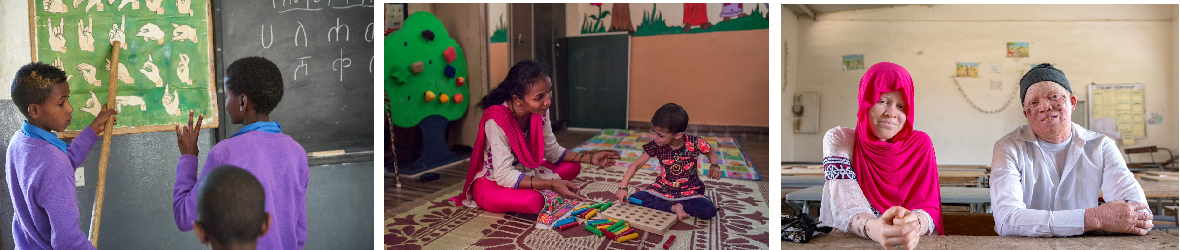
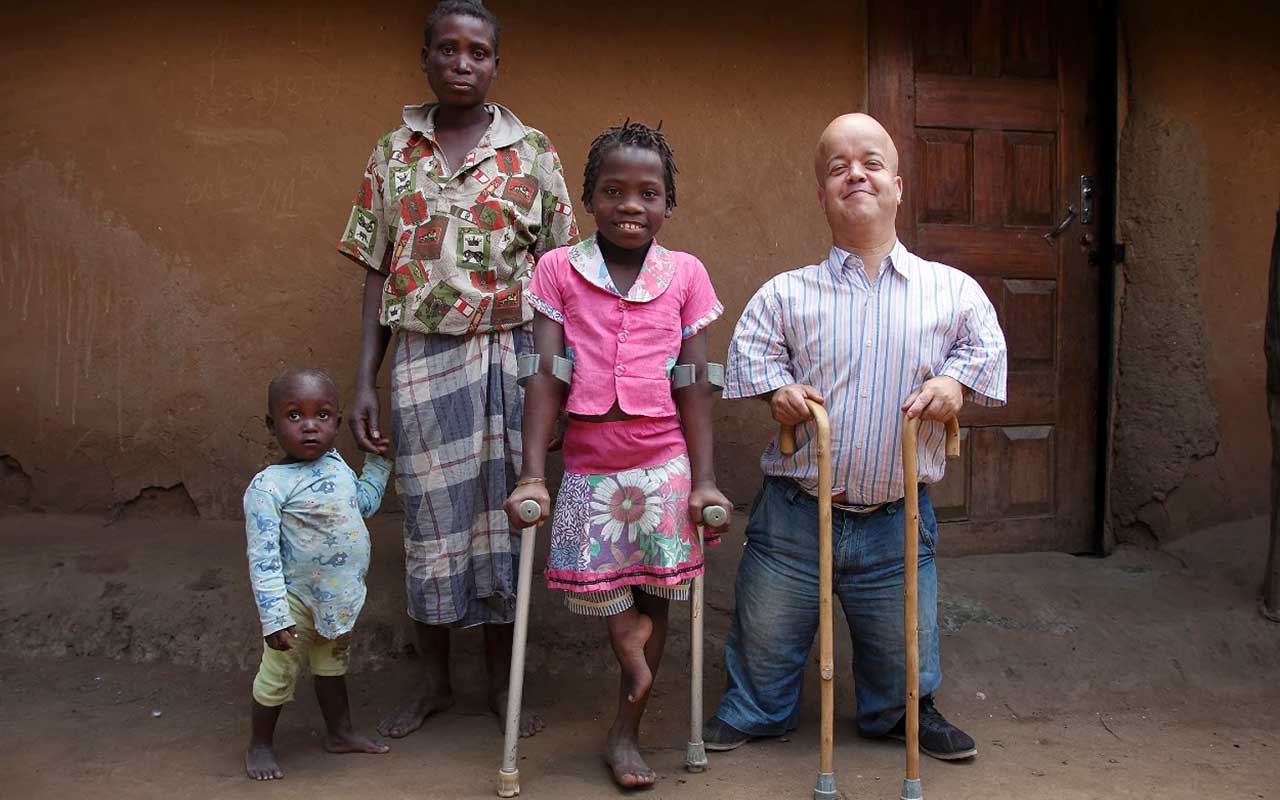
Above images: © CBM
We have relaunched two of our popular open, self-paced courses on LSHTM Open Study. These free online courses take about 3-4 hours per week to complete over 3 weeks. Designed to support those working to advance disability inclusion in health and development, find course details and access the learning modules by creating an Open Study account.
- Global Disability: Research and Evidence: by bringing together perspectives from researchers, persons with disabilities and policymakers, strengthen your understanding of how evidence can be generated and used to inform policy and practice.
- Integrated Healthcare for Children with Developmental Disabilities: enhance your knowledge of the health needs of children with developmental disabilities and explore approaches to delivering integrated care in partnership with families, education and social care services.
Disability Evidence Portal
- Disability Evidence Portal
Find more at the ICED Disability Evidence Portal including recent evidence briefs about the impact of COVID-19 on people with disabilities.
Webinars
- Poverty graduation: new evidence for an effective disability-inclusive approach from Uganda
In this webinar, we presented findings from a PENDA evaluation of a disability-inclusive ultra-poor graduation programme in Uganda, including findings from a cluster-randomised controlled trial and process evaluation.
- COVID-19 and Disability Webinar
We hosted a webinar on ensuring disability inclusion during COVID-19 responses on 25th June 2020. The webinar was hosted by Tom Shakespeare, Jane Wilbur, Morgon Banks and Hannah Kuper with a Q&A session afterwards.
Online resources mentioned during the webinar can be found below.
Guidance on inclusion
FCDO guidance on disability inclusive planning
FCDO disability inclusion strategy
FCDO Disability Inclusion Helpdesk
COVID-19
Considering disability in COVID-19 hygiene programmes
OHCHR: Disability and COVID-19
WHO: Disability considerations during the COVID-19 outbreak
Other resources
WaterAid compendium on accessible WASH
Global Disability Inclusion Report (2025)
World Report on Disability (2011)
Background thinking
- Disability in Low and Middle Income Countries: Background Thinking
PENDA have put together a summary of our thinking about Disability in Low and Middle Income Countries and how to evaluate the delivery of disability development programmes. The paper outlines what the programme understands disability to be, how it interacts with other factors and how PENDA hopes to learn more about improving inclusion and participation for people with disabilities in low and middle income countries.
Disability in Low and Middle Income Countries: Background Thinking
Take a read and let us know your thoughts at [email protected]
Accessing the mainstream: Conference on Evidence to Inform Disability Action 2026
The final PENDA conference will take place in London, from 26 - 27 November 2026.
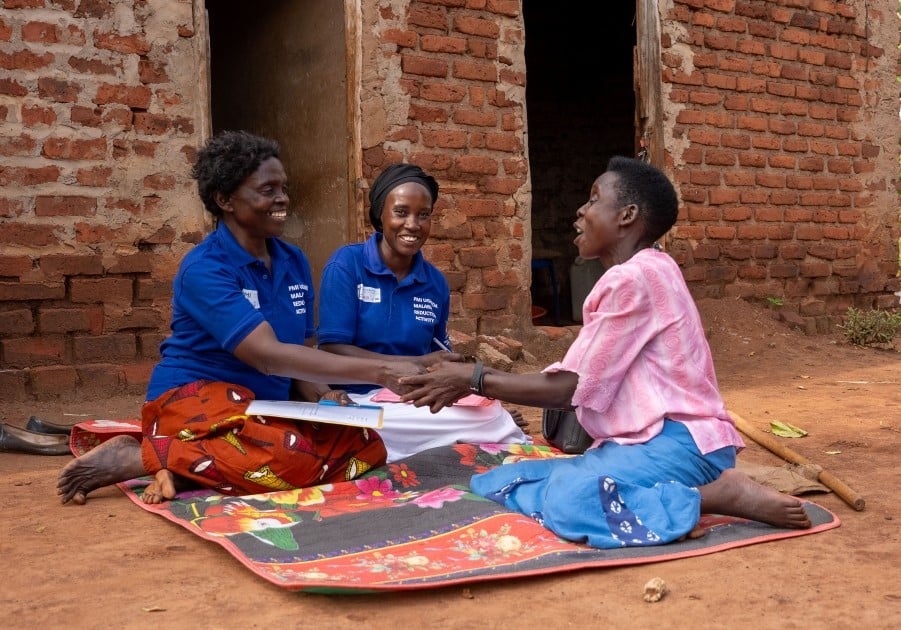
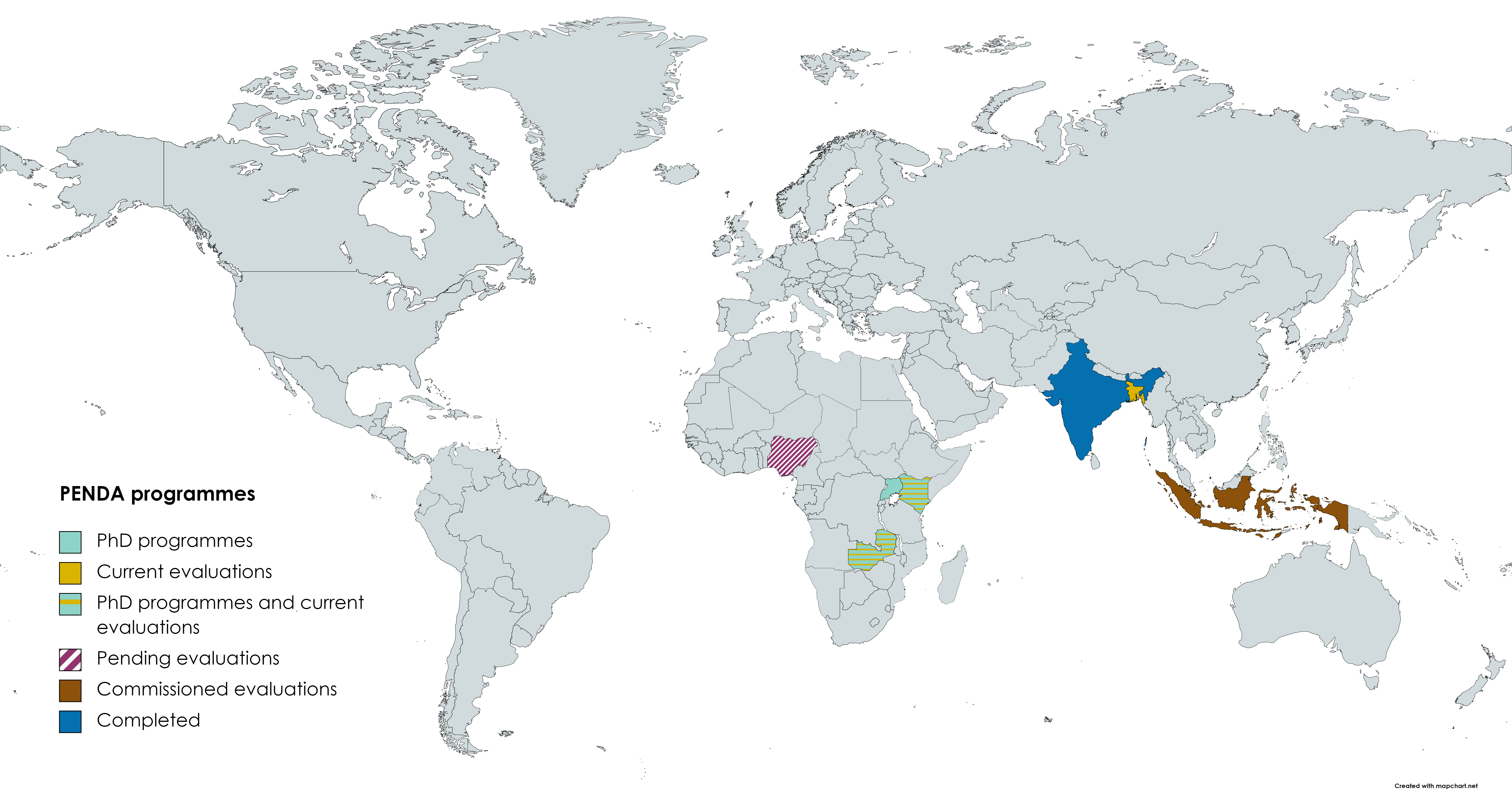
Over the last eight years, PENDA has worked with partners across Bangladesh, India, Kenya, Laos, Malawi, Nigeria, Rwanda, Sierra Leone, Tanzania, Uganda and Zambia to strengthen the evidence base on disability inclusion.
The programme has delivered impact evaluations and process evaluations of interventions, conducted secondary analyses of large datasets (including UNICEF’s Multiple Indicator Cluster Surveys), and supported doctoral researchers with disabilities. This work has generated new insights into what improves access to services, participation, and outcomes for people with disabilities.
This conference will bring together researchers, practitioners, policymakers and organisations of persons with disabilities both from PENDA and the wider field. The purpose is to share evidence and learning from the 13 PENDA interventions that aim to improve the lives of people with disabilities in low- and middle-income countries.
Conference agenda
The conference agenda is now available. Please note that this agenda is provisional and may be subject to change following the close of registration.
For more details on the conference, key dates and more, please visit the conference Events page.
Past conferences and events
- International Conference on Economic Inclusion for Persons with Disabilities
The International Conference on Economic Inclusion for Persons with Disabilities was jointly organised by the BRAC Institute of Governance and Development (BIGD) and the PENDA programme at the International Centre for Evidence in Disability (ICED), London School of Hygiene & Tropical Medicine (LSHTM). The conference was held on 18 and 19 January 2026 in Dhaka, Bangladesh.
This conference brought together academics and practitioners working on disability and economic inclusion, as well as people with disabilities and their representative organisations, policymakers, and donors. The purpose of the event was to:
- Share cutting-edge evidence and good practices on “what works” to improve economic inclusion for persons with disabilities (e.g., reducing poverty, improving access to education, and decent work)
- Advance cross-sector collaboration to accelerate effective policy, research, and programmatic action in economic inclusion for persons with disabilities.
A summary of sessions from the conference is available to read on the BIGD website.
About the conference
There are 1.3 billion people with disabilities globally, who are consistently more likely to experience both monetary and multidimensional poverty. They are often excluded from education and decent work, and face additional costs of disability that are insufficiently addressed through social protection and other programmes. This can lead to entrenched poverty for people with disabilities and their families, and even affect local and national economic growth.
Currently, there is limited high-quality evidence in low- and middle-income countries on how to reduce poverty among people with disabilities. This conference presented high-quality evidence and strategies on how to improve livelihoods and reduce poverty among people with disabilities, and to advance cross-sector collaboration on the issue among international and national stakeholders.
For further inquiries about this conference, please contact: [email protected]
- 8th International Conference on Disability and Development: Strengthening Research and Evidence on Disability
This conference was hosted by the Pragyaan Sustainable Health Outcomes (PRASHO) Foundation, the PENDA Programme, International Centre for Evidence in Disability (ICED) and the London School of Hygiene and Tropical Medicine (LSHTM) on 23 and 24 November, 2024. The event brought together researchers, activists and practitioners to discuss and debate strengthening research and evidence on disability. The focus will be on new research findings, methodologies, tools and implications of evidence for policy and practice.
There are 1.3 billion people with disabilities globally, and they are consistently left behind in aspects of life including education, livelihoods, social protection, health and rehabilitation. Unfortunately, there is weak evidence concerning how to realise disability inclusion, which supports the inaction of governments and donors on this topic.
Participants had the opportunity to attend keynote addresses from international experts, and contribute to panel discussions, training workshops and presentations. Key-note speakers to be announced!
Topics for the conference included:
- New high-quality evidence on disability, and exclusion.
- Evidence from large-scale surveys
- Innovative qualitative approaches
- Systematic reviews
- Methodological issues in investigating disability
- Approaches to undertaking qualitative and quantitative studies
- Use of routine data
- Disaggregating collected data by disability or functional domains
- Use of evidence to inform disability-inclusive development
- Case studies of activities to promote disability-inclusive responses
- Opportunities and challenges of using research evidence to influence policies and practice
- Strengthening Health systems and Policies for disability
- Initiatives to strengthening of disability-inclusive policies and programs
- Measuring the impact of policies and interventions for disability advocacy and health system strengthening.
- New high-quality evidence on disability, and exclusion.
- PENDA HBCC Webinar
We held a webinar on the 13th March 2024 to present the findings from the Evaluation of the FCDO-funded Hygiene and Behaviour Change Programme
In the webinar icddr,b and research partners presented evaluation findings from HBCC-funded projects in Kenya, Indonesia and Zambia. They shared key successes and challenges across the three countries and recommended how to strengthen inclusion in future HBCC-funded efforts. Icddr,b and B-SCAN also shared key learning generated through the population-based survey in Bangladesh.
Speakers included:
- Sheillah Simiyu, Research Scientist, APHRC
- Phylis Busienei, Research Officer, APHRC
- Mahbub-Ul Alam, Associate Scientist, icddr,b
- Jenala Chipungu, Social Behavioural Scientist, CIDRZ
- Salma Mahbub, General Secretary, BSCAN
- Yesi Maryam, Project Coordinator of UNAS
Please click on the link provided to view the recording, which includes both presentations and speakers. Recording.
Please click on the link provided to view the recording, which includes only speakers and sign language interpreters. Recording.
Videos:
- Assessment of WASH for people with disabilties in Bangladesh
- Evaluation of Hygiene Behaviour Change Coaliation
About the study:
The UK Government and Unilever launched the Hygiene & Behaviour Change Coalition (HBCC) to mitigate COVID-19 transmission in low and middle-income countries. The programme targeted a billion people and employed diverse channels such as mass media, digital tools, and interpersonal communication. Many HBCC-funded partners promoted inclusion by involving people with disabilities, older individuals, and caregivers in planning, offering tailored solutions like accessible handwashing stations and training.
With funding from FCDO and PENDA, the International Centre for Diarrhoeal Disease Research, Bangladesh (Icddr,b) led a collaborative study to understand the level of inclusion of people with disabilities, older adults and caregivers in HBCC-funded projects and evaluate the effectiveness of the interventions for these populations. Together with B-SCAN, icddr,b also conducted a population-based survey in Bangladesh to compare water, sanitation and hygiene (WASH) experiences between people with and without disabilities through a gender and ageing lens.- 6th International Conference on Disability and Development: Disability and COVID-19
We had more than 300 people join our 6th international conference on disability and development: Disability and COVID-19 on the 14th - 17th March 2022. Recordings of the conference are available to watch on our event page.
Please find below the speaker presentations from the conference. Kindly note, every effort was made to make the presentations accessible.
Day 1
Day 2
Day 3
Day 4
- 3rd International Conference on Disability and Development
About the Conference
The Third International Conference on Disability and Development was held at London School of Hygiene & Tropical Medicine in November 2019. It was co-hosted by the International Centre for Evidence in Disability (ICED) and Sightsavers, in partnership with CBM, ADD International and Help Age International, supported by FCDO.
Over 180 people joined us to discuss the Evidence in Disability Inclusive Development and where research can focus in future.
Recordings of the plenary sessions can be found below:
Plenary 1: Research Challengers
Plenary 4: Wrap up and Call to Action
For further information and to find out about future conferences please sign up to our newsletter or contact us at [email protected]
Many of our speakers and presenters have kindly shared their presentations with us, please feel free to down load a copy.
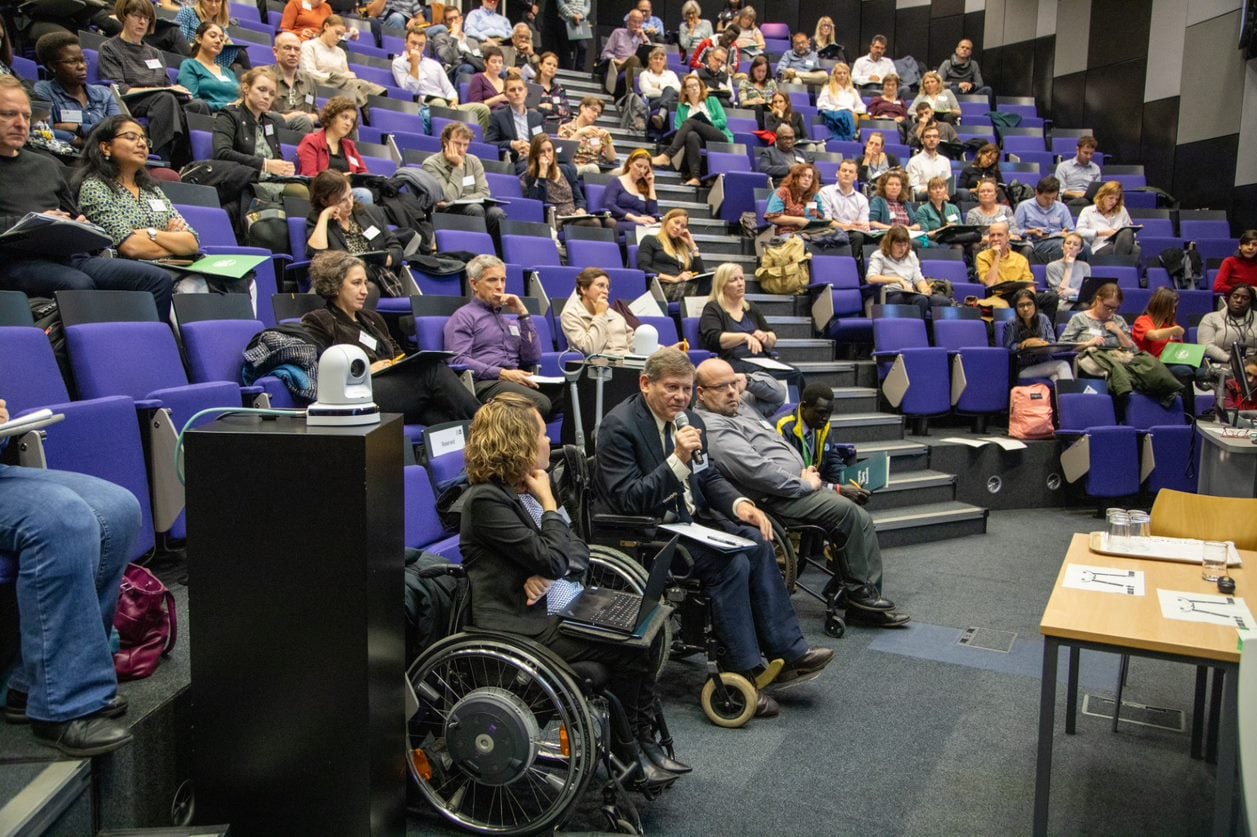
Delegates in the auditorium during a Q&A during the plenary session Plenary sessions and workshops
Plenary 1
- Hannah Kuper, Where are we now? Evidence and Gap Map: Effectiveness of interventions for people with disabilities in LMICs
Plenary 2
- Dan Mont, Administrative data for Inclusion: the example of education management information systems
- Kristin Dunkle, Emerging evidence from the What Works to Prevent Violence Against Women and Girls Global Programme
- Lorraine Wapling, Bringing data to life: the impact of disaggregated data on programme decision-making
Worshop 1: Access to Health
- Sarah Polack, Feasibility and acceptability of an intervention to improve uptake of ear and hearing services for children in Malawi
- Kirsty Smith, Perceptions of persons with disabilities in Nigeria towards healthcare
Worshop 1: Participatory Methods
- Jackie Shaw, Inclusion works! Disability inclusive participatory action learning groups: building better solutions and change practices
- Veronika Reichenberger, Participatory Video for Monitoring and Evaluation -A case study
- Margo Greenwood, Disability-focused community-based participatory research (CBPR): how is methodological learning shaping design and approach?
Worshop 1: Measurement
- Ruth Sanders, Using the Washington Group Short Set for monitoring access to eye care services by people with disabilities.
- Donna Koolmes, Developing a Needs Assessment Tool for Community Based Inclusive Development (CBID): Assessing and monitoring needs for case management.
- Kate Miller, Count Me In, an mHealth app, promotes nutrition and safe feeding for children with disabilities
Worshop 1: Education
- Emma Jolley, A mixed-methods study investigating child development outcomes in community-based early childhood settings
- Elena Schmidt, Costing inclusive education of children with disabilities: analysis of expenditures of an inclusive education pilot in Senegal
Workshop 2: Humanitarian
- Klaus Minihuber, Inclusive Humanitarian Aid for Girls, Boys, Women and Men with Disabilities in Response to Cyclone Idai
- Daniel Mont, The Long Lasting Effects of War on Disability
Workshop 2: Employment
- Stevens Bechange, Evaluation of a model for the economic empowerment of youth with disabilities in rural Uganda
- Mary Wickenden, Promoting disability inclusive formal sector employment: preliminary explorations in preparation for an intervention in Bangladesh, Kenya, Nigeria and Uganda
Workshop 2: Politics and Empowerment
- Bhavisha Virendrakumar, Disability inclusive elections in Africa: A systematic review
- Vladimir Pente, Political participation and disability in Cameroon and Senegal: a cross sectional population based survey
Workshop: Parent support
- Angelique Kester, Grassroots, family-based services for children with neurological disorders and their families at home in Uganda: an intervention study.
- Heather Michelle Aldersey, Assessing Priority Support Needs of Families of Children with Disabilities in Addis Ababa, Ethiopia
- Karen Bunning, Empowering self-help groups for caregivers of children with disabilities in Kilifi, Kenya: Impacts and their underlying mechanisms
Workshop 3: Poverty and Voice
- Morgon Banks/Shaffa Hameed, Impact of the Disability Allowance in the Maldives
- Mohammad Rashidul Islam, Poverty Graduation Model targeting persons with disabilities from extreme poor families: RCT baseline findings from Bangladesh
- Sekandi Deus, Disability and Development: The Ugandan (DPO) perspective
Workshop 3: Rehabilitation and Assistive Technology
- Sureshkumar Kamalakannan, Non- Inclusive Health system for Disability Inclusive Development: Lessons from India
- Tess Bright, Assessing need for ear and hearing services in Malawi using the rapid assessment of hearing loss survey protocol
- Dorothy Boggs, Estimating functional impairments and assistive technology need through population-based surveys: an analysis of data from Cameroon & India and overview of proposed tool
Workshop 3: Stigma
- Chandalin Vongvilay, Prevalence and attitudes towards disability in Laos: Informing World Education Laos’ CBID approach through findings from a household survey
- Maria Zuurmond, Exploring stigma and discrimination related to cerebral palsy in Burkina Faso
- Ruth Nalugya, Developing a multi-level intervention targeting disability stigma with children with cerebral palsy and their families in Uganda
Worskhop 3: Wash and Girls
- Islay Mactaggart, Water, Women and Disability in Vanuatu: Results from a mixed methods study
- Jane Wilbur, Feasibility study of a menstrual hygiene management intervention for people with intellectual impairments and their carers in Nepal
- Mbuso Jama, Using disability data to adapt education programs in marginalised contexts - A Case Study from the Girls Education Challenge (GEC) Project in Zimbabwe’
Monthly updates on PENDA activities - September 2026
After 8 years – we are in the final stretch of fieldwork! The endline survey is almost complete for the PLA-D trial. Training for the verbal autopsy component of the PLA-D trial will start next week, which will allow us to work out why people with disabilities died or were hospitalized. This will mark the last phase of endline data collection for the PLA-D trial in Uganda and for PENDA!
- January 2026
We’re in the final year of PENDA, and the focus is on wrapping up evaluations and disseminating findings.
To kick off the year, we’re looking forward to hearing from collaborators, academics, policymakers and the wider community at the International Conference on Economic Inclusion for Persons with Disabilities on 18 and 19 January in Dhaka, Bangladesh. Organised jointly with colleagues at the BRAC Institute for Governance and Development (BIGD), the conference will explore evidence and good practices on “what works” to improve livelihoods and reduce poverty among people with disabilities
- February 2026
Last month, the International Conference on Economic Inclusion for Persons with Disabilities was held in Dhaka, Bangladesh, led by our partners at the BRAC Institute of Governance and Development (BIGD). With over 300 attendees across two days, the event brought together representatives from academia, government, civil society, development actors, funders and the media, including nearly 100 persons with disabilities. The event was covered in the Dhaka Tribune, among other local media outlets. A huge thank you and congratulations to the team at BIGD for a successful event!
In Nigeria, the cluster randomised controlled trial evaluating IFPLAN has now entered the endline data collection phase. IFPLAN is an inclusive sexual and reproductive health project aimed at reducing unmet need for family planning among women of reproductive age with disabilities. IFPLAN was implemented in Kaduna City, Nigeria by Inclusive Futures, with the evaluation led by ICED in partnership with OPM Nigeria.
OPM Nigeria currently has data collection teams in the field gathering endline data from women with and without disabilities on family planning outcomes. We are grateful to everyone involved for their continued commitment and look forward to sharing results as the study progresses.
- March 2026
The final PENDA evaluation—a study evaluating the disability assessment, determination, and certification programme in Sierra Leone—has started.
Last week, we trained key informants and will proceed with a population-survey to further identify potentially edible people in the community. In March, we’ll run assessment centres to test how the newly developed CAT tool performs.
- April 2026
Cally Tann and Nat Scherer were in Rwanda last week to present findings from a cluster randomised trial evaluating the PDC/Baby Ubuntu programme, which provides early care and support for children under five at risk of developmental disabilities. The participatory event brought together caregivers, policymakers, non-governmental organisations, organisations of persons with disabilities and health providers to reflect on the findings and aid further analysis and write-up. Formal dissemination, including results from the process and economic evaluations, is planned for November 2026.
They were joined by Clelia Goodchild, a visual anthropologist and documentary filmmaker, who is developing a series of short films to capture the PDC/Baby Ubuntu trial and its impact. Here is a sneak peek of Clelia in action!
Cally and Nat also delivered refresher training with the trial enumeration team in preparation for a second endline data collection. Following the initial endline, control clusters have now received the intervention, and this next phase will assess longer-term outcomes.
Over in Sierra Leone, Sara Rotenberg and Islay Mactaggart successfully trained Impairment and Chiefdom Assessment Teams, who will now carry out 1,500 in-depth assessments of people with disabilities identified through key informants and a population survey in the coming weeks. These assessments will generate new evidence on how a community-based approach to disability identification and assessment compares with more medicalised models used for certification. We look forward to sharing these results as the final PENDA evaluation wraps up.
- May 2026
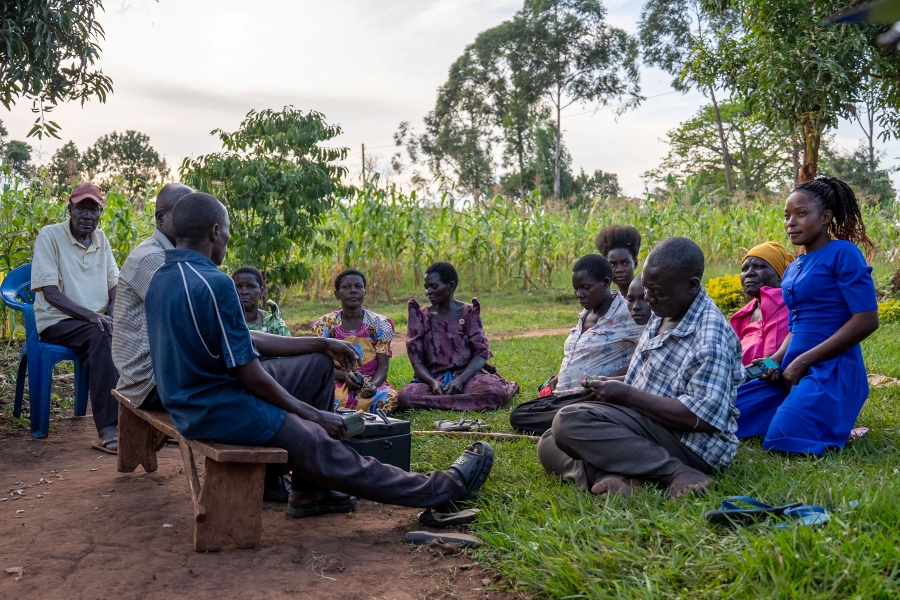
In Uganda, preparations are underway for the Participatory Learning and Action for Disability (PLA-D) endline data collection. In-person training for the data collection team will begin this week in Iganga, and data collection is expected to start shortly after in Luuka district. The endline will provide important insights into the implementation and outcomes of the PLA-D approach, helping to strengthen the evidence on what works to support disability inclusion in practice. Project collaborators and partners also gathered in Luuka last week to donate 60 wheelchairs to community members with physical disabilities — read more in a media article covering the handover.
If you’re curious to see early insights from the project, you can watch a recording of our April webinar, where we screened the short film Tusobola: We Can. Following the screening, project partners reflected on what they are seeing so far in Luuka ahead of the final trial results.
- June 2026
PLA-D “Tusubola programme” – together we can!
PLA-D brings together community-based groups of people with disabilities and supporters. They meet to collectively identify key problems in relation to health/healthcare access facing people with disabilities, develop and implement solutions to improve healthcare access, and evaluate their progress.
How do PLA-D groups work?
- Identify: Group members collectively identify the key problems they face in accessing healthcare.
- Plan: The group develops an action plan, designing solutions based on their own priorities and knowledge.
- Act: Group members implement their solutions within the community.
- Evaluate and share: Progress is reviewed and shared with the wider community to build broader support for action.
The PLA-D resources are now available on our website, including:
- PLA-D Facilitation Manual
- Designing a PLA-D programme - recommendations (guide)
- Picture Cards - Lusoga
- Picture Cards - English
- PLA-D Reporting Forms
- Activity and output monitoring dashboard – available upon request
- PLA-D training presentations – available upon request
We are undertaking a large cluster-randomised controlled trial of PLA-D as part of PENDA. This month, we are completing the endline survey, which will run through July – watch this space for results of impact coming soon!
Learn more about the programme through this short film on our website!
- July 2026
Mark and Morgon were in Dhaka with BIGD for the conference “Beyond Just Cash Transfers: New Evidence on Inclusive Education and Livelihood Interventions”. The conference showcased two PENDA trials:
- The Disability-Inclusive Ultra Poor Graduation scheme, a multi-pronged livelihoods intervention that provided asset transfers (e.g., livestock) and technical training, access to social protection, rehabilitation and assistive devices, as well as community sensitisation on disability. The PENDA trial found strong impacts of the programme, including an increase in household earnings by 20%, a tripling of asset values and improved health and participation of people with disabilities.
- The Shikhbo Shobai, an inclusive education project that provided individualised support, school-level accessibility and inclusion improvements and community sensitisation on the right to and educational needs of children with disabilities. The PENDA trial found the programme increased school attendance by 15% and decreased bullying by 36%, amongst other benefits.
Last month, we were busy disseminating findings from PENDA at meetings at the World Bank, UNICEF, Mastercard and COSP. It was great having the opportunity to share emerging findings and discuss how to use evidence to inform practice!
Find more details about these and other trials on our PENDA webpage. Or join us for the webinar on July 7 to learn more about the Disability-Inclusive Ultra Poor Graduation Scheme. Morgon Banks will be presenting findings from our trials in Laos and Bangladesh in the forthcoming Webinar on July 7 on Social protection and disability in Asia and the Pacific – progress and innovation
- August 2026
After 8 years – we are in the final stretch of fieldwork! The endline survey is almost complete for the PLA-D trial. Training for the verbal autopsy component of the PLA-D trial will start next week, which will allow us to work out why people with disabilities died or were hospitalized. This will mark the last phase of endline data collection for the PLA-D trial in Uganda and for PENDA!
- 2025 PENDA Activities
January 2025
This month we will be visiting Tanzania, to support the trial on how to reduce school-based violence for children with disabilities. We will also be going to Uganda, both to observe the community groups working to improve access to healthcare for people with disabilities, and to disseminate the findings from the Uganda Disability Inclusive Poverty Graduation programme.
February 2025
This month, we are in Uganda to observe the healthcare worker training on disability – which is a participatory course co-led by a healthcare worker and a person with disabilities. We are also visiting the community groups of people with disabilities established to identify and overcome barriers to accessing healthcare! A team is also in Rwanda this week, for work on the Ubuntu trial of early intervention for children at high risk of developmental disabilities.
We are holding the first dissemination events for our DIG Uganda project – including a webinar on February 19 (details below). Join us to find out more!March 2025
At PENDA, we are not satisfied just with publications! We want to use our findings to inform policy and practice, and dissemination of research is key. For instance, the Disability Inclusive Ultra-Poor Graduation (DIG) evaluation findings were presented to a large group last month in Uganda, but also as a webinar (recording here). And BRAC – the main implementer – has published resources on the DIG approach here. Also, this month, we are partners AMREF are disseminating lessons from the PLA-D approach in Uganda at the Africa Health Agenda International Conference. And Andrew Ssemata has been invited to present at the Zero project on the healthcare worker training programme on disability developed and implemented in Uganda.
New Resources
Our collaborator BRAC have produced a resources on the Disability Inclusive Graduation (DIG). This resource highlights considerations to be made when designing, implementing, and evaluating a Disability Inclusive Ultra-Poor Graduation Approach encompasses learnings taken from the Disability Inclusive Graduation (DIG) project in Uganda implemented by BRAC, Humanity and Inclusion, and the National Union of Women with Disabilities of Uganda (NUWODU).
Click here to read.
April 2025
This month, we are conducting the endline in Kenya for our trial evaluating the impact of a micro-entrepreneur scheme for people with disabilities, implemented by Light for the World as part of the DID-IF programme. This programme promotes the economic empowerment of people with disabilities through our “InBusiness” initiative. The initiative brings together disability inclusion advocates with public and private sector institutions to co-create sustainable ways of engaging people with disabilities in employment, business and education while creating shareable models of good practice.
May 2025
The ’Missing Billion’ study in Luuka district, Uganda is using several approaches to improve access to healthcare for people with disabilities. At the heart are Participatory Learning and Action for Disability (PLA-D) groups, which are community-led platforms enabling people with disabilities to identify barriers to healthcare and co-create solutions. Alongside, the study implements inclusive healthcare system strengthening interventions, such as, training healthcare workers on disability-sensitive care and conducting accessibility audits in health facilities. This intervention is being evaluated by PENDA, using an RCT and process evaluation.
Last month, a high-level delegation from Uganda’s Ministry of Health, led by Dr. George Upenytho, Commissioner for Community Health Services visited the project.
“This work speaks directly to the vision of the Ministry in ensuring that no one is left behind in access to health services,” said Dr. Upenytho. “We do not want the name ‘The Missing Billion’ to end with this project or remain only as a research initiative. We should work together with MRC, Amref, and the Ministry of Health to scale up these interventions to other districts and improve inclusive healthcare access across the country.”
Mr. Mubangizi Andrew, Assistant Commissioner for Disability and Rehabilitation, echoed the sentiment.
“I am excited to see people with disabilities organized in groups, this is a testament to their collective strength and ability to work together towards improving their own health.”
The Ministry team also commended the study’s inclusive healthcare worker training and healthcare facility accessibility audits for being practical, participatory and mindset-shifting, qualities that are essential for real change within the health system.
June 2025
We are holding two dissemination events of PENDA findings this month – both attended by the legendary Mark Carew! First, he is off to India, to share the findings from the DE-WORM study – which shows that children with disabilities are missing out on school-based health interventions. Then, he is going to Bangladesh, together with Hannah, to present the findings from the Star Plus intervention implemented to support youths with disabilities into employment!
Congratulations to Clarisse Chancele – who successfully defended her PhD in Sociology at the University of Dschang, Cameroon. She was supported by the PENDA programme for doctoral students with disabilities!
July 2025
We held two dissemination events of PENDA findings this month.
First, in India we disseminated the findings from the De-Worm study, which showed that school-based health interventions exclude children with disabilities, but that they can be reached with additional community outreach.
De-Worm study dissemination event in India Then, we were in Bangladesh disseminating findings from the Star Plus study, which showed that livelihood interventions work to improve employment engagement of youths with disabilities. Thank you to all the partners in the work, and the OPDs and other stakeholders who attended!
Our trial in Rwanda is evaluating the impact of early intervention to support children with developmental disabilities (“PDC/Baby Ubuntu”). The endline data collection for the trial is now underway! And the preliminary findings were presented several times last month at the European Academy Of Childhood-onset Disability (EACD) and International Alliance of Academies of Childhood Disability (IAACD) conference in Heidelberg, Germany (including pre-conference workshop and mini symposium!), the THRIVE conference in London, and the Neonatal Society Summer Conference!
Read up on all the above projects and all our other work on our website!
August 2025
Momentum is building across PENDA, with 11 evaluations up and running across the programme in collaboration with a wide range of partners. Last month, we held two field visits for PENDA projects.
Sara Rotenberg and Islay Mactaggart visited Sierra Leone for our new evaluation of approaches to identify people with disabilities for social protection enrolment, using more participatory and less clinical approaches.
Hannah Kuper visited Uganda to observe the ongoing Missing Billion Project, specifically the interventions being implemented by people with disabilities to improve their access to health services. It was wonderful to see the chickens being reared, tomatoes grown, and roads improved! Congratulations also to MRC Uganda’s Abdmagidu Menya who presented to NIHR on how Community Engagement activities were undertaken within this project.
September 2025
PENDA will wrap up by the end 2026, so we are finishing up our evaluations and will focus heavily on disseminating our findings in the coming year.
One of the interventions that we are evaluating is the InBusiness programme in Kenya, implemented by Light for the World. The project is working with entrepreneurs with disabilities to start their own business. Watch this video by Light for the World Kenya to learn more about Legei’s Journey to Financial Independence through Inclusive Business — and watch this space for our dissemination of findings starting towards the end of this year!
Another trial evaluated the impact of the Disability Inclusive Poverty Graduation Programme in Northern Uganda. We have posted the findings of the short-term economic impact as a working paper at Trinity Economic Papers, and the impacts on social participation and health outcomes are online.
We are also planning our new International Conference on Economic Inclusion for Persons with Disabilities, which will be held on 18 and 19 January 2026 in Dhaka, Bangladesh, together with the BRAC Institute of Governance and Development (BIGD). Jointly organised by ICED and the BRAC Institute of Governance and Development (BIGD), the conference will bring together academics and practitioners working on disability and economic inclusion, as well as people with disabilities and their representative organisations, policymakers, and donors. Call for abstracts and registrations will be circulated later in September.
October 2025
Sarah Marks will be in Nigeria this month to collect data for the IFPLAN trial, which aims to promote inclusive sexual and reproductive health and rights for women with disabilities in Kaduna city, Nigeria.
A new blog by Inclusive Futures (UK aid’s flagship disability inclusion initiative, led by Sightsavers and the International Disability Alliance) reflects on progress made and the threats facing disability inclusive development. Robust evidence, including findings from PENDA’s randomised controlled trials, shows that when disabled people have equal access to opportunities and services, they achieve outcomes on par with their peers. Generating and sharing this type of high-quality evidence is essential to inform policy and sustain momentum towards disability inclusive development.
November 2025
Through PENDA, we continue to generate evidence on “what works” to reduce poverty among people with disabilities through economic inclusion. The International Conference on Economic Inclusion for Persons with Disabilities, organised jointly with BIGD, will take place on 18 and 19 January 2026 in Dhaka. Abstract submissions are now open until 15 November, with registration and travel bursary details to follow later this month.
Last month, Sarah Marks visited Nigeria to complete data collection for the IFPLAN trial, a disability inclusive intervention aiming to increase family planning access for women with disabilities. While preparations are underway for the endline data collection, Sarah will present a poster on the baseline findings from the trial at the International Conference on Family Planning in Bogota, Colombia on 6 November.
The In-Business programme in Kenya is now disseminating findings back to participants, led by Light for the World Kenya through the Inclusive Futures consortium. Read an update on how the programme has benefitted microentrepreneurs with disabilities.
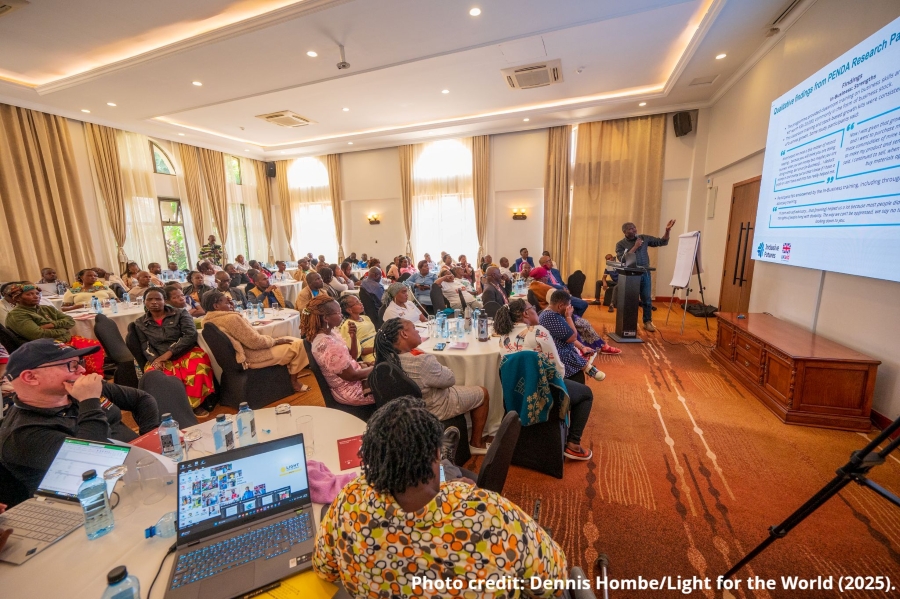
Gathering of microentrepreneurs with disabilities at the In-Business dissemination in Kenya, led by Light for the World. December 2025
In Nigeria, Sightsavers and partners completed implementation of the IFPLAN project interventions in late October. Dissemination of early findings is ongoing, with Sarah Marks presenting baseline results at the International Conference on Family Planning in Bogota, Colombia. Preparations are now underway for the endline survey: virtual training for data collectors began last month, followed by in-person training this week.
The PLA-D trial in Uganda is also moving into its final stages. The last meeting of the PLA-D cycle takes place this month and endline process evaluation data collection is in progress. We were pleased to welcome Gertrude Namazzi from Makerere University to LSHTM in late November for a baseline writing and endline planning workshop.
We were also in Laos for the cash-plus programme to deliver endline training and collect data, accompanied by colleagues from the UK Foreign Commonwealth Development Office. While in Vientiane, Mark Carew, Nathaniel Scherer and PENDA collaborators from the Lao Tropical and Public Health Institute presented at the 10th Adolescent Research Day conference, sharing findings from the baseline survey.
As we approach the final year of PENDA, the focus turns to maximising impact and supporting policy use of the evidence generated.
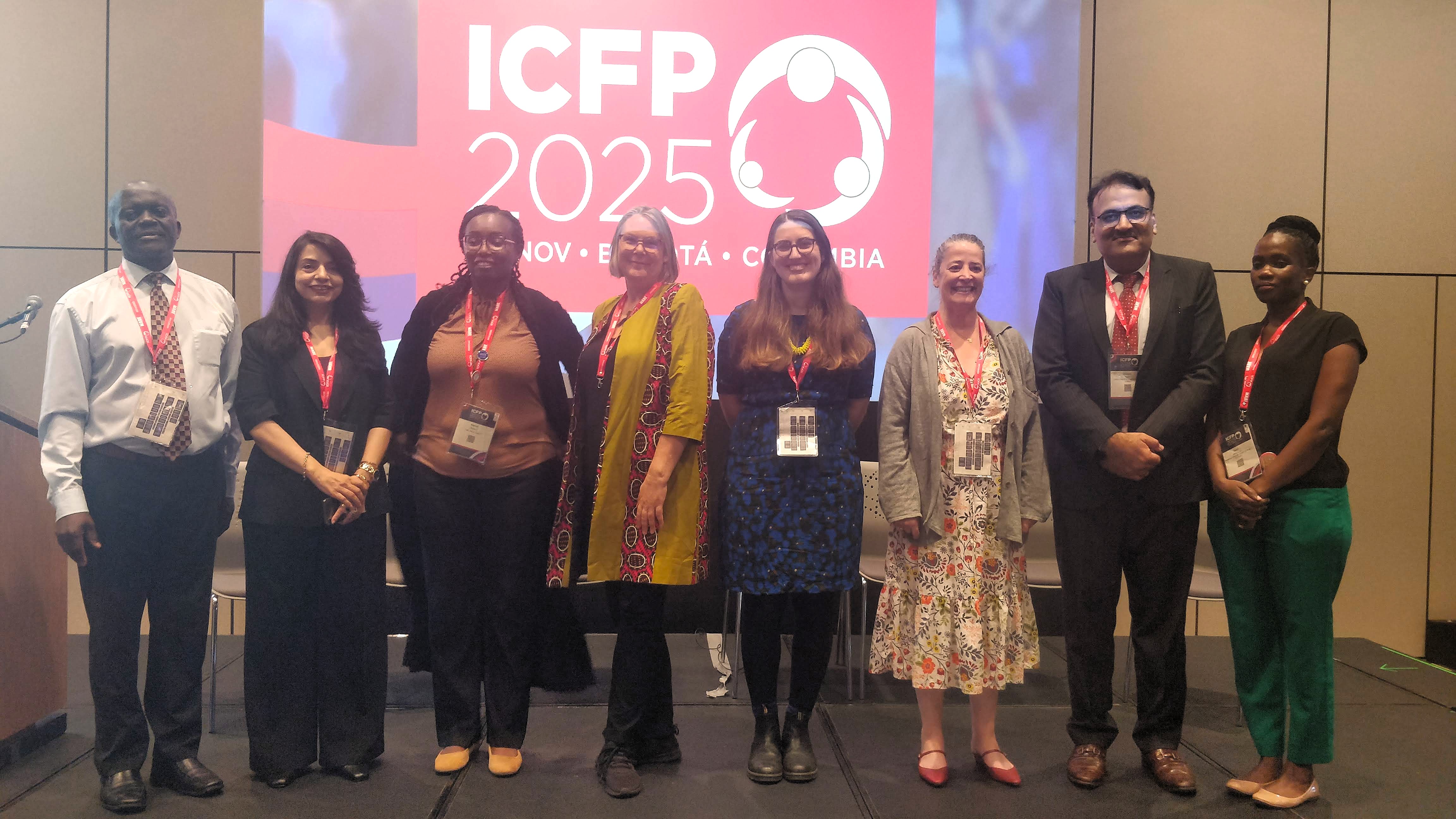
Sarah Marks poses at the International Conference on Family Planning in Bogota, Colombia. - 2024 PENDA activities
January
We now have 11 evaluations up and running, across the PENDA programme, working with a wide range of partners. Find out more information from the PENDA site on our research page:
In the past month, two further protocols from our studies have been published, describing in full the planned impact evaluations of a family planning programme for women with disabilities in Nigeria, and a micro-entrepreneur scheme for people with disabilities in Kenya. We are currently deep into planning for our forthcoming baseline studies in Rwanda and Uganda!
February
This month, we are preparing to conduct the endline of the impact evaluation of the STAR+ programme – a disability-targeted livelihood intervention in Bangladesh. We are also preparing for the baseline of the impact evaluation of the Baby Ubuntu in Rwanda – a programme of early assessment, care and support for children at risk of developmental disabilities.
April
Last month, we started data collection for the baseline of the impact evaluation of the Baby Ubuntu in Rwanda – a programme of early assessment, care and support for children at risk of developmental disabilities. The research is conducted in collaboration with Lifetime and Partners in Health. A team of 17 data collectors are working to sample 1,400 children across three districts, Burera, Kamonyi, Gakenke.
We held a webinar to disseminate the findings from the process evaluation of the Hygiene and Behaviour Change Consortium – established to assess the inclusion of people with disabilities and older people in the COVID-19 response. Catch the short film summarising the findings here.
Finally, Mark Carew leads the process evaluation work across the PENDA portfolio. He has now been appointed as Co-Theme Lead for Process Evaluation for the LSHTM Centre for Evaluation. It is an exciting opportunity to mainstream disability further within LSHTM research!June
Last month, we started the fieldwork for the baseline of our new study in rural Uganda. It is an impact evaluation of a community-based participatory group intervention to improve access to healthcare for people with disabilities. The baseline study in Rwanda is going well, for the evaluation of interventions to support the needs of young children with developmental disabilities and their families. We have completed the endline of our interventions in Bangladesh (inclusive employment) and Uganda (inclusive poverty graduation programme), working with BIGD in Bangladesh, and hope to share the results soon!
July
Last month, fieldwork is still ongoing for the baseline of our new studies in Uganda and Rwanda. We are busy disseminating results, including through the workshops in Nigeria and planned conference in India (read about it above!). We are also planning two further trials to get the total number up to 13 – watch this space for more information!
August
In news this month…. eleven trial baselines down and two to go! We are delighted that we have finished the baseline for our randomised controlled trial in Rwanda, and are almost there in Uganda! Now we are having the fun job of analysing the data, and finding out what works to promote disability inclusive development!
September
In news this month…. We are wrapping up the baseline of our study in Uganda, where we are aiming to identify up to 5000 people with disabilities, including 2000 for an in-depth study, to investigate what works to improve access to healthcare. We are also busy analysing the data on the completed trials – so watch this space for forthcoming results!
Our next Penda-supported conference is the 8th International Conference on Disability and Development – “Strengthening Research and Evidence on Disability” in Hyderabad, India, 23-24 November, 2024. Registration is open until 31 October, and abstract submission until 30 September. More information here.
October
In news this month…. Training is complete and data collection is starting soon for a new PENDA trial. This trial will explore whether a mainstream primary school-based violence prevention intervention in Morogoro in Eastern Tanzania is also effective for children with disabilities. This is an important topic as evidence shows that children with disabilities are 3-4 times as likely to experience violence compared to children without disabilities, however there is a lack of information on what works to prevent violence amongst children with disabilities. For instance, a recently completed systematic review by our group (led by Emily Eldred) found of 160 trials of school-based violence programmes globally, but only 3 disaggregated impacts by disability.
Our next Penda-supported conference is the 8th International Conference on Disability and Development – “Strengthening Research and Evidence on Disability” in Hyderabad, India, 23-24 November, 2024. Registration is open until 31 October, and abstract submission until 30 September. More information here and register here.November
In news this month… We will complete endline data collection for the Tanzania violence trial at the end of this month. The study evaluates the impact of a mainstream school-based violence prevention intervention for children with disabilities, and we are excited to start the analysis in 2025.
Andrew Ssemata presented on “Utilising community-based participatory learning and action to improve healthcare access for people with disabilities: Lessons from a cluster-randomized controlled trial in Luuka district, Uganda” at the LSHTM trials day in Uganda.
Our next Penda-supported conference is the 8th International Conference on Disability and Development – “Strengthening Research and Evidence on Disability” in Hyderabad, India, 23-24 November, 2024. More information here.December
FAO International Day of Persons with Disabilities event
On the 3rd December, Morgon Banks participated in an FAO event on the International Day of Persons with Disabilities.
The FAO, the Permanent Representation of the United Kingdom, Permanent Representation of Australia and the Permanent Representation of New Zealand, hosted the event to explore the challenges and opportunities associated with efforts to achieve disability-inclusive agrifood systems transformation, and persons with disabilities in the South-West Pacific Region.
Click to watch the full recording of the session (Morgon's talk starts from 00:44:22).
International Conference on Disability and Development
We are delighted at the success of our International Conference on Disability and Development with PRASHO in India. There were around 100 delegates, presenting fantastic talks, and it was featured in the Indian press.
- 2023 PENDA activities
January 2023
- We are super excited to be co-hosting a conference with Stellenbosch University in May 2023. Details and call for abstract above!
- Fieldwork is almost complete for the baseline of the evaluation in Nigeria to assess the impact of an inclusive family planning programme in the lives of women with disabilities.
- Read on for new key publications from PENDA
March 2023
- We are super excited to be co-hosting a conference with Stellenbosch University in May 2023. Details and call for abstract above!
- Fieldwork is underway in Kenya this month to evaluate the effectiveness of a livelihood programme to support micro-entrepreneurs.
- We are planning for our final follow up of the disability inclusive poverty graduation programme in Uganda later in the summer.
May 2023
- Fieldwork finished in Kenya this month to evaluate the effectiveness of a livelihood programme to support micro-entrepreneurs.
- We are poised to start training in Laos for the impact evaluation of a cash-transfer programme for children with disabilities, in collaboration with UNICEF and the Laos School of Public Health
- The process evaluation has been complete of the “Star Plus” inclusive livelihood programme in Bangladesh
- We are super excited to be co-hosting a conference with Stellenbosch University in May 2023. The website for the conference is live: http://stellenboschdisabilityresearch.com/
July 2023
- Fieldwork underway in Laos for the impact evaluation of a cash-transfer programme for children with disabilities, in collaboration with UNICEF and the Laos School of Public Health.
- Baby Ubuntu is a programme to establish support groups for caregivers of young children with neurodevelopmental disabilities. This initiative will be implemented in Rwanda (with Partners in Health), embedded within a case finding exercise. We will evaluate the impact of the intervention through the PENDA programme – with baseline fieldwork due to commence towards the end of this year.
- Read the latest ICED newsletter for papers published this month from PENDA!
November 2023
- Access of children with disabilities to school-based interventions: an RCT in Malawi and India
- Impact of a disability-targeted livelihoods programme in Bangladesh: the STAR+ programme
- Disability Inclusive Graduation: a cluster-randomised trial in Uganda
- Disability Inclusive Graduation: a cluster-randomised trial in Bangladesh
- Improving access to family planning in Kaduna City, Nigeria: a cluster-randomised trial
- Impact evaluation of the InBusiness programme to improve the economic empowerment of microentrepreneurs with disabilities in Kenya
- Evaluation of a programme of early assessment, care and support for children at risk of developmental disabilities in Rwanda
- Impact evaluation of a pilot cash transfer programme for households of children with disabilities in Lao PDR
- Hygiene and Behaviour Change: inclusion of people with disabilities and older people in the COVID-19 response
- Improving access to healthcare for people with disabilities in Uganda: A cluster-randomised trial
- Improving access to education for children with disabilities in Bangladesh: an impact evaluation
December 2023
In December, our spotlight was on the evaluation of the programme Hygiene and Behaviour Change: Inclusion of people with disabilities and older people in the COVID-19 response. The evaluation was undertaken by icddrb in Bangladesh, and they worked across five countries, including in depth research in Bangladesh. They found that older people and people with disabilities were often left out of pandemic response, but identified learnings and entry points to avoid this situation in the future. Recent publications, including the final publication are as follows:
- A report on the assessment of WASH and incontinence situation of people with disabilities and older people in Bangladesh
- Hygiene Hub. Summary report on considering disability in COVID-19 hygiene programmes (2020) - DEP (disabilityevidence.org)
- COVID-19 Inclusive WASH Checklist: How can organisations assess whether COVID-19 response programmes are inclusive? | COVID-19 Hygiene Hub Resources.
- Journal article: The inclusion of disability and aging in COVID-19 hygiene behaviour change interventions across LMICs
- Evaluation of Hygiene and Behaviour Change Coalition for COVID-19 Prevention: Inclusion of Disability and Ageing
The final workshop was held in November, and there were more than 15 reports in the national press. Well done to the team!
- 2022 PENDA activities
January 2022
Fieldwork is underway in Bangladesh to evaluate the impact of an inclusive education programme. This research has been commissioned out and is led by BRAC institute of governance and development (BIGD), and the University of Cambridge
We are about to start the baseline for a second impact evaluation in Bangladesh, to evaluate an inclusive livelihoods programme called STAR Plus, again working with BIGD.
Both the interventions are implemented through DIDIF – the FCDO funded consortium led by Sightsavers.
March 2022
We had a fabulous visit to Uganda in February – the first overseas trip in two years – to meet with partners on the impact evaluation of the Disability-Inclusive Poverty Graduation Programme. Fieldwork is underway of the baseline of two impact evaluations in Bangladesh (an inclusive education programme and an inclusive livelihood programme).
All three interventions are implemented through DIDIF – the FCDO funded consortium led by Sightsavers.
April 2022
We were busy last month running the 6th international conference on disability and development: Disability and COVID-19. We were joined by more than 300 delegates, to learn from around 100 contributions about Disability and COVID-19. Access all the information here shortly.
July 2022
- Our new Campbell review is out – a systematic review of effectiveness of interventions to improve livelihood outcomes for people with disabilities in LMICs.
- Fieldwork is underway in Uganda for the follow-up of our trial to assess whether Poverty Graduation schemes also work for people with disabilities!
- We are planning two more trials to start in the next few months – an assessment of how to improve family planning coverage for women with disabilities in Nigeria, and a trial of a livelihood support programme in Kenya.
- Our three PENDA PhDs are continuing to make great progress. Inspired by their success we have expanded the scheme and we are looking forward to welcoming two more PhD students from September! Details to follow soon…
September 2022
- The baseline is now complete for the Star Plus randomised controlled trial in Bangladesh, which investigates whether an inclusive livelihood programme is feasible and effective.
- The endline is now complete for the randomised controlled trial in Uganda, investigating the impact of Disability-inclusive poverty graduation.
- PENDA is supporting a work experience programme for researchers with disabilities at MRC Uganda
October 2022
- We are preparing the intervention on improving access to healthcare for people with disabilities in Uganda, through holding two workshops this month. One of the PENDA impact evaluations will focus on this intervention.
- We are getting ready for the baseline fieldwork in Nigeria for the impact evaluation of an inclusive Sexual Health Programme, led by Sightsavers and partners.
- The three PENDA PhD students will be visiting ICED later this month to work together and get support on their research.
November 2022
- We are preparing to start fieldwork next month for our trial on inclusive SRH services in Nigeria
- *** Save the date *** We are super excited to be co-hosting a conference with Stellenbosch University in May 2023. Details and call for abstract to follow!
- The three PENDA PhD students are visiting ICED later this months to work together and get support on their research.
December 2022
- We are preparing to start fieldwork next month for our trial on inclusive SRH services in Nigeria
- **** Save the date **** We are super excited to be co-hosting a conference with Stellenbosch University in May 2023. Details and call for abstract to follow!
- The three PENDA PhD students are visiting ICED later this months to work together and get support on their research.
- 2021 PENDA activities
February 2021
People
- Almost 2,000 people registered for the first run of our MOOC - “Global Disability: Research and Evidence”. The next round will be in February/March - sign up here, and please share through your networks!
- The three PENDA PhD students are continuing to make good progress – it is great to have them on board.
Knowledge
- Icddr,b (Bangladesh) have been selected to lead the evaluation of the inclusion of people with disabilities in the Hygiene and Behaviour Change investment of FCDO/Unilever. We are excited to partner with them!
- Also, BIGD (Bangladesh) and the University of Cambridge have started preparing for the impact evaluation of an inclusive education programme in Bangladesh.
Tools
- New briefs are available on the Disability Evidence Portal including on measuring disability in research related to COVID-19 response, and ensuring children with disabilities are not bullied in school. Be in touch if you want to help put together an evidence brief!
March 2021
People
- The three PENDA PhD students are joining the LSHTM Module on Global Disability and Health, and stimulating much mutual learning. Welcome!
Knowledge
- Jane Wilbur and Lorraine Wapling presented the Disability and Inclusion in COVID-19 Behaviour Change Programmes webinar to FCDO and HBCC Grantees this week, hosted by FCDO’s CV19 Behaviour Change Forum, the COVID-19 Hygiene Hub and Unilever and co-led by FCDO’s Disability Inclusion team. PENDA have carried out a desk review of HBCC grantee projects to explore how people with disabilities, older adults and their caregivers are included in these and to suggest ways to make these projects more inclusive. Having systematically reviewed 416 documents submitted to FCDO and Unilever by 21 grantees, they identified key learning and recommendations about how to enhance the inclusion of people with disabilities, older adults and their caregivers in COVID-19 interventions. They also shared good practice examples from HBCC grantees to facilitate learning. They are also providing feedback to the HBCC management team.
Tools
- Four Campbell reviews are underway – assessing the evidence for effectiveness of interventions to improve education, livelihood, social inclusion and empowerment outcomes for people with disabilities. Protocols are in submission.
April 2021
People
- Two of PENDA PhD students (Florence and Queen) and Tom Shakespeare co-authored the commentary “Triple jeopardy: disabled people and the COVID-19 pandemic” for the Lancet.
- All three PENDA PhD students completed the LSHTM MSc module on “Global Disability and Health"
Knowledge
- We are developing four Campbell reviews of how to improve outcomes for people with disabilities in low and middle income settings (with respect to education, livelihood, social inclusion and empowerment). The first on livelihood is submitted this month, and we hope will be available soon.
Tools
- The next run of the MOOC Global Disability: Evidence and Research starts May 3.
May 2021
People
- The second run of our MOOC on Global Disability: Research and Evidence, starts this week. 2,270 people have enrolled on this course so far!
Knowledge
- Fieldwork is poised to start by our partner icddr-b on the inclusion of people with disabilities in the Hygiene and Behaviour Change Consortium response to COVID-19, funded by FCDO and Unilever.
Tools
- Check out the new evidence briefs on the Disability Evidence Portal! New ones on overcoming barriers to accessing rehabilitation and the benefits of inclusive education for children without disabilities.
June 2021
People
- This month we welcome Daniel Dominey on an internship to the PENDA team. He will be sharpening his research skills by conducting large scale data analyses on the healthcare needs of people with disabilities.
- The run of our MOOC ON “Global Disability: Evidence and Research” has completed with 225 learners joining
Knowledge
- Lorraine Wapling and Jane Wilbur conducted a review of Hygiene and Behaviour Change Coalition (HBCC) funded projects, to assess whether they were inclusive of older people and people with disabilities. They have launched a learning brief and report that summarise lessons learned about how COVID-19 prevention programmes can be inclusive of people with disabilities, older adults, and caregivers. They also includes recommendations for organisations that can be applied in all WASH programmes, not just in COVID-19 prevention interventions.
Tools
- As part of the HBCC evaluation, Jane and Lorraine produced a COVID-19 inclusive WASH checklist. Developed for practitioners, it aims to support the inclusion of people with disabilities, older adults and caregivers in COVID-19 WASH interventions and can be applied when planning, designing, monitoring and evaluating WASH programmes.
July 2021
People
- This month we welcome Daniel Dominey on an internship to the PENDA team. He will be sharpening his research skills by conducting large scale data analyses on the healthcare needs of people with disabilities.
- The run of our MOOC ON “Global Disability: Evidence and Research” has completed with 225 learners joining
Knowledge
- Lorraine Wapling and Jane Wilbur conducted a review of Hygiene and Behaviour Change Coalition (HBCC) funded projects, to assess whether they were inclusive of older people and people with disabilities. They have launched a learning brief and report that summarise lessons learned about how COVID-19 prevention programmes can be inclusive of people with disabilities, older adults, and caregivers. They also includes recommendations for organisations that can be applied in all WASH programmes, not just in COVID-19 prevention interventions.
Tool
- As part of the HBCC evaluation, Jane and Lorraine produced a COVID-19 inclusive WASH checklist. Developed for practitioners, it aims to support the inclusion of people with disabilities, older adults and caregivers in COVID-19 WASH interventions and can be applied when planning, designing, monitoring and evaluating WASH programmes.
September 2021
We are undertaking four Campbell reviews, to consolidate what works for improving outcomes of people with disabilities in terms of education, social inclusion, empowerment and livelihood. This month, two protocols have been published:
- Effectiveness of interventions for improving livelihoods for people with disabilities in low- and middle-income countries: a systematic review.
- Effectiveness of interventions for improving social inclusion for people with disabilities in low- and middle-income countries: a systematic review.
We have now recruited three PENDA PhD students, who are all African scholars with disabilities. They are all making great progress in their research.
October 2021
We are preparing for fieldwork to collect baseline data for two impact evaluations. The first, undertaken by LSHTM and BIGD is to evaluate the impact of an inclusive livelihood programme in Bangladesh. The second, led by BIGD and Cambridge university is to evaluate the impact of inclusive education in Bangladesh. Both programmes are part of the Inclusive Futures consortium, led by Sightsavers.
December 2021
We are committed to participatory approaches in all we do. We have shared our learning across the group in the publication this month on “Participatory Research in Disability in Low- and Middle-Income Countries: What have we Learnt and what Should we Do?” in the Scandinavian Journal of Disability. We will use these best practices in our PENDA trials.
We are progressing with our Campbell reviews. The protocols for the three systematic reviews on effectiveness of interventions for improving educational, livelihood and social inclusion outcomes for people with disabilities in low- and middle-income countries are now published.
The new NIHR funded project on “Improving access to healthcare for disabled people in Uganda” will use participatory methods to develop and pilot-test a community-based intervention. A full PENDA randomised controlled trial will then be undertaken to assess whether it is effective at reducing mortality.- 2020 PENDA activities
December
People
- We’re excited to launch our new free MOOC - “Global Disability: Research and Evidence” – which will start on 30th November. We welcome learners who wants learn more and contribute towards research on disability. Sign up here, and please share through your networks!
Knowledge
- Research in Uganda is underway, with baseline fieldwork almost completed for our evaluation of the UKAID funded Ultra-Poor Graduation programme for people with disabilities, implemented by BRAC, HI and other partners.
- The review of the inclusion of people with disabilities in the Hygiene and Behaviour Change investment of FCDO/Unilever is now complete, with constructive feedback given to all projects.
Tools
- Take a look at the Disability Evidence Portal which includes evidence briefs about COVID and other thematic areas impacting the lives of people with disabilities. The Portal now has two briefs in Spanish, courtesy of our friends at CBM.
November
People
- We’re excited to launch our new free MOOC - “Global Disability: Research and Evidence” – which will start on 30th November. We welcome learners who wants learn more and contribute towards research on disability. Sign up here, and please share through your networks!
Knowledge
- We are in the process of shortlisting for our second grant for the evaluation of hygiene and behaviour change COVID-19 projects. More news to follow later in the year.
- Research in Uganda is due to start shortly to evaluate the UKAID funded Ultra-Poor Graduation programme for people with disabilities.
Tools
- Take a look at the Disability Evidence Portal which includes evidence briefs about COVID and other thematic areas impacting the lives of people with disabilities. The Portal now has two briefs in Spanish, courtesy of our friends at CBM.
September/October
People
- We are putting the finishing touches onto our MOOC on “Global Disability: Research and Evidence” which aims to build capacity of people to contribute towards research on disability. It will launch during the week of Dec 3. It is a three week course, with 2-4 learning hours per week. Sign up here, and please share through your networks!
Knowledge
- We have launched our second commissioning bid for evaluation of hygiene and behaviour change COVID-19 projects. Deadline is October 7. More information here.
Tools
- The Disability Evidence Portal is live. It includes two new briefs about COVID: “How can we measure disability in research related to the COVID-19 response?” and “How can social protection responses to COVID-19 be made disability inclusive?” Additionally, a brief on “Considering disability and ageing in COVID-19 hygiene promotion programmes” has been written for the HygieneHub.
August
People
- We have now selected Stephene Maende from Kenya as the third candidate in our PENDA Africa PhD scheme. He has background in research, strategic planning, policy analysis and impact evaluation of policy interventions/programmes, holds a master of Arts Economics degree from the University of Nairobi, bachelor of Arts from Kenyatta University, certificate in Evaluation of Public Policy from Laval University (Canada) and basic accounting skills (CPA I) from KASNEB. Welcome Stephene.
Knowledge
- Three papers are now online on “Are current approaches to poverty measurement disability-inclusive?” (by Morgon Banks), “Disability Inclusion Measures” (by Tom Shakespeare et al) and “Rapid Evidence Assessment of what works to improve livelihood outcomes for people with disabilities in low and middle income countries” (by Hannah Kuper et al).
Tools
- The Disability Evidence Portal is live, and Tom Shakespeare wrote a blog about it. It includes two new briefs about COVID: “What are the key considerations for including people with disabilities in COVID-19 hygiene promotion programmes” and “What do we know about how to support mental health and wellbeing during the COVID-19 pandemic from past infectious disease epidemics?”
July
People
- Our COVID-global project is ongoing, collecting mostly qualitative, but also quantitative data, on the experiences of people with disabilities during COVID-19 in Uganda, Zambia, Ghana, India, Bangladesh and the UK.
- We are preparing for the baseline of our impact evaluation, with partners, in Uganda on the effectiveness of the Poverty Graduation Programme that is inclusive of people with disabilities.
Knowledge
- PENDA webinar for DFID discussed how to make the COVID-19 response disability-inclusive (webinar here) and commentary to Wellcome Open to learn from the UK experience (paper here).
Tools
- The Disability Evidence Portal is live, and Tom Shakespeare wrote a blog about it. Campbell reviews are underway to assess what works to promote education, livelihood, social inclusion and empowerment for people with disabilities.
- The application has been launched for the third PENDA PhD programme - In Kenya. Application here, deadline June 21.
June
People
- The application has been launched for the third PENDA PhD programme - In Kenya. Application here, deadline June 21.
Knowledge
- A PENDA webinar for FCDO discussed how to make the COVID-19 response disability-inclusive (webinar here) and commentary to Wellcome Open to learn from the UK experience (paper here).
Tools
- The Disability Evidence Portal is live, and Tom Shakespeare wrote a blog about it.
- Campbell reviews are underway to assess what works to promote education, livelihood, social inclusion and empowerment for people with disabilities.
May
People
- The application has been launched for the third PENDA PhD programme in Kenya. Application here – deadline May 24.
Knowledge
- A PENDA webinar for FCDO discussed how to make the COVID-19 response disability-inclusive (webinar here) and commentary to Wellcome Open to learn from the UK experience (paper here).
- Due to the COVID-19 pandemic, we have had to delay our fieldwork on impact evaluations. We are in discussion with DFID on including new COVID and disability-related research in the meantime.
Tool
- The Disability Evidence Portal is live, and Tom Shakespeare wrote a blog about it.
- Campbell reviews are underway to assess what works to promote education, livelihood, social inclusion and empowerment for people with disabilities.
April
People
- The two PhD students have been selected, and are starting to prepare their research plans.
Knowledge
- Due to the COVID-19 pandemic, we have had to delay our fieldwork on impact evaluations. We are in discussion with FCDO on including new COVID and disability-related research in the meantime.
Tools
- There has been a soft launch of the evidence portal. Please share your feedback with us!
March
People
- We have recruited two PhD students, who are women with disabilities from Zambia and Uganda. Welcome to the PENDA team Queen and Florence!
Knowledge
- We have short-listed the teams for the impact evaluation that we are commissioning out, and are planning a second open competition for later in 2020.
- We are busy finalising the protocol for the impact evaluation of the Disability Inclusive Poverty Graduation Programme in Uganda, together with BRAC and HI.
- We are developing the methods for the impact evaluation of the STAR programme for inclusive livelihood in Bangladesh, together with BIGD and DID partners.
- We are wrapping up fieldwork for the school inclusion study in India and Malawi, including the qualitative fieldwork.
Tools
- As mentioned above, we have started to plan for a MOOC on disability research methods.
- The soft launch of the evidence portal is imminent!
February
- Tom Shakespeare has completed visits to Bangladesh and India in January, where he trained researchers about conducting disability-focussed studies.
- Hannah and Calum Davey travelled to Uganda to start planning for an impact evaluation on a poverty graduation programme, in collaboration with BRAC and HI.
- We have recruited our first PhD student in Uganda, and are short-listing candidates for Zambia.
- We are wrapping up fieldwork for the school inclusion study in India and Malawi.
- We are finalising the first version of the Evidence Portal, to guide policy makers on disability-inclusive programmes.
January
- Plans of visiting India and Bangladesh, where Tom Shakespeare is conducting training of researchers on disability, and we are furthering our plans for impact evaluation
- We are preparing to launch our first commissioning project (see above for details)
- We are interviewing people with disabilities in Uganda to join our PhD programme, and eagerly awaiting the applications from candidates in Zambia.
- Planning webinar series for launch in early 2020.
- 2019 PENDA activities
December
- We are launching our PhD scheme in Zambia and Uganda.
- We are finalising the plans for the impact evaluations.
- We are making plans to visit India and Bangladesh in January.
- We are collaborating with partners on ongoing fieldwork in India and Malawi within the DeWorm Study.
- We are planning webinar series for launch in early 2020.
November
- Tom Shakespeare and Hannah Kuper visited India to plan for the DeWorm Sub-Study on the inclusion of children with disabilities in school-based health care programmes.
- Calum Davey and Morgon Banks visited Bangladesh to start discussions on the impact evaluation of an informal employment scheme for people with disabilities, which is part of FCDO’s DID project.
- Fieldwork is ongoing in India and Malawi within the DeWorm Study.
- We are launching application to our PhD scheme for researchers with disabilities in Kenya, Zambia and Uganda.
Work is progressing well on development of the Evidence Portal on Disability Inclusive Development!
October
- This month, we will be launching applications to our PhD scheme for researchers with disabilities in Kenya, Zambia and Uganda.
- We will also be starting our webinar series this month. Watch this space!
- Last month, Tom Shakespeare and Hannah Kuper visited Malawi to conduct a joint training of DPO members and researchers on research about disability. We also finalised our plans for our study about whether school-based health programmes exclude children with disabilities – underway in Malawi and India.
- We will be visiting India and Bangladesh to prepare for future impact evaluations on school-based health programmes, informal employment and inclusive education.
Still time to register for the PENDA Conference at LSHTM on November 5-6, 2019 on “Evidence in Disability Inclusive Development”, co-hosted with Sightsavers.
September
- Information is now available about our study to assess whether school-based health programmes exclude children with disabilities – underway in Malawi and India.
- As part of PENDA, we are setting up a working group on “Measuring Inclusion” to share ideas and expertise. If you are interested in participating in the working group, please email Islay Mactaggart for more information.
- Still time to register for the PENDA Conference at LSHTM on November 5-6, 2019 on “Evidence in Disability Inclusive Development”, co-hosted with Sightsavers.
August
People
- We are almost ready to start recruiting for our PhD programme for people with disabilities from African Countries. We will circulate the advert later this summer – please share far and wide!
Knowledge
- Our background paper is now “live”, explaining our approach to disability inclusion and evaluation.
- Tom Shakespeare has been working with FCDO as a special advisor on their report: “FCDO’s work on disability-inclusive development".
- We have started to make plans to develop an Evidence Portal, where we will display evidence related to disability-inclusive development in a format that is useful for policy and decision makers.
- We are getting ready for our conference in November!
Tools
- We are reviewing tools available to measure participation of people with disabilities, and accessibility of infrastructure, to be used throughout our projects.
July
People
- We are putting the finishing touches onto our PhD programme for people with disabilities from African Countries. We will circulate the advert later this summer – please share far and wide
Knowledge
- We have started our first Impact Evaluation in Malawi! This study explores whether children with disabilities are excluded from school-based, in comparison to community-based, health programmes. We will repeat the same study in India. We will also investigate barriers and facilitators to inclusion of school among children with disabilities, using qualitative and quantitative methods.
- We will be commissioning out 4 impact evaluations to be conducted by external groups. We are aiming to launch the first call later this summer.
Tools
- In the coming years, we will work on developing and refining tools in four areas:– to measure attitudes, accessibility, participation and multi-dimensional poverty. Watch this space!