





ICON brings together researchers, patients, and people affected by cancer to improve outcomes for all patients diagnosed with cancer, and to reduce inequalities in cancer care and cancer outcomes. To achieve these goals, we conduct a series of studies which explore how the characteristics of patients and their sociodemographic environment interact with the healthcare system, and how these interactions influence access to and delivery of care as well as cancer outcomes. The evidence acquired helps us to recommend and assess policies which aim at improving cancer outcomes for all patients.
Using anonymous data routinely collected by the NHS, our research looks at the differences in cancer outcomes along the cancer journey for the 21 most common cancers in England. We know that peoples’ experiences with cancer care and their outcomes can be different based on where they live, their age, ethnicity or other factors. We involve a diverse group of people, including those with experience of cancer as a patient, carer, friend, family member or community support worker to support our aim in ensuring the healthcare system meets all needs.
Involving people whose lives have been affected by cancer is an integral part of our research and activities. As members of our project teams and advisory panels, patients and carers help to guide our research, ensure its relevance and keep our aims and actions grounded in reality.
About us
Why are cancer outcomes poorer in some population groups in countries with universal access to healthcare? Why does access to optimal cancer care vary between different cancer patients? What are the mechanisms leading to such disparities? These are the type of questions our research aims to answer.
Our ambition is to reduce these inequalities, ensuring that everyone, regardless of their socio-demographic background, benefits from improvements in cancer care. We aim to do this by providing evidence that enables policymakers to address these inequalities through targeted interventions. By identifying and explaining the mechanisms which generate the persisting inequalities in cancer care and outcomes, we can suggest interventions and evaluate existing and proposed interventions in their ability to reduce inequalities.
What we do
The aims of our research are to improve cancer outcomes for all patients diagnosed with cancer, and to reduce the inequalities in cancer care and cancer outcomes. To achieve these goals, we conduct a series of studies which explore how the characteristics of patients and their sociodemographic environment interact with the healthcare system, and how these interactions influence access to and delivery of care as well as cancer outcomes. The evidence acquired helps us to recommend and assess policies which aim at improving cancer outcomes for all patients.
Statistical methods
Analysing complex, observational data requires advanced and innovative methods, some of which are being developed by our team. We also devote specific efforts to develop visualisation tools in order to communicate and disseminate our findings to a wide audience, including to cancer patients themselves, as well as other stakeholders.
Research involvement
We gather feedback and evaluate all our activities, taking great care to ensure that the individuals who participate in our activities or get involved in our research benefit from their involvement with us. Our research is certainly enriched as a result of our interactions with them, and the positive impact of our PPIE activities on our research staff is evident from their enthusiasm and commitment to it.
Patient data
To answer our research questions, we analyse in depth the detailed data describing the steps taken by patients along their journey with cancer, as well as the sociodemographic and healthcare context of that journey. We use datasets that are collected routinely by healthcare providers, such as hospitals, and collated by official bodies such as NHS England. This (anonymised) data provides us with a comprehensive picture of each patient and enables us to better understand the mechanisms leading to differential cancer care and outcomes. For information about which datasets are used in our projects, please see the individual project descriptions in our Research page.
We are also pleased to align ourselves with advocacy groups such as “use MY data” and Understanding Patient Data, who are helping to raise the voice of patients and the public who are passionate about having their data used for research to improve the lives of all.
For a broader view of cancer research at the London School of Hygiene and Tropical Medicine, see the blog here.
Ethical approval, security and confidentiality
All of our research using UK data from patients with cancer is approved by the Research Ethics Committee of the Health Research Authority. The HRA is the UK’s statutory body that oversees access to health data for research, under prevailing law (Data Protection Act 2018, NHS Act 2006 and the European Union’s General Data Protection Regulation 2016). The annual reports are in the public domain on the HRA web-site. All our research projects are also approved by the Ethics Committee at the London School of Hygiene and Tropical Medicine, regardless of whether or not they use data from the UK.
To ensure that we maintain the physical and electronic security of the data we hold, we maintain our own internal data management and security policy. This is in line with the LSHTM Information Management Security policy and procedures. LSHTM data protection policy and privacy notices are available here.

Bernard
Rachet
Professor of Cancer Epidemiology

Ellen
Nolte
Professor of HS and Systems Research

Yuki
Alencar
Research Group Manager

Aimilia
Exarchakou
Research Fellow

Katja
Gravenhorst
Research Fellow

Eva
Kagenaar
Research Fellow

Nikolina
Pajic
Project Administrator

Clemence
Leyrat
Associate Professor

Suping
Ling
Assistant Professor in Epidemiology

Ananya
Malhotra
Research Fellow

Camille
Maringe
Associate Professor

Manuela
Quaresma
Assistant Professor

Wende
Safari
Research Fellow in Statistics

Iain
Timmins
Research Fellow

Mamud
Joof
Communications Officer

Koki
Shimizu
Res - LSHTM-Nagasaki University Joint PhD Programme for Global Health - Public Health & Policy

Franziska
Koehler
Research Student - MPhil/PhD - Public Health & Policy

Elizabeth Wangari
Mwanika
Research Student - MPhil/PhD - Public Health & Policy

David
Winspear
Research Student - MPhil/PhD - Public Health & Policy
Aurelien
Belot
Honorary Associate Professor
Sara
Benitez Majano
Honorary Assistant Professor

Mari
Saito
Honorary Assistant Professor

Miguel-Angel
Luque-Fernandez
Honorary Associate Professor of Cancer Epidemiology

Laura
Woods
Honorary Assistant Professor

Nourah
Alsheridah
Honorary Research Fellow
- Developing a risk score for pancreatic cancer diagnosis
Status: Completed
This research project began in 2019 with funding from the Pancreatic Cancer Research Fund. The aim is to improve early detection of pancreatic cancer by leveraging historical medical records from general practices across England.
Our goal is to identify patients at higher risk of developing pancreatic cancer by applying machine learning methods to medical data. We are investigating whether certain combinations of symptoms, illnesses, or health problems occur uniquely or more frequently in individuals who are later diagnosed with this devastating disease. By identifying these symptom patterns, we hope to enable earlier triage and referral for diagnostic tests, increasing the likelihood of earlier diagnosis and more effective treatment.
Current work
Building on the foundations of our pilot study, we are now undertaking an expanded and more advanced phase of the research.
In this new study, we are using an improved approach with a larger cohort of patients and more up-to-date clinical data. Our aim is to refine and enhance the predictive tool developed in the pilot phase. Once the improved risk score is developed, we will evaluate:
- How many patients would have been recommended for screening if the tool had existed in the past
- How many cancers might have been diagnosed earlier through targeted screening
- Whether the tool is cost-effective for the NHS
This study has the potential to increase early detection rates for pancreatic cancer, ultimately improving access to timely treatment and enhancing survival outcomes.
Study outputs
Conference Presentations
Our findings have been presented at several international conferences, including:- Cancer in Primary Care Research International (Ca-PRI) Conference 2025,
- The Early Detection of Cancer Conference 2023,
- ESMO World Congress on Gastrointestinal Cancer (WCGIC) 2020 and published in Annals of Oncology
Publications
- Our pilot study was published in PLOS ONE in 2021.
Media Coverage
The study has received broad media attention, with coverage in:
- The Times,
- Medical Xpress,
- pharmaphorum,
- News Medical Life Sciences
- ‘In Focus’ Blog Post published online by American Journal of Managed Care (AJMC).
Other resources
- Watch our short video explaining the aims and potential impact of the pilot study.
A poster on our pilot study and current work is available here.
- Policy Research Unit in Cancer Awareness, Screening and Early Diagnosis
Status: Completed
Between 2011-2024, we were part of the twice awarded Policy Research Unit in Cancer Awareness, Screening and Early Diagnosis funded by the NIHR Policy Research Programme. As one of the seven academic institutions that form the Policy Research Unit (PRU), led by Prof. Stephen Duffy at Queen Mary University of London, we led the research stream on cancer awareness and inequalities in cancer care and management.
During the first grant award (2011-2018), our research mainly focused on explaining the large proportion of cancers diagnosed through emergency presentation in England, one of the routes to diagnosis of cancer and main indicator of diagnostic delays. We showed that GP characteristics were not predictive of a high or low proportion of lung cancer EP (Maringe et al, 2018), and that it was mostly due to patients by-passing primary care that increased the risk of an unplanned hospitalisation. To reduce EP, our research suggests it would require identifying the key reasons for the socioeconomic inequalities in emergency hospital admissions that persist even after controlling for the usual patient and tumour factors. (Maringe et al, 2018) We also explored the roles of cancer symptom awareness and barriers to seeking medical help on cancer outcomes. Barriers clearly vary by socio-demographics and higher barriers are associated with worse cancer outcomes (Niksic et al, 2015; Niksic et al, 2016; Niksic et al, 2016).
Throughout the final round of the programme (2019-20243), we aimed to understand whether medical reasons for hospital admission in the two years prior to the cancer diagnosis are linked to the routes to cancer diagnosis. We explored the interplay of diagnostic intensity (as reflected by patient’s history in primary and secondary care) and socioeconomic status, age, and sex. We found that colon cancer patients diagnosed through EP, and particularly the more deprived, had the highest number of hospital emergency admissions 7 months prior to diagnosis. However, the symptoms and conditions they were admitted for were commonly vague and non-specific to colon cancer (Exarchakou et al, 2024).
To highlight the importance of tackling inequalities, we estimated the life-years lost due to inequalities. We showed that inequalities in cancer outcomes lead to more life-years lost due to cancer particularly among younger and more deprived patients (Exarchakou et al, 2022).
- Monitoring multidimensional aspects of quality of life after cancer immunotherapy, an open smart digital Platform (QUALITOP)
Status: Completed
This four-year ERC Horizon 2020 funded project (2020-2024), involved 13 institutions from 9 different countries and was led by the Hospices Civils de Lyon, France. It involved the development of a pilot platform to collect, manage and analyse a large amount of data on health status and multidimensional aspects of health-related quality of life (physical, mental and social wellbeing) of cancer patients after immunotherapy. The platform aimed to provide insights for clinicians and policy makers to propose individualised monitoring strategies following immunotherapy to minimize risks for the patients and optimise their quality of life.
Our main involvement in this project is to lead the quantitative analyses required to understand the determinants of quality-of-life (QoL) following immunotherapy. Our first study used observational real-world data to assess the impact of immunotherapy as well as other systemic cancer treatments on patients’ health related QoL who have advanced stage cancer. We also studied the role of comorbidities on QoL. In another study we described the changes in QoL of patients with advanced-stage lung cancer over 18 months following immunotherapy by different cancer treatment regimens in a real-world setting.
More specifically, to identify patterns of adverse events following immunotherapy and investigate how their occurrence impacts the different components of quality of life.
Current work
As immunotherapy improves survival for cancer patients, maintaining QoL has become increasingly important. Research shows that psychosocial factors such as social support, health literacy, trust in doctors, hope, and uncertainty can significantly influence QoL during treatment. Our current study explores how these factors impact patients’ QoL undergoing immunotherapy. Findings will help guide interventions to improve well-being alongside clinical outcomes.
While immunotherapy has transformed cancer treatment and improved survival, it can also cause serious immune-related adverse events that impact patients'QoL. Understanding these side effects is essential for ensuring safer and more patient-centred care. Our project will aim to identify patterns of adverse events following cancer immunotherapy and explore how these events affect different aspects of QoL, using electronic health records (EHR) from across England. We will also investigate whether access to these new and costly treatments vary by geography or population groups, helping to highlight potential inequalities in care.
Study outputs
Malhotra A, Suazo-Zepeda E, Vinke PC, de Bock GH, Maas WJ, Hiltermann JTJN, Rachet B, Leyrat C, Quaresma M. Changes in global quality of life after treatment with immune checkpoint inhibitors in patients receiving different treatment regimens for advanced stage lung cancer in the Netherlands: a 2015-2021 cohort study. BMJ Open. 2025 Feb 20;15(2):e098062. doi: 10.1136/bmjopen-2024-098062. PMID: 39979046
Malhotra, A., Fransen, H. P., Quaresma, M., Raijmakers, N., Versluis, M. a. J., Rachet, B., Van Maaren, M. C. & Leyrat, C. (2023). Associations between treatments, comorbidities and multidimensional aspects of quality of life among patients with advanced cancer in the Netherlands—a 2017–2020 multicentre cross-sectional study. Quality of Life Research.
Vinke, P. C., Combalia, M., Bock, G. H. D., Leyrat, C., Spanjaart, A. M., Dalle, S., Silva, M. G. D., Essongue, A. F., Rabier, A., Pannard, M., Jalali, M. S., Elgammal, A., Papazoglou, M., Hacid, M.-S., Rioufol, C., Kersten, M.-J., Oijen, M. G. V., Suazo-Zepeda, E., Malhotra, A., Coquery, E., Anota, A., Preau, M., Fauvernier, M., Coz, E., Puig, S. & Maucort-Boulch, D. (2023). Monitoring multidimensional aspects of quality of life after cancer immunotherapy: protocol for the international multicentre, observational QUALITOP cohort study. BMJ Open, 13, e069090.
- Ensuring robustness of evidence in public health research for increased policy impact: widened use of advanced causal inference techniques (ROBEST)
Status: Completed
This three-year (2022-2025) Medical Research Council project [grant number MR/W021021/1] aims to improve the robustness of the outputs in public health research.
This is achieved through increasing the adoption of consolidated, adequate causal inference methods, making the most of recent developments in the fields of statistics, machine learning and data science, such as the targeted maximum likelihood estimation (TMLE) algorithm.
TMLE is a semiparametric double-robust, efficient substitution estimator allowing for data-adaptive estimation while obtaining valid statistical inference. In addition to being double-robust, TMLE allows the inclusion of machine learning algorithms that minimise the risk of model misspecification, a problem that persists for competing estimators.
Nonetheless, TMLE rests on relatively complex statistical and mathematical concepts that need to be demystified for wider adoption. Thus, we are developing further the user-friendly Stata command, eltmle (https://github.com/migariane/eltmle), to universalise the use of advanced causal inference techniques blending data-adaptive prediction, robust estimation, and statistical inference among applied and public health researchers.
Since 2022, we provided applied researchers with:
- Tutorials that offer practical guidance on implementing targeted machine learning estimation using intuitive, accessible language: Targeted maximum likelihood estimation for a binary treatment: A tutorial, Introduction to computational causal inference using reproducible Stata, R, and Python code: A tutorial
- A simple yet detailed article in the Stata Journal, and online tutorials and empirical applications illustrating the use of eltmle. [in review]
- Demonstrations of the good properties of TMLE in simulated scenarios: Performance of Cross-Validated Targeted Maximum Likelihood Estimation
- Real-life applications of the eltmle command
- Surgery or radiotherapy for early-stage cancer (SORT)
Status: Ongoing
The SORT study is an NIHR-funded project that compares radiotherapy versus surgery for treatment of people with early-stage cancers of the lung, oesophagus and bladder, and will provide recommendations to help improve patients’ outcomes.
The main objectives are to understand:
- the effect of having radiotherapy rather than surgery on patient’s outcomes
- the NHS costs of radiotherapy compared to curative surgery
- the impact of the COVID-19 pandemic on inequalities in the receipt of treatments.
The study prioritises involvement of people with experience of cancer and those from communities who have the worst outcomes. We have brought together a diverse patient and public involvement panel who meet regularly with us to feed into the research and output of results.
Further, we work with charities, such as Fight Bladder Cancer and collaborators, including the Centre for Ethnic Health Research, to reach, involve, listen, and respond to the voices of those from relevant communities.You can read more about the project here: https://www.lshtm.ac.uk/research/centres-projects-groups/sort
The first protocol paper has been published in BMJ Open (July 2025) and is available here: https://bmjopen.bmj.com/content/15/7/e103038
- Timeliness of Access to Cancer Treatment - Improving Care (TACTIC)
Status: Ongoing
For people with cancer, NHS targets for timely treatment are not being met for surgery or radiotherapy which are the two main curative treatments for solid tumours. It is unclear how we can make better use of all available capacity for surgery and radiotherapy to provide more timely treatment. This 3.5 year NIHR funded project aims to investigate how to improve timeliness of curative surgery or radiotherapy for people with cancer by using an innovative cancer learning system model. The model will combine high quality data, innovative co-design techniques, and an inclusive online community to provide large-scale capability for understanding problems, developing solutions, and evaluating them.
This project (2025-2028) is a partnership between LSHTM and the University of Cambridge. Click here for more details.
- Quantifying childhood cancer burden in Tanzania: optimising use of multi-hospital electronic datasets and implications for cancer care and outcomes
Status: Ongoing
The disease burden of childhood cancer in Africa is among the highest globally, with a mortality-to-incidence ratio of 0.51 in Africa, compared with 0.16 in very-high Human Development Index regions. Despite being treatable and curable in high-income countries, 5-year survival is only 8% in East Africa. In the absence of comprehensive, uninterrupted data, estimating the respective roles of detection, diagnosis, and treatment in poor outcomes is challenging. A national childhood surveillance programme is required to monitor the World Health Organisation’s goal of increasing 5-year survival for childhood cancer to at least 60% by 2030.
The purpose of this observational longitudinal study is to identify and characterise children with cancer aged 0-19 years across six hospitals in Tanzania, quantify the childhood cancer burden and its determinants, and identify the key drivers of poor outcomes to support clinicians in managing children with cancer and to guide public health interventions.
This project, funded by Wellcome Trust, will generate the first quantification of Tanzania’s childhood cancer burden across six hospitals within the National Children’s Cancer Network (NCNN), its determinants, and the drivers of poor outcomes, using an optimised multi-hospital electronic health record system. We will achieve this by (1) using state-of-the-art epidemiological and statistical techniques to maximise the use of available data; and (2) using a structured, systematic, and collaborative approach to co-design and co-develop actionable recommendations for sustaining childhood cancer epidemiological surveillance in Tanzania.
- Risk stratification for Earlier Diagnosis of Bowel Cancer
Status: Ongoing
Bowel cancer is one of the most common cancers in England, yet a substantial proportion of patients are diagnosed at a late stage or through emergency presentations, which are associated with poorer survival and worse patient experience. Current referral pathways rely on “red-flag” symptoms and tests such as the Faecal Immunochemical Test (FIT), but these approaches miss a proportion of cases, particularly among patients presenting with vague or non-specific symptoms. This challenge is especially pronounced among younger adults, where incidence is rising, but clinical suspicion is often low.
This Cancer Research UK–funded pilot study investigates whether machine learning methods applied to linked primary care electronic health records and national cancer registry data can help identify patients at increased risk of bowel cancer earlier in the diagnostic pathway. Using a matched case–control design, the study explores combinations of symptoms, clinical conditions, and patient characteristics recorded in routine healthcare data. We are using advanced machine learning approaches such as Random Forests and Extreme Gradient Boosting to detect patterns that may signal increased risk before diagnosis.
The aim is to generate preliminary evidence for developing clinically useful risk prediction tools that could support earlier investigation of high-risk patients. Findings from this pilot will inform a future large-scale population-based study to develop and validate risk scores that could ultimately support clinical decision-making and improve early detection of bowel cancer.
- Inequalities in Cancer Care and Outcomes
Status: Ongoing
'Inequalities in Cancer Care and Outcomes’ is an ongoing Cancer Research UK funded Programme, initiating in 2005. Its main ambition is to reduce inequalities in cancer outcomes, ensuring that everyone, regardless of sociodemographic background, benefits from improvements in cancer care. The first three quinquennia of the programme (2005--2020) covered the following:
- measured trends and patterns of inequalities,
- identified the factors behind those inequalities and examined the role of individual tumour and patient factors on the inequalities in cancer care and survival by sociodemographic categories.
The most recent quinquennium (2020-2025), led by Professor Bernard Rachet, aims to describe how the interplay between patient characteristics and healthcare system components affect inequalities in cancer outcomes. We have recently started a fifth quinquennium (2025-2030) and will embark on an innovative evolution of our research programme focussing on a detailed understanding of the lung cancer pathway in two Cancer Alliances (Northern England and Southeast London). This programme will be co-led by Professors Bernard Rachet and Ellen Nolte, in collaboration with partners in Newcastle University and the Cancer Alliances.
- A Robust ‘Multiple Imputation framework’ for dealing with missing data in electronic health records (ROMI)
Status: Ongoing
Many important healthcare questions cannot be answered through traditional clinical trials alone. For example, we still do not know which cancer treatments work best for older adults, even though most cancer patients are aged 70 and over. We also don’t always know why people from different backgrounds can experience different diagnoses, treatments, and health outcomes.
However, large healthcare databases are becoming increasingly available and by linking information from different health records, researchers can learn more about patient experiences and outcomes. Still, these datasets often contain missing or inaccurate information, such as details about a patient’s ethnicity, smoking status, or stage of disease. This can affect the accuracy of research findings and the decisions that are based on them.
This NIHR-funded project (2026-2029), a collaboration with the University of Warwick, will develop new statistical methods to improve how missing information is handled in healthcare datasets. The project expands on existing approaches, including a technique called substantive model compatible multiple imputation (SMC-MI), which helps researchers make better use of incomplete data. The aim is to create methods that can cope with the complexity of modern healthcare data and produce more reliable results.
The new methods will be developed and tested using cancer datasets due to their size, detail, and accessibility. However, the approaches will be designed so they can be used across many areas of healthcare research.
The project will work closely with two key groups whose input will help ensure the methods are useful, practical, and informed by patient perspectives:
- The statistical research community
- The patient data advocacy organisation Use My Data
All new methods will be added to existing open-source software, R, making them freely available and accessible to researchers worldwide. Results will also be shared through scientific publications and research networks. By improving the quality of research using large health datasets, this project aims to strengthen the evidence used to guide healthcare policy and ultimately improve outcomes for patients.
All our research uses data provided by patients and collected by the NHS as part of their care and support. We are proud to include this citation in all our research outputs and recognise the vital importance of the data shared by patients and the direct role they play in our research.
Involving people whose lives have been affected by cancer is an integral part of our research and activities. We work with patient representatives as equal partners; as co-investigators and collaborators on our research projects, from the application stage to the dissemination of results and beyond. These include members of the National Cancer Research Institute’s (NCRI) Consumer Forum, with whom our team are proud to have a long association. Frequent participants in the NCRI Dragons’ Den sessions, we receive input and feedback on our research proposals at their earliest stages of development. As members of our project teams and advisory panels, patients and carers help to guide our research, ensure its relevance and keep our aims and actions grounded in reality.
- Analytical Tools
Please follow the link to ICON's GitHub page for freely accessible tools and resources.
GitHub link: icon-lshtm
- MEXHAZ
Fit an (excess) hazard regression model using different shapes for the baseline hazard (Weibull, piecewise constant and B-splines), with the possibility to include time-dependent and/or non-linear effect(s) of variable(s) and a random effect defined at the cluster level.
A detailed description of the methodology is provided in the following 2 papers:
Charvat H, Remontet L, Bossard N, Roche L, Dejardin O, Rachet B, Launoy G, Belot A (2016). “A Multilevel Excess Hazard Model to Estimate Net Survival on Hierarchical Data Allowing for Non-Linear and Non-Proportional Effects of Covariates.” Statistics in Medicine, 35(18), 3066–3084. https://onlinelibrary.wiley.com/doi/10.1002/sim.6881
Charvat H, Belot A (2021). “mexhaz: An R Package for Fitting Flexible Hazard-Based Regression Models for Overall and Excess Mortality with a Random Effect. ” Journal of Statistical Software, 98(14), 1–36. https://doi.org/10.18637/jss.v098.i14Link to access program: CRAN: Package mexhaz
- Age Standardised Net Survival Estimation
Step-by-step guidance to the age standardisation of net survival using the stns program and the International Cancer Survival Standard (ICSS) weights, including the appropriate formulae for the estimation of age standardised net survival and associated standard errors.
Link to access program: Cohort.html
- Graphical Tools
Manuela Quaresma and Bernard Rachet
Funnel plots were developed to enable comparison of institutional performance whilst showing the precision of each measure. We first used them to show variation between surgeons and over time in the proportion of women referred for radiotherapy after breast cancer, for a Panorama documentary broadcast in 2006. We also used them to show differences in the excess hazard of death from breast cancer among women managed by different surgeons.
We have developed funnel plots to improve the visualisation of geographical and temporal patterns in cancer survival for health policymakers. A tutorial paper describes the use of these plots for various measures, such as relative survival and the excess hazard of death (Quaresma et al., 2014). We also set out new statistical formulations of the control limits for each of these measures.
We have also developed smoothed maps to improve the presentation and interpretation of the results for national strategic purposes, as well as for local management.
References and further reading
Quaresma, M., Coleman, M. P. & Rachet, B. Funnel plots for population-based cancer survival: principles, methods and applications. Statistics in Medicine 2014; 33: 1070-1080.
Rachet B, Maringe C, Nur U, Quaresma M, Shah A, Woods LM, Ellis L, Walters S, Forman D, Steward JA, Coleman MP. Population-based cancer survival trends in England and Wales up to 2007: an assessment of the NHS cancer plan for England. Lancet Oncol 2009; 10 : 351-69
Ito Y, Ioka A, Tsukuma H, Ajiki W, Sugimoto T, Rachet B, Coleman MP. Regional differences in population-based cancer survival between six prefectures in Japan: application of relative survival models with funnel plots. Cancer Sci 2009; 100: 1306-11
Coleman MP, Quaresma M, Berrino F, Lutz J-M, De Angelis R, Capocaccia R, Baili P, Rachet B, Gatta G, Hakulinen T, Micheli A, Sant M, Weir HK, Elwood JM, Tsukuma H, Koifman S, Azevedo e Silva G, Francisci S, Santaquilani M, Verdecchia A, Storm HH, Young JL, CONCORD Working Group. Cancer survival in five continents: a worldwide population-based study (CONCORD). Lancet Oncol 2008; 9: 730-56
Coleman MP, Rachet B, Quaresma M, Lepage C, Baum M, Sikora K. Bradford NHS Trust and Panorama [webappendix report, 119pp]. Lancet 2006, 368: 730-731
Coleman MP, Rachet B, Quaresma M, Lepage C, Baum M, Sikora K. Bradford NHS Trust and Panorama. Lancet 2006; 368: 730-1
Spiegelhalter DJ. Funnel plots for comparing institutional performance. Stat Med 2005; 24: 1185-202
Contact: [email protected]
Corsican Summer School on Modern Methods in Biostatistics and Epidemiology
ICON members are delighted to be involved in the Corsican Summer School on Modern Methods in Biostatistics and Epidemiology: Statistical methods and recent advances in statistical methods for excess risk analysis.
The course is offered as part of the HEAR+STAT series of courses organised by the Challenges in the Estimation of Net SURvival (CENSUR) working survival Group.
ICON was involved in the 2022 and 2024 courses and is looking forward to collaborating with the CENSUR team for the 5th edition of the course from 6-10 July 2026. Registration for the course is now open. Please follow this link to register.
Deadline to register: 10 June 2026
A new study led by Dr Koki Shimizu, an ICON researcher, suggests that people living in more deprived areas of England are less likely to receive intensive treatment for acute myeloid leukaemia (AML), despite care being provided through the NHS.
The London School of Hygiene & Tropical Medicine (LSHTM) is seeking a Research Fellow in Statistics to join the Inequalities in Cancer Outcome Network (ICON) on an exciting new NIHR-funded research project.
This role offers the opportunity to work on advancing multiple imputation methods for missing data using complex real-world healthcare datasets, in collaboration with the University of Warwick. You'll work alongside leading statisticians and epidemiologists, contribute to cutting-edge methodological research, and publish impactful findings. This post is full-time, based in London and is funded until Dec 2028.
We're looking for candidates with a postgraduate (ideally doctoral) qualification in medical statistics or a related field, strong programming skills (preferably in R), and experience with missing data methods.
📍 London, UK
📅 Deadline: 24 August 2026
Apply now and help shape the future of public health research: PHP-HSRP-2026-13 Research Fellow in Statistics - Jobs at LSHTM
The London School of Hygiene and Tropical Medicine (LSHTM) is pleased to invite applications for a PhD studentship as part of a five-year programme on inequalities in cancer care and outcomes, funded by Cancer Research UK (CR UK). The studentship will start in September 2026 and is funded for four years. Only those applicants who meet all the eligibility criteria can be considered for this studentship. Applications close on 20th April 2026.
For further information and to apply, please follow this link.
International Women’s Day, celebrated annually on March 8, recognises the achievements of women around the world while highlighting the ongoing need for equity in health, education and leadership. It is also an opportunity to spotlight women whose work is helping shape stronger and more inclusive health systems.
Today, we celebrate, Dr Elizabeth Wangari Mwanika, a Research degree student whose research focuses on understanding and reducing inequalities in cancer and non-communicable disease (NCD) outcomes in sub-Saharan Africa, with particular emphasis on breast and cervical cancer among women.
On International Day of Women and Girls in Science, we celebrate the stories, resilience, and achievements of women whose journeys continue to inspire the next generation.
Today, we celebrate Dr Wende Safari, whose path into science was shaped by curiosity, encouragement, and the courage to embrace unexpected opportunities.
Researchers at LSHTM used anonymised GP records to investigate whether certain combinations of symptoms, illnesses, or health problems occur more frequently in individuals who are later diagnosed with pancreatic cancer. By identifying these symptom patterns, we aim to enable earlier triage and referral for diagnostic tests, increasing the likelihood of earlier diagnosis and more effective treatment.
This animation explains the PCRF funded research project, how we used the data and involved public contributors to reach our findings.
A new study led by Associate Professor Dr Camille Maringe, and Assistant Professor Dr Manuela Quaresma shows that increasing use of keyhole colon cancer surgery for patients considered high-risk could save lives and NHS resources
Two closely linked studies published by ICON researchers at LSHTM examined these inequalities from different angles. One article, published in eClinicalMedicine, examined which patients were more or less likely to receive keyhole surgery rather than open surgery, and assessed whether it was associated with lower mortality. The other article, published in The Lancet Oncology, built on these findings to estimate the impact of correcting the inequalities in use of keyhole surgery, observed in the eClinicalMedicine study.
Read more: Keyhole surgery for colon cancer is not reaching those it would benefit most
View the infographic (pdf)
Recommendations published by a committee of leading health screening specialists say introducing a prostate cancer screening programme for all men across the UK would likely cause more harm than good.
The UK National Screening Committee (UK NSC) advises ministers across UK governments and National Health Service (NHS) about all aspects of health screening. They provide initial recommendations which are then considered over a longer consultation period.
Read more about this story.
Research shows how immunotherapy impacts the quality of life in advanced lung cancer patients.
A recent study led by researchers at the London School of Hygiene & Tropical Medicine (LSHTM) provides real-world evidence on how QoL changes over 18 months in patients with advanced lung cancer receiving different ICI-based treatments.
This study explores how immunotherapy impacts the quality of life in advanced lung cancer patients, guiding personalised care beyond survival benefits.
Dr Ananya Malhotra, Research Fellow, LSHTM
Research suggests women from deprived areas in England face a higher risk of developing a second primary cancer
Women from the most deprived areas in England are at a significantly higher risk of developing a second primary cancer after surviving breast cancer, according to a new study published in the International Journal of Cancer.
This shows the importance of monitoring, preventing, and identifying second primary cancers among breast cancer survivors, particularly those from disadvantaged backgrounds.
Dr Suping Ling, Assistant Professor, LSHTM
Nearly a third of colon cancers, one of the most common cancers in England, are diagnosed by emergency admission, with this proportion being much higher among patients living in socio-economically deprived areas. Why do we see such disparities?
The analysis, published today in the British Journal of Cancer, included 15,263 patients diagnosed with colon cancer in 2013 who experienced at least one NHS hospital admission in the two years prior to diagnosis, comprising 74% of all colon cancer cases. Crucially, despite similar overall rates of hospitalisations, deprived patients are more likely to end up in the emergency room, especially in the months immediately prior to their cancer diagnosis. This suggests that delays in diagnosis may be more common among individuals facing socio-economic hardships.
New research by Dr Suping Ling, funded by Hope Against Cancer and published in Diabetologia, shows that cancer mortality in people with type 2 diabetes is substantially higher than the general population – 18% for all cancers combined, 9% for breast cancer and 2.4 times for colorectal cancer.
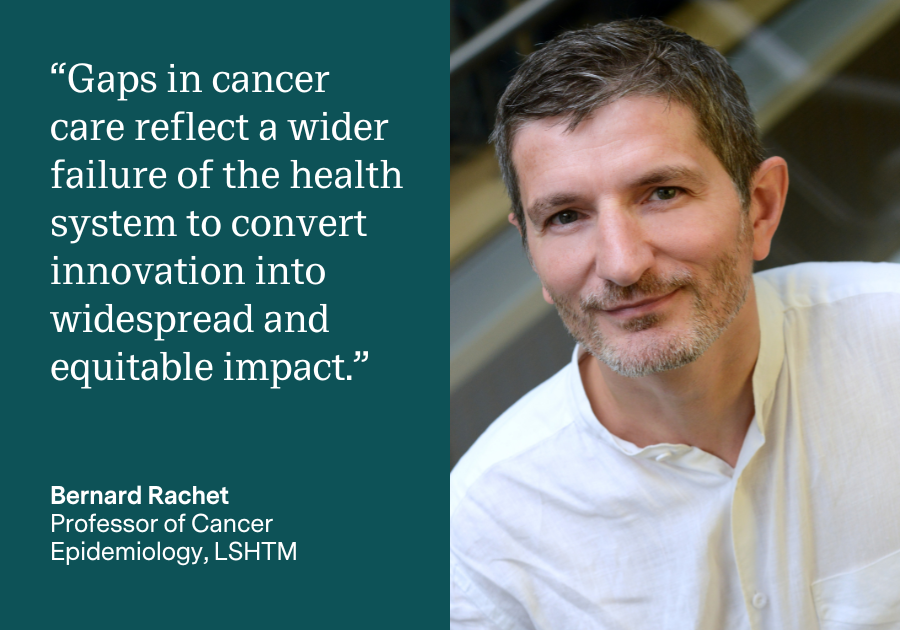
LSHTM experts say survival gaps and inequalities must be addressed to improve UK cancer outcomes
Cancer death rates across the UK have dropped by 22% since the 1970s, according to the latest Cancer in the UK Report 2025 published by Cancer Research UK.
The report provides the most up-to-date analysis of long-term trends in cancer incidence and mortality across the UK, and shows that while deaths from cancer have dropped, the number of diagnoses have increased by almost 50%.
Read more: Expert Comment: UK sees 20% drop in cancer mortality but diagnoses still rising
A new review by LSHTM researchers reveals that most interventions to reduce cancer inequalities focus narrowly on screening, missing broader systemic issues.
Researchers at the London School of Hygiene & Tropical Medicine (LSHTM) have conducted a comprehensive review of experimental interventions aimed at reducing inequalities along the cancer care pathway.
The review, published in the International Journal of Cancer, shows that most efforts remain concentrated on early detection, while significant disparities in diagnosis, treatment, and post-treatment care continue to go largely unaddressed.
This highlights the need for cancer interventions to address interacting factors to reduce inequalities for disadvantaged groups.
Dr Wende Safari, Research Fellow, LSHTM
On 25 May 2022, staff and doctoral students from the London School of Hygiene & Tropical Medicine, connected by cancer research, participated in Science Museum Lates – an after-hours opportunity for adults interested in science to engage with leading researchers on a given theme. Find out how they shared the importance of data and what they’re taking away from this experience.
Read more: Science Museum Lates: Could your data save a life?