Expert Comment: Risks of universal prostate cancer screening could outweigh benefits
2 December 2025 London School of Hygiene & Tropical Medicine London School of Hygiene & Tropical Medicine https://lshtm.ac.uk/themes/custom/lshtm/images/lshtm-logo-black.png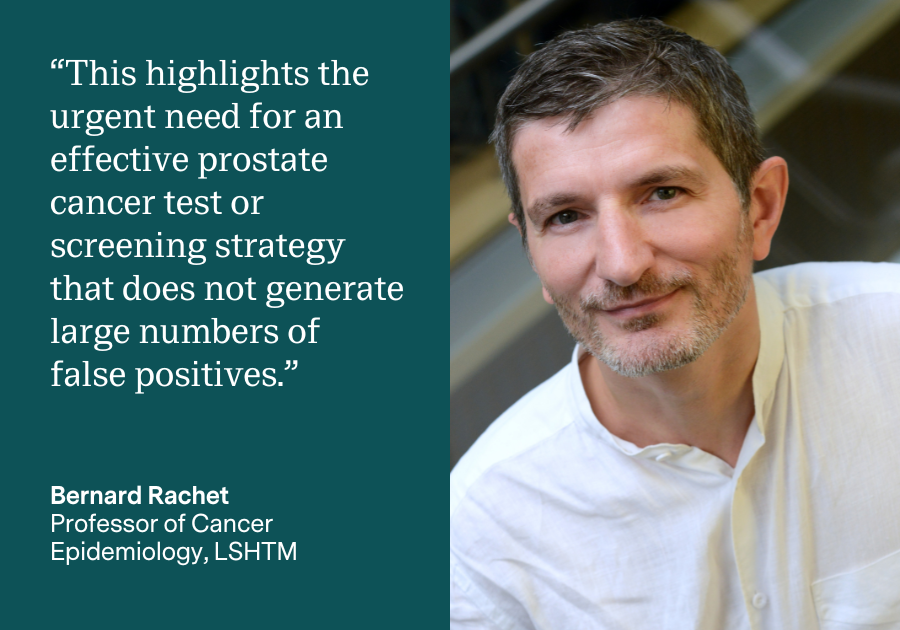
Recommendations published by a committee of leading health screening specialists say introducing a prostate cancer screening programme for all men across the UK would likely cause more harm than good.
The UK National Screening Committee (UK NSC) advises ministers across UK governments and National Health Service (NHS) about all aspects of health screening. They provide initial recommendations which are then considered over a longer consultation period.
Upon studying the available scientific evidence, they found that a prostate cancer screening programme for all men in the UK would not be justified, but that men with specific genetic mutations that lead to more aggressive tumours, called BRCA or BRCA2, should be eligible for targeted screening.
Prostate cancer is the most common male cancer in the UK and second most common cancer overall after breast cancer. It is known to affect one in eight men, with around 55,300 new diagnoses and 12,200 deaths across the UK every year.
Despite this, and compared with some other major cancers, the process of screening, diagnosing and deciding on treatment for prostate cancer is extremely complex.
Commenting on the report, experts from the Inequalities in Cancer Outcomes Network (ICON) at the London School of Hygiene & Tropical Medicine say the committee have rigorously reviewed the evidence, and balanced the benefits and risks of testing men more widely.
Screening would rely on a prostate-specific antigen (PSA) blood test, which has been shown to generate a high number of false positives, followed by scans and a biopsy. Overtreatment of prostate cancers that would not otherwise affect quality of life has also been found to cause lasting, impactful health issues for some men, including incontinence and impotence.
Assistant Professor Suping Ling said: “Based on the UK NSC’s report, for every 1,000 men invited to screening, up to two lives could be saved, but up to 20 men are likely to be over-diagnosed, and 12 of these may undergo unnecessary treatment over a 15-year follow-up period.
“Taken together with findings on its potential cost-ineffectiveness for the NHS, the evidence does not currently justify population-wide screening but it does highlight an urgent need for better data on at-risk groups including Black men.
“Developing more effective screening methods and improving access to support and diagnoses when symptoms present, may offer greater improvements in prostate cancer outcomes.”
Professor Bernard Rachet, who leads ICON at LSHTM, said: “The evidence is strongly against PSA-based screening in the general population, and in my view, the right decision has been made. This aligns with guidance in other countries, for example Denmark, where PSA testing is strongly discouraged among asymptomatic men.
“The situation is different for high-risk men, such as those with BRCA1 or BRCA2 mutations, and the committee’s decision reflects that.
“This highlights the urgent need for an effective prostate cancer test or screening strategy that does not generate large numbers of false positives, which place a considerable burden on NHS resources.”
Read more about the challenges and progress of prostate cancer research in the UK in ‘Prostate cancer screening in the UK – what you need to know’ by Professor Jan van der Meulen of LSHTM and the National Cancer Audit Collaborating Centre (NATCAN).
You can find out more about prostate cancer by visiting the Prostate Cancer UK website.
If you enjoyed this article and would like to build a career in global health, we offer a range of MSc programmes covering health and data, infectious and tropical diseases, population health, and public health and policy.
Available on campus or online, including flexible study that works around your work and home life, be part of a global community at the UK's no.1 public health university.