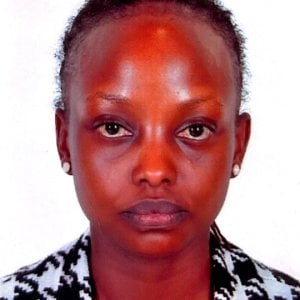
Dr Elizabeth Wangari Mwanika
Research Student - MPhil/PhD - Public Health & Policy
United Kingdom
I am a medical doctor and public health researcher with over twelve years of clinical experience as a general practitioner in paediatrics, working at the intersection of clinical medicine, epidemiology, and health equity in low- and middle-income countries. Grounded in frontline care for children and adolescents, my work adopts a life-course perspective on non-communicable diseases, with particular focus on cancers affecting women and girls, especially breast and cervical cancer in sub-Saharan Africa.
My clinical foundation informs my research on health systems strengthening and equitable cancer care. A central component of my work involves the development and implementation of multi-centre disease registries and digital surveillance systems designed to improve early detection, strengthen diagnostic and treatment pathways, and generate high-quality data for policy and planning.
Through both clinical practice and research, I am committed to addressing structural inequities in access to diagnosis, treatment, and long-term care. Across all my roles, I aim to translate robust clinical and population-level data into context-sensitive, sustainable models of care that improve outcomes for children, adolescents, and women.
Affiliations
Centres
Research
My research interests focus on understanding and reducing inequalities in cancer and non-communicable disease (NCD) outcomes in sub-Saharan Africa, with particular emphasis on breast and cervical cancer among women. I examine how socio-demographic, economic, and health system factors shape access to early detection, diagnostic timeliness, treatment pathways, and survival.
I am particularly interested in cancer surveillance and the role of disease registries in strengthening health systems. My work explores the development of multi-centre clinical registries, digital health integration, and data governance frameworks that enable the routine use of high-quality data for policy, planning, and resource allocation.
More broadly, I apply equity-oriented approaches to health systems research, including the use of structured inequality frameworks, to understand how evidence can inform universal health coverage reforms and sustainable models of care that reduce financial, geographic, and social barriers to treatment.
Selected Publications