
1. Flavia Zalwango
Social Scientist and Public Health Researcher, MRC/UVRI & LSHTM Uganda Research Unit
“Respect matters not only for people with disabilities but also for those working with them.”
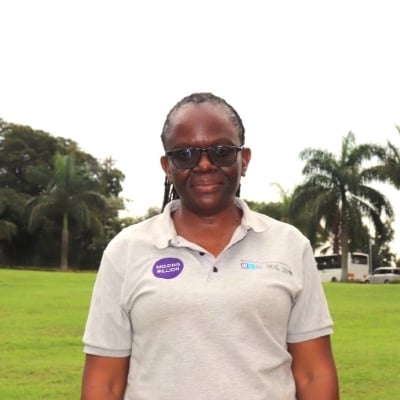
I was very excited when I was invited to this training because I feel this is important to my work in the Unit’s Vaccine Research. In the social sciences, I don’t think we have prioritised engaging people with disabilities enough. When recruiting participants at the community level, we’d often end up with just one or two participants with disabilities. I’ve always wondered why they don’t come through. When we later analysed our data, we realised that it’s because the interests of people with disabilities weren’t really represented.
Often, we say we’re inclusive without thinking through what that actually means. When we bring people with disabilities to the forefront and make their participation a continuous process and not a one-off, it helps us work together to co-create solutions to the challenges they face every day.
Professor Tom Shakespeare talked about respect, which is something we overlook. Respect matters not only for people with disabilities but also for those working with them. If we look at our work through that lens, we’ll be more successful in designing programmes and research that truly reflect respect: respect for individuals, cultures and lived experiences.
2. Geofrey Musanje
Pharmacist at Nakaseke General Hospital & Secretary for Persons with Disabilities at the National Organisation of Trade Unions, Uganda
“Positive stories are powerful.”
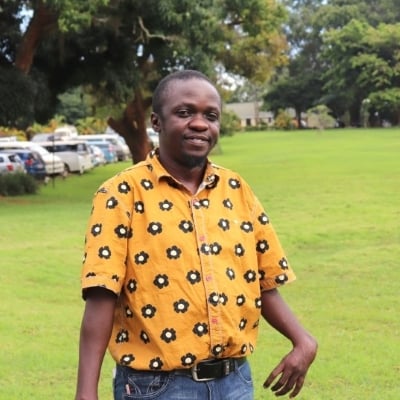
Being in one room with people with different disabilities has made me so happy. For instance, I had never used sign language before this training, and it was wonderful to see how learning to say a simple greeting could be so empowering.
The presentations by Professor Tom and the youth researchers reminded me that some of the issues we discuss have already been researched. For example, it was eye-opening to see how international frameworks, like the International Labour Organization (ILO) Recommendation 190 on harassment and violence, can be applied to protect people with disabilities from abuse. I was also encouraged to hear about positive trends in countries like Uganda, Kenya and Zambia. It’s good to know that progress is happening, even if it’s gradual.
Positive stories are powerful. They show that people with disabilities can have successful careers, families and leadership roles. I’ve always believed that success stories should be shared widely because they inspire others to act. I’ve seen this myself when I’m at work in the hospital, where people tell me that seeing me succeed as a person with a disability gives them hope for their children. Ultimately, the principle of “nothing about us without us” should guide everything we do.
3. Sylvia Ichumar
Education and Social Development Policy Adviser, Foreign Commonwealth Development Office (FCDO) at the British High Commission in Uganda
“It's been a chance to reflect and to ask whether I’ve been having the right conversations and paying attention to the details that make inclusion real.”
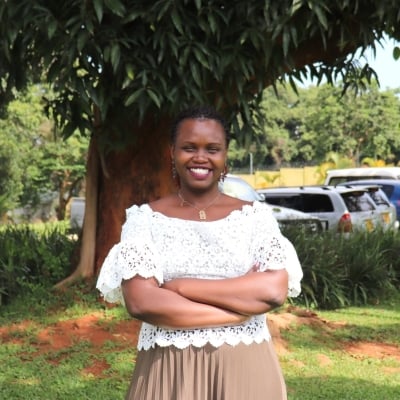
At the FCDO, a significant part of my role is to ensure disability inclusion is mainstreamed across our programmes. While I work on disability inclusion, I’m not a person with a disability. It always helps to be in spaces where you can listen to the voices of people with lived experience of disability. This training has improved my understanding of current needs in the disability space and the approaches we can take to do better. It has been a chance to reflect and to ask whether I’ve been having the right conversations and paying attention to the details that make inclusion real.
A priority for all our development programmes is to include a learning and research component on how to integrate disability inclusion and generate evidence that even smaller organisations can use. They may not have the capacity that larger organisations do, but if we lead in providing that evidence, it becomes easier for others to make decisions and implement inclusive approaches. Another idea that stood out for me in this regard was having disability champions within organisations – people whose job is to make sure inclusion doesn’t get lost.
4. Jacqueline Kobusingye
Lecturer in Public Health, Uganda Christian University
“We need to integrate inclusion into every aspect of [health] service delivery...”
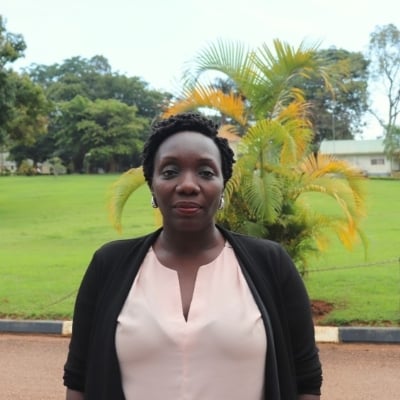
As a public health professional, this training has got me thinking about how integrating disability inclusion into all areas of public health could make a real impact. I realised that we haven't adopted inclusive practices in our work, such as how to make reasonable accommodations in research or healthcare. It struck me that while about 15 per cent of Ugandans are persons with disabilities, we haven’t done much to include everyone.
It made me think about how we design our programmes and research, and who gets left out, because I’ve seen this gap in my work. For example, if a mother comes into a health facility and no one can use sign language to communicate with her, that’s not respectful care. We need to integrate inclusion into every aspect of [health] service delivery, and this training has really helped me identify the practical steps to take to improve our programmes.
5. Robert Ssekubugu
HIV researcher at Rakai Health Sciences Program
“Unless we’re deliberate, our evidence will never be truly representative.”
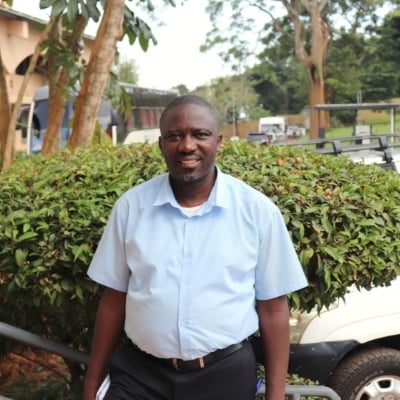
What stood out the most at this training was that persons with disabilities were involved at every level as organisers, facilitators and participants. They owned the workshop. That level of inclusion must have taken years to build, and it’s something everyone can aim for.
I’ve been working in HIV research for about fifteen years, but this was my first training on disability inclusion. We’ve had discussions about accessibility and site readiness, but not about inclusion in research participation. For a long time, we haven’t been intentional about addressing inclusion, despite encountering needs that required this kind of thinking. What I’ve realised is that if you’re not intentional about looking for disability, you may think it doesn’t exist in your study population.
Often, we’ve considered people who can’t see or speak as “incapable” of participating in research, so we stopped there. I’ve already discussed with my team to help us better understand who these people are and why they’re classified that way. Once we do that, we can begin developing mechanisms to include them in our studies. That’s a tangible step we can take soon.
People with disabilities won’t always come forward on their own. And unless we’re deliberate, our evidence will never be truly representative.
More information
The three-day event was supported by the Programme for Evidence to Inform Disability Action (PENDA) and the Wellcome-funded Disability Inclusive Youth Research Programme. Read more about the training and open day here.
If you enjoyed this article and would like to build a career in global health, we offer a range of MSc programmes covering health and data, infectious and tropical diseases, population health, and public health and policy.
Available on campus or online, including flexible study that works around your work and home life, be part of a global community at the UK's no.1 public health university.