

The Disability Research Group (DRG) at the MRC/UVRI & LSHTM Uganda Research Unit conducts research to improve the health, development and quality of life of people with disabilities in East Africa.
The DRG objectives are:
- conducting research on interventions to enhance the health, development, and quality of life of persons with disabilities in Africa;
- establishing an inclusive disability research centre in East Africa by empowering researchers with disabilities and fostering partnerships with research institutions and disability organizations across the continent;
- advocating for equity, diversity, and inclusion in research, education, and employment within the unit, particularly emphasizing disability inclusion.
Aligned with the UN Convention on the Rights of Persons with Disabilities and Sustainable Development Goals, our emphasis lies on ensuring equitable access to health, education, employment, and social participation, as well as involving persons with disabilities in research. Employing Afrocentric and participatory methodologies, we develop culturally appropriate and inclusive interventions, influence policy, and contribute to decolonizing disability research in East Africa.
The DRG is nested in the Non Communicable Diseases Theme at the the MRC/UVRI & LSHTM Uganda Research Unit and collaborates closely with the International Centre for Evidence in Disability (ICED) at LSHTM. We partner with academic institutions, disability organizations, service providers, civil society, and relevant government departments in the region. We are members of the African Network for Evidence-to-Action in Disability (AfriNEAD).
The Disability Research Group is led by Femke Bannink Mbazzi, Associate Professor, and post-doctoral scientists Andrew Ssemata and Rehema Namaganda. We have 20+ research staff members, a group of youth co-researchers with disabilities and PhD students.
The DRG works with Adult and Youth Advisory Groups of Persons with Disabilities, and partners with organizations of persons with disabilities, relevant government departments and non-governmental organizations in the region.
- Disability Inclusive Youth (DIY) research
Disability Inclusive Youth (DIY) research: an innovative and co-creative study to improve inclusion of children and youth with disabilities in health research in East Africa, funded by Wellcome, is a multi-country mixed methods study. The aim of this study is to explore barriers and facilitators to inclusion of children and youth with disabilities in health research, co-create solutions to make health research in East Africa disability inclusive, and create a disability knowledge and research centre to inform and support inclusive health research in the region.
DIY builds research capacity of youth with disabilities in Uganda, Kenya and Rwanda and partner universities to explore the barriers and facilitators to disability inclusive health research. The youth researchers interview leading health researchers, key health stakeholders, government and research organisations, health service providers and children and youth with disabilities and their caregivers. They will also use video and photo voice to document lived experiences of children and youth in research studies. In participatory workshops the youth co-create recommendations to make health research more inclusive of children and youth with disabilities.
- Disabled Youth Investigates
This AHRC funded qualitative capacity-building project aims to improve the participation and inclusion of youth with disabilities in research. Youth with disabilities and their peers are trained in research and mentored to conduct research at the MRC/UVRI & LSHTM Uganda Research Unit and Makerere University. This project is implemented in partnership with the Child Health and Development Centre at Makerere University, the National Council for Persons with Disabilities and the THRU Zimbabwe Health Unit’s Youth Research Academy.
The project adapted the Youth Research Academy manual from Zimbabwe through co-creative meetings with key stakeholders and youth advisors. Youth researchers received a 10-day qualitative research training on disability studies, data collection methods, data transcription, coding, analysis, GDPR, GCP, and fieldwork. To foster contextual learning and capacity building, youth participants were attached to existing research teams and project for a period of 3-months as interns. Each youth had a mentor and also received support from the research team. Each youth was paired with a peer to work together during the internship and later in the field research they conducted. Evaluations were conducted about the training sessions and the internships involving youth researchers. The youth researchers co-produced a participatory film on the capacity building project highlighting how to make inclusive research work relationships.
- The Mission Billion
In this NIHR funded project, led by Prof Hannah Kuper from ICED and Dr Femke Bannink Mbazzi from the Disability Research Group in Uganda, we test if community based participatory groups can improve access to health care for people with disabilities in Luuka district in Eastern Uganda. This study is implemented together with organisations of persons with disabilities, Makerere University and AMREF. It is part of the larger Missing Billion Initiative to improve health and quality of life of persons with disabilities globally.
- The Baby Ubuntu programme
The Baby Ubuntu programme of early care and support for young children with developmental disability and their families funded by Saving Brains, Grand Challenges Canada and the Tropical Health Education Trust, is an early childhood intervention which aims to improve health and well-being of children with developmental disabilities and their caregivers. The programme has developed training manuals for caregivers and health care workers.
- Evidence based inclusive education for children with disabilities in primary schools Uganda: Obuntu Bulamu, a peer-to-peer support intervention for inclusion
Funded by FWO, VLIR-UOS, Atlas Alliance and FIRAH, this randomized controlled trial aims to improve inclusion and quality of life of children with disabilities at home and in school through the Obuntu bulamu intervention. The co-created intervention emphasizes indigenous values of reciprocity and mutual responsibility and builds peer support networks amongst children, families and schools. The intervention was co-created with the study participants. See the training manuals and film narratives at the below links:
Implementing partners include parents groups for children with disabilities SHYNEA, Kyambogo University and Ghent University.
- NAVIGENDI: Navigating the challenges of violence, gender, and disability
This ESRC funded mixed method longitudinal study with young people with disabilities in Uganda closely follows a cohort of children with disabilities over a period of 3 year to create in-depth understanding of violence and violence prevention. This Disability Research Group implements this study in collaboration with Prof Jenny Parkes and Prof Colleen Howell from University College London, Raising Voices Uganda and the National Union for Persons with Disabilities of Uganda.
- Improving Kidney Saving - and Continence Management Services for Children with Spina Bifida in Uganda
This Child-Help International and Bo-Hjelt Foundation funded project aims to improve quality of life of children with spina bifida through development of an improved continence management intervention in Uganda. This study is implemented in partnership with CURE Hospital, Katalemwa Cheshire Home, Our Useful Rehabilitation Services, AVSI Foundation and House of Hope, and the Spina Bifida and Hydrocephalus Association of Uganda.
- Young Africa Works: Disability Inclusion Research Partnership
This research, with Prof Tom Shakespeare and Dr Sarah Polack from ICED as PI’s, aimed to explore the experiences of young people with disabilities and the individual, social and policy level factors influencing access to education and employment in Uganda and six other countries in Africa (Rwanda, Ethiopia, Senegal, Ghana, Kenya, Nigeria). The East African research hub for this project was led by Dr Femke Bannink Mbazzi and Dr Agnes Ssali from the DRG. Read the reports.
View the participatory film describing experiences of youth in Uganda and Ghana.
Publications
- 2026
- Menya A, Sentoogo Ssemata A, Silvesteri S, Smythe, T., Kuper, H., Bannink Mbazzi F. (2026) Health-seeking behaviours and pathways among people with disabilities in Eastern Uganda: A qualitative analysis. NIHR Open Res, 6:49 https://doi.org/10.3310/nihropenres.14204.
- Kasamba I, Mugisha J, Marks S, Mbabazi P, Bannink-Mbazzi F, Seeley J, Kuper H (2026) Association of disability and 12-year all-cause and cause-specific mortality: analyses from the Wellbeing of Older People cohort study in Uganda. BMJ Global Health 11 (1), e019802-e019802 https://doi.org/10.1136/bmjgh-2025-019802
- Atnafu, D. D., Mbazzi, F. B., Yitayal, M., & Kuper, H. (2026). Inequalities in health and healthcare utilization among people with disabilities in Ethiopia: evidence from the 2021/2022 Ethiopian Socio-Economic Panel Survey. Disability and Rehabilitation, 1–13. https://doi.org/10.1080/09638288.2026.2632936
- Marks S, Sentoogo Ssemata A, Namazzi G, Menya, A., Iyereget, M., Mugisa, M. Rotenberg, S., Carew, M.T., Chen, S., Bottomley, C., Smythe, T., Mactaggart, I. Bannink Mbazzi, F., Waiswa, P., Kuper, H (2026) Community-based participatory learning and action groups to improve healthcare access for people with disabilities in Luuka district, Uganda: Study protocol for a cluster-randomized controlled trial with economic and process evaluations. NIHR Open Res 2026, 6:48 https://doi.org/10.3310/nihropenres.14284.1
- 2025
- Bannink Mbazzi F., Musendo DJ, Kitema GF, Olenja JM and Ssemata AS (2025). Disability Inclusive Youth (DIY) Research: an innovative and co-creative study to improve inclusion of children and youth with disabilities in health research in East Africa: a mixed-method study protocol. Wellcome Open Research, 10:578, https://doi.org/10.12688/wellcomeopenres.24916.1
- Bannink Mbazzi, F., Namaganda, R., Nansamba J., Ssali, A., Sande, S., Kawesa, E.S., Ssemata, A.S., Muyinda, H. (2025) Youth and Mentor Experiences of a Disability Inclusive Youth Research Training and Mentorship Programme in Uganda. Scandinavian Journal of Disability Research 27(1): 578–592. https://doi.org/10.16993/sjdr.1307
- Atnafu DD, Kuper H, Bannink Mbazzi F. (2025) Left behind in primary healthcare: A qualitative exploration of healthcare experiences of people with disabilities in Ethiopia. PLOS Global Public Health 5(9): e0005147. https://doi.org/10.1371/journal.pgph.0005147
- Atnafu, D.D., Bannink Mbazzi, F., Mezgebu Y. & H. Kuper (2025). Does life expectancy vary by disability status in low and middle-encome countries?: a systematic review and meta-analysis Journal: African Journal of Disability, 14, a1514. https://doi.org/10.4102/ajod.v14i0.1514
- Smythe, T., Ssemata, A. S., Menya, A., Mbazzi, F. B., & Kuper, H. (2025). Disability training for healthcare workers in Uganda: qualitative findings from the pilot test. BMC medical education, 25(1), 1-9. https://doi.org/10.1186/s12909-025-07330-4
- Ssemata, A., Smythe, T., Sande, S., Abdmagidu, M., Hameed, S., Waiswa, P., Bannink Mbazzi, F. & H. Kuper (2025) Engaging Community Groups to Enhance Healthcare Access for Persons with Disabilities in Rural Uganda: A Qualitative Exploration. PLOS Global Public Health 5(3): e0003140. https://doi.org/10.1371/journal.pgph.0003140.
- Sande, S., DIY youth researchers team, Kawesa, E.S., Muyinda, H. Bannink Mbazzi, F. (2025) ‘My Sister Is My Everything’: A qualitative explorative study of social participation by youth with disabilities in Wakiso District, Uganda. African Journal of Social Work 15 (5) 10.4314/ajsw.v15i5.1
- 2024
- Smythe, T., Ssemata, A. S., Slivesteri, S., Bannink Mbazzi, F., & Kuper, H. (2024). Co-development of a training programme on disability for healthcare workers in Uganda. BMC health services research, 24(1), 418. https://doi.org/10.1186/s12913-024-10918-z
- Bannink Mbazzi, F., Kawesa, E., Nalugya, R., & Seeley, J. (2024). The ‘Obuntu bulamu’ visual narratives: participatory research and film making about inclusion of children with disabilities in Uganda. Journal of Participatory Research Methods, in press. https://doi.org/10.35844/001c.123887
- Nimusiima, C., Kawesa, E. S., Seeley, J. & Bannink Mbazzi, F. (2024). Adaptation and validation of the child and family follow-up survey (CFFS) tool to measure participation of children with disabilities in Uganda. African Journal of Social Work, 20-30 https://dx.doi.org/10.4314/ajsw.v14i1.3
- Tumukunde, V., Medvedev, M. M., Tann, C. J., Mambule, I., Pitt, C., Opondo, C., et al (2024) OMWaNA Collaborative Authorship Group. (2024). Effectiveness of kangaroo mother care before clinical stabilisation versus standard care among neonates at five hospitals in Uganda (OMWaNA): a parallel-group, individually randomised controlled trial and economic evaluation.. Lancet (London, England), S0140-6736(24)00064. doi:10.1016/S0140-6736(24)00064-3
- Smythe, T., Scherer, N., Nanyunja, C.,Tann, C. J., & Olusanya, B. O. (2024). Strategies for addressing the needs of children with or at risk of developmental disabilities in early childhood by 2030: a systematic umbrella review.. BMC medicine, 22(1), 51. doi:10.1186/s12916-024-03265-7
- Mactaggart, I., Ssemata, A. S., Menya, A., Smythe, T., Rotenberg, S., Marks, S., Bannink Mbazzi, F., & Kuper, H. (2024). Adapting and pilot testing a tool to assess the accessibility of primary health facilities for people with disabilities in Luuka District, Uganda. International journal for equity in health, 23(1), 237. https://doi.org/10.1186/s12939-024-02314-0
- Mugisha, J.O., Makanga, R., Kimono, B. W., & Kasamba, I. (2024). Leaving no one behind: Disability and HIV prevention, knowledge among adults in a population cohort in Uganda. African Journal of Disability, 13, 8. https://doi.org/10.4102/ajod.v13i0.1497
- Bannink Mbazzi, F., Hameed, S., Ganle, J. K., Shakespeare, T., & S. Polack (2024). Participatory research with youth with disabilities: Experiences from sub-Saharan Africa. African Journal of Disability, 13, 1491. https://doi.org/10.4102/ajod.v13i0.1491
- Ssemata, A.S., Smythe, T., Sande S., Menya A., Hameed S., Waiswa P., Bannink Mbazzi, F. & H. Kuper (2024). Exploring the barriers to healthcare access among persons with disabilities; a qualitative study in rural Luuka district, Uganda. BMJ Open, 2024-086194.R2. http://dx.doi.org/10.1136/bmjopen-2024-086194
- Nono, D. , Ssemata A.S., Bannink Mbazzi, F., & J. Seeley (2024) Facilitators and Barriers to Usage and Practice of Clean Catheterisation in Children with Spina Bifida. African Journal of Disability, 13. https://doi.org/10.4102/ajod.v13i0.1473
- Ssemata, A.S., Smythe,T., Sande S., Menya A., Hameed S., Waiswa P., Bannink Mbazzi. F. and H. Kuper (2024). Suggested solutions to barriers in accessing healthcare by persons with disability in Uganda: a qualitative study. BMC s12913-024-11448-4.pdf
- Kawesa, E.S., Nimusiima, C., Seeley, J. & Bannink Mbazzi, F. (2024). Selection of a classroom observation tool for disability inclusion in Uganda. African Journal of Disability, 13(0), a1485. https://doi.org/10.4102/ajod.v13i0.1485.
- Ssemata, A.S., Smythe, T., Sande S., Menya, A., Shaffa Hameed, S., Waiswa, P., Bannink Mbazzi, F., Kuper, H. (2024). Suggested solutions to access to healthcare among persons with disability in Uganda: a qualitative study. BMC Health Services Research.
- 2023
- Bannink Mbazzi, F., Kawesa, E., Nimusiima, C., Nalugya, R., van Hove, G., & Seeley, J. (2023). ‘We Have to Try and Teach Them from Home’ – Parents’ Perspectives on Education of Children with Disabilities During the First Year of the COVID-19 Outbreak in Uganda. International Journal of Disability Development and Education, 1-18. 10.1080/1034912x.2023.2279788
- Kuper, H., Ssemata, A. S., Smythe, T., Drazdzewska, J., Waiswa, P., Kagurusi, P., Rosato, M., & Bannink Mbazzi, F. (2023). Is it feasible to implement a community-based participatory group programme to address issues of access to healthcare for people with disabilities in Luuka district Uganda? A study protocol for a mixed-methods pilot study. BMJ open, 13(9), e074217. https://doi.org/10.1136/bmjopen-2023-074217
- Nalugya, R., Nambejja, H., Nimusiima, C., Kawesa, E. S., van Hove, G., Seeley, J., & Bannink Mbazzi, F. (2023). Obuntu bulamu: Parental peer-to-peer support for inclusion of children with disabilities in Central Uganda. African Journal of Disability, 12. doi:10.4102/ajod.v12i0.948.
- Bannink Mbazzi, F., King, R. & J. Seeley (2023) ‘Dimensions of Vulnerability. Case 8.3: Studying the Impact of COVID-19 on Vulnerable Populations’. Page 165/166. Research Ethics in Epidemics and Pandemics: A Casebook. Eds. Susan Bull & Michael Parker. Oxford: Wellcome Centre for Ethics. https://link.springer.com/book/10.1007/978-3-031-41804-4
- Bannink Mbazzi, F. (2023). Translating the Ubuntu philosophy into practical disability inclusive interventions. In Ubuntu Philosophy and Disabilities in Sub-Saharan Africa (pp. 148-162). Routledge. doi:10.4324/9781003343684-9
- Sturrock, S., Sadoo, S., Nanyunja, C., & Le Doare, K. (2023). Improving the Treatment of Neonatal Sepsis in Resource-Limited Settings: Gaps and Recommendations.. Research and reports in tropical medicine, 14, 121-134. doi:10.2147/RRTM.S410785
- Medvedev MM, Tumukunde V, Kirabo-Nagemi C, Greco G, Mambule I, Katumba K, et al. Process and costs for readiness to safely implement immediate kangaroo mother care: a mixed methods evaluation from the OMWaNA trial at five hospitals in Uganda. BMC health services research. 2023;23(1):613
- 2022
- Bannink Mbazzi, F. & Kawesa, E. (2022) ‘Impairments of the brain’ – Global South perspectives on childhood neurodevelopmental disabilities. Special issue on Ethics & Neurodevelopmental Disorders in Developmental Medicine and Child Neurology, https://onlinelibrary.wiley.com/doi/full/10.1111/dmcn.15253.
- Nanyunja, C., Sadoo, S., Kohli-Lynch, M., Nalugya, R., Nyonyintono, J., Muhumuza, A., et al (2022). Early care and support for young children with developmental disabilities and their caregivers in Uganda: The Baby Ubuntu feasibility trial.. Front Pediatr, 10, 981976. doi: 10.3389/fped.2022.981976
- Nanyunja, C., Sadoo, S., Mambule, I., Mathieson, S. R., Nyirenda, M., Webb, E. L., et al. (2022). Protocol for the Birth Asphyxia in African Newborns (Baby BRAiN) Study: a Neonatal Encephalopathy Feasibility Cohort Study.. Gates open research, 6, 10. doi:10.12688/gatesopenres.13557.1
- 2021
- Tann, C. J., Kohli-Lynch, M., Nalugya, R., Sadoo, S., Martin, K., Lassman, R., et al. (2021). Surviving and thriving: early intervention for neonatal survivors with developmental disability in Uganda. Infants and Young Children, 34(1), 17. http://doi.org/10.1097/IYC.0000000000000182.
- Bannink Mbazzi, F., Nimusiima, C., Nalugya, R., Kawesa, E., King, R., Van Hove, G., Seeley, J. (2021) The impact of COVID-19 measures on children with disabilities and their families in Uganda. Disability & Society, online, http://doi.org/10.1080/09687599.2020.1867075.
- Tann, C. J., M. Kohli-Lynch, R. Nalugya, S. Sadoo, K. Martin, R. Lassman, C. Nanyunja, M. Musoke, M. Sewagaba, M. Nampijja, J. Seeley and E Webb. (2021). "Surviving and Thriving: Early Intervention for Neonatal Survivors With Developmental Disability in Uganda." Infants and Young Children 34(1): 17-32. http://doi.org/10.1097/IYC.0000000000000182.
- Bannink Mbazzi, F., Nimusiima, C., Akellot, D., Kawesa, E., Abaasa, A., Hodges, A., Seeley, J., Vervoort, T. (2021) Use of Virtual Reality Distraction to Reduce Child Pain and Fear during Painful Medical Procedures in Children with Physical Disabilities in Uganda: A feasibility study, Pain Medicine, pnab206, https://doi.org/10.1093/pm/pnab206.
- 2020
- Bannink Mbazzi, F., Nalugya, R. Kawesa, E., Nambejja, H., Nizeyimana, P., Ojok, P., van Hove, G., and Seeley, J. (2020) ‘Obuntu bulamu’ – development of an indigenous model for disability inclusion in Uganda. Scandinavian Journal of Disability Research, 22(1), pp. 403–416. https://doi.org/10.16993/sjdr.697
- Bannink Mbazzi, F., Nalugya, R., van Hove, G. (2020) ‘They give him a chance’- Parents’ perspectives on disability and inclusive primary education in Uganda. International Journal of Disability, Development and Education, 10.1080/1034912x.2019.1593326
- Tann, C. J., Kohli-Lynch, M., Nalugya, R., Sadoo, S., Martin, K., Lassman, R. et al. (2020). Surviving and Thriving: Early Intervention for Neonatal Survivors With Developmental Disability in Uganda.. Infants & Young Children, 34(1), 17-32. doi:10.1097/IYC.0000000000000182
- Medvedev MM, Tumukunde V, Mambule I, Tann CJ, Waiswa P, Canter RR, et al. Operationalising kangaroo Mother care before stabilisation amongst low birth Weight Neonates in Africa (OMWaNA): protocol for a randomised controlled trial to examine mortality impact in Uganda. Trials. 2020;21:1-19.
Presentations & Reports
- Disability and Health Research Training Factsheet, November 2025
- DIY Study dissemination, 4 June 2024
- The Wake-Up Call with King of Radio Wesley ft Naume Adong and Sande Silvester from MRC, 4 June 2024
- Sande Slivesteri Presentation at the World Disability and Rehabilitation Conference 2023
- Obuntu Bulamu: Inclusive Education
- Obuntu Bulamu Libende Boyz
Social
- Twitter: @obuntu_bulamu
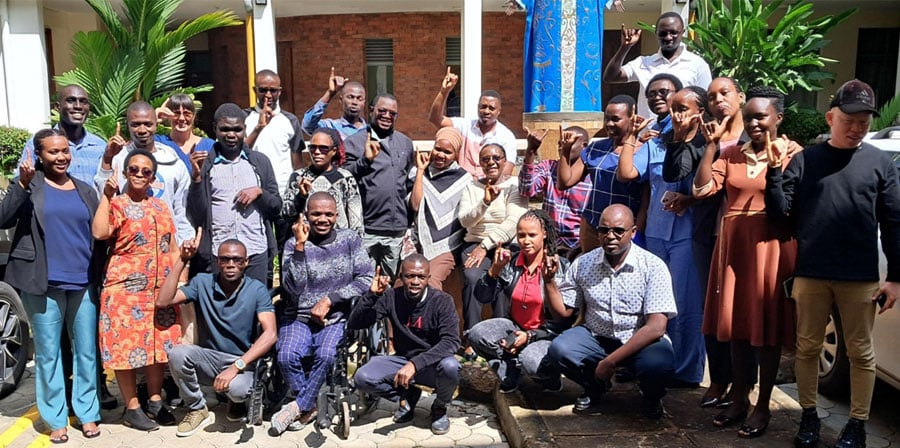
From 18–22 May 2026, youth researchers with disabilities from Kenya, Rwanda, and Uganda participating in the Wellcome-funded Disability Inclusive Youth Research Programme came together for an energising week of collaboration, reflection, and learning.
During the workshop, the team reflected on preliminary research findings and strengthened their skills in participatory research methods, including photovoice. The young researchers revisited their experiences of engaging in disability research, not as participants, but as active contributors and leaders in the research process.
They shared the challenges they encountered, explored the strategies they used to navigate these, and celebrated the progress and key milestones achieved throughout the programme. The gathering provided an important opportunity to learn from one another, deepen connections, and reaffirm our commitment to advancing disability-inclusive research.
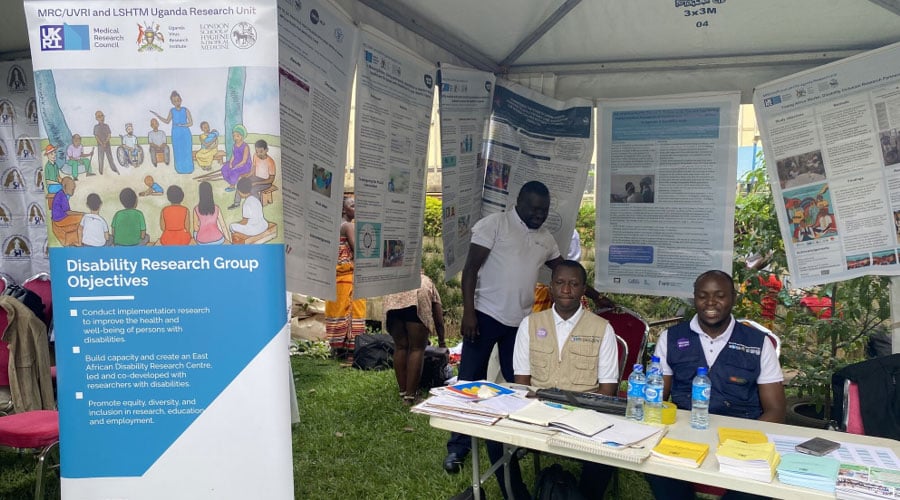
On May 22, 2026, the Disability Research Group was honoured to join the Ugandan Ministry of Health and other stakeholders at the launch of the National Rehabilitation and Assistive Technology Strategic Plan (2025–2030). The strategy marks an important step towards improving access to rehabilitation services and assistive technologies for all in Uganda. We look forward to the implementation of the strategy and to continued collaboration with government, researchers, Organizations of Persons with Disabilities, and other partners to advance inclusive health in Uganda.
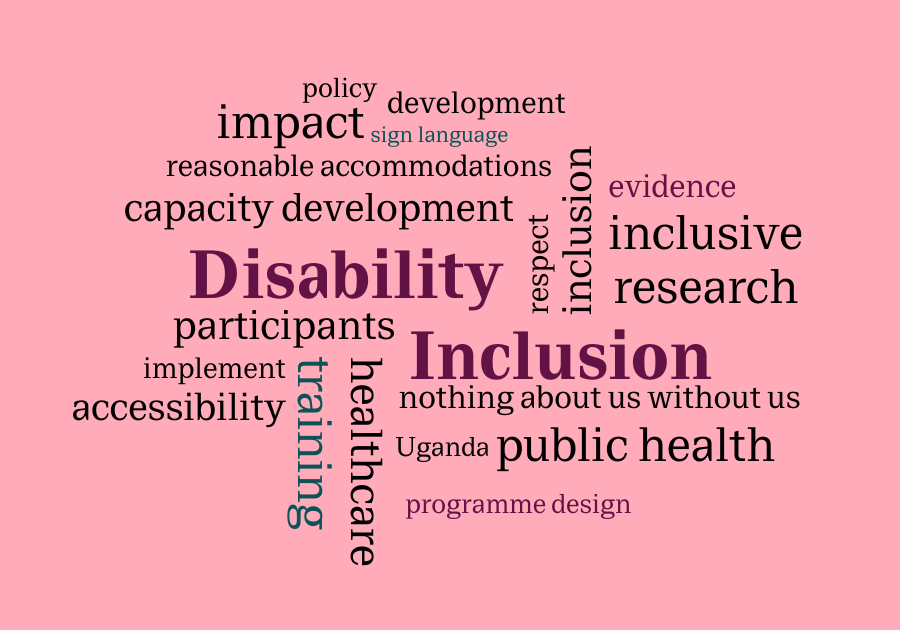
From 5-6 November 2025, the Disability Research Group at the MRC/UVRI & LSHTM Uganda Research Unit hosted a training on disability inclusion in health research.
Participants came from a range of professional backgrounds spanning research, healthcare, policy and development. In their own words, they shared reflections on what they learned and how it connects to their work.
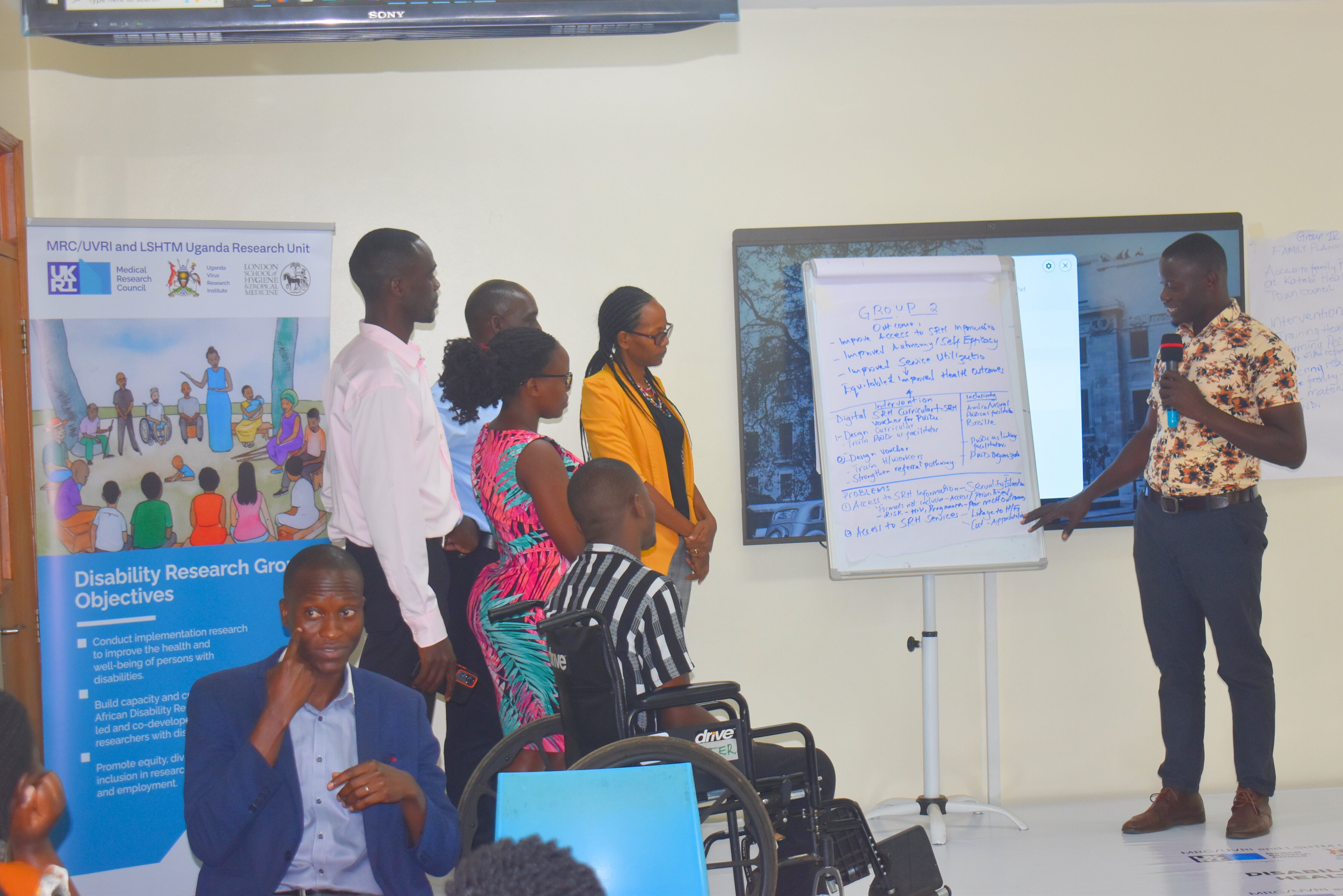
From 5-7 November 2025, the Disability Research Group (DRG) at the MRC/UVRI & LSHTM Uganda Research Unit and the International Centre for Evidence in Disability (ICED) at LSHTM hosted a three-day event in Entebbe to strengthen disability inclusion in health research and policy.
The event brought together participants from across sectors including government, academia, and organisations of persons with disabilities to build practical skills for inclusion throughout the research process.
The first two days focused on hands-on training, where participants explored how to design and conduct studies that meaningfully engage persons with disabilities, ensure accessibility in research environments, and promote ethical practices and inclusion in research teams. Sessions included group work, case studies, and reflections from persons with lived experience of disability.
Participants also discussed inclusive policy and practice delving into topics such as ethics and consent. The training formed part of a broader shift towards equitable health research systems in which persons with disabilities are active partners in generating and applying evidence.
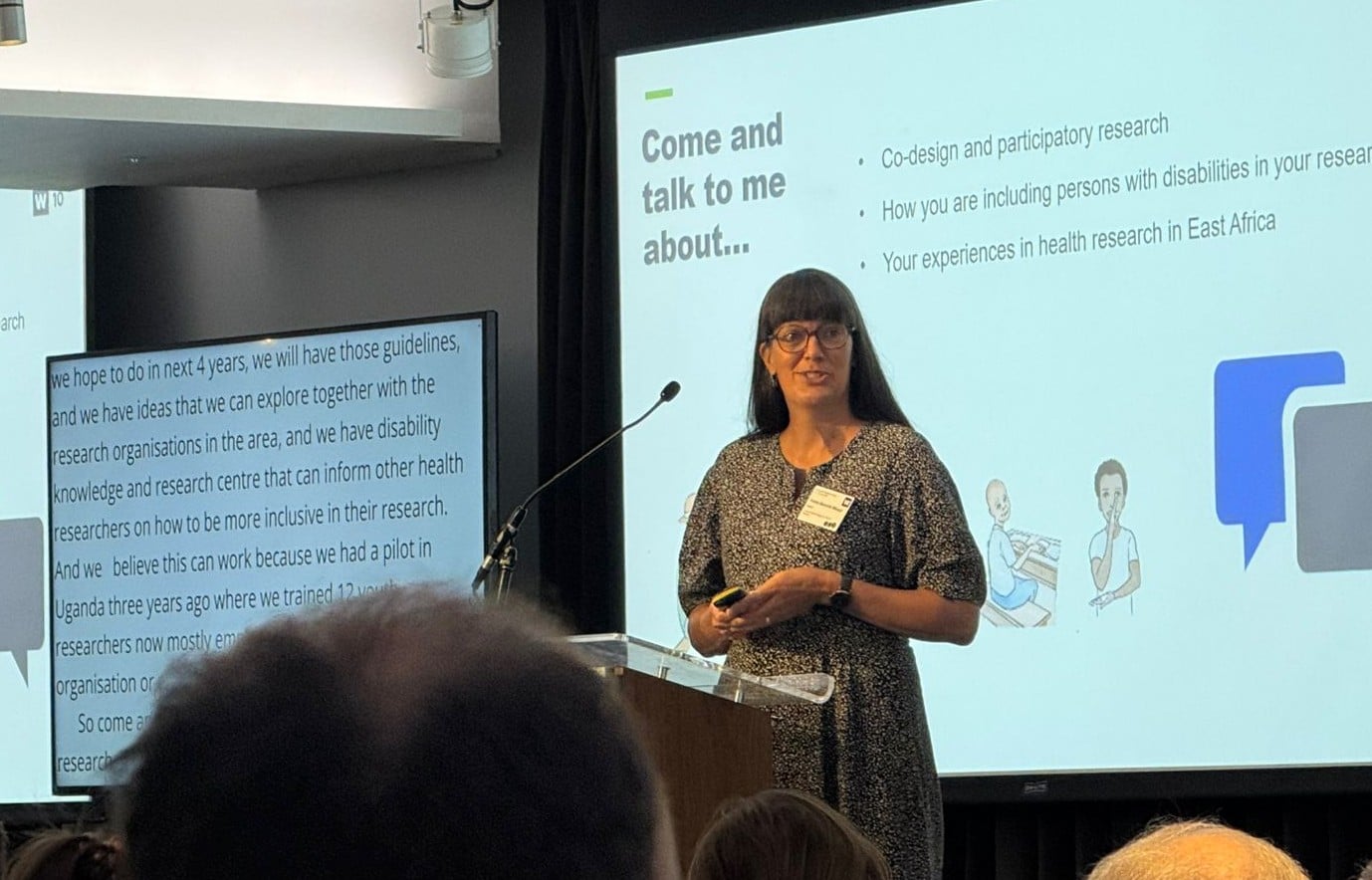
Researcher Meetings are a forum for the Wellcome-funded Discovery Research Community to connect and learn from each other. At the most recent meeting (22-23 July 2025), Dr. Femke Bannink Mbazzi, Head of the Disability Research Group, presented the work of the Disability Inclusive Youth (DIY) project.
DIY is a five-year, multi-country study that aims to improve the inclusion of children and youth with disabilities in health research in East Africa. The innovative and co-creative programme is building research capacity of youth with disabilities in Uganda, Kenya, Rwanda and partner universities to explore the barriers and facilitators to disability inclusive health research.
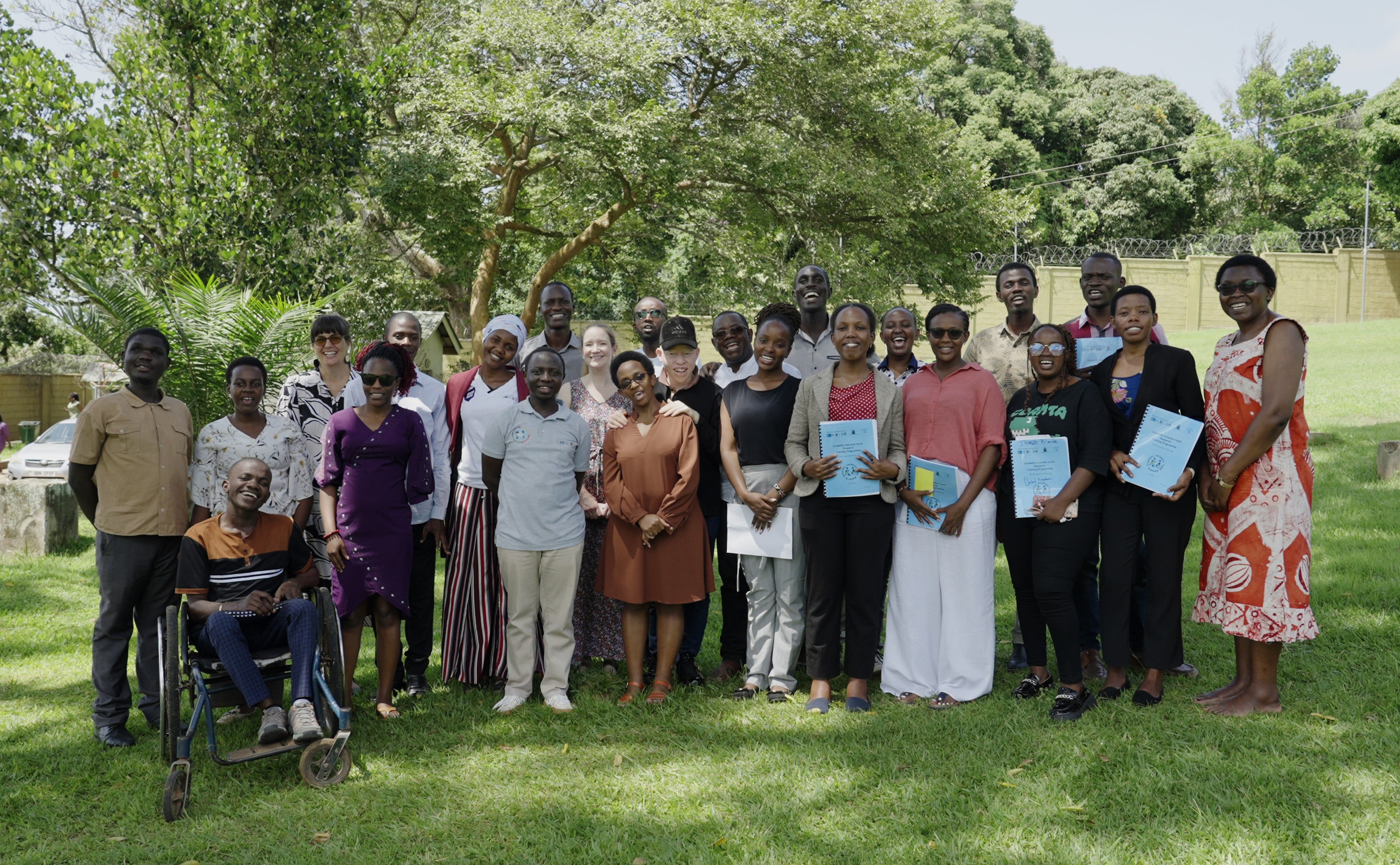
The Disability Inclusive Youth (DIY) research study held its regional inception meeting and youth researchers training from 9-13 June 2025, to launch a bold initiative that is not only strengthening research skills among youth with disabilities, but also redefining what inclusive research looks like in East Africa. Led by Dr. Femke Bannink Mbazzi, Head of the Unit’s Disability Research Group, and supported by expert facilitators from Uganda, Rwanda, and Kenya, the training brought together twelve youth researchers with disabilities for an intensive, interactive skills-building experience.
Participants were equipped with core competencies in research ethics, data collection, analysis, and community engagement, among others, preparing them to participate in studies exploring how to make health research more inclusive across the region. The DIY study, funded by Wellcome, builds on a successful pilot in Uganda (now extending to Kenya and Rwanda), to understand barriers and enablers to disability-inclusive health research. Ultimately, it aims to co-create practical guidelines and establish a regional Disability Knowledge and Research Centre, the first of its kind in East Africa.
The Missing Billion research team and partner AMREF in Health established 50 Participatory Learning and Action on Disability (PLA-D) groups, trained 5 healthcare workers and 5 persons with disabilities to deliver trainings to 250 health care workers, and is conducting 36 health facility audits with the Disability Accessibility Checklist (DAC). These audits will identify key challenges and opportunities for improving healthcare accessibility, ensuring that persons with disabilities receive equitable and inclusive healthcare services. The trainings and groups aim to identify challenges, raise awareness and find solutions to improve health care access for persons with disabilities.
Read more about this research.
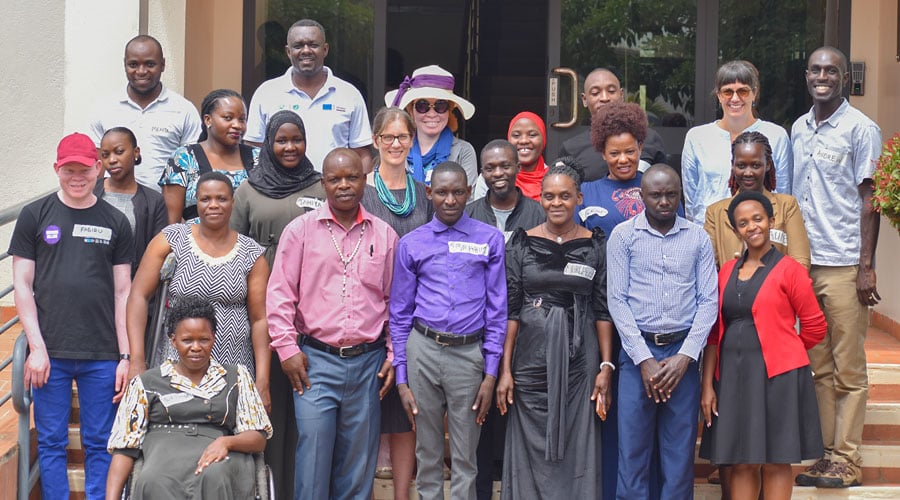
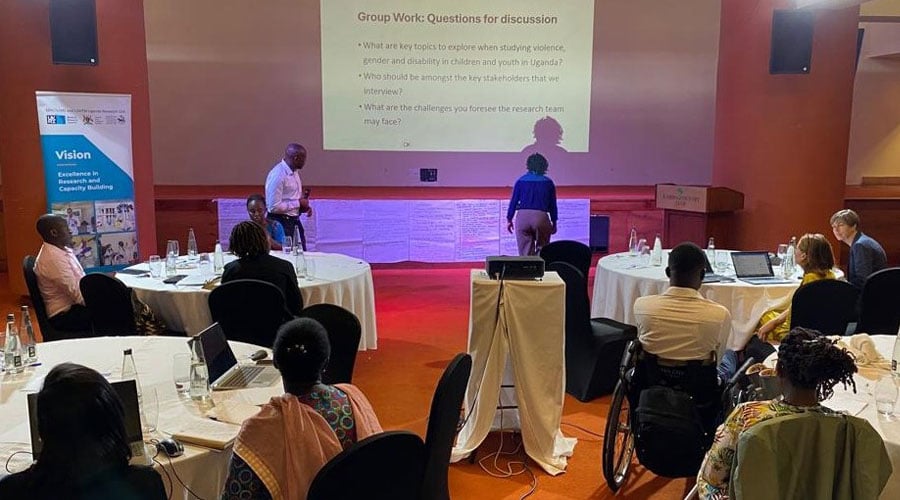
Building on insights from the COVAC and Obuntu Bulamu studies, the ESRC funded NAVIGENDI study explores the complex. In October 2024, the NAVIGENDI team held a stakeholder engagement meeting to co-design study tools, including the ‘road’ or ‘river of life’ method, which maps young people's life trajectories and experiences of violence and resilience.
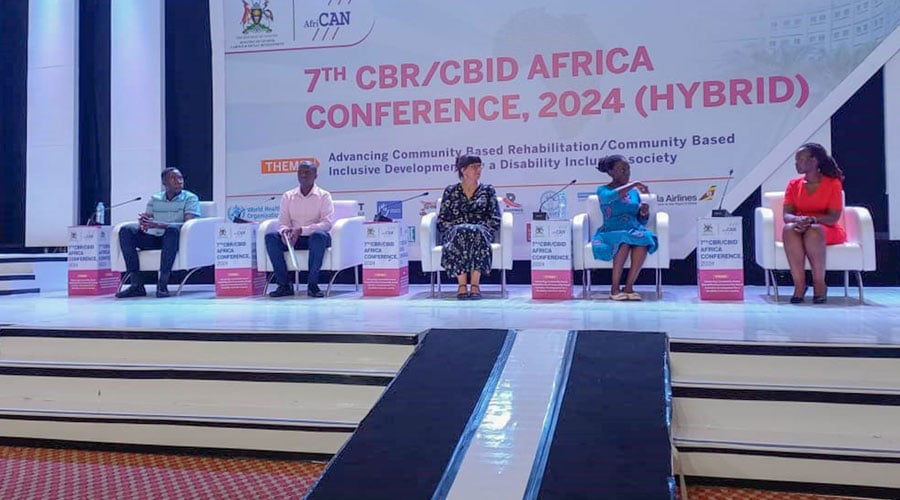
In September 2024 Disability Research Group researchers presented a key note and 6 papers at the 7th CBR/CBID Africa Conference on their experiences in capacity building and participatory research in East Africa. Their contributions highlight the importance of inclusive development and research.
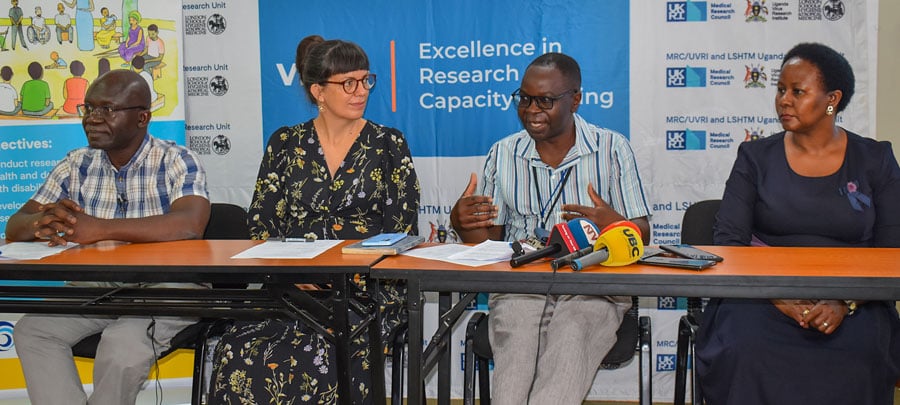
The Disabled Youth Investigates (DIY) Study leads together with the youth researchers held a press conference at the MRC/UVRI & LSHTM Uganda Research Unit in Entebbe to share research findings. Several media houses including NTV, UBC TV, NBS, CBS Radio, Monitor, New Vision and socio-media influencers attended the press conference.
Links to media coverage:
- Abavubuka abaliiko obulemu babanguddwa mu mirimu egyenjawulo
- Breaking barriers in research
- Youths with disabilities empowered to conduct research
- Ugandan Youth with Disabilities Lead Inclusive Research Initiative
- The peer to peer support and mentoring model effectively trained youth with disabilities in research skills, increased their employment prospects and raised awareness about the value of inclusive research
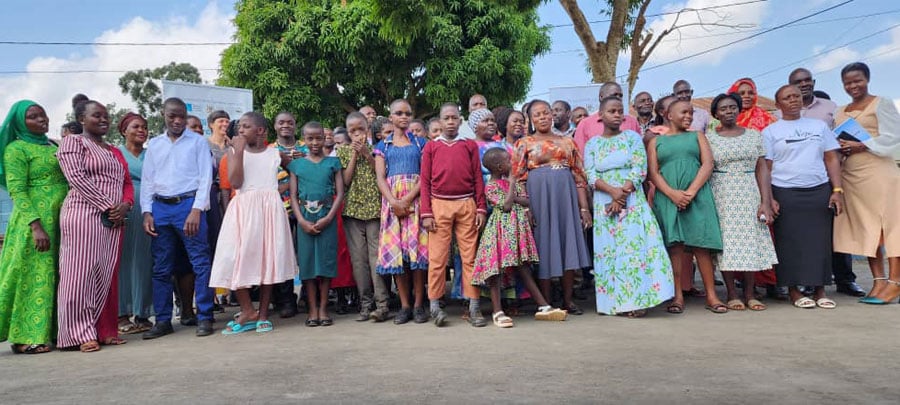
The Obuntu Bulamu study shared research findings with participants and stakeholders in Masaka district on June 8 and Wakiso district on June 15. The intervention improved classroom inclusion of children with disabilities and their peers in primary schools in Central Uganda.
Our youth researchers share the Disabled Youth Investigates study results and raise awareness on the importance of including youth with disabilities in research at Rest TV.
Watch the video.
Our DIY Youth Researchers & FriendsF4R hosted a community workshop themed "challenging outdated ideologies on disability & special educational needs."
Political leaders, researchers, and youth with disabilities from North Charleston Police and Show Abilities Uganda attended.
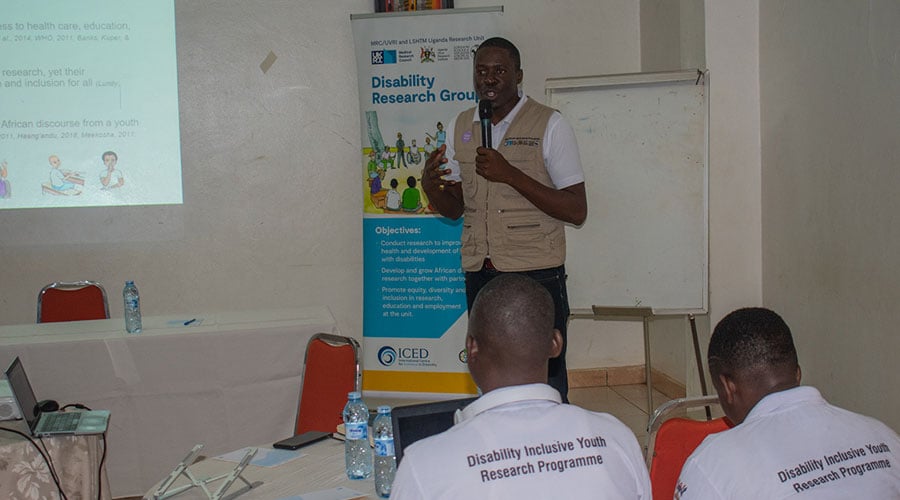
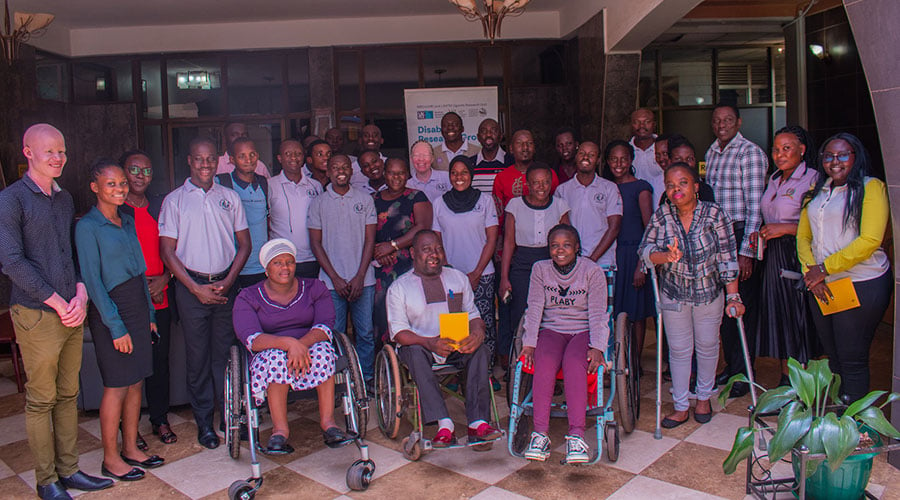
Our Disability Inclusive Youth (DIY) researchers are presenting about our co-collaborative research at the FriendsF4R (Fighting 4 Rights) global event in UK today.
The Disabled Youth Investigates project is a qualitative action research study focused on capacity building for youth with disabilities in research.
From June 19th – 23rd, Dr Mandi Tembo joined the MRC/UVRI and LSHTM Uganda Research Unit to facilitate the DIsability Inclusive Youth (DIY) Research Programme 2023.
Find out more about the programme.
The Obuntu Bulamu research project aims to improve participation, inclusion, and quality of life of children with disabilities. The project is funded by the Norwegian Agency for Development Cooperation (Norad), Atlas Alliance, International Foundation of Applied Disability Research (FIRAH) and Child-Help.
Partners
- International Centre for Evidence in Disability (ICED) at LSHTM
- Child Health and Development Centre, Makerere University
- African Network for Evidence-to-Action in Disability (AfriNEAD)
- National Council for Persons with Disabilities, Uganda
- The Missing Billion Initiative
- Kyambogo University, Uganda
- Ghent University, Belgium
- Stellenbosch University
- The Health Research Unit Zim (THRU ZIM)
- National Union of Disabled Persons of Uganda (NUDIPU)
- The Uganda National Action on Physical Disability (UNAPD)
- Uganda National Association of the Deaf (UNAD)
- Light for the World, Uganda
- Amref Health Africa
- CoRSU Rehabilitation Hospital
- Kyanninga Child Development Centre
- National Association of Cerebral Palsy
- Uganda National Association of the Blind (UNAB)
- SHYNEA-UGANDA
- Spina Bifida and Hydrocephalus Association of Uganda
- The Uganda Association of Down Syndrome
Funders
- National Institute for Health and Care Research (NIHR)
- Child-Help International
- Bo-Hjelt Foundation
- UKRI Economic and Social Research Council (ESRC)
- NORAD / Atlas Alliance
- International Foundation of Applied Disability Research (FIRAH)
- Saving Brains
- Grand Challenges Canada
- The Tropical Health Education Trust
- UKRI Arts and Humanities Research Council
- Mastercard Foundation
- The Seneca Trust
- Cerebral Palsy Alliance
- Wellcome