What is the Research Consortium for School Health and Nutrition?
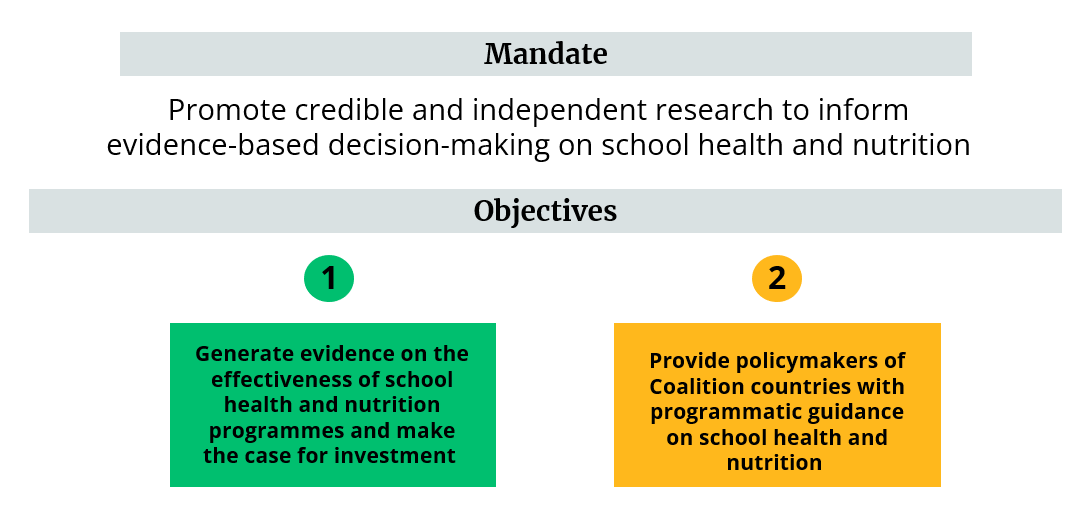
The Research Consortium for School Health and Nutrition is the research initiative of the School Meals Coalition (SMC). Established at the request of SMC member states, we provide independent, actionable evidence to help governments design effective school health and nutrition programmes. Our work is guided by a 10-year research strategy aligned with the SMC's vision of ensuring every child has access to a nutritious meal in school by 2030.
How we work
With a small Secretariat based at the London School of Hygiene & Tropical Medicine, the Research Consortium operates as a global network-of-networks, coordinating research through seven Communities of Practice (CoPs) made up of researchers based at leading academic institutions all over the world. Each Community of Practice focuses on a different research priority as identified by the School Meals Coalition member states. Read more about our Communities of Practice.
Meet the team

Donald Bundy
Director | Professor of Epidemiology and Development

Linda Schultz
Secretariat Lead

Gilbert Miki
Research Fellow

Silvia Pastorino
Research Fellow

Patricia Eustachio Colombo
Research Fellow


Kate Morris
Communications Lead

Jasmine Catmull
Communications Officer

Georgia Crowley
Project Coordinator

Eilidh Naismith
Philanthropy Lead
Global Academy
As a global Research Consortium, collaboration is at the heart of what we do. We invite all those currently working or conducting research in the field of school health and nutrition, or with an interest in the subject, to join our Global Academy of 1,500+ professionals in more than 130 countries, working across 700 organizations. Our Global Academy members receive regular updates from across our Communities of Practice containing emerging research findings, upcoming events, and opportunities to engage with and contribute to our work.
National research hubs
To respond to the specific research needs of the 100+ member states of the School Meals Coalition, the Research Consortium engages in-country experts to harness the unique expertise of those most familiar with the context in which the research is being conducted. Through these national research hubs, the Consortium is able to provide useful, contextually relevant, and appropriate guidance to the policymakers and parliamentarians of the School Meals Coalition.
Equitable partnerships
The success of the Consortium relies on equitable research partnerships with a broad range of public, private, and multilateral actors who share a commitment to improving child development, education and wellbeing. The Consortium, together with its Communities of Practice, follows equality, diversity and inclusion (EDI) principles by engaging partner institutions in discussions with prospective donors, leveraging virtual platforms for collaborations across geographies and disciplines, and recognizing contributions of all contributors in its publications.
Establishing the Research Consortium: Timeline
- April 2020 - The impact of COVID-19 on school-aged children
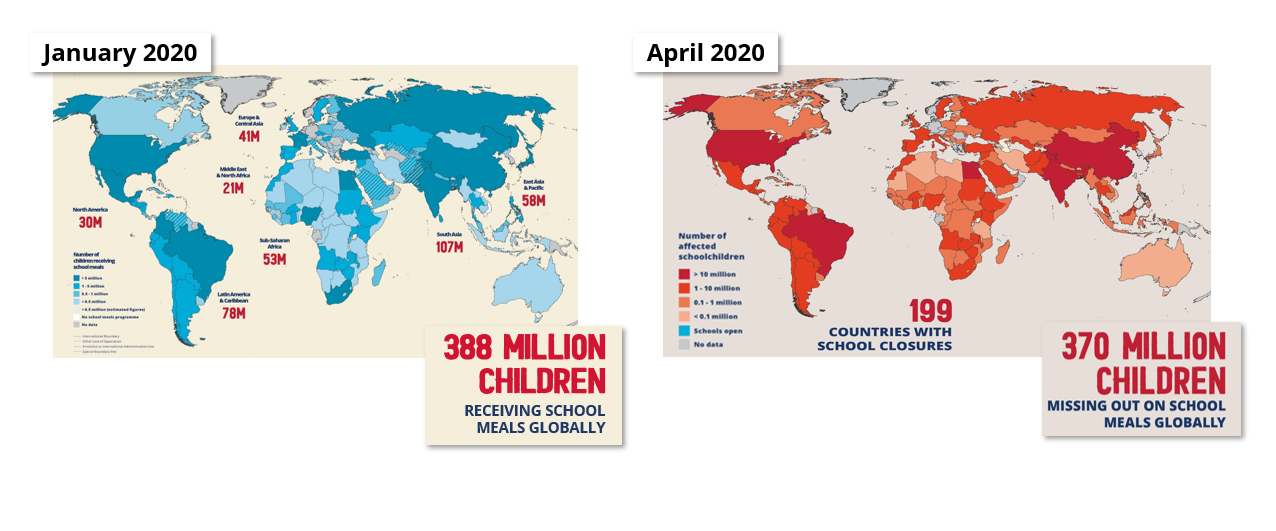
At the beginning of 2020, national school feeding programmes around the world delivered school meals to 388 million children each day in 161 countries, feeding more children than at any time in human history. By April that year, the COVID-19 pandemic had brought a decade of global progress in school nutrition programmes to a halt and resulted in a major education crisis, excluding 370 million children from their school meal, which was for many their only reliable meal of the day.
The situation highlighted the need for school health and nutrition programmes that are more inclusive, efficient, and resilient to ensure the health and well-being of school children, while providing a safety net, creating human capital, supporting national growth, and promoting economic development.
- The country-led demand for the establishment of the School Meals Coalition
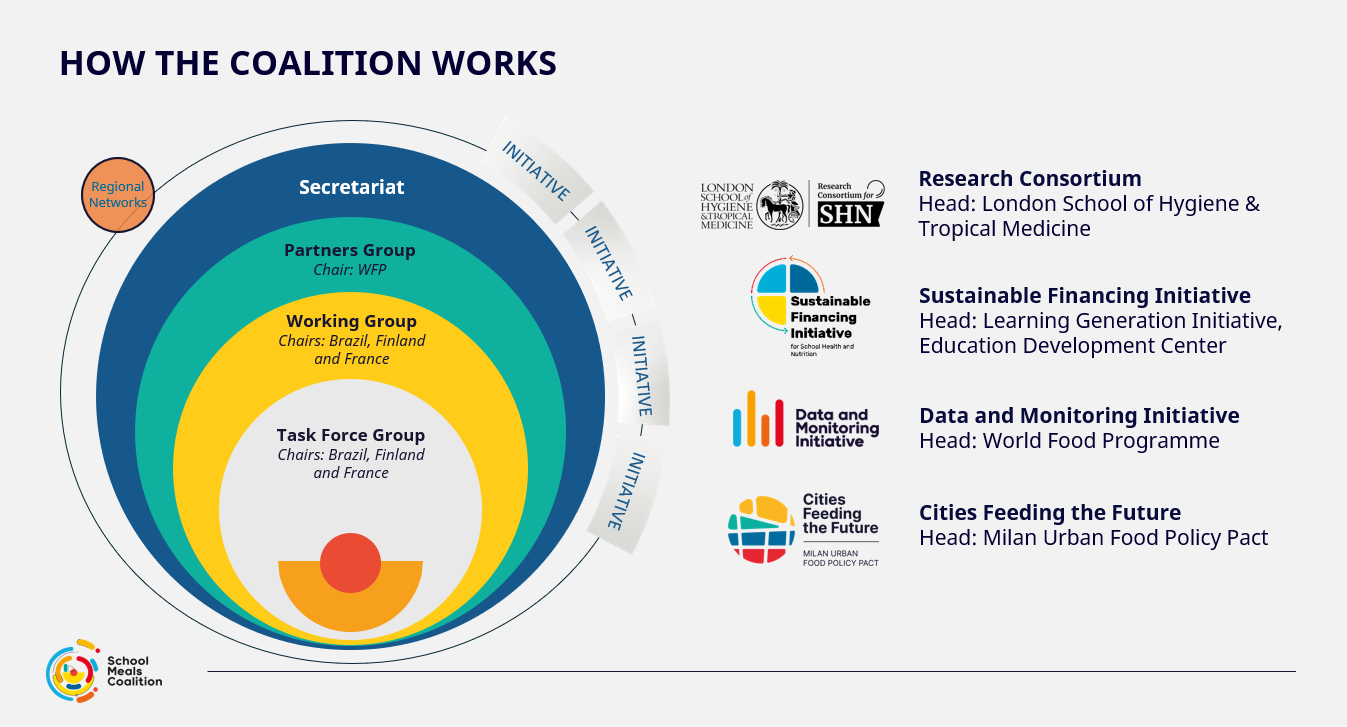
In this context, (now) more than 100 national governments, UN agencies, think tanks, and NGOs launched the international School Meals Coalition, pledging to drive actions that will urgently re-establish, improve, and scale-up school health and nutrition programmes to achieve the Sustainable Development Goals (SDGs) and ensure that every child has the opportunity to receive a nutritious meal at school by 2030. The School Meals Coalition is supported by an operational secretariat based at the UN World Food Programme, comprising four initiatives that were established at the request of the member states to assist with the scaling up of their national school meals programmes.
- May 2021 - Launching a global Research Consortium for School Health and Nutrition
For the countries of the School Meals Coalition to successfully improve and scale up their national school health and nutrition programmes, they called for the establishment of a global Research Consortium to produce and assemble independent, credible evidence to fill knowledge gaps and equip them with the information needed to design successful programmes.
In May 2021, the Research Consortium for School Health and Nutrition was formally launched with a small Secretariat hosted by the London School of Hygiene & Tropical Medicine.
Watch the launch event
- November 2021 - Endorsement from the United Nations
In a joint declaration published in November 2021, the leaders of the Food and Agriculture Organization (FAO), the UN Educational, Scientific and Cultural Organization (UNESCO), UNICEF, the World Food Programme (WFP), and the World Health Organization (WHO), committed to assisting the School Meals Coalition. Specifically, the letter declared its support for the establishing of a Research Consortium to assist the countries of the coalition in evidence-based decision-making on the health, nutrition, and wellbeing of their school-age children.