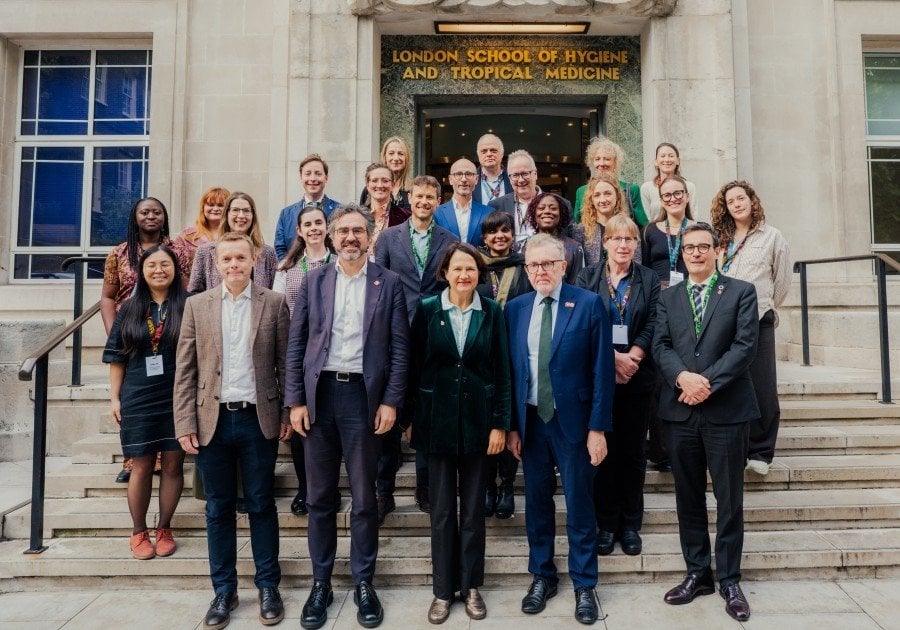
UK parliamentarians and development partners visited the London School of Hygiene & Tropical Medicine (LSHTM) on 29 October 2026, to explore how scientific research and international partnerships can help address growing challenges to global food security, nutrition and health.
As the world moves towards a population of nearly 10 billion by 2050, food insecurity, unaffordable healthy diets, climate change, environmental pressures, conflict, and persistent inequalities are creating interconnected challenges that demand greater collaboration between researchers and policymakers.
The visit was hosted by the Agriculture, Nutrition and Health (ANH) Academy Science–Policy Platform, a largescale programme co-funded by the UK Foreign, Commonwealth & Development Office (FCDO) and Gates Foundation. Since 2015, the ANH Academy has brought together researchers, policymakers and practitioners from around the world to strengthen evidence, research capacity and policy action across agriculture, food systems, nutrition and health.
The UK's role in a changing research landscape
The UK has a longstanding tradition of investing in research as part of its international development efforts, drawing on its scientific institutions and global partnerships to address challenges that cross national borders.
Against a backdrop of growing pressure on international development funding, the visit provided an opportunity to discuss how the UK can continue to support global research collaborations and help translate scientific evidence into effective policies.
In a recent speech, Kirsty McNeill, Minister for International Development and Africa, pointed to “five securities” that the UK will be focusing on – health security, climate security, economic security, human security, and food security.
During their visit to LSHTM, the parliamentarians – who are members of the All-Party Parliamentary Groups on Nutrition for Development, and Malaria and Neglected Tropical Diseases – heard how these priorities are all closely connected to food systems, and why addressing food systems challenges requires approaches that consider human health, nutrition and environmental sustainability together.
Connecting research across food systems, health and the environment
The visit showcased the breadth of research taking place across LSHTM at the intersection of human health, nutrition, agriculture and environmental change.
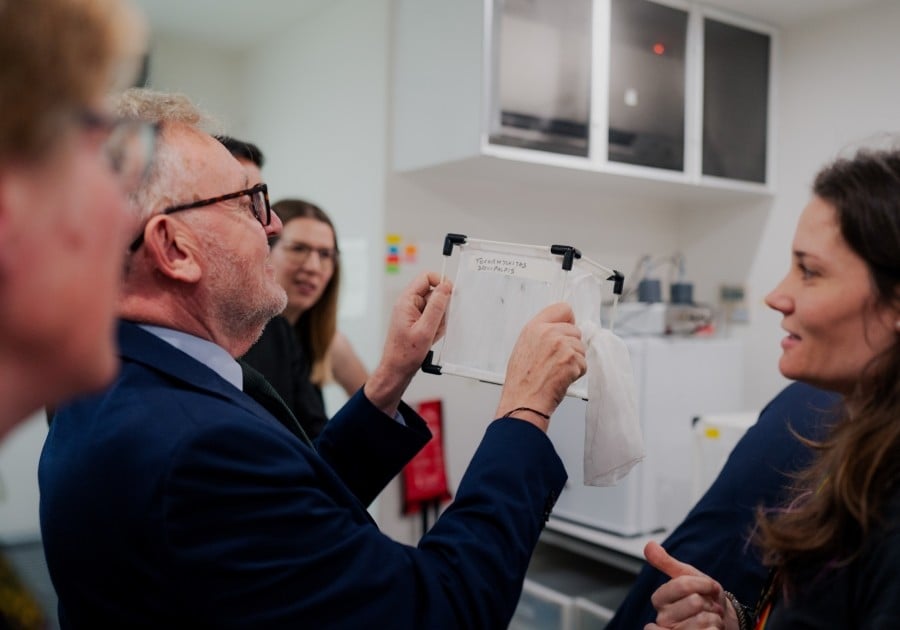
During a tour of LSHTM's laboratories, led by the Environmental Health Group (EHG), visitors learned about ongoing research to understand how and where children are exposed to enteric pathogens – bacteria, viruses and parasites that can cause gastrointestinal infections. These infections can contribute to malnutrition and poor growth in children, while inadequate water, sanitation and hygiene conditions can increase the risk of exposure. Researchers explained how understanding these environmental and health connections can help inform more effective nutrition and disease prevention strategies.
In LSHTM’s insectaries, parliamentarians were introduced to LSHTM’s research into vector-borne diseases, including how they are influenced by environmental and climatic changes. This was followed by a discussion with the Agriculture and Infectious Disease Group on the relationship between rice production, malaria risk and climate change.
Finally, visitors explored LSHTM’s Library and Archives, viewing historical public health pamphlets on HIV/AIDs and nutrition, as well as archival research from the school.
From scientific evidence to policy action
A dedicated discussion during the visit brought together parliamentarians, researchers and development partners to explore how scientific evidence can inform policy and investment decisions on global food security, nutrition and health.
Professor Liam Smeeth, Director of LSHTM, and co-leads of the ANH Academy Science-Policy Platform highlighted the importance of international collaboration in addressing these interconnected challenges.
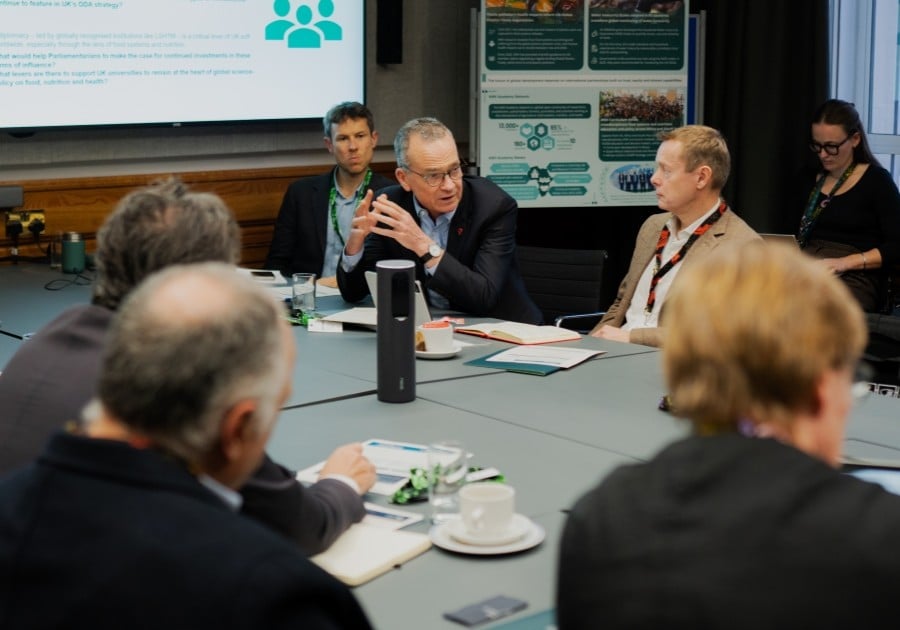
Professor Smeeth said: "Human health faces many complex challenges. Responding to these threats needs us to work together in partnership across both national and disciplinary boundaries. When resources for health are in short supply, the need for robust evidence on the effectiveness and cost-effectiveness of policy options becomes more important. LSHTM’s mission is to improve health and health equity in the UK and worldwide; working in partnership to achieve excellence in public and global health research, education and translation of knowledge into policy and practice."
From understanding the affordability of healthy diets to investigating water insecurity, climate resilience and plastic pollution in agrifood systems, real world impacts emerging from the ANH Academy illustrated why sustained investment in global interdisciplinary collaborations produces evidence that policymakers can use to develop healthier, more equitable and sustainable food systems.
The four directors from the newly formed Africa Regional Collaborative for Agriculture, Nutrition and Health (ANH-ARC) also presented their vision for strengthening African-led research and its use in policy and practice on food systems and nutrition, and showcasing this model equitable partnership co-led by institutions in Ghana, Ethiopia and South Africa with LSHTM.
Rt Hon David Mundell MP highlighted the role parliamentarians can play in championing issues such as malnutrition in parliamentary discussions and decision-making.
As research funding faces growing pressures, the visit underlined that the challenge is not only to generate more evidence, but to ensure that existing knowledge and science diplomacy can inform global collaboration, investment, policy and action.
Professor Suneetha Kadiyala, principle investigator of the ANH Academy Science-Policy Platform, said: “The visit provided an opportunity to strengthen understanding between the scientific community and those engaged in parliamentary and development policy processes, while highlighting the value of sustained research investment and partnerships at home and internationally.
“The implications extend beyond global health and development. In an increasingly interconnected world, advances in agriculture and food systems, healthy diets and nutrition, disease prevention and climate resilience can deliver benefits across borders, including for the UK."
If you enjoyed this article and would like to build a career in global health, we offer a range of MSc programmes covering health and data, infectious and tropical diseases, population health, and public health and policy.
Available on campus or online, including flexible study that works around your work and home life, be part of a global community at the UK's no.1 public health university.