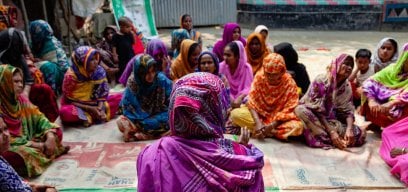
Fertility, ageing communities, migration, rising inequalities – the headlines are dominated by these pressing global population challenges. Population trends impact everything from geopolitical stability, to carbon emissions, from labour markets to sexual health and from family relationships and care to economic growth. The world of data is also changing, opening new fields of digital demographic enquiry. Trained demographers are essential to providing population projections and analysis underpinning critical global trends and to expand the boundaries of demographic data science for real-world impact.
Join our MSc Demography and Health to study population dynamics and their interaction with global health. Over one year (full time) or two years (part time or split study), you’ll learn to analyse processes that govern population change, including reproductive behaviour and social relationships, exposure to health risks, economic growth, population policies and climate change. You will study in a research-oriented environment, taught by staff conducting important work on health, mortality, fertility and migration and working in partnership with teams across the globe to advance demographic science.
This programme is also available online.
Funding
Our degree is recognised by the Economic and Social Research Council (ESRC) and the Medical Research Council (MRC), for students planning to undertake the MSc + PhD research, and the MSc is also recognised for funding by the Population Investigation Committee. Scholarships from these bodies and others are available each year. LSHTM also offers the annual Basia Zaba Memorial Scholarship in Demography.
What you will learn
- Learn demographic methods and theory, including population projections; dynamics of fertility, mortality and migration; data science and analytics; computational demography; programming; life-course research and survival analysis
- Learn to present results of analyses through written and oral presentations
- Take a critical, interdisciplinary approach to the study of population change and its interactions with wider social, political and environmental change
- Discover how we can use evidence-based approaches to develop and evaluate population programmes
- Formulate critical, policy-relevant, research questions and use demographic and health data to address them
- Develop practical skills through student-led seminars, data analysis tasks and mini-research projects
Understand how to analyse and exploit emerging data sources to unravel contemporary population dynamics and their interactions with social, economic and environmental change. You will also study how to conduct demographic research in situations where data are lacking, learning from experts who are pioneering new methods of data capture in such settings.
You’ll be taught by demographers, data and social scientists, and reproductive health specialists. Hear about their specialist research on everything from improving demographic data collection in pandemics, to evolutionary and anthropological demography, to the relationship between mortality and inequality, as well as from a range of external speakers working in the population field.
All MSc Demography & Health students will receive core training in formal, mathematical demography and quantitative methods including population dynamics and projections and will study contemporary issues in population studies. Beyond these core subjects you can choose to specialise. If you have a quantitative background, you may focus on more advanced computational demography and programming on the Population Data Science pathway, otherwise, if you come from a social science, community or policy background, you may choose to focus on the interface between demography, health and public policy on the Population Health and Policy pathway. The modules available on each pathway differ and are detailed below.
Your research project will give you a chance to examine an area in more depth. Past students have explored topics such as the demographic impact of climate change in the Gambia, migration from Mexico, spatial analysis of infant mortality in Victorian London, the impact of family planning programmes in Tanzania, and interactions between ageing and employment in the UK.
Who is it for?
Social and political scientists, mathematicians, geographers – this course is perfect for anyone interested in population and its relation to health and wider social and environmental change. You might be a professional working in government or for an NGO where demographic skills are in high demand. Or you might have just finished your undergraduate degree and want to pursue an MSc which will equip you to contribute solutions to some of today’s most pressing global challenges.
Demography and Health graduates are in great demand. Some move into policy and practice, implementing population analytics and critical thinking for Governments, international organisations and NGOs. Others launch their careers in academia, contributing to deeper understandings of population change. You’ll graduate with a range of analytical and critical skills that are essential on the world stage, and with an MSc which has a global reputation in this field. You’ll find our graduates working in rewarding roles at UN organisations, government statistics offices, NGOs, think tanks and WHO.
Duration
One year full-time; part-time or split-study over two years. Ways to study explained.
Postgraduate Certificate and Postgraduate Diploma
This programme also offers students the opportunity to register for a Postgraduate Certificate (PGCert) or Postgraduate Diploma (PGDip).
Both the PGCert and the PGDip can be studied full-time. If you study the PGCert, your study and assessments will be concentrated in the Autumn Term (October-December) with some assessments in January. If you study the PGDip you will additionally take modules and assessments in the Spring and Summer Terms (January-May). Further details on compulsory and elective modules and when they run are available on the Structure tab.
Intercalating study
Find out about intercalating this programme.
Demography & Health
Watch Assistant Professor Rachel Scott talk about the programme.
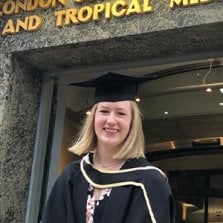

Demography plays an important role in understanding population dynamics - how populations change in response to the interplay between fertility, mortality and migration - and its impact on the health and healthcare needs of a population.
This programme will help students acquire technical expertise in demography and an understanding of the interlinkages between population studies and health, including fertility, sexual behaviour, ageing, health inequalities and life expectancy.
Why study the MSc Demography & Health at LSHTM?
- Learn demography within the wider context of public health in a world-leading specialised institution
- Tailor your degree to meet your needs thanks to the modular structure of the programme
- Gain practical skills through student-led seminars, data analysis tasks or mini-research projects
- Specialise and apply your learning with the MSc research project
- Learn to formulate research questions and use bio statistical data and analysis to address them
- Assess population studies and apply your research findings to policy, backed by sound knowledge
- Learn to present results of bio statistical analyses through written and oral presentations
- Understand population trends in low-, middle- and high-income countries
- Choose to focus on the technical aspects of data analytics and estimation, or, take a more interdisciplinary approach to the study of population and health
What are my career prospects as a health demographer?
The course teaches research skills which are highly valued in the job market generally and are welcomed in a wide variety of research fields. The teaching draws on several related disciplines within LSHTM and because of the modular approach can be tailored to suit different needs.
Graduates from this programme leave with a set of key skills and experience in theories and methods of population sciences, biostatistics, epidemiology, research methods and data analysis which enable them to embark on a diverse range of careers in:
- public health
- academic research
- NGOs
- reproductive health programmes
- health services
- government statistical offices
- policy and planning
Why choose LSHTM?
- LSHTM is a specialist public health institution, renowned all over the world for its research excellence and prestigious postgraduate study programmes
- We consistently rank highly in various global university league tables, including: #2 in the world and #1 in the UK for Public Health (ShanghaiRanking 2024) and #1 for the key measure of impact, providing the highest quality contribution to the economy or society (Times Higher Education REF2021 Impact Scores) and. Read more about our rankings
- We have a strong academic and media presence worldwide
- The international character of LSHTM contributes significantly to the quality and range of its teaching and training: our students come from over 155 countries, with over 60% from outside the UK
- Our global graduate network of over 35,000 actively engaged alumni and international research collaborations create fantastic networking opportunities for students
Why study demography & health?
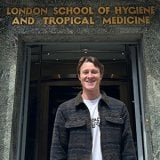
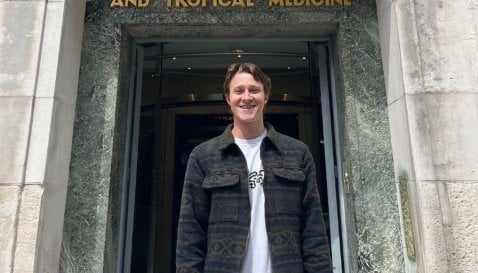
Nalin shares his experience of studying the MSc Demography and Health.

The below structure outlines the proposed modules for this programme. Programme and module specifications provide full details about the aims and objectives of each module, what you will study and how the module is assessed.
Structure of the year
Term 1 (September - December) consists of ten teaching weeks for AB1 slot modules, plus one Reading Week* in the middle of the term. Followed by the Winter break.
Term 2 (January - March) consists of a further ten weeks of teaching for C and D slot modules, plus a Reading Week in the middle of the term. C modules are taught in five half-week blocks before Reading Week. D modules are taught in five half-week blocks after Reading Week. Followed by the Spring break.
Term 3 (April - September) consists of five weeks of teaching for E slot modules, taught in half-week blocks, and the project report.
*Reading Week is a week during term where no formal teaching takes place. It is a time for private study, preparing for assessments or attending study/computer skills workshops. There are two Reading Weeks at LSHTM: one in November and the other in February.
Population Data Science pathway
- Term 1
Students take the following compulsory AB1 modules:
- Demographic Methods
- Population Studies
- Concepts and Methods in Epidemiology
- Programming
- Statistics for Health Data Science
- Terms 2 and 3
Students take a total of five compulsory and elective study modules, one from each timetable slot (C1, C2, D1, D2, E).
C1 slot
- Research Design & Analysis
- Machine Learning
- Statistical Models for Discrete Outcomes
- Health Care Evaluation
- Designing Public Health Programmes
- Sociological Approaches to Health
C2 slot
- Population, Poverty and Environment
- Family Planning & Reproductive Choice
- Design and Analysis of Epidemiological Studies
- Statistical Methods in Epidemiology
- Survival Analysis
- Conflict and Health
D1 slot
- Social Epidemiology
- Spatial Epidemiology in Public Health
- Analysis of Hierarchical and Other Dependant Data
- Medical Anthropology and Public Health
- Evaluation of Public Health Interventions
- Current Issues in Maternal and Perinatal Health
- Epidemiology of Non-Communicable Diseases
- Modelling and the Dynamics of Infectious Diseases
D2 slot
- Population Dynamics & Projections
E slot
- Analysing Survey & Population Data
- HIV
- Advanced Statistical Models in Epidemiology
- Causal Inference and Missing Data
- Proposal Development
Population Health & Policy pathway
- Term 1
Students take the following compulsory AB1 modules:
- Basic Epidemiology
- Demographic Methods
- Population Studies
- Principles of Social Research
- Statistics for Epidemiology & Population Health
- Term 2 and 3
Students take a total of five compulsory and elective study modules, one from each timetable slot (C1, C2, D1, D2, E).
C1 slot
- Research Design & Analysis
- Gender and Reproductive Rights
- Health Care Evaluation
- Designing Public Health Programmes
- Sociological Approaches to Health
C2 slot
- Population, Poverty and Environment
- Family Planning & Reproductive Choice
- Design and Analysis of Epidemiological Studies
- Statistical Methods in Epidemiology
- Conflict and Health
- Qualitative methodologies
D1 slot
- Social Epidemiology
- Spatial Epidemiology in Public Health
- Medical Anthropology and Public Health
- Planetary health in practice
- Evaluation of Public Health Interventions
- Current Issues in Maternal and Perinatal Health
- Epidemiology of Non-Communicable Diseases
- Modelling and the Dynamics of Infectious Diseases
- Programme Monitoring and Implementation Research
D2 slot
- Population Dynamics & Projections
E slot
- Analysing Survey & Population Data
- HIV
- Advanced Statistical Models in Epidemiology
- Proposal Development
Project report
During the summer months (June - August), students complete a research project for submission by early September. This is an opportunity to apply the demographic skills and knowledge acquired through the programme in an independent research project, with supervision from a member of staff and often in partnership with existing LSHTM projects and programmes. MSc Demography and Health students usually undertake original data analysis on a demographic topic, but there are also options to develop a project proposal or to write an original literature or policy review.
Postgraduate Certificate and Postgraduate Diploma
This programme also offers students the opportunity to register for a Postgraduate Certificate (PGCert) or Postgraduate Diploma (PGDip). Both PGCert and PGDip are available only on the Population Health & Policy pathway. Details of what each course entails are summarised in the table below.
| Course | You study |
|---|---|
| Master's | 10 modules (6 compulsory, 4 elective) + project report |
| Postgraduate Diploma | 9 modules (6 compulsory, 3 elective). Students choose either 3 modules in Term 2, or 2 modules in Term 2 and 1 module in Term 3. If all modules are completed by the end of Term 2, duration is six months. If a term 3 module is selected, duration is nine months. |
| Postgraduate Certificate | 5 core modules (all compulsory - AB1 modules) |
Both the PGCert and the PGDip can be studied either full-time in one year or part-time over two years. If you study the PGCert, most of your study and assessments will be concentrated in the Autumn Term (October-December) with some assessments in early January. If you study the PGDip you will additionally take modules in the Spring-Summer Terms (January-May). Further details on compulsory and elective modules and when they run are available above.
You can register for the PGCert or PGDip in the first instance and then, on successful completion of the compulsory core modules, transfer your registration to the PGDip or MSc. Information on fees for this option is available on the fees and funding tab. Students wishing to transfer their registration to PGDip or MSc should be aware that you must complete these within five years of completing the first qualification.
Changes to the programme
LSHTM will seek to deliver this programme in accordance with the description set out on this programme page. However, there may be situations in which it is desirable or necessary for LSHTM to make changes in course provision, either before or after registration. For further information, please see our page on changes to courses.
Continuing Professional Development (CPD)
LSHTM offers a wide range of standalone modules for those looking for continued professional development and wishing to develop their networks, knowledge and skills in a particular area without the full commitment of an MSc. Explore intensive individual modules.

| Fees 2026/27 | Master's | PG Diploma | PG Certifcate | |
|---|---|---|---|---|
| Home | Full-time | £13,580 | £9,500 | £5,430 |
| Part-time | £6,790 | £4,750 | £2,715 | |
| EU/Overseas | Full-time | £31,450 | £22,010 | £12,580 |
| Part-time | £15,725 | £11,005 | £6,290 |
*Mobile users, scroll right to view fees
Funding available for this programme:
- 2026-27 Basia Zaba Memorial Scholarship - deadline 25 March 2026.
- 2026-27 PIC Masters Studentship Scheme in Population Studies - deadline 26 May 2026.
Sources of funding:
In order to be admitted to an LSHTM master's degree programme, an applicant must:
- hold either a first degree at Second Class Honours (2:2) standard in a relevant discipline, or a degree in medicine recognised by the UK General Medical Council (GMC) for the purposes of practising medicine in the UK, or another degree of equivalent standard awarded by an overseas institution recognised by UK ENIC or the GMC.
or
- hold a professional qualification appropriate to the programme of study to be followed obtained by written examinations and judged by LSHTM to be equivalent to a Second Class Honours (2:2) degree or above.
or
- have relevant professional experience or training which is judged by LSHTM to be equivalent to a Second Class Honours (2:2) degree or above.
If you have not previously studied in the UK, you can check our guide to international equivalent qualifications for our master's degrees.
Additional requirements for the MSc Demography & Health are:
- evidence of numeracy skills
Students select their Demography & Health pathway - either Population Health and Policy or Population Data Science - during orientation week (Welcome Week) at LSHTM.
Population Health and Policy Pathway
Relevant subjects include:
- Social sciences: anthropology, demography, development, economics, geography, international relations, politics, sociology
- Sciences: mathematics, statistics, biology, medicine, nursing, midwifery
Other qualifications may be considered if you can show evidence of sufficient quantitative exposure. Please highlight this clearly in your application.
Applicants who don’t meet the minimum entry requirements but have relevant professional experience may still be eligible. All qualifications and experience are assessed as part of the application process.
Population Data Science Pathway
This pathway suits students with a strong mathematical background, including knowledge of:
- Probability and statistics
- Calculus
- Linear algebra (including logarithms and exponents)
These skills may come from:
- A degree in mathematics, statistics or a related discipline
- Quantitative study within a science-based undergraduate degree
- 2-3 years of relevant work experience in data science or an allied field
Familiarity with statistical programming is an advantage. During Welcome Week, your mathematical skills will be assessed and discussed with the Programme Team to confirm whether this pathway is the right fit.
Students without the required mathematical background will follow the Population Health and Policy pathway. This is also a quantitative route, covering:
- Mathematical demography
- Population modelling and projections
- R programming
It’s complemented by a wider selection of social science and policy-focused modules, offering a balanced and applied approach.
Any student who does not meet the minimum entry requirement of a second-class honours degree or equivalent qualification but who has relevant professional experience may still be eligible for admission. Qualifications and experience will be assessed from the application.
English language requirements
If English is not your first language, you will need to meet these requirements: Band B.
Some applicants may be exempt if they have previously studied in English or meet other specified criteria. Please see our English language requirements for details.
It is possible to apply without English language test results however the results of a test may be listed as a condition of an offer of admission.
Intercalating students
This option is available for in-person MSc programmes. You will need the equivalent of a bachelor's degree to undertake a master's degree. This will usually require you to have a BSc degree or have completed the first three years of your medical degree. More information on intercalating a Master's at LSHTM.
Access and widening participation
At LSHTM we are committed to ensuring that excellent students feel encouraged to apply for a course of study with us. We have introduced an innovative contextual admissions system that is designed to support those students who have faced the greatest barriers to their learning. More information on widening participation at LSHTM.
Applications for this programme are currently closed. Register your interest to be notified when applications open for 2026/27 (early November).
Applications should be made online and will only be considered once you have provided all required information and supporting documentation.
Please also read LSHTM's Admissions policies (pdf) prior to submitting your application.
You can apply for up to two master's programmes. Make sure to list them by order of preference as consideration will be given to your top choice first.
Please ensure you pay careful attention to the content of your personal statement, as we do not invite applicants to interview for this programme, so the clarity and relevance of the information you can provide is of considerable importance to us. We would like to know your experiences in the relevant field(s), your reasons for applying to our programme, what you hope to gain from the training we offer, and how you intend to use the knowledge and skills you acquired to further your career and contribute to improving health.
Application fee
A standard non-refundable application fee of £50 applies to all Master’s degree programmes and is payable upon application submission. The application fee also applies to PG Diplomas and PG Certificates where appropriate. Income generated from the application fee is shared between scholarships and the student hardship funds.
Application deadline
All applicants are encouraged to apply as early as possible to ensure availability of a place and a timely decision on their application. This is particularly important for applicants with sponsorship deadlines.
Closing dates for all taught face-to-face MSc, PG Diploma and PG Certificate applications for entry in the 2027/28 academic year is:
- Sunday 25 July 2027 at 23:59 UK time for all students requiring a Student visa
- Tuesday 31 August 2027 at 23:59 UK time for all UK, Irish and non-Student visa students.
Applicants will be required to meet the conditions of their offer and provide all necessary documents by the date of their Offer of Admission.
Tuition fee deposit
All applicants must respond to their offer of admission within 28 days or their place will be released and the offer automatically declined. The deposit is deductible from tuition fees upon full registration with LSHTM. Applicants in receipt of a full scholarship will not be required to pay the deposit.
- Home students: £500 non-refundable deposit, payable within 28 days of the offer date
- Overseas students: £2,000 non-refundable deposit
- Offers made before 31 January 2027: deposit due by 1 March 2027
- Offers made from 1 February 2027 onwards: deposit due within 28 days of the offer date.
Do you need a visa?
Please visit our Visa & Immigration pages for advice and guidance.
Important notice for nationals/citizens of Afghanistan, Cameroon, Myanmar or Sudan: If you require a UK student visa, the government has introduced a “visa brake”. As a result, LSHTM is currently unable to sponsor student visas for applicants from these countries.
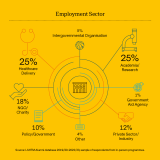
Graduates from this programme enter a diverse range of positions in public health, research, NGOs, health programmes, health services, government, policy and planning.
Employability
On average, 90% of our master's graduates from the 2019/20-2022/23 cohorts were in employment or undertaking further studies 15 months after graduation (Graduate Outcomes Surveys, 2020-2023).
Careers at LSHTM
In this video, LSHTM students share why they chose public health and reflect on their studies, student experience and future career goals.
Graduates from this programme enter a diverse range of positions in public health, academic research of a very wide nature, NGOs, reproductive health programmes, health services, government statistical offices, policy and planning.
Below you will find just a few of the positions and organisations that our graduates from this course have entered:
- Example job titles:
-
Academic Researcher
Lecturer
Government Research or Policy Analyst
Research Scientist
Project Officer
International Technical Advisor
Market Research Consultant
Editor
Data Analyst
Epidemiologist
Evaluation Officer
Health Policy Adviser
Scientific Officer
Programme Officer
Senior Data Manager - Example organisations:
-
United Nations Population Fund
UNAIDS
Médecins Sans Frontiers
Institute for Health Metrics Evaluation
Mary Stopes International
Population Council
Guttmacher Institute
Kenya Medical Research institute (KEMRI)
World Health Organisation
Universities in many countries
Central and Local Government
National Statistical Offices in various countries
Public Health England
International Planned Parenthood Organization
Malawi Epidemiology and Intervention Research Unit
NHS England
British Medical Journal
Population Services International
International Organization for Migration
LSHTM Alumni
LSHTM’s alumni community includes over 35,000 graduates across more than 190 countries. It offers a lifelong connection to LSHTM and to each other.
We are proud of our global alumni network, which includes many notable members, such as:
- Tedros Adhanom, the Director-General of the World Health Organization (WHO), who completed his MSc in Immunology of Infectious Diseases
- Karina Rando, the Minister of Public Health in Uruguay, studied MSc Public Health – Health Economics stream
- Christopher Whitty, Chief Medical Officer for England and Chief Medical Adviser to UK Government, studied MSc Epidemiology.
- Vanessa Bradford Kerry, founder of the non-profit Seed Global Health, director of the Program in Global Public Policy and Social Change at Harvard Medical School, and Special Envoy for Climate Change and Health for the World Health Organization (WHO), studied the MSc in Health Policy, Planning and Financing
- Career support - the LSHTM Careers Service provide a range of services from 1-1 appointments to events and workshops.
- Alumni blogs - did you know LSHTM has over 35,500 alumni in more than 190 countries.
- International alumni chapters - find an LSHTM network of alumni near you from our over 30 chapters.