
Almost every Gambian household was infected with a respiratory virus during a single year, averaging more than five infections per person, according to this study led by MRC Unit The Gambia at the London School of Hygiene & Tropical Medicine (MRCG at LSHTM).
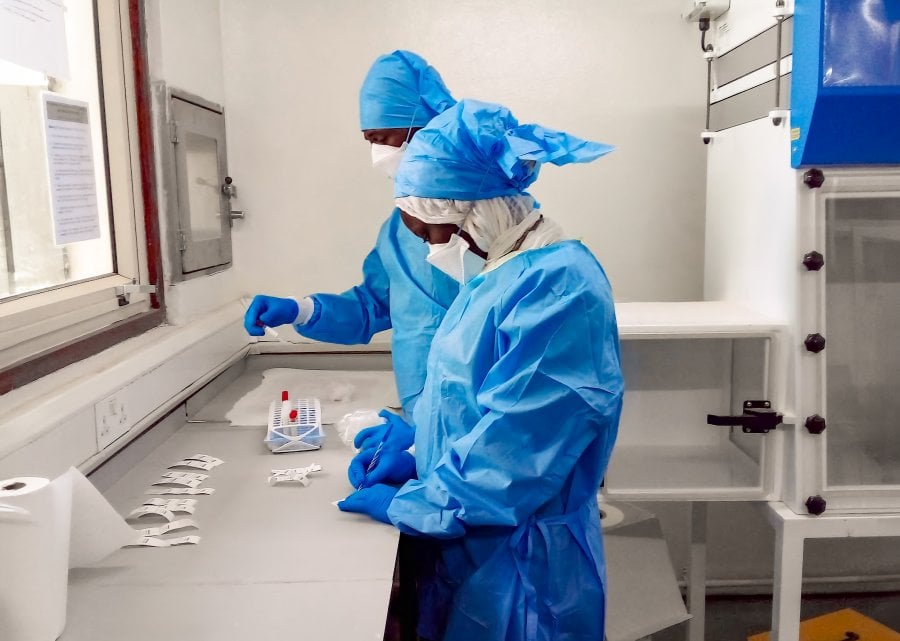
Published in eBioMedicine, part of the Lancet Discovery Science Journal, the study followed almost 350 people in 52 households in the Greater Banjul area between March 2021 and June 2022, collecting respiratory swabs every week whether or not participants felt unwell. More than 14,500 swabs were tested for rhinovirus, SARS-CoV-2, seasonal coronaviruses, influenza, respiratory syncytial virus (RSV), parainfluenza viruses, human metapneumovirus and adenovirus.
Common respiratory viruses differed markedly in whom they infected, how long they were shed and how readily they spread within homes. Nearly nine in ten infections caused no symptoms, so most of this transmission would go undetected by clinic or hospital-based surveillance.
The study found that viral infection is near universal. 97% of participants were infected at least once, with an average of 5.3 infections per person per year. Rhinovirus was the most common, infecting 86.5% of participants (around 2.4 infections per person per year).
Findings also show that most infections were asymptomatic at 88.4% of 1,423 infection episodes and none led to hospitalisation. SARS-CoV-2 (16.3%) and RSV (17.7%) had the highest proportions of symptomatic infections.
Dr Sheikh Jarju, co-first author and scientist at MRCG at LSHTM, said: “Our study provides important information on how respiratory viruses circulate and spread within households in The Gambia. One of the most striking findings was that the large majority of infections occurred without symptoms, which shows how difficult it is to understand transmission through symptom-based surveillance alone.”
Young children carry the heaviest load with under-fives showing the highest infection rates for rhinovirus, RSV, seasonal coronaviruses and parainfluenza viruses, and were much more likely than adults to shed virus for more than a week. In contrast, SARS-CoV-2 infected both children and adults similarly.
Additionally, the study found that viruses spread differently within homes. The rhinovirus, SARS-CoV-2, RSV and seasonal coronaviruses spread more readily than adenovirus and parainfluenza viruses, and higher viral load and longer shedding were linked to more onward transmission. Most secondary cases arose from people who had no symptoms.
Prof Thushan de Silva, joint senior author, Professor of Infectious Diseases at the University of Sheffield and Clinical Associate Professor at MRCG at LSHTM, said: “Studies that swab whole households every week, whether or not anyone feels unwell, are rare anywhere and especially so in low- and middle-income countries. Yet they are the only way to measure the true incidence of infection, how much of it is silent, and how viruses move between family members. As vaccines and antibodies against RSV and other respiratory viruses are rolled out, understanding who drives transmission in settings like The Gambia will be essential in deciding who to protect. None of this would have been possible without the commitment of the participating families and our field team.”
Respiratory infections remain a major cause of death in children under five and older adults in low- and middle-income countries. Yet most data on respiratory viruses in these settings come from people sick enough to seek care. Others are from the few community studies in sub-Saharan Africa mostly conducted in South Africa, which has an older population and smaller households than much of the region. Earlier studies have also tended to focus on one or two viruses at a time.
Prof Beate Kampmann, joint senior author, Director of the Centre for Global Health, Charite University Medicine, Berlin, and Senior Investigator at the MRC Unit, said: “In addition to the lessons we learned about COVID, we now have a much better picture of the circulating respiratory viruses in The Gambia on which we can base future research. Our teams generated a unique set of samples and data, and it shows what’s possible with the trust of the communities our science wishes to serve.”
The authors note that the study took place during the Delta and Omicron waves of SARS-CoV-2, when influenza circulation was low worldwide, and that weekly sampling may have missed some very short infections. They highlighted that future surveillance systems and public health measures, including those planned for future pandemics, should account for asymptomatic infections if they are to reduce respiratory virus transmission. This study was funded by UK Research and Innovation.
If you enjoyed this article and would like to build a career in global health, we offer a range of MSc programmes covering health and data, infectious and tropical diseases, population health, and public health and policy.
Available on campus or online, including flexible study that works around your work and home life, be part of a global community at the UK's no.1 public health university.