Researchers at the MRC Unit The Gambia at the London School of Hygiene & Tropical Medicine (MRCG at LSHTM) have found that lung problems can persist in children and adolescents even after successful tuberculosis (TB) treatment, highlighting the need for longer-term monitoring and care.
TB remains a major global health challenge, with children and adolescents accounting for approximately 11% of the 10.7 million new cases reported worldwide in 2024. Although treatment can successfully clear the infection, some people experience lasting respiratory problems, known as post-TB lung disease.
While these long-term effects are increasingly recognised in adults, less is known about how children's lungs recover after treatment, particularly during childhood and adolescence when the lungs are still developing.
Published in Thorax, the study followed 79 children and adolescents in The Gambia who had completed treatment for pulmonary TB. Participants underwent lung function tests, chest X-rays and respiratory symptom assessments at treatment completion, six months later and again after 12 months.
The results showed 57% of participants had abnormal lung function at treatment completion, compared with 59% after 12 months. Although the proportion reporting respiratory symptoms fell from 35% to 21%, impaired lung function remained common.
Chest X-ray abnormalities also decreased from 47% to 38% over the same period, suggesting some recovery in lung health. However, only around one in five participants showed sustained improvement in key measures of lung function, while most experienced little change.
The researchers also identified two factors associated with persistent lung impairment: abnormal lung function and being underweight at the end of TB treatment. Children with either of these characteristics were around 13 times more likely to experience ongoing lung function problems a year later.
These findings suggest that simple assessments of lung function and nutritional status at treatment completion could help healthcare providers identify children who may benefit from closer monitoring and additional support.
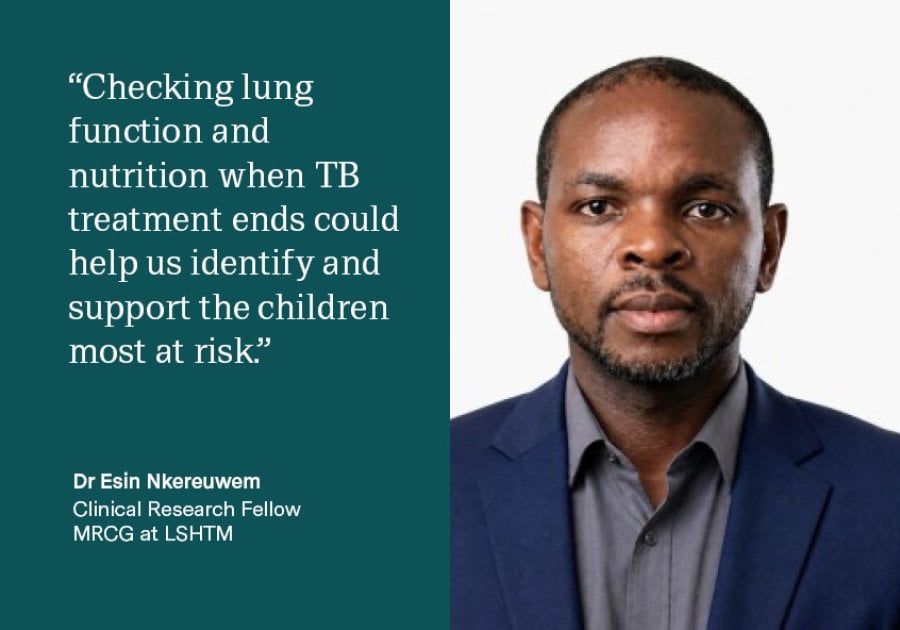
Dr Esin Nkereuwem, lead researcher at the MRC Unit The Gambia at LSHTM, said, “Curing TB doesn’t always mean the lungs have recovered. More than half of the young people in our study still had reduced lung function a year after treatment, at an age when their lungs are still growing. Checking lung function and nutrition when treatment ends could help us identify and support the children most at risk.”
The research highlights the importance of looking beyond treatment success when assessing recovery from childhood TB. As the lungs continue to develop throughout childhood and adolescence, persistent impairment could have implications for respiratory health later in life.
The researchers suggest that structured follow-up care, including lung function testing and nutritional assessments where available, could help identify children at risk of longer-term complications.
Further research involving larger groups of children is needed to understand how lung function changes beyond the first year after treatment and which interventions could best support recovery.
The research was funded by the European & Developing Countries Clinical Trials Partnership (EDCTP2) programme, supported by the European Union (grant number TMA2020CDF-3197, Childhood TB Sequel).
If you enjoyed this article and would like to build a career in global health, we offer a range of MSc programmes covering health and data, infectious and tropical diseases, population health, and public health and policy.
Available on campus or online, including flexible study that works around your work and home life, be part of a global community at the UK's no.1 public health university.