
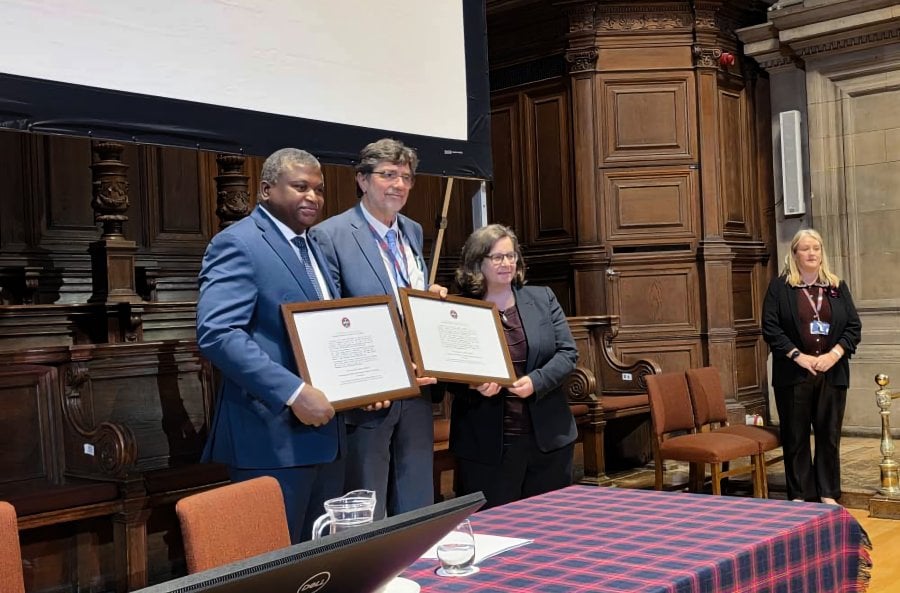
MRC Unit The Gambia at the London School of Hygiene & Tropical Medicine (MRCG), together with The Gambia’s Ministry of Health, have been awarded the 2026 Edinburgh Prize for Global Health Impact in recognition of their pioneering research that demonstrated the effectiveness of insecticide-treated bed nets in reducing malaria-related illness and deaths.
The recognition celebrates research that contributed to the landmark 1991 publication in The Lancet, which provided important evidence of the effectiveness of insecticide-treated bed nets. Overall, the intervention reduced mortality among children aged under 5 by 63 percent and malaria-specific death by 70 percent, providing a crucial path for the widespread adoption of insecticide-treated nets as a major malaria-control measure.
Prof Ed Clarke, Unit Director, commented "As a paediatrician, the impact of insecticide-treated bed nets on deaths in childhood demonstrated in these pioneering studies remains astonishing. As a result of these findings, bed nets are now part of the standard armamentarium against malaria across the globe and have undoubtedly contributed to the progress towards reducing under-five mortality. Working alongside the Ministry of Health, the Unit continues to contribute to the drive to reduce preventable deaths from malaria and other diseases and it is wonderful to have received this award in recognition of the contribution of The Gambia to global health.
The award was received by the Honourable Minister of Health, Dr Ahmadou Samateh, and Professor Umberto D’Alessandro, Theme Lead for Disease Control and Elimination at MRC Unit The Gambia.
On behalf of The Gambia Government, Honourable Minister of Health, Dr. Ahmadou Samateh highlighted:
“This award is a proud moment for The Gambia and proof of what can be achieved when research is by backed strong partnerships. The evidence generated through research conducted in The Gambia has contributed to saving millions of lives in Africa and beyond. We must continue to build on this legacy by investing in research, strengthening our health systems and working with our partners to ensure that evidence translates into better health outcomes for our communities.”
The research marked a significant milestone in the global fight against malaria, informing public health strategies in several high burden countries, and contributing to the wider adoption of insecticide-treated bed nets as a life-saving intervention in malaria-endemic countries. More than three decades later, the impact of this research continues to be felt worldwide.
Reflecting on the recognition, Professor D’Alessandro stated:
“It is an honour to receive the Edinburgh Prize for Global Health Impact on behalf of the MRC Unit The Gambia. It recognises the important contribution the Unit provided and still provides to the fight against malaria. Such work would not have been possible without the continuous collaboration between the Unit and the national health authorities. Over the last 20 years, The Gambia has been able to substantially reduce its malaria burden thanks also to the cutting-edge research implemented by the MRC Unit The Gambia in close collaboration with the Ministry of Health and its National Malaria Control Programme.”
The award underscores the value of research conducted in The Gambia and its contribution to addressing major health challenges worldwide. From generating evidence on malaria prevention to supporting the development of effective public health interventions, MRCG continues to work with national and international partners to push both research and the capacity required to drive these for the benefit of communities.
The long-standing collaboration between MRCG, and the National Malaria Control Programme of the Ministry of Health has been crucial beyond this research to current joints efforts towards elimination.
If you enjoyed this article and would like to build a career in global health, we offer a range of MSc programmes covering health and data, infectious and tropical diseases, population health, and public health and policy.
Available on campus or online, including flexible study that works around your work and home life, be part of a global community at the UK's no.1 public health university.