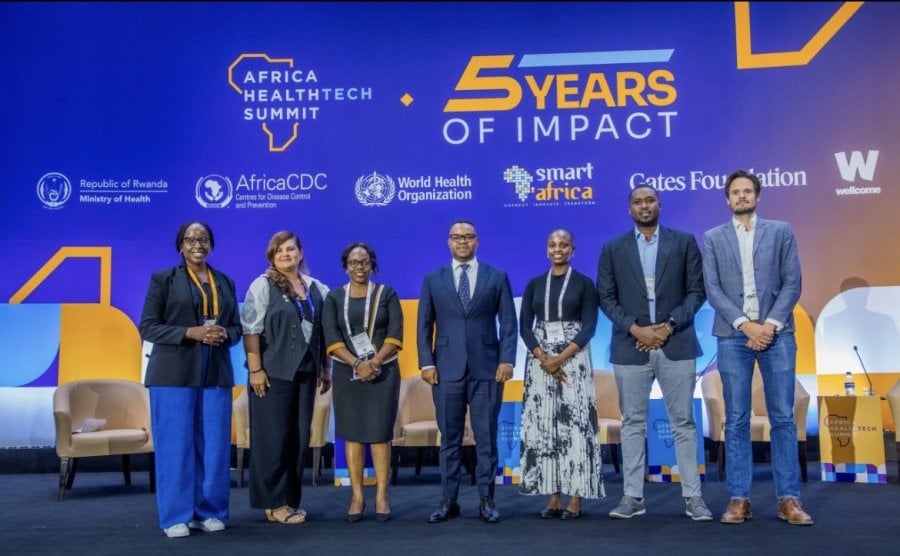
The Africa HealthTech Summit 2026 brought together researchers, policymakers, healthcare professionals and technology experts in Kigali, Rwanda, from 30 September to 2 October to explore how innovation and digital technologies can strengthen health systems across Africa.
Elizabeth Wangari, a Research Degree student in Public Health and Policy at the London School of Hygiene & Tropical Medicine (LSHTM) and a member of the Inequalities in Cancer Outcomes Network (ICON), joined a panel hosted by Wellcome to discuss strengthening health data systems for research in Africa.
Drawing on her experience as a clinician and researcher working with the Clinical Research Health Network (CREA-N)'s MAISHA Registry in Kenya, developed in collaboration with Datawise Africa, Elizabeth highlighted the need to ensure that health data benefits the patients, healthcare workers and communities who generate it.
Elizabeth said: "Health data too often flows upwards, from patients and facilities into reporting systems without enough value returning to the people and communities who generate it."
She emphasised the importance of moving beyond data collection to consider how information can help clinicians improve care, support patients in understanding their health and enable institutions to identify gaps in services.
Her contribution also highlighted the role of community engagement and advocacy in developing research systems that respond to local needs. Drawing on the MAISHA Diabetes Registry, she stressed that patients and healthcare workers need to understand why their data is being collected and how it can contribute to improving healthcare.
"Patients and healthcare workers need to understand the purpose of collecting data and see its relevance to their lives and everyday work. Building that relationship is an ongoing responsibility," she added.
The discussion also explored the foundations needed to make health data systems effective and sustainable. These include strong institutional governance, systems that can communicate and exchange information, and long-term investment in skilled professionals such as data managers, statisticians and data stewards.
Another key theme was data sovereignty and the importance of ensuring African institutions have the capacity and authority to govern, analyse and use locally generated health data responsibly. Strengthening this capacity can help ensure research evidence reflects local priorities and supports decisions that benefit patients and communities.
These discussions closely connect with Elizabeth's PhD research within ICON at LSHTM, where she is examining inequalities in breast and cervical cancer in Machakos County, Kenya. Her work explores questions around representation in health data, gaps in cancer care pathways and how research evidence can support more equitable healthcare services.
Reflecting on the summit, Elizabeth said: "As we build stronger health data systems, we must keep asking whether the evidence we produce is reaching the people whose experiences made it possible.
“The summit highlighted the growing expertise and ambition across Africa to strengthen health data systems and advance locally led research. It also reinforced the importance of ensuring that investment in health technologies is accompanied by meaningful community engagement, strong governance and the capacity to translate data into improvements in patient care.”
If you enjoyed this article and would like to build a career in global health, we offer a range of MSc programmes covering health and data, infectious and tropical diseases, population health, and public health and policy.
Available on campus or online, including flexible study that works around your work and home life, be part of a global community at the UK's no.1 public health university.