I wouldn’t have expected one of my main takeaways from a week shadowing the UK Health Security Agency’s (UKHSA) Medical Entomology and Zoonoses Ecology (MEZE) team to be that yes, it is possible to send a tick through the post in a deflated balloon (and no, please don’t take that as a recommendation).
My research, as a first-year PhD student at the London School of Hygiene and Tropical Medicine (LSHTM), explores how climate and environmental changes impact the risk of arthropod-related disease outbreaks in England. A large proportion of my work relies on the analysis of surveillance data, meaning accurate interpretations are key for real-world outputs. Arthropod data, which characterises the likes of ticks and mosquitoes, is collected through many methods of surveillance and therefore can be particularly challenging to understand without background context.
An opportunity to spend a week with the MEZE team at UKHSA’s Porton Down site in Salisbury gave me the chance to see these processes first-hand.
My visit happened to coincide with the detection of Aedes aegypti in East London, which at the time had not yet been made public. This gave me a rare insight into how processes within the ‘National contingency plan for invasive Aedes mosquitoes in England’ are executed in real-time.
Over the course of the week, I witnessed their data collection processes from start to finish, as well as some of the expected – and unexpected – challenges involved.
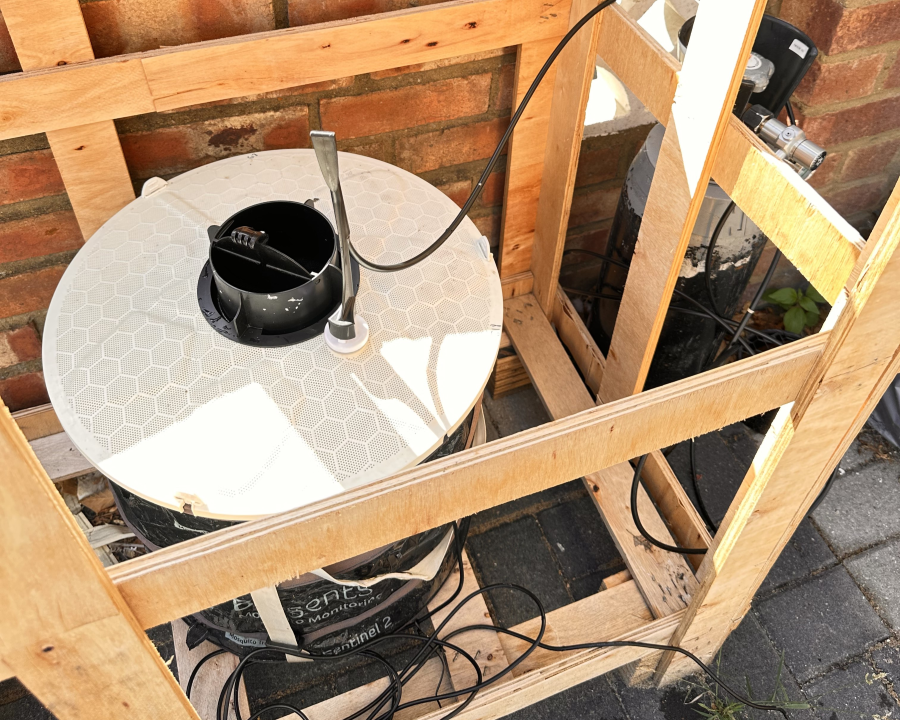
A particular example can be taken from a day in East London, monitoring the enhanced surveillance traps set after the Aedes aegypti detection. Until then, I hadn’t considered the significance of communication with local communities for mosquito surveillance and control. How do you notify residents of an unusual mosquito occurrence without fearmongering, whilst also stressing the importance of household mosquito management?
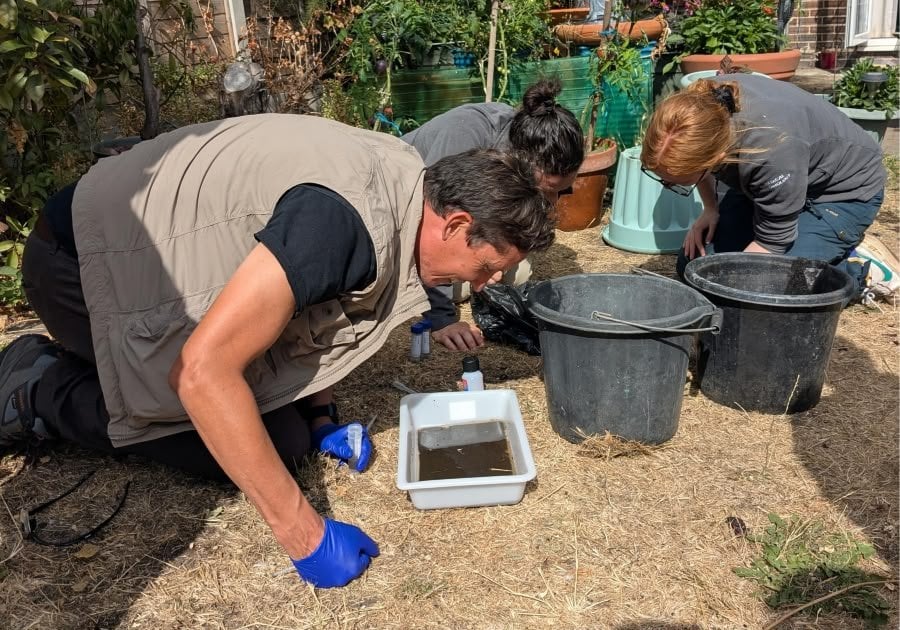
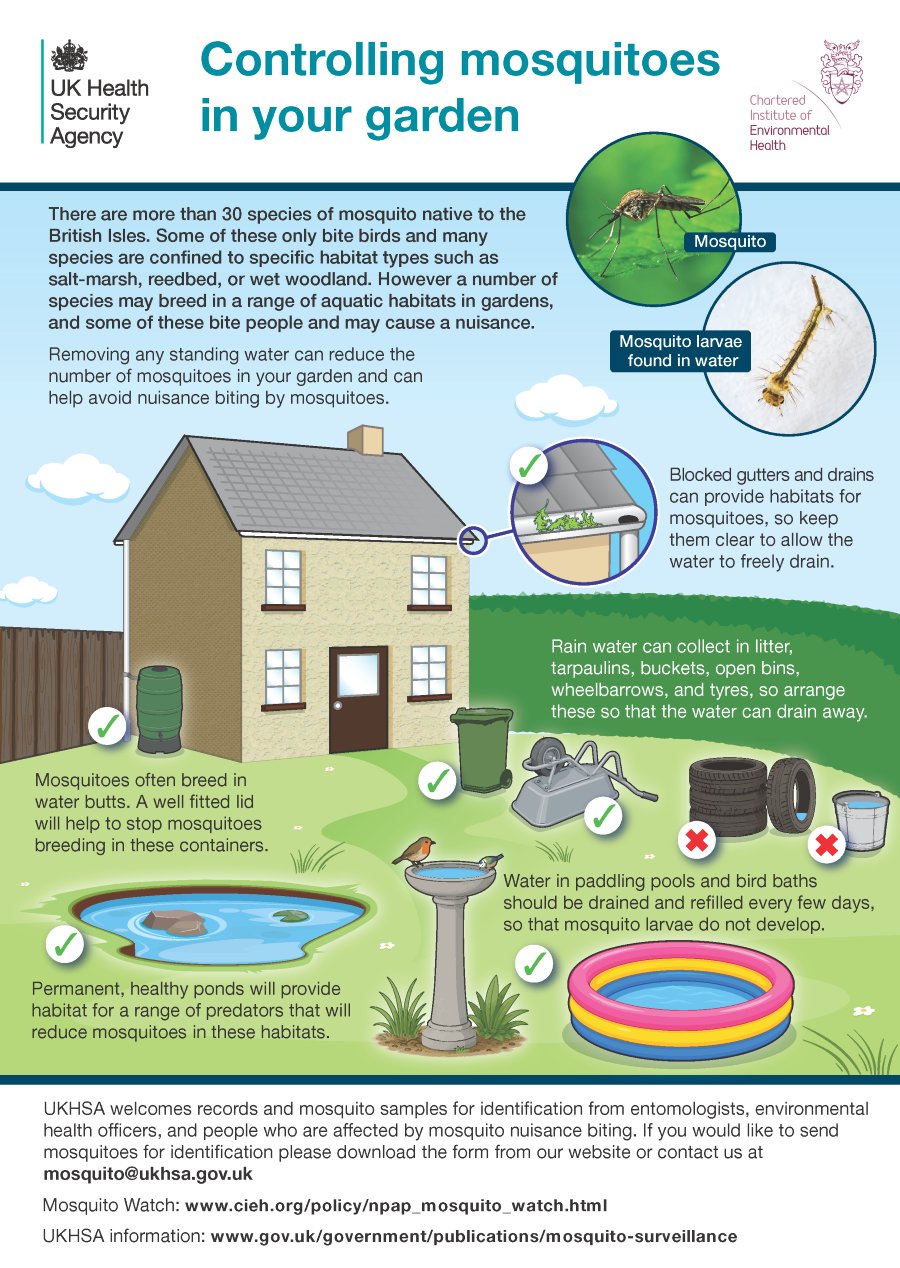
In this case, the MEZE team sent out carefully worded flyers to residents in the relevant areas, explaining how to reduce mosquito breeding sites in their gardens. This was followed up by visits to properties, where the MEZE team provided additional guidance to residents and set adult mosquito traps in the gardens of individuals who were willing. Checking these traps weekly allowed the MEZE team to monitor mosquito levels whilst also assessing if stagnant water was being removing adequately from the gardens of residents. Observing the differences in reactions from these residents really demonstrated that effective surveillance relies on communication and trust with the public as much as it relies on traps and laboratory identifications.
I also realised the importance of the collaborations between the MEZE team and organisations responsible for vector control. As the MEZE founder and team lead, Jolyon Medlock, explained, that their team’s focus is on vector surveillance and communication, rather than on downstream control strategies. Developing and implementing these control strategies relies, instead, on contributions from a much wider group, including pest control, forest management, and local authorities.
I joined one meeting bringing together some of these stakeholders, where discussions ranged from streamlining vector control processes between the UK and Europe, to practical challenges created by invasive mosquito detections in the UK – which are likely to continue in a changing climate.
The conversation raised questions directly relevant to my own research. How can we ensure that the interventions we use are both effective and environmentally sustainable? At what point should action be taken, and at what scale? How do we convince local authorities to engage when there are limited resources and funding?
My PhD aims to contribute to early-warning indicators for the enhanced detection of arthropod-related disease emergences in England. The week reinforced that these tools cannot be developed in isolation: they need to take account of how surveillance information will actually be used and what happens once a potential risk is identified.
The largest allocation of my time at MEZE was spent immersed within the mosquito and tick identification processes – and I quickly discovered that getting hands-on is the best way to learn.
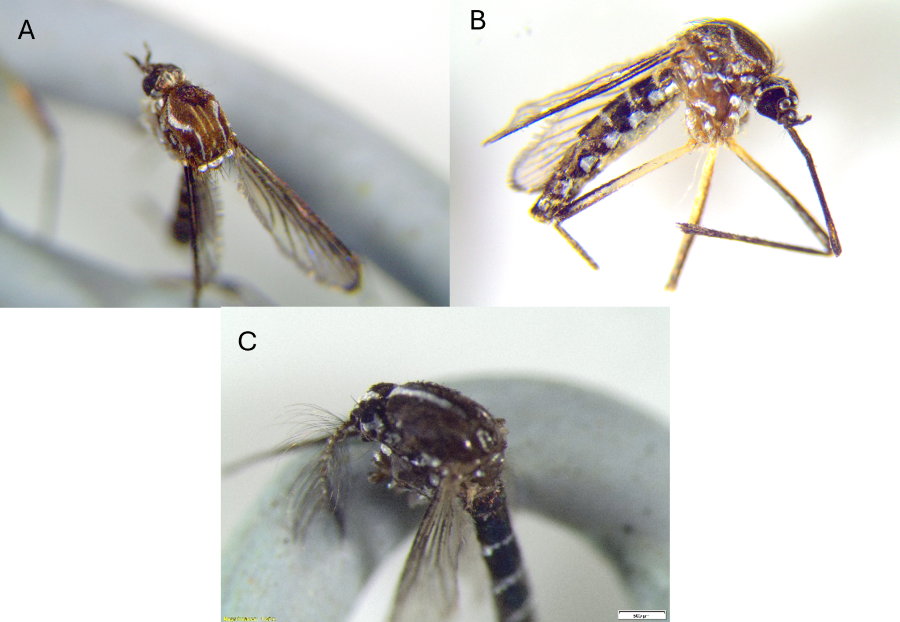
The volume of mosquitoes collected were nothing short of substantial. We had an extensive range of sources for mosquitoes, from enhanced trapping (from gardens in the vicinity of the recent Aedes aegypti detection), to the nationwide mosquito survey (focusing on wetlands and other high-risk sites), and the snapshot project, which aims to fill in any geographical gaps in surveillance.
The majority of ticks are sent in through the Tick Surveillance Scheme (TSS), which is a citizen science initiative encouraging tick submissions from across the country. They get submissions of ticks from a great range of sources, including from veterinary clinics and hospitals, but also from members of the public – occasionally in those aforementioned deflated balloons.
After taking an hour to identify one, it quickly became clear how difficult it can be for the untrained eye to distinguish between species. The labour and accuracy needed to ensure species are correctly identified is something I won’t forget when interpreting the final outputs.
Spending time with the MEZE team has changed the way I think about the surveillance data I use in my research. The background knowledge and new skills I’ve gained through working with MEZE was the perfect experience in clarifying how their data will be integrated within my PhD, and has changed my understanding of their data collection processes in a way that will undoubtably influence the interpretation of my outputs.
This project is funded by the NIHR HPRU in Climate Change and Health Security. The views expressed are those of the author(s) and not necessarily those of the NIHR or the Department of Health and Social Care.
If you enjoyed this article and would like to build a career in global health, we offer a range of MSc programmes covering health and data, infectious and tropical diseases, population health, and public health and policy.
Available on campus or online, including flexible study that works around your work and home life, be part of a global community at the UK's no.1 public health university.