Mosquitoes in the UK: What you need to know
26 June 2026 London School of Hygiene & Tropical Medicine London School of Hygiene & Tropical Medicine https://lshtm.ac.uk/themes/custom/lshtm/images/lshtm-logo-black.png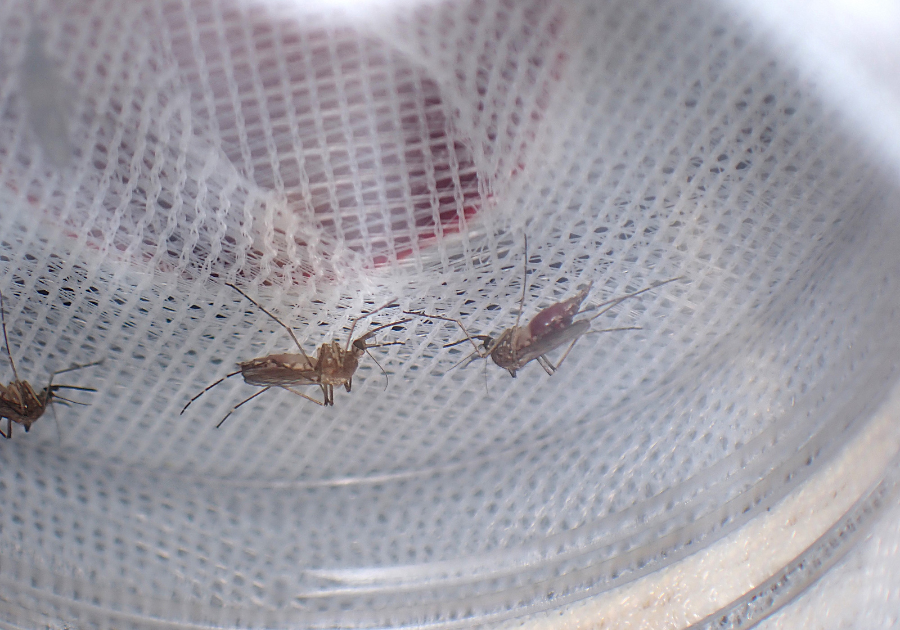
The buzzing and biting of the summer mosquito season in the UK has begun.
But are there more mosquitoes in the UK and are we seeing them for longer periods of the year, and could it become worse than an itch?
Climate change is affecting mosquito habitats and behaviour, for example with species moving to new areas in their quest for survival, or being active for more months of the year. This has potential implications including for the diseases mosquitoes can spread.
In part one of our two-part series on UK mosquitoes, medical entomologist Dr Mojca Kristan, Assistant Professor at LSHTM, explains what’s happening with UK mosquitoes, and why.
Dr Kristan said: "At the moment there's a low risk of bites from UK mosquitoes spreading serious illness, but we have to be alert to the threat of new disease-carrying mosquito species as climate change makes Britain a more attractive place for mosquitoes to survive and thrive."
Does the UK have mosquitoes?
There are over 30 species of native British mosquitoes (globally there are more than 3,000 species). However, not all of them are human biters, and not all can transmit diseases.
Which mosquitoes are found in the UK?
Culex pipiens: breed in many different water sources, including ponds, ditches, marshes, water tanks, buckets and bird baths, and also temporary puddles and flooded grasslands. They hibernate over winter as adults.
Culex pipiens f. molestus (the "London Underground" mosquito): a sub-species of Culex pipiens, these prefer urban infrastructure, such as sewers, pipes, drains, and underground tunnels where it is warmer and sheltered.
Culiseta annulata (the so-called house mosquito): one of the most common mosquitoes in the UK. It likes a range of natural and artificial water bodies, such as ponds, ditches, marshes, garden water butts, cisterns, and bird baths. It is a persistent nuisance biter, quite large and does not enter true hibernation; adults start looking for a blood meal when the temperature rises over 7C.
Anopheles claviger: prefers ditches, streams, temporary pools, and marshy field edges but also garden tanks and rain barrels. These overwinter as larvae, while adults can start appearing from late winter/early spring onwards.
Anopheles plumbeus: prefers holes in trees but has recently started moving into more urban environments such as gardens with bird baths and other containers. Known as a persistent nuisance biter.
Anopheles maculipennis complex (a group of morphologically similar species, in Britain these are An. atroparvus, An. daciae, and An. messeae): found in ditches, ponds, and marshes. Anopheles atroparvus is more common in brackish waters along the coast and estuaries. They all overwinter as adults.
Aedes vexans: known as the floodwater mosquito. Aedes vexans breeds in places such as floodplains of rivers and lakes where water levels fluctuate. Once flooded and when the temperature is high enough, eggs will hatch in large numbers.
In addition, some invasive species native to other countries could make their way to certain parts of the UK in the future. For example, Aedes albopictus (Asian tiger mosquito), which can carry viruses including dengue, is already well established in Europe. Although its eggs have been found in the south east of England (for the first time in 2016) it has not yet settled in the UK. There is ongoing intensive surveillance for this species.
As well as mosquitoes, people in the UK can also be bitten by other smaller, flying insects such as midges and black flies.
What weather conditions are best for mosquitoes?
Mosquitoes like warm temperatures, as well as rain to provide standing water where they can lay eggs. The second half of May 2026 was too dry but we had lots of rain at the beginning of June and as the weather has warmed up, the conditions in the UK now are perfect for a potential surge. There is standing water around for mosquitoes to lay their eggs until they are ready to emerge and start biting. If temperatures stay in the mid 20Cs, species like Culex and Anopheles will usually hatch in a few days. If it remains warm and we have a bit of rain every now and then, the mosquito breeding and biting cycle will continue.
What happens if I get bitten by a mosquito in the UK?
British mosquito bites, like all mosquito bites, can cause itching and redness which usually lasts for a few days. Bites should get better on their own, although over-the-counter creams are available to ease symptoms. Scratching can increase the risk of skin infection. In rare cases, bites can cause serious allergic reactions. If this happens you need to seek medical advice.
Can I catch diseases from mosquitoes in the UK?
The risk to human health from mosquitoes in the UK is currently very low, but research is being carried out at LSHTM to investigate this further and identify potential changes. These insights could support efforts to protect people from mosquito-borne diseases in the future, especially as temperatures rise and the UK and Europe experience other effects from climate change.
Currently, only ticks are known to transmit diseases to humans in the UK (tick-borne encephalitis and Lyme disease; also babesiosis and anaplasmosis, which are both currently rare in humans). Native British mosquito populations have the potential to spread different viruses and malaria parasites to humans. Some native mosquitoes, especially Culex, can transmit Usutu virus, present in the UK since 2020 and known to especially affect blackbirds. Usutu virus presents a very low risk for healthy individuals but can be of significant concern for the immunocompromised.
Why do mosquitoes bite us?
Female mosquitoes need blood in order to lay eggs, so they bite animals or humans to feed on their blood. Only the females bite. Male mosquitoes don’t bite as they don’t require blood, and they feed on nectar and other sugar sources such as fruit instead. Females additionally also feed on sugar for energy.
Why do mosquitoes bite some people more than others?
It’s true that some people are bitten more than others. How attractive someone is to mosquitoes depends on factors including human genetics, chemistry and biology. It’s not how we smell – as perceived by us, humans.
These include:
Skin microbiome: especially important are specific “odours”/gases/special compounds produced by the bacteria living on our skin. People with a lot of carboxylic acids (fatty acids) - primarily produced by the microbiome - on their skin are thought to be especially attractive to mosquitoes, as mosquitoes find these compounds very attractive. People who have more diverse skin bacteria tend to be less attractive to mosquitoes – but certain types of bacteria make you more attractive (in high diversity, other beneficial bacteria can mask their effect).
Breath and body heat: mosquitoes sense carbon dioxide (CO2) and can detect it from up to 30m away. People who exhale more CO2 can therefore be more attractive to mosquitoes. Once mosquitoes get close to a person (within 1m), they detect us with their thermal sensors.
Genetics: there are some indications that mosquitoes prefer certain blood groups, but that is not completely confirmed in nature. Heritability also plays a part. Studies with twins have shown that mosquito attractiveness is 67% linked to genes – so it is largely also down to our DNA.
How do I stop mosquitoes biting me?
Wear insect repellent and cover your skin with long sleeves, plus wear socks in the evening as mosquitoes like biting around our ankles.
If you are travelling to tropical destinations where malaria or other dangerous mosquito-borne diseases are present, you should seek medical advice around vaccinations and prophylaxis (anti-malarial medication), and take appropriate precautions such as using repellent (especially those containing DEET) and sleeping under a bed net if/where available to protect yourself from mosquitoes.
Many mosquitoes tend to come out more in the evening and nighttime, although in some instances they have evolved to bite in the daytime when they have more access to the blood sources they require. Aedes mosquitoes transmitting arboviruses such as dengue and chikungunya do not bite at night but especially during dawn and dusk periods, and even during daytime. If travelling to areas where these mosquitoes pose a problem, use repellent.
How can I reduce mosquitoes in my garden?
As mosquitoes breed in standing water, it’s a good idea to empty out any potential breeding sites, for example watering cans, bird baths and plant pots.
When is mosquito season in the UK?
Most native British mosquitoes typically peak between May and September. However, winters are becoming milder and wetter, creating good conditions for mosquitoes, so we can expect mosquito activity to last longer than in the past.
Why are more people being bitten at other times as well now?
In the past, UK winters were cold enough to kill off active mosquito adults or force them into diapause. Diapause is hibernation-like state, which used to be triggered by shorter days and colder temperatures. Male mosquitoes would die off, but females would hide in sheltered areas and be mainly inactive and stop blood feeding. However, milder winters, as we saw at the end of 2025/early 2026, can mean that at least some mosquitoes remain active.
If temperatures stay above 7°C–10°C, some mosquito species (eg Culiseta annulata, the “house mosquito”) can continue to fly and feed. In addition, the so-called “London underground mosquito”, Culex pipiens molestus, lives in urban locations such as sewers and pipes where it is warmer and sheltered, so these can remain active throughout the winter. These two species are most likely to have caused the early spring 2026 spike in biting outside the usual mosquito season.
Is wet weather also a factor?
In addition to milder weather, there has also been a lot of rain (2026 had one of the wettest starts to the year on record), which created mosquito breeding sites. They need to lay eggs on water as larvae and pupae live in water and can’t survive if they dry out.
There is a direct correlation between high winter rainfall and mosquito density as it allows for habitat expansion generally, with flooded areas and saturated ground remaining wet for longer, even later into spring. Milder temperatures, apart from being favourable for mosquitoes, also prevent standing water sources from freezing. This allows mosquitoes like Culiseta annulata to continue its life cycle: instead of being dormant, they wake and become active, blood feed, and then lay eggs. Warmer temperatures also mean that larval development, which takes place in water, is faster – as is digestion of blood meals and formation of eggs.
What parts of the UK are most affected by this?
Outside the peak summer season, mosquitoes tend to be concentrated in warmer areas in south east England and London. The “urban heat island” effect means cities stay up to several degrees warmer than rural areas, and also provide sheltered areas (micro-climates) where mosquitoes can shelter and stay active, such as heated basements, sewers and pipes. In the coastal south east, such as Kent, Essex, West Sussex, there are established mosquito populations of certain species (like Culex modestus) which are known to thrive in the Thames Estuary's marshes.
About Mojca Kristan

Originally from Slovenia, Mojca Kristan graduated from LSHTM with an MSc in the Biology and Control of Disease Vectors in 2001. Since returning to LSHTM as a staff member in 2012, she has been involved in teaching and research on the ecology and control of vector-borne diseases, with particular interest in vectors of malaria and other diseases. Dr Kristan is an Assistant Professor in Medical Entomology. She works with colleagues in the insectaries at LSHTM, where we breed and study colonies of mosquitoes from around the world, and some of the diseases they transmit, in laboratory conditions.
If you enjoyed this article and would like to build a career in global health, we offer a range of MSc programmes covering health and data, infectious and tropical diseases, population health, and public health and policy.
Available on campus or online, including flexible study that works around your work and home life, be part of a global community at the UK's no.1 public health university.