




The DUALIS study involves the co-design and evaluation of a multifaceted intervention to improve syphilis screening and management among pregnant women in Indonesia.
The DUALIS team brings together experts in maternal and newborn health, infectious diseases, health economics, health systems, and implementation science to strengthen antenatal screening and prevent mother-to child transmission of syphilis, HIV and hepatitis B.
DUALIS is a multi-level, multi-faceted intervention focusing on improving syphilis screening and management in pregnant women in Indonesia. The research aims to strengthen antenatal care and accelerate progress towards the elimination of mother-to-child transmission of HIV, syphilis and hepatitis B.
The DUALIS study is led by the London School of Hygiene & Tropical Medicine and Gadjah Mada University in collaboration with the Indonesian Ministry of Health.
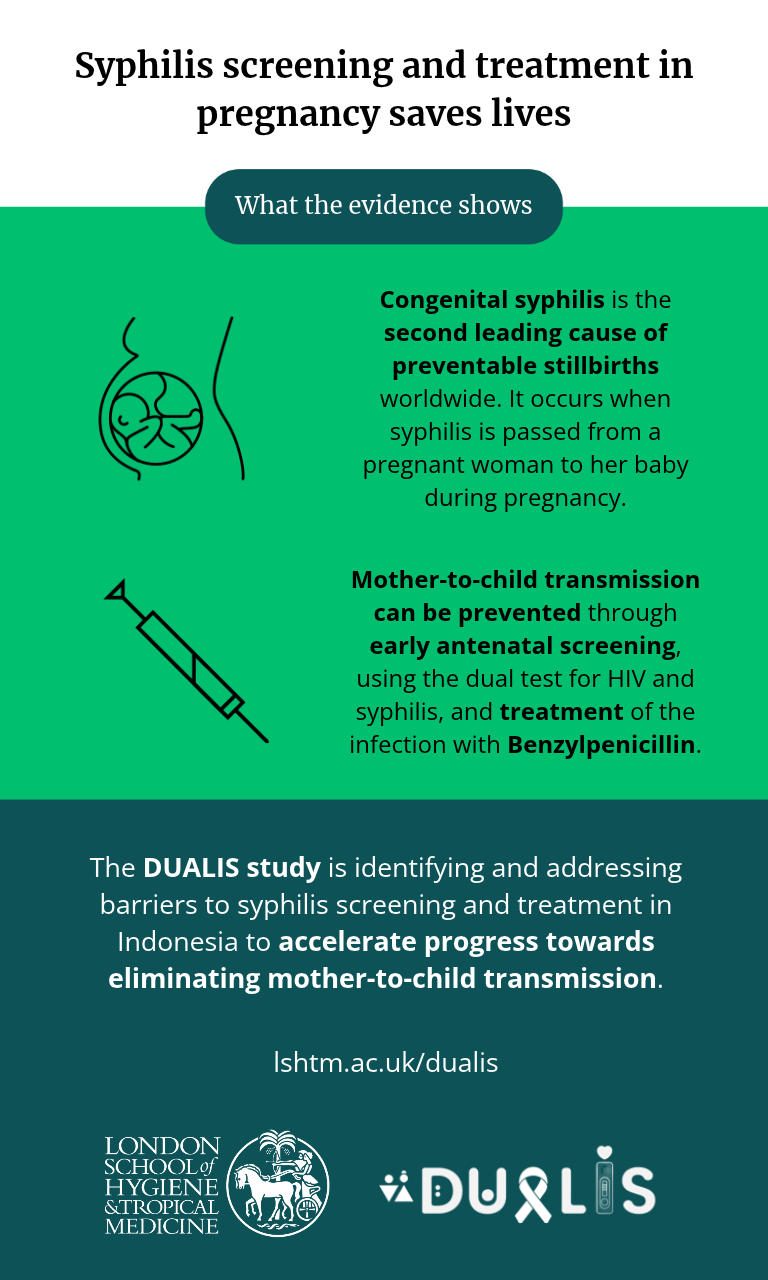
Around a million pregnant women are diagnosed with syphilis each year. Congenital syphilis, where the disease is passed on from a pregnant woman to her baby during pregnancy, is the second leading cause of preventable stillbirth globally, preceded only by malaria. According to the WHO, around 700,000 cases of congenital syphilis were diagnosed in 2021 globally, with many cases resulting in adverse birth outcomes.
Syphilis in pregnant women has risks for both the mother and foetus, including premature birth, neonatal death, low birth weight, neonatal neurological impairment, vision loss, convulsive disorders and bone malformations. Effective solutions to screen and treat syphilis in pregnant women already exist. Mother-to-child transmission can be prevented through universal screening early in pregnancy, and prompt treatment with Benzyl Penicillin (BPG) and follow up of women who test positive.
Screening for syphilis has been expanded in many countries through the introduction of rapid tests, including the dual test for HIV and syphilis. These tests can save costs and streamline screening services. However, several barriers need to be overcome to strengthen antenatal testing and treatment of syphilis in Indonesia, including lack of awareness and stigma, inconsistent implementation of national guidelines, and problems with supply of treatment.
The DUALIS study will design and evaluate an intervention to identify and address these barriers, to improve syphilis management in pregnancy and work towards eliminating mother-to-child transmission of syphilis.
Read more about our research.
Co-Principal Investigators
- Prof Shunmay Yeung, London School of Hygiene & Tropical Medicine (LSHTM)
- Prof Virginia Wiseman, LSHTM
- Prof Ari Probandari, Gadjah Mada University (UGM) and Universitas Sebelas Maret (UNS)
Co-Investigators
- Prof Yanri Wijayanti Subronto, UGM
- Dr Marco Liverani, LSHTM
Researchers
- Dr Vitri Widyaningsih, UNS
- Dr Luh Putu Lila Wulandari, University of New South Wales (UNSW)
- Juniati Rahmadani, UGM
- Dr Christa Dewi, UGM
- Dr Tsitsi Monera-Penduka, LSHTM
Project Manager
- Swasti Sempulur, UGM
Communications Manager
- Sarah Sharpe, LSHTM
The DUALIS study aims to design and evaluate the effectiveness, cost-effectiveness and implementation of a capacity-strengthening intervention to promote early syphilis management in pregnancy and to strengthen the Prevention of Mother-to-Child Transmission (PMTCT) programme in Indonesia.
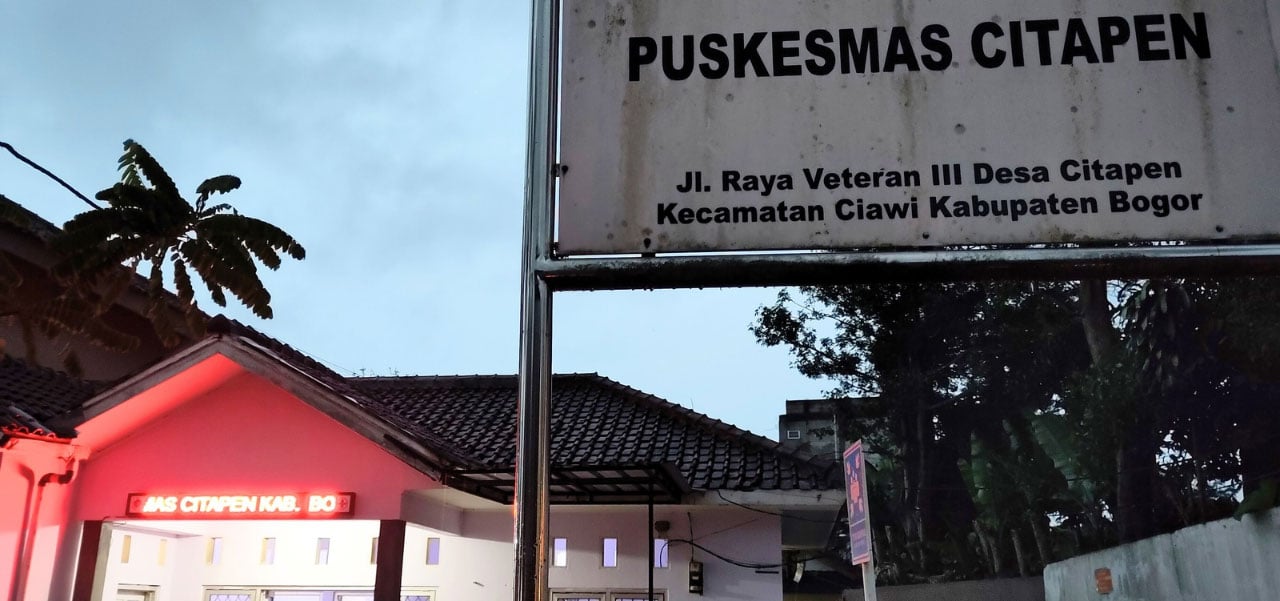
The evaluation uses a quasi-controlled pre- and post-intervention study design, comparing outcomes before and after implementation and across different areas. The programme is being implemented at the district level in partnership with District Health Offices, local Puskesmas (government primary healthcare centres), and community and private midwives.
The intervention will take place in four districts, within two provinces, west Java and East Nusa Tenggara. These provinces were selected in consultation with the Ministry of Health, prioritising provinces with relatively high prevalence of syphilis and where coverage of antenatal care testing or syphilis treatment is below the national average. Data on testing coverage will also be gathered from a quasi-control district in each province, which represent similar areas to the intervention districts in terms of disease burden and screening coverage.
The intervention has been co-designed with partners of the DUALIS study including the Ministry of Health and will be implemented over a 12-month period. A comprehensive package of operational support, capacity strengthening and practical tools will be provided in the intervention sites to promote screening for and management of syphilis in pregnancy.
The research seeks to strengthen PMTCT guidelines in Indonesia and other low- and middle-income countries. DUALIS will also provide practical resources for training and capacity building that can be used across a range of health systems.