
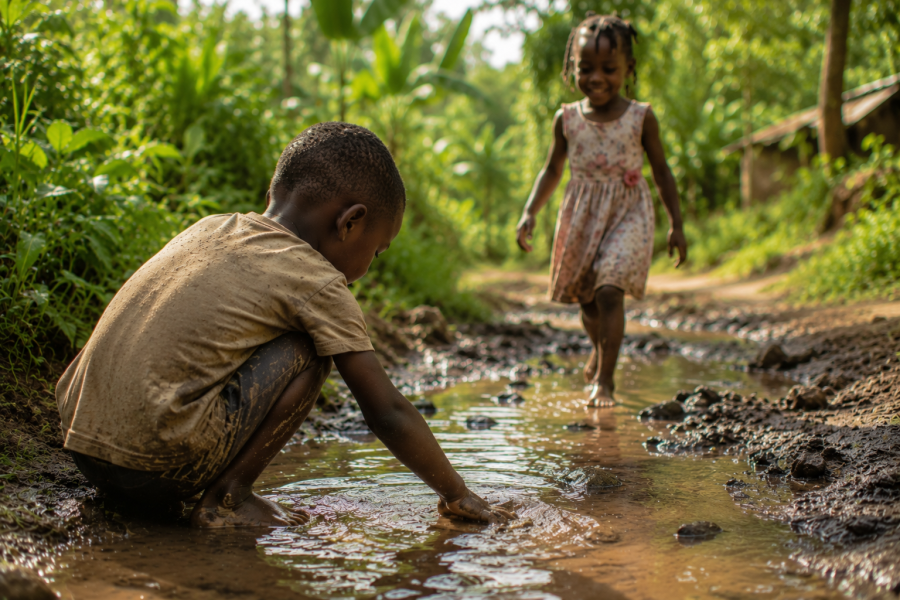
Researchers are now building a clearer understanding of how these exposures interact to shape health across the life course, creating new opportunities to improve disease prevention from the very beginning of life.
This emerging evidence was the focus of a week-long scientific conference convened by the MRC/UVRI and LSHTM Uganda Research Unit, bringing together researchers and collaborators from Makerere University, the University of Oxford, the University of Glasgow, the University of Manchester, the University of York, Kilimanjaro Christian Medical Centre and Leiden University Medical Centre to explore how research can inform more effective public health strategies in Uganda and beyond.
The conference opened with the EMaBS–NCDs Run , which brought together study participants, their families, researchers, nurses, community field workers and health partners in a celebration of more than two decades of partnership through the Entebbe Mother and Baby Study (EMaBS) cohort. Beyond celebrating this shared journey, the run created an opportunity for researchers to engage directly with the communities behind the research, facilitating conversations on how early-life experiences have shaped the cohort's contribution to knowledge on lifelong health and reinforcing the value of sustained community participation in research.
A recurring theme throughout the discussions was that prevention should begin long before disease develops. Evidence presented at the conference demonstrated how exposures during pregnancy and early childhood have lasting effects on immunity, growth and long-term health, highlighting maternal and child health as a critical opportunity to reduce future disease burden.
Much of this understanding has been made possible through long-term cohort studies such as the Entebbe Mother and Baby Study (EMaBS) and the General Population Cohort. By following participants from birth into adulthood, these studies provide unique insights into how early-life environments influence health over decades.
"Long-term cohort studies like EMaBS@21 and the General Population Cohort allow us to move beyond snapshots of health and instead understand the full arc of human development," said Prof Emily Webb, Principal Investigator of the EMaBS@21 study at the Unit. "By tracking individuals from birth into adulthood, we are uncovering how early-life exposures shape immunity, growth and disease risk in ways that are critical for designing more effective, context-specific interventions."
The findings are also helping researchers better understand why vaccines can perform differently across populations. Rather than viewing vaccine effectiveness in isolation, scientists are increasingly recognising that environmental and early-life exposures play an important role in shaping immune responses. Incorporating these factors into vaccine research and clinical trials could support the development of more context-specific immunisation strategies and strengthen the interpretation of research findings.
"Understanding why vaccines perform differently across settings requires us to look more closely at the environments in which people live and the exposures that shape immune responses over time," said Associate Professor Gyavira Nkurunungi, Immunomodulation Research Lead at the Unit. "Strengthening collaboration across disciplines is essential if we are to translate this understanding into more context-specific and effective public health and immunisation strategies."
The conference also highlighted the importance of bringing together expertise from immunology, epidemiology, environmental health, clinical research and data science to address increasingly complex public health questions. Participants emphasised that understanding lifelong health requires integrated approaches that connect biological, environmental and population-level data.
Building on these discussions, the meeting concluded with a two-day multi-omics training workshop, equipping researchers with advanced skills to integrate and analyse complex biological and environmental datasets. By strengthening local capacity in these emerging analytical approaches, the training supports the translation of research evidence into interventions that can improve health across the life course.
Read more about the Unit’s vaccine research
If you enjoyed this article and would like to build a career in global health, we offer a range of MSc programmes covering health and data, infectious and tropical diseases, population health, and public health and policy.
Available on campus or online, including flexible study that works around your work and home life, be part of a global community at the UK's no.1 public health university.