
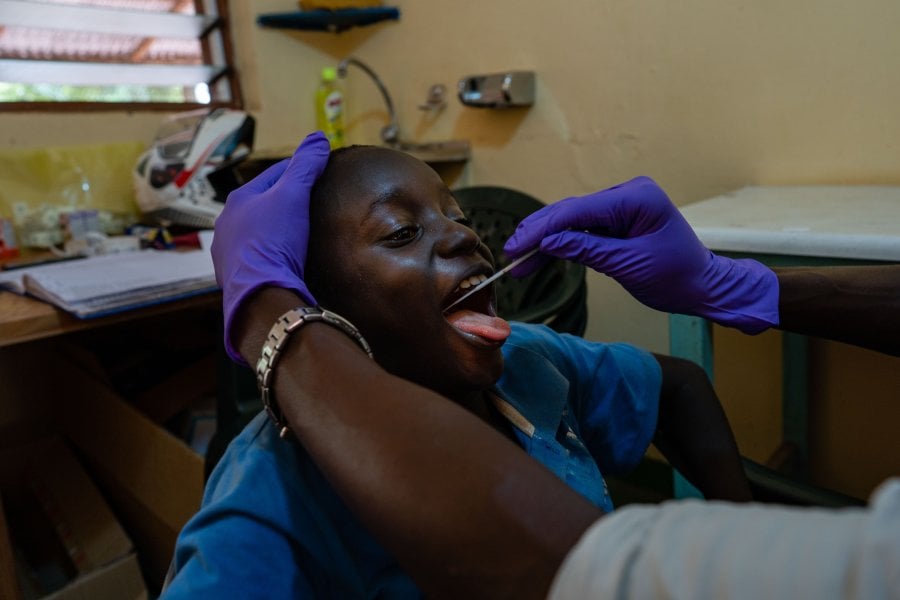
The Award will enable researchers to investigate how early-life exposure to Group A Streptococcus shapes immunity and contributes to heart disease.
Strep A is a common type of bacteria that can cause several illnesses, including sore throat and skin infections. In some cases, infection can lead to severe invasive disease or trigger complications such as rheumatic heart disease (RHD), which disproportionately affects children and young adults, especially in vulnerable communities.
Despite the significant global burden of Strep A disease, there is currently no licensed vaccine. Understanding how our immune systems respond following exposure to Strep A, particularly during the earliest stages of life, is therefore critical for future vaccine development and disease prevention.
“This is a very exciting long-term study aiming to understand how exposure to Strep A in early life programmes the immune system and may result in protection from infection or the development of immune-mediated rheumatic heart disease (RHD). RHD is a devastating condition which can lead to heart failure and significant disability and death in early adulthood. We urgently need a vaccine against Strep A and this work will further this goal,” said Professor Ed Clarke, Principal Investigator and Unit Director of MRCG at LSHTM.
A major component of the study will be the establishment of a new birth cohort in The Gambia. Infants will be followed from birth through their first two years of life, providing researchers with an opportunity to study how repeated exposure to Strep A during early childhood affects the development of the immune system.
The study will also investigate why natural immunity to Strep A may develop poorly during early life, which immune responses provide protection against infection, and whether early biological responses may help explain why some children later develop complications such as rheumatic heart disease.
Funded through a Wellcome Discovery Award, the seven-year programme brings together researchers from MRCG at LSHTM, the University of Sheffield in the UK, the University of Auckland in New Zealand, the Walter and Eliza Hall Institute in Australia, and Institut Pasteur in France. They will combine long-term clinical and epidemiological studies with advanced immunology, proteomics and mathematical modelling to build a more detailed picture of the relationship between Strep A exposure, immunity and disease.
Dr Eunice Kiamba, Research Fellow at MRCG at LSHTM and Co-Investigator co-leading the cellular immunology component of the programme, said: “I am delighted to contribute to this important programme, which combines cutting-edge science with a strong commitment to strengthening research capacity in Africa.
The research will build on ongoing studies in The Gambia, Uganda and Malawi, where more than 22,000 children are being screened for early signs of rheumatic heart disease. Connecting these studies will provide an important opportunity to examine whether patterns of immune response and Strep A exposure observed in early childhood are associated with later signs of rheumatic heart disease.
Dr Effua Usuf, Associate Professor at MRCG at LSHTM and co-lead of the epidemiology work in the programme said: “I am excited to be part of this study, which will provide valuable data towards developing a vaccine against Strep A. Preventing this bacterial infection could transform the lives of children in The Gambia and beyond, sparing them from serious illness and the lifelong consequences of rheumatic heart disease.”
In addition to the research component, the study will strengthen scientific expertise and leadership in Africa. Early career researchers will have opportunities for advanced training in areas including immunology, serology, epidemiology and data science. The programme seeks to build sustainable research capacity, especially in countries where the burden of Strep A and its complications is greatest.
Building on MRCG at LSHTM’s long-standing expertise in population health, epidemiology, immunology and clinical research, this initiative further strengthens our contribution to generating evidence and fostering solutions to some of the region's most pressing diseases affecting children and young people.
If you enjoyed this article and would like to build a career in global health, we offer a range of MSc programmes covering health and data, infectious and tropical diseases, population health, and public health and policy.
Available on campus or online, including flexible study that works around your work and home life, be part of a global community at the UK's no.1 public health university.