
Professor Francesco Checchi at the London School of Hygiene & Tropical Medicine (LSHTM) will lead the five-year project, “Quantitative epidemic risk assessment in humanitarian responses”.
The funding is part of a new £54 million investment from UK government partners and UK Research and Innovation (UKRI) supporting 18 research and innovation projects to tackle major biosecurity threats, including emerging epidemics and antimicrobial resistance. The investment is co-funded by UKRI, the Foreign, Commonwealth and Development Office (FCDO) and other government partners.
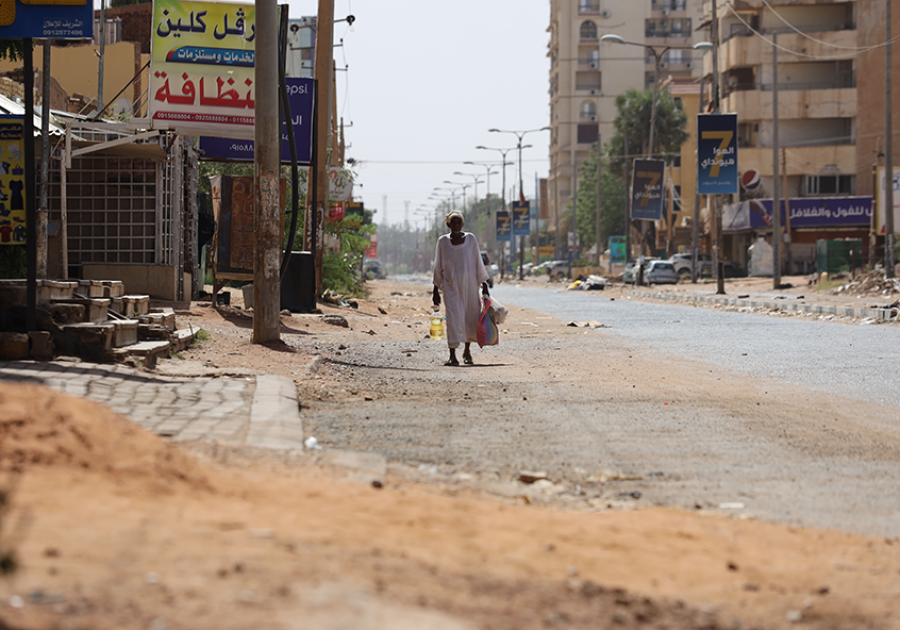
Humanitarian crises are affecting an increasing number of people, driven by armed conflict and increasingly by climate change. Around 300 million people worldwide currently require humanitarian assistance, around a third of whom have been forcibly displaced. At the same time, humanitarian funding is declining, increasing pressure on organisations to make the greatest possible impact with limited resources.
Epidemics are disproportionately common in humanitarian crises, where overcrowding, malnutrition, poor water and sanitation, and disrupted health services can increase the risk of disease outbreaks. However, there is currently no systematic way for humanitarian organisations and local health authorities to assess and prioritise the risks posed by different epidemic-prone diseases.
Over five years, the project will develop a systematic approach to assess the likelihood and potential impact of epidemics in humanitarian crises. The team will use statistical, mathematical and geospatial modelling, alongside local expertise, to develop risk assessments and decision-support tools.
The research will be carried out across four humanitarian settings – eastern Democratic Republic of Congo, south-central Somalia, Darfur in Sudan and a fourth emergency to be identified – with the aim of developing approaches that can be used more widely to support decision-making in future humanitarian responses.
Francesco Checchi, Professor of Epidemiology and International Health at LSHTM, said: “Disease outbreaks can have devastating consequences in humanitarian crises, where health systems and communities are already under enormous pressure. This funding will allow us to develop more rigorous and practical approaches to assessing epidemic risk, helping decision-makers identify where the greatest threats lie and act earlier to reduce their impact.”
Researchers at LSHTM will work together with academic and operational partners, including the Catholic University of Bukavu in DRC, SIMAD University in Somalia, the Barcelona Supercomputing Centre and Epicentre, and the epidemiology unit of Médecins Sans Frontières. The project will also strengthen local researchers’ expertise in complex analyses, enabling researchers based within or close to crisis-affected areas to lead epidemic risk assessments by the end of the project.
The project forms part of a wider programme aimed at strengthening capacity in the UK and internationally to prevent, detect and respond to biological threats. The 18 funded projects bring together expertise across disciplines and countries to improve preparedness, strengthen resilience and support earlier detection of emerging risks.
Professor Sir John Edmunds, FCDO Chief Scientific Adviser, said: “FCDO is pleased to co-fund these innovative research projects. They will make a real difference to understanding and managing emerging diseases and reducing their impact for vulnerable people and their livelihoods, including in humanitarian responses.”
If you enjoyed this article and would like to build a career in global health, we offer a range of MSc programmes covering health and data, infectious and tropical diseases, population health, and public health and policy.
Available on campus or online, including flexible study that works around your work and home life, be part of a global community at the UK's no.1 public health university.