As world leaders gather in Antalya, Türkiye, for the 31st United Nations Climate Change Conference (COP31) from 9–20 November 2026, attention is turning to how countries can deliver on their climate commitments. Following the launch of the Belém Health Action Plan and the adoption of global adaptation indicators at COP30, this year's conference presents an important opportunity to strengthen health systems, address inequalities and accelerate action to protect health from climate change.
Researchers from the London School of Hygiene & Tropical Medicine (LSHTM) will be contributing expertise spanning climate-related health impacts, adaptation and resilience, sustainable food and health systems, and the health benefits of climate mitigation. Through initiatives including the Centre on Climate Change and Planetary Health, LSHTM is working to strengthen the evidence base for ambitious, equitable climate action that protects both people and the planet.
At COP31, our researchers will be participating in events, following negotiations and engaging with international partners to help ensure that scientific evidence informs climate policy and translates into meaningful benefits for health.
Meet our researchers at COP31
Five LSHTM researchers will be attending COP31 in person, bringing different perspectives on the connections between climate change, human health and the environment. Listed in order of attendance, find out more about their research, plans for the conference and what they hope COP31 will achieve.
- Rosie Green, Professor of Environment, Food and Health

Research focus: Climate mitigation and health co-benefits, sustainable food systems and evidence synthesis
“I work on a range of projects related to climate and health, mostly focusing on health co-benefits of climate mitigation actions (the Pathfinder Initiative, PAICE), climate resilience in food systems (Visibilize4ClimateAction East Africa, SHEFS-SA, BAFR-UK, ClimateFlation), and evidence synthesis for climate and health (DESTINY, METIUS). My wider research explores the relationships between diets, the environment and human health, including how healthier and more sustainable food systems can benefit both people and the planet.
“At COP31, I will be attending Health Day, meeting with WHO and collaborators from the USA, and speaking at an event organised by Oxford University. I'm hoping to see tangible progress on including health in climate action.”
- Maëlle Marchand, MPH, Doctor of Public Health (DrPH) candidate

Research focus: Planetary health governance, adaptation, institutional learning and equity
“My research focuses on how institutions across local, national and international levels anticipate and respond to planetary health challenges. I'm interested in anticipatory governance, implementation science, and how evidence and diverse knowledge systems inform equitable policy and practice.
“My current doctoral study examines the 2023–2024 UNEP–International Science Council Foresight Trajectory, a global initiative on emerging risks and opportunities for planetary health and human wellbeing. It explores how the involvement of delivery partners in adapting and co-facilitating workshops to bring regional knowledge into global findings may have influenced their own foresight practices, organisational learning and uptake of planetary health insights.
“At COP31, I intend to follow the main programme on health/food, resilient cities and climate finance, alongside side events on the Global Goal on Adaptation and Health Pavilion sessions, including ATACH Day. Through these events and exchanges with researchers, policymakers and practitioners, I aim to understand how evidence informs adaptation decisions and how health and equity are considered. I also intend to attend civil society events on Indigenous leadership and the role of Indigenous and local knowledge in climate decisions.
“I hope COP31 advances adaptation finance and the practical use of the Belém Adaptation Indicators, including measures of health impacts and health-system resilience. I also hope to see greater attention to inequalities in adaptation outcomes, alongside meaningful participation by Indigenous Peoples and local communities in setting adaptation priorities and evaluating progress.”
- Dr Sham Lal, Assistant Professor of Epidemiology

Research focus: Climate change, child health and climate-resilient health systems in sub-Saharan Africa
“I'm an Assistant Professor of Epidemiology in the Faculty of Infectious and Tropical Diseases, working on child health in sub-Saharan Africa, with a long-standing focus on malaria. More and more, my research asks how a changing climate is affecting children's survival and health.
“In my climate–health work, I am examining how extreme heat, heavy rainfall and flooding affect child deaths, hospital admissions and migration, and which children are most at risk. In both Tanzania and Southern Mozambique I'm linking nearly three decades of children's health and demographic data to daily heat-stress indices. Overall, I aim to create evidence that health systems can act on.
“At COP31, my focus will be health and adaptation. In the negotiations, I'll be following the Global Goal on Adaptation. COP30 adopted 59 adaptation indicators, several of them on health, but progress stalled at the June talks in Bonn, so how they'll be put into practice is open again in Antalya. I'll also follow the talks on adaptation finance.
“Outside the negotiations, I'll be engaging with the climate and health community at the Health Pavilion, and meeting researchers, health ministries and partners from sub-Saharan Africa who work on climate-informed surveillance and heat early warning for children.
“With 'dynamic and resilient health systems' among the priority themes of the COP31 Action Agenda, I'd like this to be the COP where health commitments become measurable. That means agreeing how the adaptation indicators will be used, with health measures that low-income countries can actually collect and that are broken down by age, so the effects of climate change on young children are visible rather than averaged away.
“It means progress on the common indicators that countries endorsing the Belém Health Action Plan are due to develop by COP31. Looking ahead I hope Antalya builds momentum towards COP32 in Addis Ababa, so that African priorities are at the centre of next year's talks.”
- Dr Lorna Benton, Assistant Professor in Planetary Health

Research focus: Climate mitigation, planetary health and evaluation of climate–health interventions
“As an Assistant Professor in the Centre on Climate Change & Planetary Health, my research focuses on climate mitigation and health, planetary health and evaluation, particularly understanding how climate action can deliver benefits for human health.
“Through the Pathfinder Initiative, I work on strengthening the evidence base for climate and health interventions, including developing approaches to evaluate their effectiveness and health impacts. We aim to help policymakers and practitioners identify which climate actions work, understand their wider benefits and ensure that evidence informs decision-making.
“At COP31, I will be speaking at an official side event co-organised by LSHTM on 18 November on just, healthy transitions away from fossil fuels, and will be following the Research and Systematic Observation (RSO) work stream with interest. This year, I hope that the best available science forms the basis of ambitious action, especially to protect health as an immediate pathway for action.”
- Dr Iris Blom, Researcher, Pathfinder Initiative
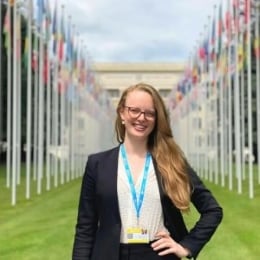
Research focus: Sustainable healthcare, health systems resilience and the health benefits of climate action
“I am a medical doctor, policy expert and climate-health researcher working on sustainable healthcare, climate change and health evaluation, and the Pathfinder Initiative at LSHTM. My research focuses on the health co-benefits of climate action and how healthcare systems can become both more resilient to climate change and environmentally sustainable. I am also involved in the Lancet Commission on Sustainable Healthcare, which examines how health systems can reduce their environmental impact while delivering high-quality care.
“At COP31, I will be speaking at events on health co-benefits, sustainable healthcare and resilient healthcare, including an official UNFCCC side event hosted by the Pathfinder Initiative and partners. I will also be following negotiations and building ambition in all sectors through the health argument, engaging daily with the health community, and meeting with Party members.
“COP30 gave the health sector its first international adaptation framework, the Belém Health Action Plan. At Antalya, we need to see whether governments start implementing it. I am looking for three outcomes.
“First, agreement on the common indicators for the Belém Health Action Plan, so that endorsing Parties can report real progress by COP33. Those indicators should line up with the Belém Adaptation Indicators under the Global Goal on Adaptation, and they need to come with means of implementation, including a credible pathway to tripling adaptation finance.
“Second, health in national climate plans should be treated as a measurable commitment. The GCHA's latest Healthy NDC Scorecard finds that the highest-emitting economies score lowest on health, while 19 of the 20 top-scoring plans come from low- and middle-income countries.
“Third, I hope Antalya treats health systems as both vulnerable to climate change and contributors to it. Adaptation and greenhouse gas mitigation in healthcare should advance together, building on the work of WHO's Alliance for Transformative Action on Climate and Health (ATACH).
“Across all three, I hope to see young people and early-career professionals take part as co-creators of these processes, not only as observers.”
Find LSHTM at COP31
LSHTM researchers will be contributing to events and discussions throughout COP31, sharing evidence and expertise on the health benefits of climate action, sustainable healthcare, adaptation and planetary health.
Find out where to hear from our researchers and engage with their work. All event times are local to Antalya (UTC+3).
- 10 November
11:00 - 12:00: Healthy, livable and resilient cities under climate overshoot
- Location: Global Futures Pavilion, Blue Zone, Area B2
- Organisers: CoCare Society
- LSHTM speaker: Professor Rosie Green (in person)
- Event overview: The session will bring together researchers and practitioners from different parts of the world to discuss how cities are responding to climate overshoot, with a particular focus on the impacts of extreme heat on health, urban livability, and social inclusion. Through international case studies and diverse perspectives, we aim to exchange experiences, reflect on approaches to adaptation and transformation, and explore how cities can become healthier, more livable, and more inclusive.
- 18 November
18:30 - 20:00: From transparency to impact: accelerating just, healthy transitions beyond fossil fuels
- Location: Side Event Room 1 (GORDIYON)
- Organisers: Pathfinder Initiative at the London School of Hygiene & Tropical Medicine (LSHTM), Centro Mexicano de Derecho Ambiental (CEMDA), Environmental Investigation Agency (EIA) and Greener Impact International (GII)
- LSHTM speaker: Dr Lorna Benton and Dr Iris Blom (Moderator)
- Event overview: Official UNFCCC COP31 side event exploring how transparency, methane action and just transitions can deliver climate, health and equity benefits.
- Further information and link to the livestream can be found on the event page - please note for audiences watching online from the UK, the event will begin at 15:30 GMT.
- 19 November
10:30 - 11:30: From Country Evidence to Heat Action: Insights across South and Southeast Asia
- Location: Health Pavilion
- Organisers: Global Heat Health Information Network (GHHIN) South Asia Hub, based at the Council on Energy, Environment and Water (CEEW), India; Global Heat Health Information Network (GHHIN) Southeast Asia Hub, based at the Heat Resilience & Performance Centre, NUS Medicine, Singapore; WHO-WMO Climate Health Joint Programme
- LSHTM speaker: Dr Iris Blom
- Watch the livestream.
13:30 - 15:00: Who does the work? The health workforce and climate commitments: launch of Green Planet, Green Care
- Location: BeNeLux Pavilion
- Organisers: Dutch Green Health Alliance (Groene Zorg Alliantie), with University Medical Center Utrecht, Amsterdam UMC and the London School of Hygiene & Tropical Medicine
- LSHTM speaker: Dr Iris Blom
- Event overview: This session will explore the vital role of healthcare professionals in translating national climate commitments into practical action, including the barriers they face and the support needed from governments and professional bodies. It will also mark the international launch of Green Planet, Green Care, a new open-access book offering practical guidance on sustainable healthcare, from emissions reduction and circularity to education, medicines and advocacy, featuring a foreword co-authored by Dr Iris Blom and Professor Andy Haines, and a chapter authored by Iris.
LSHTM virtual delegates at COP31
Alongside our in-person delegation, LSHTM researchers will be participating virtually in COP31, following negotiations, engaging in discussions and contributing to the global climate and health conversation remotely.
- Virtual delegation
- Dr Bilal Djeghout, Molecular Microbiologist and Research Fellow
- Dr Gouvidé Jean Gbaguidi, Research Fellow - Climate Change and Health, MRC Unit The Gambia
- Lara Moussa, PhD Research Student - Climate change and malnutrition
- Hima Narayan, MSc Student (Public Health)
- Martha Teshome, DrPH Candidate - Planetary Health Group
- Dr Elaine Flores Ramos, Research Fellow in Planetary Health
- Dr Rekha Rao, MSc Student (Epidemiology)
Study Climate Change and Planetary Health at LSHTM
The research and expertise that LSHTM brings to COP31 also helps inform the training of the next generation of climate and health professionals.
Our MSc in Climate Change and Planetary Health explores how environmental change affects human health and the systems that sustain human wellbeing. Drawing on interdisciplinary research across LSHTM, including leading work from experts within the Centre on Climate Change and Planetary Health, the programme examines the drivers of climate and ecological change, their impacts on health, and the strategies and solutions that can reduce risks and support more sustainable and resilient societies.
This programme is also available online, with flexible study options.
Interested in studying at LSHTM? Join us at our upcoming Autumn Open Evening event (18 November) to find out more.
Contact Us
For general enquiries about LSHTM at COP31, please contact Ellie Morse, Communications Officer ([email protected]).
For media enquiries, please contact [email protected].
To find out how you can support us, make a gift or partner with the CCCPH, please contact: Eilidh Naismith, 020 7612 7879.
If you enjoyed this article and would like to build a career in global health, we offer a range of MSc programmes covering health and data, infectious and tropical diseases, population health, and public health and policy.
Available on campus or online, including flexible study that works around your work and home life, be part of a global community at the UK's no.1 public health university.