Regional divide in health misinformation impacts and skills, UK survey suggests
27 October 2026 London School of Hygiene & Tropical Medicine London School of Hygiene & Tropical Medicine https://lshtm.ac.uk/themes/custom/lshtm/images/lshtm-logo-black.png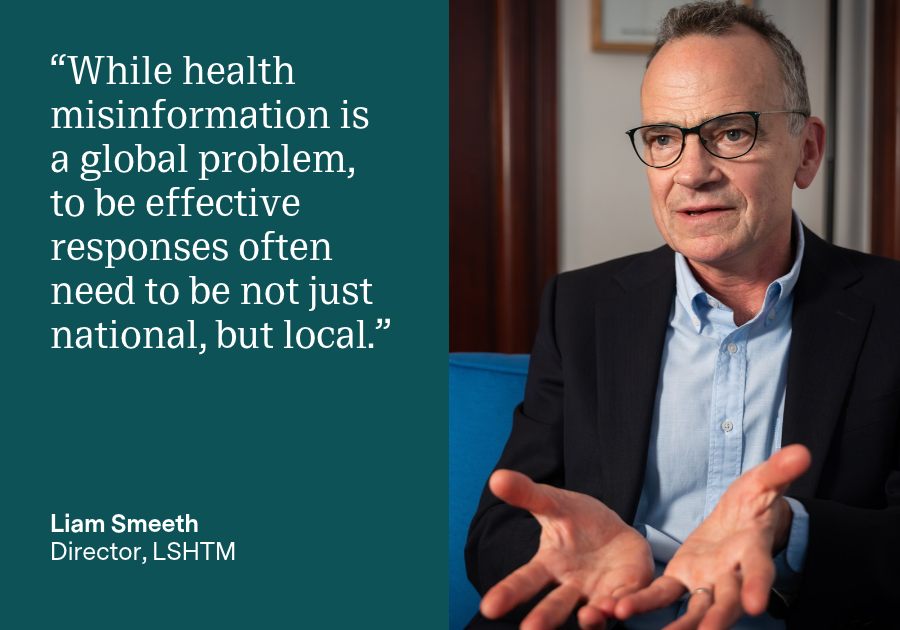
People in different parts of England have very different experiences of the health impacts of false or misleading information (misinformation) and approaches to checking health claims, an analysis from the London School of Hygiene & Tropical Medicine (LSHTM) suggests.
The new analysis of regional data from a survey of 2,110 UK adults is published in an update to the LSHTM report Health Misinformation: Public Perceptions of Threat to the UK. The survey was commissioned by LSHTM and conducted by Survation on 9-10 September 2026.
The analysis found a third (31%) of people in the North East of England said they knew someone who had come to serious harm from a health decision based on misinformation, compared to only 1 in 6 (18%) in the South East and West Midlands. Examples of serious harms include contracting a preventable disease, delaying medical treatment, or suffering symptoms for longer than necessary.
Meanwhile people in Yorkshire & Humber were the least confident of any English region at judging if a health claim was accurate, with only just over a quarter (28%) saying they were very or somewhat confident. Those in the South West, were the most confident at judging the accuracy of health claims, with half (52%) saying they were very or somewhat confident.
People in Yorkshire & Humber were also the least confident at finding reliable information on a health issue, with 4 out of 10 (44%) saying they were very or somewhat confident. This compares to the most confident region, the North West, where nearly 7 out of 10 (69%) were very or somewhat confident.
As part of deciding if a health claim is accurate, nearly two thirds (64%) of people in the East of England said they checked health claims against the NHS/government website, compared to only 4 out of 10 (41%) of Londoners.
A quarter of Londoners (25%) said they followed how a health claim was being discussed on social media when deciding if a health claim was accurate, compared to only 1 in 10 (10%) of those in the South West. Over a quarter of Londoners (27%) also said they would ask AI chatbots about health claims, compared to only 1 in 10 (11%) of those in the East of England.
In the North East a third of people (30%) said they asked family or friends about health claims when deciding if a claim was accurate, compared to only 1 in 6 (18%) of those in the South East and South West who would ask family or friends.
When it came to exposure to different types of health misinformation: a third (35%) of those in the South West said they had come across vaccine misinformation in the last six months, compared to only 1 in 6 (18%) of Londoners.
A quarter (25%) of those in the East Midlands said they had come across misinformation about dietary supplements/weight-loss injections in the last six months, compared to only 1 in 8 (14%) of those in the North East.
Meanwhile a fifth (22%) of those in the East Midlands said they had come across misinformation about mental health in the last six months, compared to only 1 in 9 (12%) of those in the South East.
The regional analysis builds on the national picture described in the report which found over half (54%) of UK adults picked educating the public on how to identify false or misleading health information as one of their top three priorities. The youngest and oldest age groups were the least confident at factchecking health claims with 1 in 5 of both those aged 18-24 (22%) and aged over 65 (20%) either not very confident or not at all confident.
The report’s authors say that national and local campaigns are needed to equip people with the skills and resources they need to identify and factcheck potentially false or misleading health claims. LSHTM is inviting local health authorities to collaborate with university experts and communications professionals through the Health Information Integrity Network.
Professor Liam Smeeth, Director of the London School of Hygiene & Tropical Medicine, said: “Our previous analysis found that a fifth of UK adults say they know someone who has suffered serious harm as a result of health misinformation. What this new analysis suggests is that even those living in neighbouring regions of England could be experiencing very different levels of harm from misinformation or have very different experiences while attempting to judge the accuracy of health claims or find reliable health information.
“Understanding the factors behind these regional variations is vital if we are to provide people with the right tools and support to protect themselves from dangerous health information wherever they live. It’s more evidence that while health misinformation is a global problem, to be effective responses often need to be not just national, but local.”
The authors say further research is needed into these regional differences as well as fundamental questions such as how people realise they have been misinformed and which interventions would be most helpful for people of different ages and backgrounds.
Publication
The new analysis is detailed in an update to the report, Health Misinformation: Public Perceptions of Threat to the UK, published on the LSHTM website.
This independent survey and report was funded entirely by LSHTM.
If you enjoyed this article and would like to build a career in global health, we offer a range of MSc programmes covering health and data, infectious and tropical diseases, population health, and public health and policy.
Available on campus or online, including flexible study that works around your work and home life, be part of a global community at the UK's no.1 public health university.