
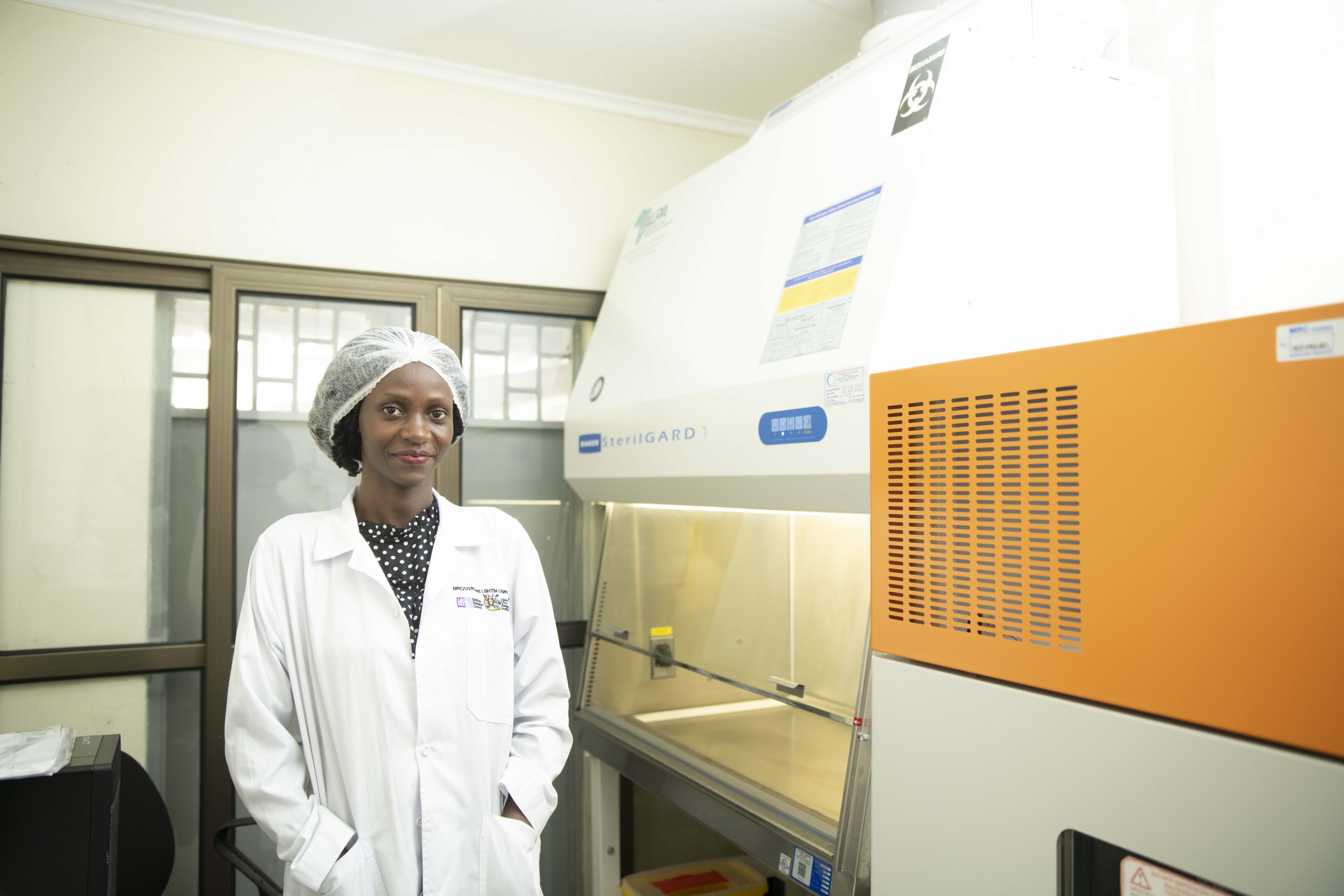
For more than three decades the MRC/UVRI & LSHTM Uganda Research Unit has generated the evidence that underpins national, regional, and global responses to HIV and other pressing public‑health challenges. Building on this legacy, the Clinical Research and Trials Platform brings together all aspects of clinical trial design, delivery, and oversight into a single integrated structure, making our expertise more accessible, streamlined, and impactful than ever before.
By consolidating people, processes, and infrastructure, the Platform:
- Builds on a proven legacy. From the Unit’s landmark HIV‑prevention trials in the 1990s to today’s multi‑country vaccine and NCD studies, every lesson learned fuels a unified engine for innovation and discovery.
- Strengthens scientific rigour and accelerates delivery. Harmonised standard operating procedures, centralised regulatory support, and purpose‑built laboratories ensure that each study meets, and often sets, international best practice.
- Focuses research where it matters most. Resources are directed towards Uganda’s and Africa’s most urgent health challenges, while remaining responsive to evolving global health priorities.
- Enables access and collaboration. Whether through investigator‑led studies, industry partnerships or international consortia, all collaborators benefit from seamless integration into a proven, well-supported trial ecosystem.
From the first protocol draft to the final conference presentation, peer-reviewed paper or policy brief, the Platform offers truly end‑to‑end support, enabling scientists, clinicians, industry sponsors, and community stakeholders to translate ideas into impactful interventions with clarity, confidence, and speed.
Where We Work
The Clinical Research and Trials Platform operates across a network of strategically located sites in Uganda, enabling support for a wide range of clinical studies in both urban and rural settings.
Our central coordination hub in Entebbe hosts fully equipped research clinics, laboratories, and biobanking facilities. In Masaka City, we operate a research centre optimised for the efficient delivery of large-scale trials.
Beyond these core sites, we collaborate with key partner institutions to extend our research footprint and deepen integration with the national health system. These include Masaka Regional Referral Hospital, Entebbe Regional Referral Hospital, and the AIDS Information Centre in Mengo, Kampala.
Across all locations, the Platform ensures the presence of trained staff, compliant storage and pharmacy systems, dedicated clinical spaces, and well-established community engagement structures, providing a strong foundation for ethical, high-quality research that addresses public health needs.
Explore our Knowledge Transfer and Community Engagement work
Our Team
The Platform is led by a multidisciplinary team comprising clinicians, pharmacists, clinical trial managers, nurses, community liaison officers , and administrative staff. All members are trained in Good Clinical Practice (GCP), Human Subjects Protection (HSP), General Data Protection Regulations (GDPR) Good Participatory Practice (GPP), and other essential areas of clinical research. The platform works closely with in-house regulatory and quality assurance specialists, statisticians and data managers. They bring significant experience in designing, managing, and delivering trials across diverse settings, ensuring that every study meets the highest scientific and regulatory standards.
Dr. Eugene Ruzagira - Head of Platform
Unit Pharmacist
Timeline
Laying the Foundations (Early 1990s)
The Unit in close collaboration with the Uganda Virus Research Institute (UVRI) began to establish itself as a trusted centre for clinical research in Uganda through landmark community HIV prevention trials. These early studies, many conducted in partnership with international partners, laid the groundwork for strong community engagement structures, early regulatory pathways, and purpose-built trial infrastructure, particularly in Masaka.
System strengthening (Early 2000s)
This period saw the establishment of formal community engagement structures, SOPs and ethics support systems, laying the foundation for more efficient regulatory reviews and oversight. During this time, the Unit conducted its first clinical trials involving investigational products such as vaginal microbicides, HIV vaccines, and antiretroviral therapies.
Integration and strategic alignment (2018)
In 2018, the Unit formally joined the London School of Hygiene & Tropical Medicine, strengthening its global partnerships and catalysing greater participation in international multi-site trials. Around the same time, the Unit expanded its leadership in clinical trials, assuming coordination responsibilities for PrEPVacc, the EDCTP-funded, multi-country HIV vaccine efficacy trial. Since then, it has continued to lead other major multi-country studies, including IMPALA and Mobile Men.
Rapid adaptation during the COVID-19 pandemic (2020–2021)
The COVID-19 pandemic tested the Unit’s capacity and resilience. The Unit played a central role in delivering national and regional studies on vaccine acceptability, therapeutics, and diagnostics. Trial teams enabled rapid study start-up and regulatory approvals during a time of global uncertainty, underscoring the value of a centralized, well-coordinated clinical trials infrastructure. Notably, the Unit rapidly established and conducted the COVAC Uganda trial, the first to evaluate the safety and immunogenicity of a self-amplifying RNA (saRNA) SARS-CoV-2 vaccine in Uganda.
A pivot toward platform thinking (2021-2022)
As the number and complexity of clinical studies increased and partnerships expanded, the need for a unified structure to harmonise operations, sustain vital resources, attract high-quality collaborations, and improve cost-effectiveness and project delivery became clear. In response, a cross-functional working group established this need and recommended solutions. This laid the foundation for centralising trial operations, strengthening governance, and streamlining processes across the Unit under the Clinical Research and Trials Platform.
Expanding Reach (2022)
To expand its trials infrastructure, particularly in Entebbe where most studies were previously conducted within the Entebbe Regional Referral Hospital, the Unit established a purpose-built clinical research facility. This new site serves urban populations in Entebbe and serves as the central coordination hub for the Clinical Research and Trials Platform.
Formalisation and consolidation (2023-2025)
The Clinical Research and Trials Platform was formally established in April 2023. It is now fully operational, supporting up to 30 clinical trials alongside knowledge translation and capacity-strengthening initiatives.
Events
Our events span scientific symposia, community dialogues, and stakeholder engagements, providing a platform to share research, exchange ideas, and strengthen partnerships. We connect evidence with impact. Each event reflects our commitment to collaboration and informed action.
Our Services
From concept to close-out, our Clinical Research and Trials Platform provides comprehensive support to help research teams deliver high-quality, impactful studies. We work closely with investigators, sponsors, and regulatory authorities to ensure every trial is scientifically robust, ethically compliant, and operationally efficient.
Resources
Find documents and tools that support every stage of clinical research at the Platform. From protocol templates to training materials and SOPs, these resources are designed to help you plan, manage, and deliver high-quality clinical trials.
Publications
Our publications cover a broad spectrum of research, from clinical trials and observational studies to implementation science and social science, sharing evidence that informs health policy and practice
Knowledge Exchange
Knowledge Transfer & Exchange (KTE) is the Platform’s bridge between science and real‑world impact. We enable KTE by working with investigators to ensure research findings are effectively communicated to policy makers, practitioners, communities, and other stakeholders.