Experts at LSHTM will lead research to improve maternal care and neonatal outcomes as part of a major UK initiative aimed at tackling inequalities before, during and after pregnancy.
Teams at LSHTM will focus on neonatal and longer-term child and family outcomes as well as programme level research using data, digital tools and economics to support the £50 million national Maternity Disparities Consortium.
This is a national programme, funded by the National Institute of Health and Care Research. It brings together higher education, NHS, community and voluntary organisations to close the most critical gaps in maternal care.
The consortium will generate the evidence, interventions and research capacity needed to help translate national ambition into practical, equitable improvements for mothers, babies and families and develop capacity for current and next generation workforce to drive action.
The launch comes at a pivotal moment for maternity care in the UK, with national attention increasingly focused on improving safety, equity and mother's experiences of care.
Within the consortium, Professor Cally Tann and Dr Sarah Moxon will lead the neonatal and longer-term child and family outcomes' theme. This theme will develop and test better ways to support babies and families who are at higher risk of adverse outcomes. This includes improving follow up care after birth, strengthening links between hospital and community services and supporting families as they move from maternity and neonatal care into longer term child and family support.
Dr Ipek Gurol-Urganci and Professor Luke Vale will lead the digital, economics, data linkage and analytics (DELTA) core function, with Dr Aduragbemi Banke-Thomas leading on capacity development aspects for DELTA. They will ensure the programme will use “big” data, digital tools, health economics and real-world evaluation to understand what works, for whom and in what circumstances. This will help identify effective, efficient and, above all, fair interventions that can be tailored to make them practical to deliver at scale across different parts of the UK.
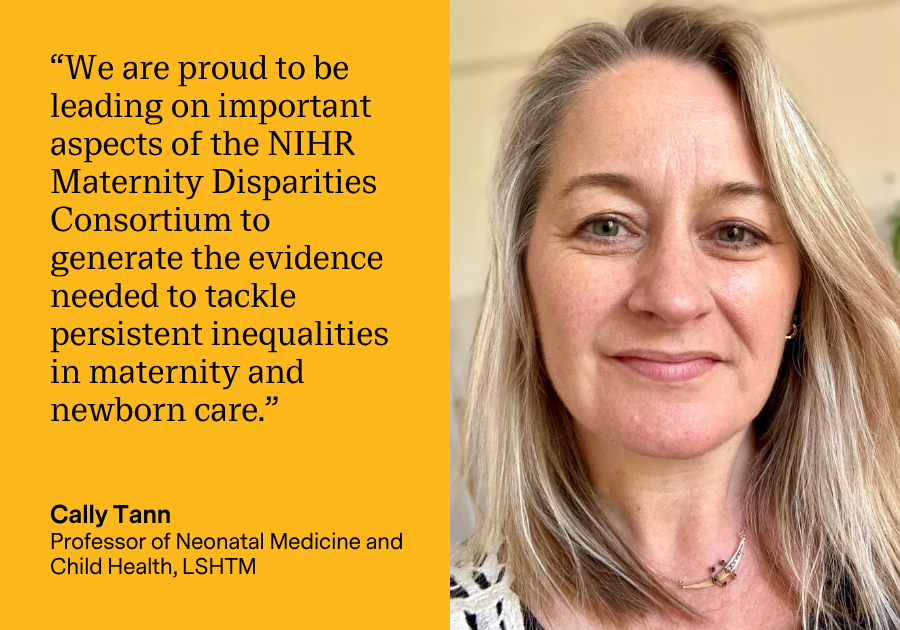
Cally Tann, Professor of Neonatal Medicine and Child Health, said: “Every family deserves the opportunity to achieve the best possible start in life for their baby, regardless of their background, ethnicity, or circumstances.
"We are proud to be leading on important aspects of the NIHR Maternity Disparities Consortium, bringing together researchers, healthcare professionals, policymakers and communities to generate the evidence needed to tackle persistent inequalities in maternity and newborn care. By working in partnership with those most affected, we have an opportunity to develop and scale solutions that improve outcomes and ensure that high-quality, equitable care becomes a reality for all.”
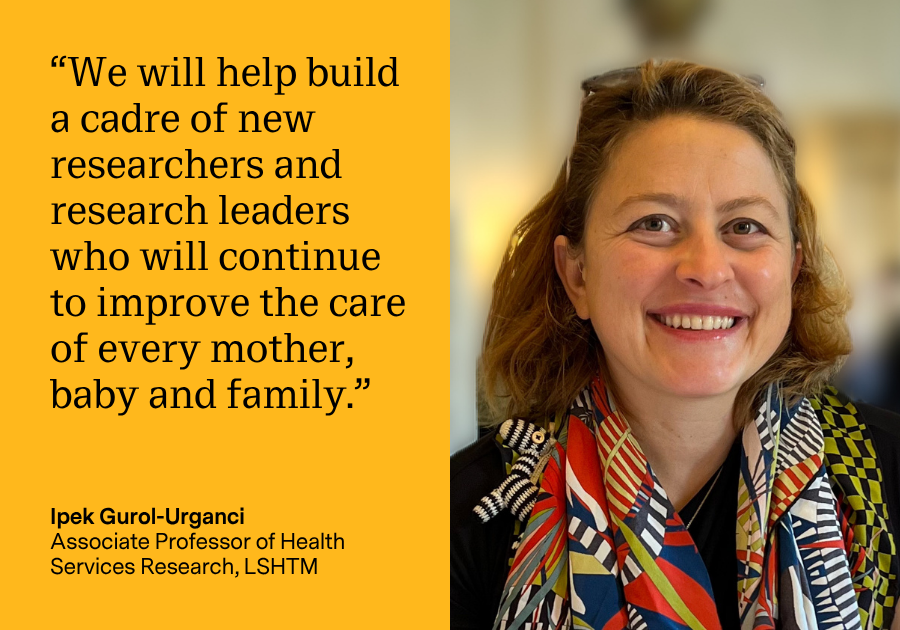
Ipek Gurol-Urganci, Associate Professor of Health Services Research, said: "In our programme-level role, we will carry out and advance maternity disparities research methods. We will develop new methods to bring together national and local data sources in equality-focussed analyses and evaluations. In this way, we will produce robust, actionable and system-level evidence on the best ways to reduce disparities and improve maternal and neonatal outcomes. Throughout all this we will help build a cadre of new researchers and research leaders who will continue to improve the care of every mother, baby and family."
If you enjoyed this article and would like to build a career in global health, we offer a range of MSc programmes covering health and data, infectious and tropical diseases, population health, and public health and policy.
Available on campus or online, including flexible study that works around your work and home life, be part of a global community at the UK's no.1 public health university.