
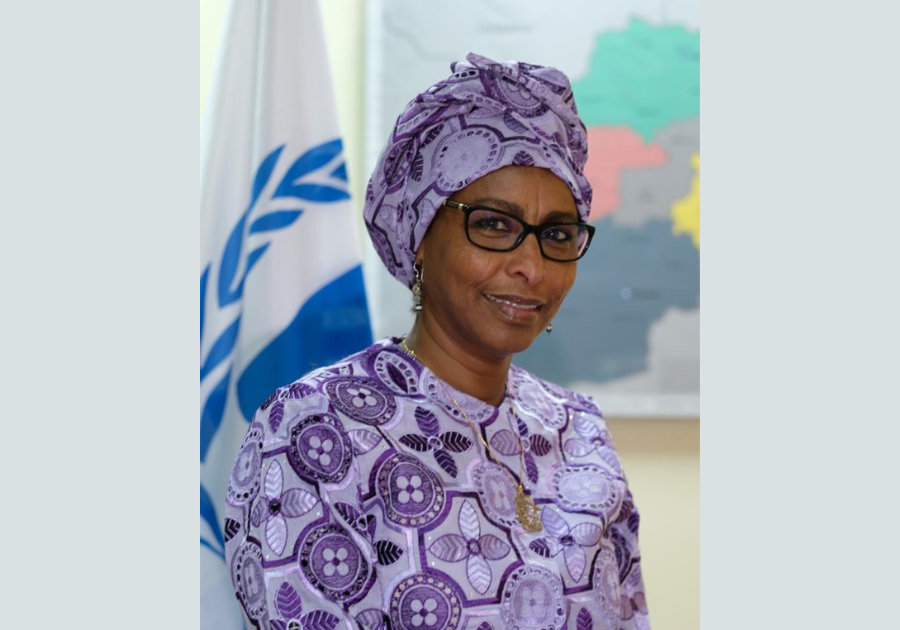
Name: Fathiaa Abdalla
Role: Candidate for Doctorate of Public Health (DrPH)
Faculty/department: PHP
1) Tell us about yourself and your career so far.
Early in my career, I was inspired to pursue humanitarian work through learning about crises, but I wanted to understand the bigger picture and the systems affecting people’s lives. That led me to study Public Health for Global Practice at LSHTM.
After completing my Master’s degree, I worked with MSF, Save the Children and UNICEF before spending more than 20 years with UNHCR. Along the way, I lived and worked all over the world, including in Afghanistan, Algeria, North Korea, Ethiopia, Iraq, Kenya, Tanzania, and Western Sahara. During my years in humanitarian leadership with the UN, I had the honour of serving as UNHCR Representative to Afghanistan and Kenya, and Deputy Representative to Yemen and Iran.
2) What inspired your return to academia?
During my time at UNHCR, I realised how important research is for influencing humanitarian policy and securing resources. I saw directly how research my team produced on protracted refugee situations helped strengthen the case for greater advocacy and investment in public health programmes.
I had considered pursuing a PhD many years ago, but I chose humanitarian work instead. After returning to London two years ago, completing a short course on Researching Gender-Based Violence and attending a DrPH open evening, I decided the time was right to return to academia and I started my DrPH last September. What attracted me to the programme is its combination of a research project, leadership and management training, and public health policy analysis, alongside getting to learn from other students’ global practical experience. While I have previously written reports and articles for the UN and participated in team research, I’m excited to lead an academic research project independently for the first time.
3) What is the focus of your research here at LSHTM?
My research focuses on generating evidence that can improve humanitarian responses to sexual violence in conflict settings, particularly in Sudan. During my humanitarian career I repeatedly saw that sexual and gender-based violence was pushed to the bottom of the priority list during crises, and this shaped my interest in holistic solutions for better responding to reducing SGBV in conflict.
In the short term, I’m interested in conducting an analysis on how organisational policies and humanitarian coordination can be strengthened to make SBGV responses more effective and efficient during emergencies. Longer term, I am interested in how war changes people’s perceptions of SGBV, the root causes of violence, securing justice for women and recognising conflict-related sexual violence as a war crime, as well as understanding the experiences of male survivors.
I’ve noticed throughout my career that the best solutions often come from within communities themselves. In my research, I’d also like to explore the concept of localisation and how communities can be supported to change harmful social norms and prevent SGBV in the first place.
4) What impact do you hope your research will have?
I hope my research contributes to stronger and more holistic responses to sexual violence in humanitarian crises, so that no one is left behind. Ultimately, I want to help ensure that prevention receives as much attention as protection and response, and that power and resources are shifted to local actors.
Sudan is particularly important to me because it’s where I’m from. Alongside my studies, I support charities responding to the ongoing war including Humanitarian Action for Sudan based at SOAS, which directs funds to a network of volunteers in Sudan for whom I act as the focal point for sexual violence.
I also hope my research can contribute to changing victimhood narratives about women in general and specifically women in Sudan.
5) What is your biggest achievement to date, or something you’re most proud of?
I am proud of leading authentically and by example, putting affected people first. One of the achievements I am most proud of is creating partnerships that give young people access to senior leaders and opportunities they might not otherwise have. Seeing them participate and gain confidence is incredibly rewarding.
I am also proud that women from similar backgrounds can look at my journey and see what is possible. As I often say, there is no miracle – just motivation.
Outside my studentship, I was very pleased to be asked to moderate one of the group sessions on the Conflict and Health MSc module, and I led a session with 15 engaging students where we discussed a case study of child marriage in conflict.
6) Outside of work, what do you like to do in your free time?
Much of my time outside work is spent supporting humanitarian and community initiatives, particularly those linked to women and children from countries affected by conflict.
I’m also a big football fan – I support Chelsea and England – and I’ve travelled with them for matches around the UK and abroad. While I was on R&R from my assignment to Afghanistan, encouraging work-life balance, I went to the 2018 World Cup in Russia supporting England where I was captured on TV cheering! I also enjoy walking in nature, Zumba dancing and traveling with my family.
If you enjoyed this article and would like to build a career in global health, we offer a range of MSc programmes covering health and data, infectious and tropical diseases, population health, and public health and policy.
Available on campus or online, including flexible study that works around your work and home life, be part of a global community at the UK's no.1 public health university.