Research led by members of the London School of Hygiene & Tropical Medicine has highlighted the need for tuberculosis (TB) programmes to shift their focus onto interventions that reach whole communities. This is opposed to interventions that merely target people already living with TB, or are actively looking for treatments.
Published in Nature Health, the authors argue their modelling analysis shows an urgent need to shift the priorities of TB research and public health to population-wide programmes, which would improve health outcomes and also prove cost-effective.
TB still remains one of the leading causes of illness and deaths around the world, as each year an estimated 10 million people develop TB, and 1.3 million die. Though these numbers have declined slowly in recent decades, the progress made against TB is precarious and under threat. Current public health strategies are not reducing cases enough to meet global public health targets against TB, and recent funding cuts to public health threatens to reverse any existing progress.
Based on modelling the impact of various public health programmes designed to tackle TB in Brazil, India, and South Africa, the authors found that the best programmes for reducing TB targeted the health of the population as a whole. This specifically included: community-wide screening for TB which was estimated to prevent 31-38% of TB episodes by 2050, and mass vaccinations offered to the whole population of countries that prevented 15-28% of episodes. Prison screening in Brazil was also found to be effective by preventing 23% of episodes.
Additional analyses looking at whether these programmes provide good value for money spent by healthcare systems by being low cost and providing significant health benefits. The level of cost-effectiveness for each programme varied among the three countries, but population-wide programmes were likely to be cost-effective in Brazil and South Africa.
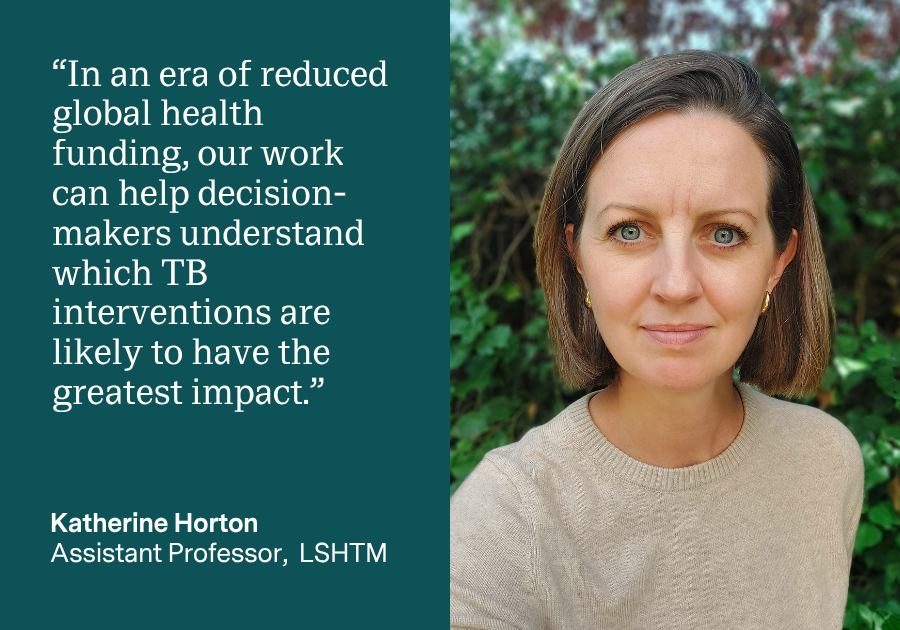
Katherine Horton, Assistant Professor at LSHTM, said: “In this era of reduced funding for global health programmes, our work provides important evidence for decision-makers on which interventions are likely to have the greatest impact on TB burden.”
These results show that public health researchers and policy makers should shift funding and focus to TB programmes that target whole communities. Even with the initial costs to their healthcare systems, countries that finance comprehensive and impactful programmes (community screening and vaccination programmes) will improve long-term health in a cost-effective manner.
The authors noted some limitations in their modelling work. The authors used an 80% coverage as a benchmark for all programmes, but were unable to consider the logistical/operational requirements to reach this level of coverage, including any additional costs required to scale up programmes. Future work on how to tackle these logistical challenges and ensure cost-effectiveness would be valuable.
Horton K, Schwalb A, Harker M et al. Global impact and cost-effectiveness of tuberculosis interventions. Nature Health, 2026. DOI: 10.1038/s44360-026-00171-5
If you enjoyed this article and would like to build a career in global health, we offer a range of MSc programmes covering health and data, infectious and tropical diseases, population health, and public health and policy.
Available on campus or online, including flexible study that works around your work and home life, be part of a global community at the UK's no.1 public health university.