The team
CMMID Science Day - June 2022
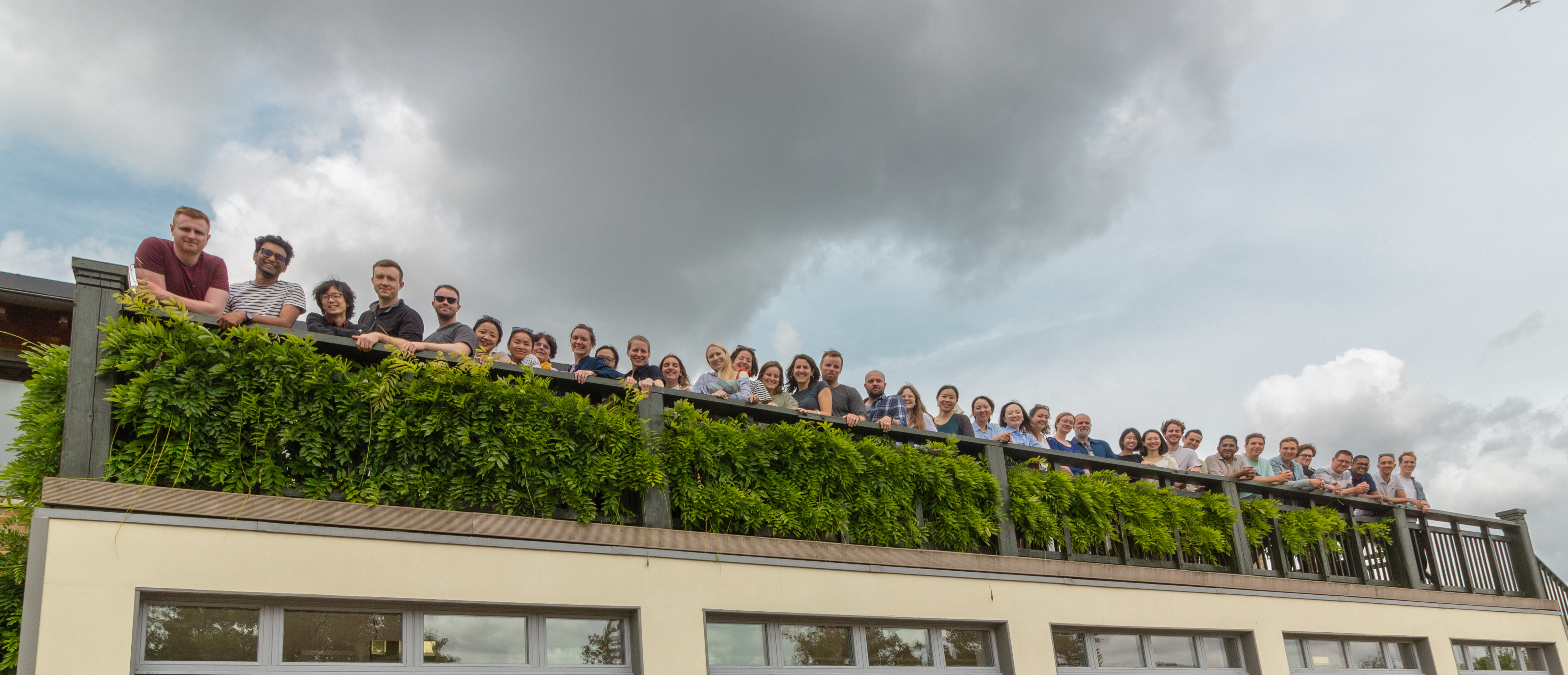
The Centre for the Mathematical Modelling of Infectious Diseases (CMMID) is a multidisciplinary grouping of more than 150 epidemiologists, mathematicians, economists, statisticians and clinicians from across all faculties of the LSHTM.
- Centre vision
At the Centre for Mathematical Modelling of Infectious Diseases, researchers at LSHTM develop and apply models that inform public health policy and improve understanding of infectious disease dynamics.
We aim to strengthen and connect the community of infectious disease modellers (both within and beyond LSHTM), promote excellence in research and collaboration, and ensure modelling continues to inform effective and equitable public-health action.
- Strategic aims
Our strategic aims are to:
- Support members with a collaborative, inclusive environment for research excellence and career development
- Support modelling at LSHTM by ensuring they can access the tools and support they need and encourage cross-School collaboration
- Build our profile as an internal hub of excellence, networking, and information exchange in infectious disease modelling
Our research focuses on developing and applying models that inform public health policy and improve understanding of infectious disease dynamics. CMMID is structured into multiple research themes in which researchers are developing and applying mathematical models to a range of infections including HIV, HPV and other sexually transmitted infections, tuberculosis, SARS-CoV-2, influenza, rotavirus, measles, poliovirus, pneumococci, Hib, Ebola and dengue.
More fundamental research includes developing methods to measure underlying contact patterns, sampling hard-to-reach populations (such as drug users or internally displaced people), efficiently fitting complex mathematical models to data, and the integration of epidemiological models with economic analyses.
CMMID is actively engaged in developing links with other (modelling) groups; we are members of the Juniper consortium and many alumni continue their research at other universities and public health institutions.
Directors

Kathleen O'Reilly
Associate Professor

Sebastian Funk
Professor of Vaccine Epidemiology
Management Team

Rein Houben
Associate Professor in Infectious Disease Epidemiology
Seminar organisers

Simon Procter
Assistant Professor

Kevin Van Zandvoort
Research Fellow
ECR co-ordinators

Kishen Joshi
Research Student - MPhil/PhD

Ali Fahmi
Research Fellow
Andree Valle Campos
Research Fellow

Luke Burton
Research Student - MPhil/PhD
Steering committee
Graham Medley
Chair

Adam Kucharski
EPH representative
Beate Kampmann
ITD representative