Patients living in England's most deprived areas are less likely to receive potentially curative treatment when bowel cancer spreads to the liver, according to a new study led by researchers from the Inequalities in Cancer Outcomes Network (ICON) at the London School of Hygiene & Tropical Medicine (LSHTM).
Published in the Journal of Cancer Policy, the study analysed national cancer registration and hospital records from 61,819 patients whose bowel cancer had spread to the liver. Researchers examined whether socioeconomic background and access to specialist hospitals influenced the likelihood of receiving liver treatment, including surgery and procedures that destroy cancerous tissue using heat.
Among patients whose cancer had spread to the liver at or around their initial bowel cancer diagnosis, 10.8% of those living in the least deprived areas received liver treatment, compared with 7% of those in the most deprived areas. This inequality remained even after accounting for factors such as age, sex and other health conditions.
The study found that inequalities were less pronounced among patients whose cancer spread to the liver later, suggesting that barriers to accessing care may differ depending on when the cancer is diagnosed.
Researchers also identified substantial differences in treatment rates depending on whether patients were diagnosed with initial bowel cancer at hospitals with specialist liver units. Among patients whose cancer spread to the liver after their initial bowel cancer diagnosis, the estimated probability of receiving liver treatment within one year was 38.5% for those diagnosed at hospitals with specialist units, compared with 11.3% for those diagnosed elsewhere.
These findings suggest that the hospital where patients begin their treatment journey, and how they are referred to specialist services, may influence their chances of receiving liver treatment.
Bowel cancer, also known as colorectal cancer, can spread to other parts of the body, including the liver. For some patients, surgery to remove cancerous tissue or treatments that destroy tumours using heat can improve survival. However, access to these treatments varies across England.
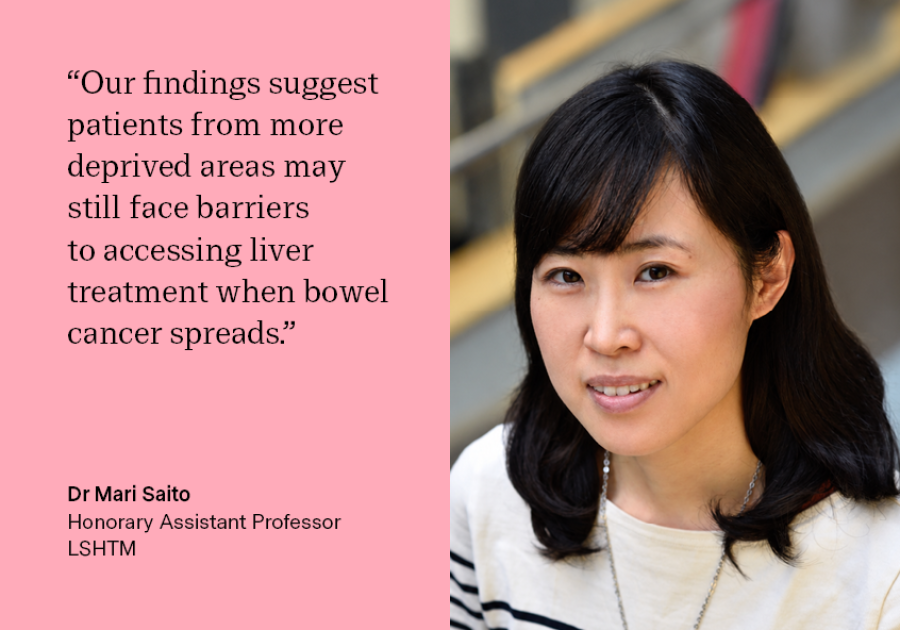
Mari Saito, lead author and Honorary Assistant Professor at LSHTM, said: “Although specialist cancer services have been centralised to improve outcomes, our findings suggest that patients from more deprived areas may still face barriers to accessing liver treatment when bowel cancer and liver metastases are diagnosed at the same time.
“We also found that patients whose cancer spread to the liver later were less likely to receive liver treatment if they had their initial bowel cancer surgery at a hospital without liver specialist services. This highlights the importance of consistent referral pathways to ensure that patients have the opportunity to be assessed by liver specialists, regardless of where they first receive care.”
The researchers recommend more consistent referrals to liver specialist multidisciplinary teams, where surgeons and other healthcare professionals assess patients and determine the most appropriate treatment options. They also call for greater involvement of liver specialists in local cancer team meetings, alongside routine reviews of referral practices, to help reduce variation in care across England.
The researchers acknowledge that treatment decisions depend on several clinical factors, including the extent and location of cancer spread, which could not all be assessed using the available data.
Publication
Mari Kajiwara Saito et al. Socioeconomic inequalities in treatment for colorectal liver metastases in England: A competing risk analysis using National Cancer Registration Dataset. Journal of Cancer Policy, 2026. DOI:10.1016/j.jcpo.2026.100818
If you enjoyed this article and would like to build a career in global health, we offer a range of MSc programmes covering health and data, infectious and tropical diseases, population health, and public health and policy.
Available on campus or online, including flexible study that works around your work and home life, be part of a global community at the UK's no.1 public health university.