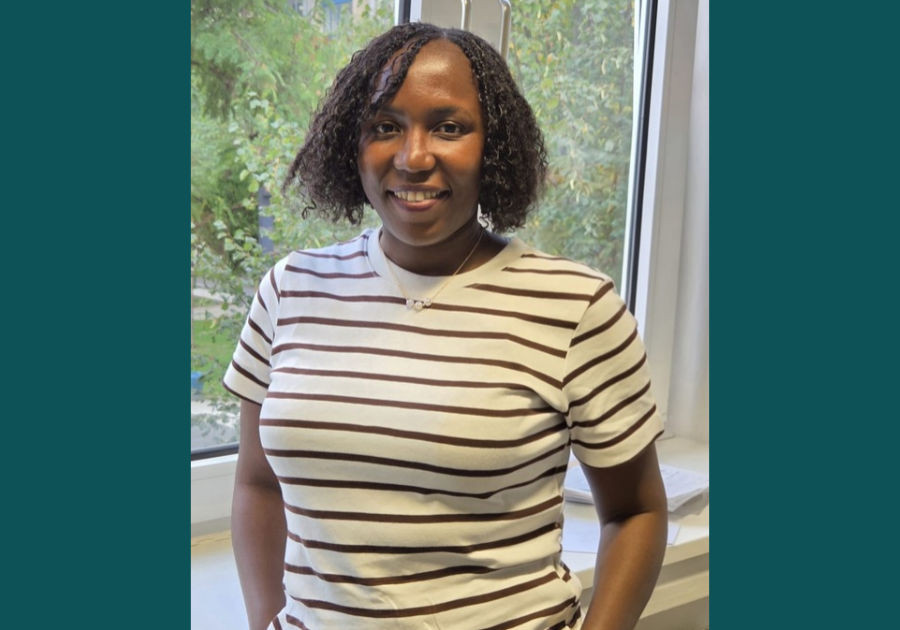
As we mark Black History Month, Dr Wende Safari, a Research Fellow with the Inequalities in Cancer Outcomes Network (ICON) at the London School of Hygiene & Tropical Medicine (LSHTM), shares her perspectives on the importance of diversity in global health research.
Supported by a Wellcome Trust Early Career Fellowship, Wende's research focuses on quantifying the burden of childhood cancer in Tanzania. Her wider work explores inequalities in cancer outcomes, using patient data to better understand cancer care pathways and the key drivers of poor outcomes for children with cancer in Tanzania.
Drawing on her experiences across Africa and Europe, Wende believes that bringing different perspectives into research is essential to understanding and addressing health inequalities.
"Our societies comprise diverse people with unique experiences, knowledge, and skills. I have learnt that when we bring these different perspectives into our research questions, our findings become more meaningful and more relevant to the people they are meant to serve."
This is particularly important for communities whose experiences and health needs are often overlooked.
"The people most affected are often those on the margins of society, who are too often forgotten in research," Wende explains. "Listening to different voices helps us understand the patterns and keeps our research grounded in real-world health challenges."
Bringing different perspectives into research
Having worked across Africa and Europe, Wende has seen how different research environments influence the way knowledge is produced and shared.
In Europe, she experienced a culture of shared contribution, where research teams are encouraged to exchange ideas and recognise individual contributions. However, approaches developed in well-resourced health systems may not always translate to settings with different resources and realities.
In Africa, she highlights the strengths researchers bring through their close connections with communities and understanding of local contexts. However, institutional hierarchies and unequal access to training can influence whose knowledge is recognised.
"Global health research is strongest when a culture of shared contribution meets closeness to context, and when everyone involved evolves and is recognised as having knowledge worth hearing."
Wende's research on inequalities in cancer outcomes also demonstrates why different perspectives matter throughout the research process. Patient data can reveal patterns in cancer diagnosis and outcomes, but understanding the experiences behind those numbers requires insights from people working across different parts of the healthcare system.
"If your research uses patient data, for example, involve clinicians, data entry clerks, decision-makers and local institutions alongside local researchers."
Each brings a different understanding of how information is collected, how healthcare services operate and the challenges patients may face. Bringing these perspectives together can help researchers ask more relevant questions and ensure their findings reflect the needs of different populations.
Wende also highlights the importance of shared understanding in international research partnerships. Terms such as equitable partnership, data sharing and community engagement may be interpreted differently across settings, making local knowledge essential to developing meaningful collaborations.
Moving beyond representation
While greater representation is important, Wende believes meaningful inclusion requires addressing the practical and cultural barriers that prevent researchers from accessing opportunities and progressing into leadership roles.
"Talent is not the problem. Access is."
Researchers in Africa and the wider Global South often face unequal access to training, funding and international opportunities. Visa requirements and travel restrictions can also limit their ability to participate in international research activities. As research evolves, particularly with advances in artificial intelligence, Wende is concerned that unequal access to training could widen existing gaps.
Beyond these practical challenges, she points to institutional cultures that can discourage researchers from taking the lead.
"Too often, local researchers are not given the encouragement and trust that build confidence, and just navigating institutional systems can be a challenge on its own."
Funding structures can create further difficulties. Different funder requirements can result in fragmented data systems, making it harder to sustain research programmes and leaving local researchers implementing projects rather than developing and leading their own.
For Wende, meaningful inclusion is about more than having researchers represented on teams or publications. It means ensuring they have opportunities to influence research priorities, contribute their expertise and take ownership of the work.
Creating opportunities for the next generation
Wende identifies four areas where universities and research institutions can make a difference: investing in mentorship, recognising contributions across research teams, adapting communication to local contexts and supporting local scientists to take on leadership roles.
She believes institutions should create environments where early-career researchers can develop their skills, contributions are acknowledged and local scientists are equipped to drive research within their own health systems. However, she also emphasises that meaningful change begins with how individuals treat and support their colleagues.
"I believe change begins with a person. I have grown most where I was trusted and given room to develop, and I try to give others the same."
She encourages researchers to consider whether colleagues, regardless of their career stage, race or culture, are genuinely being heard and given opportunities to contribute. As Black History Month provides an opportunity to recognise the contributions of Black researchers, Wende hopes the next generation will continue to pursue their ambitions, even when progress feels slow.
"What I have learnt is that lasting change does not happen overnight. It comes through thousands of small decisions, made consistently over time, and each one moves us forward."
Her message to aspiring Black scientists is one of persistence and confidence: "Stay curious, listen widely, and trust that your voice belongs in the room. Progress is not always visible in the moment, but when I look back over the past decade, I can see how those small steps changed my life. Yours will too. Keep taking them."
If you enjoyed this article and would like to build a career in global health, we offer a range of MSc programmes covering health and data, infectious and tropical diseases, population health, and public health and policy.
Available on campus or online, including flexible study that works around your work and home life, be part of a global community at the UK's no.1 public health university.