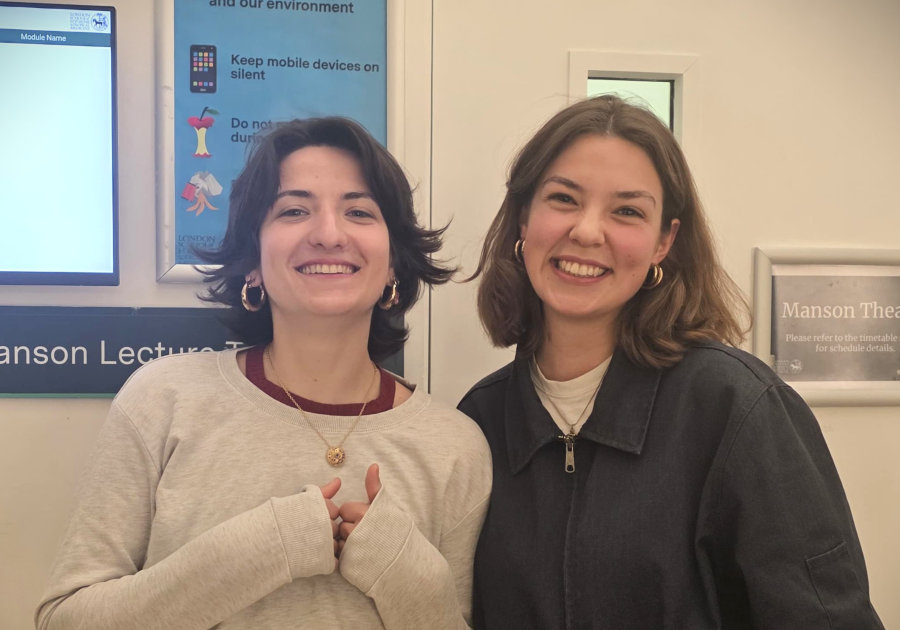
Could you introduce yourselves and tell us what you are studying at LSHTM, as well as what first sparked your interest in climate change and planetary health?
Juliette: I have a diverse background, with a BA in Social Sciences, where I focused on political science, and I recently completed the MSc in One Health at LSHTM and the Royal Veterinary College (RVC). Since high school, I have been passionate about climate change and participated in marches in The Hague, and worked on raising awareness for climate refugees with Forced To Flee, but after taking an online course on the impacts of climate change on health, I knew I wanted to explore this area further. I enjoy tackling complex challenges from an interdisciplinary perspective and hope to work at the intersection of climate change, health, and policy.
Elena: I am a medical doctor from Italy, and I have just completed an MSc in Climate Change and Planetary Health. My personal interest in ecology stems from a deep connection with nature and wilderness, which I cultivate through outdoor sports, both at sea and in the mountains. During medical school, however, I realised how profound the impact of human induced environmental degradation could be on health, and I decided to engage in climate activism. I hope my future work will contribute to promoting adaptation strategies that protect vulnerable communities from the adverse effects of climate change.
What was your main research area in your MSc, and how does it relate to climate change and planetary health?
Elena: My summer project investigated whether restoration projects in African drylands could generate health co-benefits by improving child nutrition and growth. Restoring degraded land means strengthening ecosystem services that benefit humans as well as other living species. This approach has the potential to go beyond adaptation strategies, as it can help shift our relationship with nature from one of exploitation towards one of collaboration.
Juliette: As part of my research project, I worked on water insecurity in India, specifically Bihar and Uttar Pradesh, analysing within-household gender differences in individual water insecurity experiences using the IWISE-4 Scale (Individual Water Insecurity Experiences Scale - a quick, 4-item survey used to measure the prevalence of water access and reliability problems faced by individuals). This project fits well with my interests in climate change and health, as key drivers of water insecurity are natural disasters and global warming. Water insecurity is a very complex problem, which requires collaboration across the animal, human and environmental sectors to create long-term sustainable change. De-siloed collaboration is a key aspect of One Health, which I look forward to continue applying in my career.
What have been the highlights of your time as a Student Ambassador for the Centre on Climate Change & Planetary Health (CCCPH)?
Elena: Over the past year, being a Student Ambassador for the CCCPH has been both fun and formative! First of all, we had the opportunity to meet and learn from many amazing people, both within the Centre and from each other. Second, we followed the climate negotiations through virtual passes for COP30 and the 2026 Bonn Climate Change Conference. Hearing negotiators and community leaders discuss women’s and Indigenous peoples’ rights in climate policies reinforced my conviction that a more equitable world is possible, even in the face of the climate crisis.
Juliette: Hearing the importance of transparent research in translating climate commitments into policy further strengthened my interest in climate change and health research, shaping my choice of summer research project. It was incredibly rewarding to organise seminars, panel discussions and film screenings for the student community. Participants were so engaged and really appreciated the opportunity to discuss climate and health throughout the year. A highlight was organising the screening of The Cost of Growth, followed by a lively discussion led by Matt Gibson. The viewpoints shared by attendees, the open atmosphere and can-do mindset of the group were truly energising. Being a student ambassador was a great opportunity to grow our network, help at events, learn from others and get an insight into the Centre’s work.
Extreme weather in 2026 has brought growing attention to the health impacts of climate change. How does this connect with what you have been studying, and what is it like to learn alongside researchers working on these issues in real time?
Elena: This summer, it was hard to keep my hopes up as heatwaves, wildfires and floods hit my home country and many other parts of the world. However, I was surrounded by the wonderful student community at LSHTM, which has all the skills, energy and passion needed to bring about meaningful change. It really shows that everything is possible, one step at a time; we just need to dream big!
How have your studies and ambassador experience shaped the kind of work you would like to do after LSHTM, or helped you explore planetary health beyond your course?
Both: Being a Student Ambassador has given us the chance to see what happens behind the scenes. Taking part in management meetings, organising and helping at events and learning from the Centre’s research output. We now value interdisciplinary research even more, as it makes you realise just how much expertise is needed to address the challenges of planetary health and climate change. We are hoping to take forward in our own work and research the rigour we have learned at LSHTM, and also the enthusiasm and creativity of the people we have met here.
Looking beyond your own career, what changes would you most like to see for the future of climate and planetary health, and what gives you hope that progress is possible?
Elena: In the immediate future, I would like to see a shift in the global agenda towards phasing out fossil fuels, electrifying energy systems, and promoting sustainable diets. These changes are urgently needed.
Juliette: In the long term, I hope to see a paradigm-shift. Moving away from an era of exploiting nature, with little regard for the impacts on the environment and animals, to the environment being on a more equal footing.
Both: The chronic underestimation of the ecological consequences of human activity needs to give way to greater respect for planetary boundaries and local ecosystems. We believe progress is possible because we have incredible people paving the way, as well as the knowledge and resources needed to make this shift happen.
What would you say to someone considering studying at LSHTM?
Elena: Join this amazing university! You’ll be able to follow what interests you most and even discover new areas of research and policy that you never knew existed. Afterwards, you’ll see the world differently and have the tools to be the change you want to see in the world. The friends I made at LSHTM surprised and inspired me every day, and I feel that the exchange we shared throughout the year has changed who I am today. Don’t hesitate to apply!
Juliette: I fully agree with Elena! The past year studying One Health has been incredibly valuable. Beyond the fantastic academic support and interdisciplinary course content, the conversations with peers in class, at the Pumphandle social, and in the hallways have shaped how I’ll approach health challenges moving forward. The course has given me essential tools to tackle complex challenges and a much broader perspective on health. Also, LSHTM offers many extracurricular opportunities, from becoming a Centre Ambassador to attending additional workshops, which I found great opportunities to meet people, develop new skills, and grow beyond the classroom.
To find out more about our postgraduate programmes at LSHTM, join our upcoming open days.
If you enjoyed this article and would like to build a career in global health, we offer a range of MSc programmes covering health and data, infectious and tropical diseases, population health, and public health and policy.
Available on campus or online, including flexible study that works around your work and home life, be part of a global community at the UK's no.1 public health university.