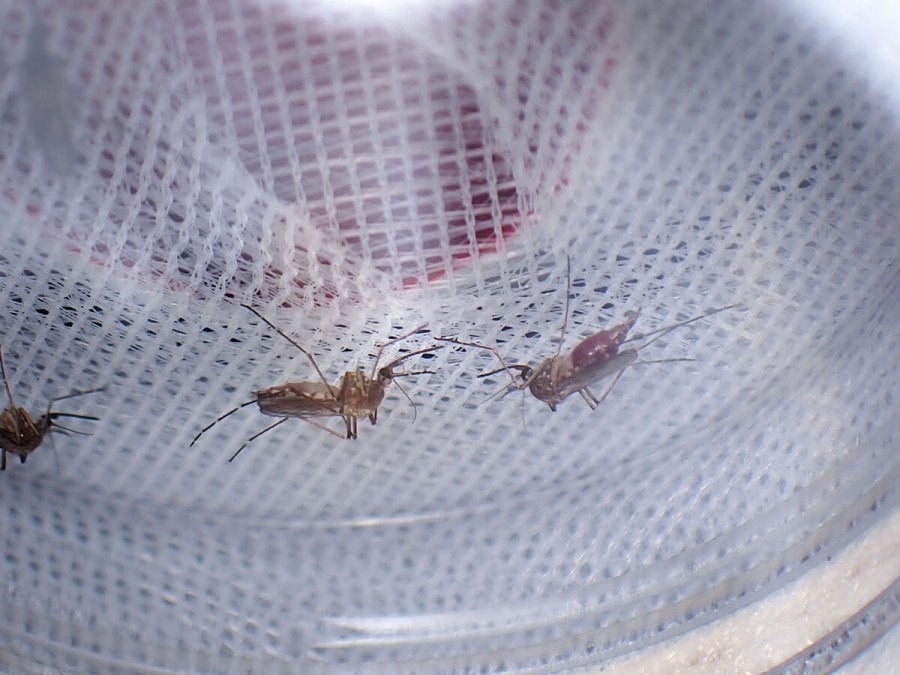
At the London School of Hygiene & Tropical Medicine (LSHTM), researchers work with mosquito colonies originating from across Africa, Asia and beyond, some of which have been maintained for decades.
The oldest strain currently maintained at LSHTM dates back more than 50 years. The G3 strain, an Anopheles gambiae/Anopheles coluzzii hybrid, is a standard laboratory strain originating from mosquitoes collected on McCarthy Island, now known as Janjanbureh, in The Gambia in 1975.
Other standard laboratory strains maintained at LSHTM have origins around the world. These include Anopheles stephensi originating from Punjab, Pakistan, in 1981, alongside Anopheles strains originating from Kenya, Zanzibar and Cameroon.
There are more than 3,000 mosquito species worldwide, but not all bite or feed on blood, and only a fraction can transmit diseases to humans. Around 430 species belong to the Anopheles genus, which includes the mosquitoes responsible for transmitting malaria. Of these, only around 40–70 are thought to be capable of transmitting the disease to humans.
Not all the mosquitoes housed at LSHTM transmit human malaria. Researchers also work with Aedes mosquitoes, including Aedes aegypti and Aedes vexans. Aedes aegypti, for example, can transmit viruses including dengue, yellow fever, Zika and chikungunya.
LSHTM researchers have also established the UK's first laboratory colony of Aedes vexans, a mosquito species native to the UK. Nicknamed the "princess mosquito" because of its particular breeding requirements, the species is notoriously difficult to rear in laboratory conditions. Studying species such as Aedes vexans can help researchers better understand mosquito biology and prepare for changing mosquito-borne disease threats.
There are also some more unusual residents. Toxorhynchites brevipalpis, a giant mosquito, does not feed on blood at all as an adult. Instead, its larvae feed on the larvae of other mosquitoes.
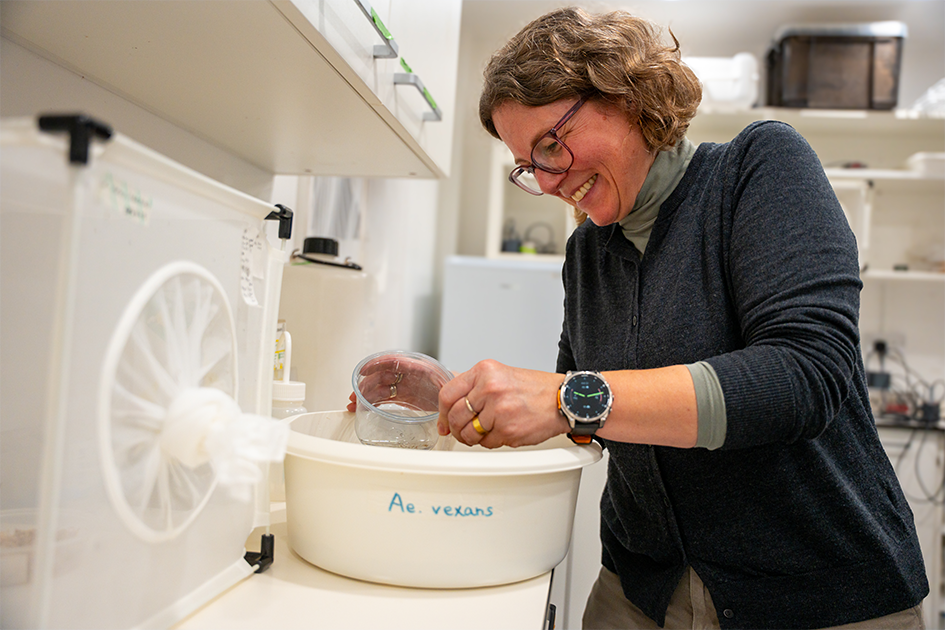
For Dr Mojca Kristan, Assistant Professor at LSHTM, this diversity is also a reminder that there is much more to mosquitoes than their reputation as disease-carrying pests.
“Some of the mosquitoes are very beautiful.”
Keeping this varied collection alive and healthy requires considerable care.
The mosquito life cycle has four stages: egg, larva, pupa and adult. At LSHTM, adult mosquitoes are kept in cages containing around 600 males and females, allowing them to mate. When females are ready for a blood meal, each can go on to lay approximately 100 eggs.
The eggs are collected from water and hatch into larvae after around two days. The larvae are fed fish food as they pass through four developmental stages before becoming pupae. These are transferred into new cages, where the adults emerge and the cycle begins again.
Adult mosquitoes feed on a sugar solution for energy, while females also require a blood meal to develop their eggs. Researchers provide this using specialist membrane feeding systems. Blood is warmed to around 37°C to mimic human body temperature, and mosquitoes feed through an artificial membrane.
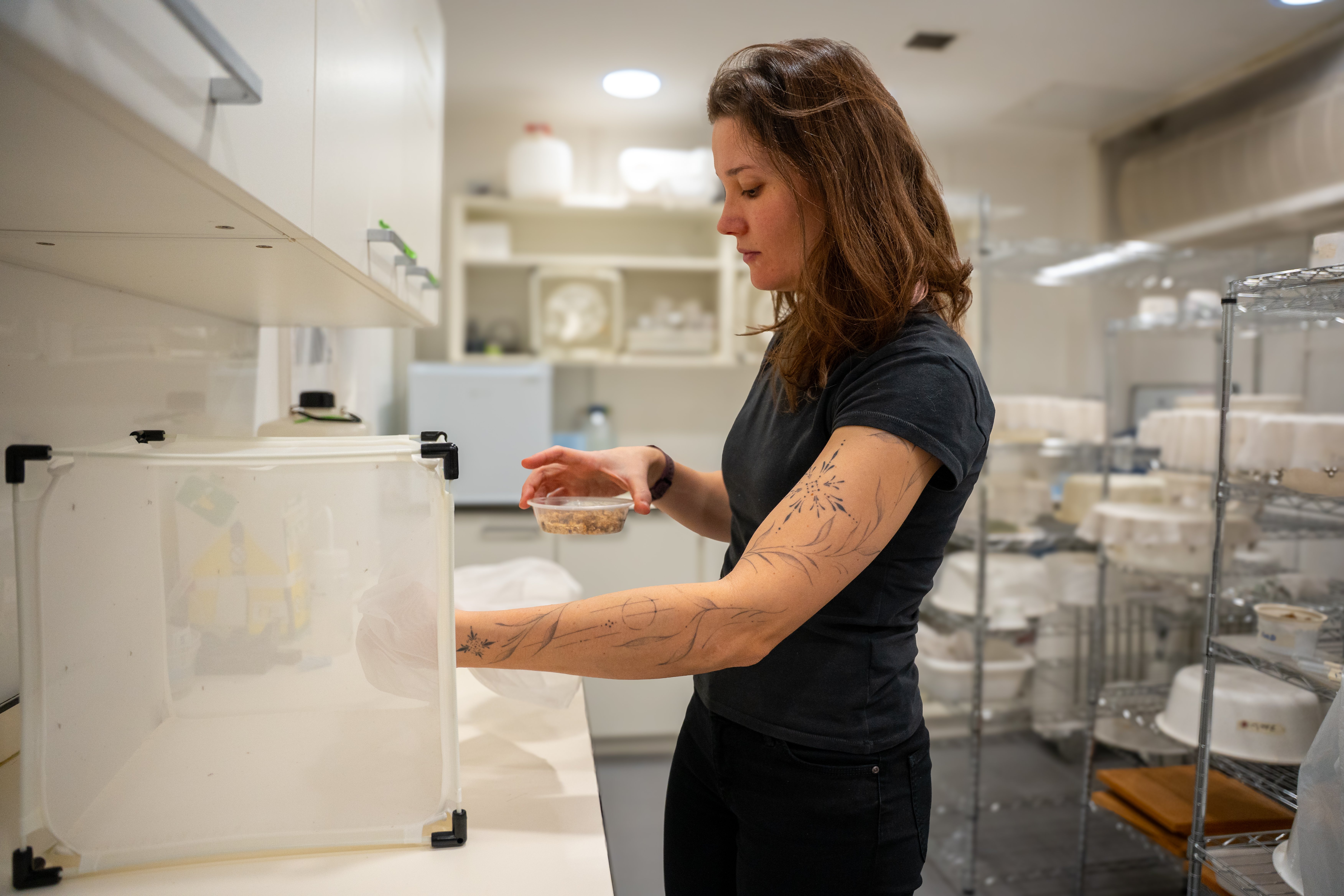
According to Mariana Reis Wunderlich, Scientific Officer at LSHTM, rearing tropical mosquitoes in London means recreating the conditions they need to thrive. Temperature, humidity and light and dark cycles are carefully controlled and monitored. Even London's hard tap water is unsuitable for rearing the larvae, meaning researchers use filtered water instead. Strict containment protocols are also in place to ensure mosquitoes remain securely inside the facility.
These carefully maintained colonies allow researchers to ask much bigger questions about malaria.
At LSHTM's Human Malaria Transmission Facility (HMTF), researchers use Anopheles stephensi and Anopheles coluzzii to study interactions between mosquitoes and malaria parasites. The facility is the only one in the UK where regular transmission experiments with human malaria parasites are carried out.
The HMTF team can investigate what happens as malaria parasites develop inside mosquitoes and explore how transmission might be interrupted. The mosquitoes can be used to test whether potential drugs, vaccines or antibodies block parasite development, as well as to study insecticide resistance, mosquito behaviour, the microbiome and the effects of environmental factors such as temperature and humidity.
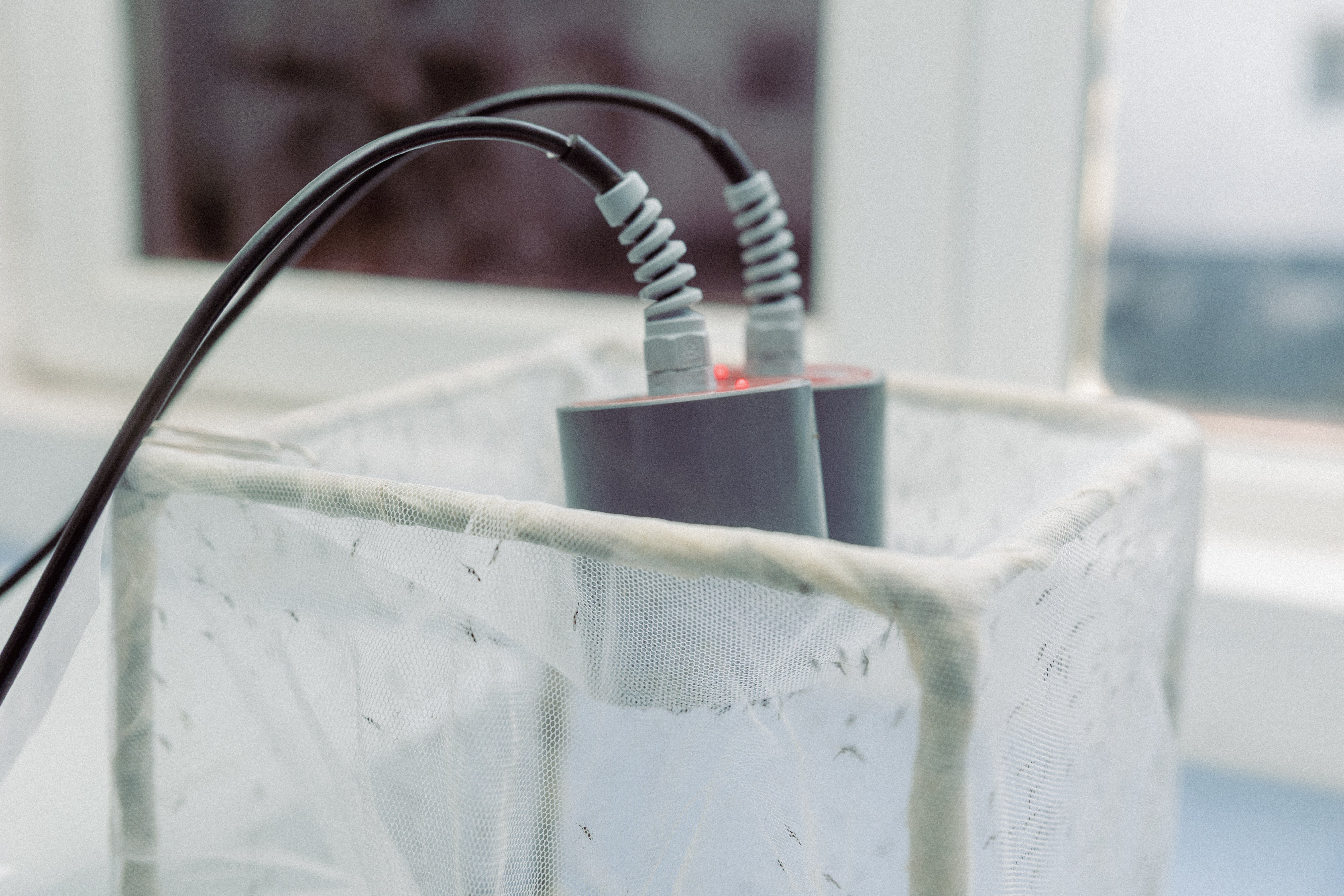
While researchers in London study mosquitoes under tightly controlled conditions, the work extends to The Gambia, where LSHTM's oldest mosquito colony originated more than five decades ago.
Today, the MRC Unit The Gambia at LSHTM operates three mosquito insectaries in Walikunda, Basse and Fajara, giving researchers opportunities to investigate malaria and its mosquito vectors in a setting where transmission occurs.
The newest state-of-the-art insectary in Fajara was officially inaugurated in March 2024, expanding the Unit's capacity to study malaria parasites and mosquito populations, their interactions and approaches to controlling them. The facility can produce more than 20,000 female mosquitoes each month.
At MRC Unit The Gambia, Scientific Officer Amie Kolleh Njie, and colleagues work with important malaria vectors including Anopheles coluzzii and Anopheles gambiae. While its An. coluzzii laboratory colony originated from mosquitoes collected in Yaoundé, Cameroon, its An. gambiae colony is locally sourced.
The setting provides opportunities that are difficult to replicate in London. The hot and humid climate is naturally favourable for mosquito breeding and survival, while researchers can collect mosquitoes directly from communities, monitor seasonal transmission and study interactions between mosquitoes, parasites and people in real-world settings.
The insectaries form part of a much wider programme of malaria research at the MRC Unit The Gambia. Researchers work with communities across the country on malaria studies and clinical trials, connecting laboratory research with questions about transmission, prevention and control among populations affected by the disease.
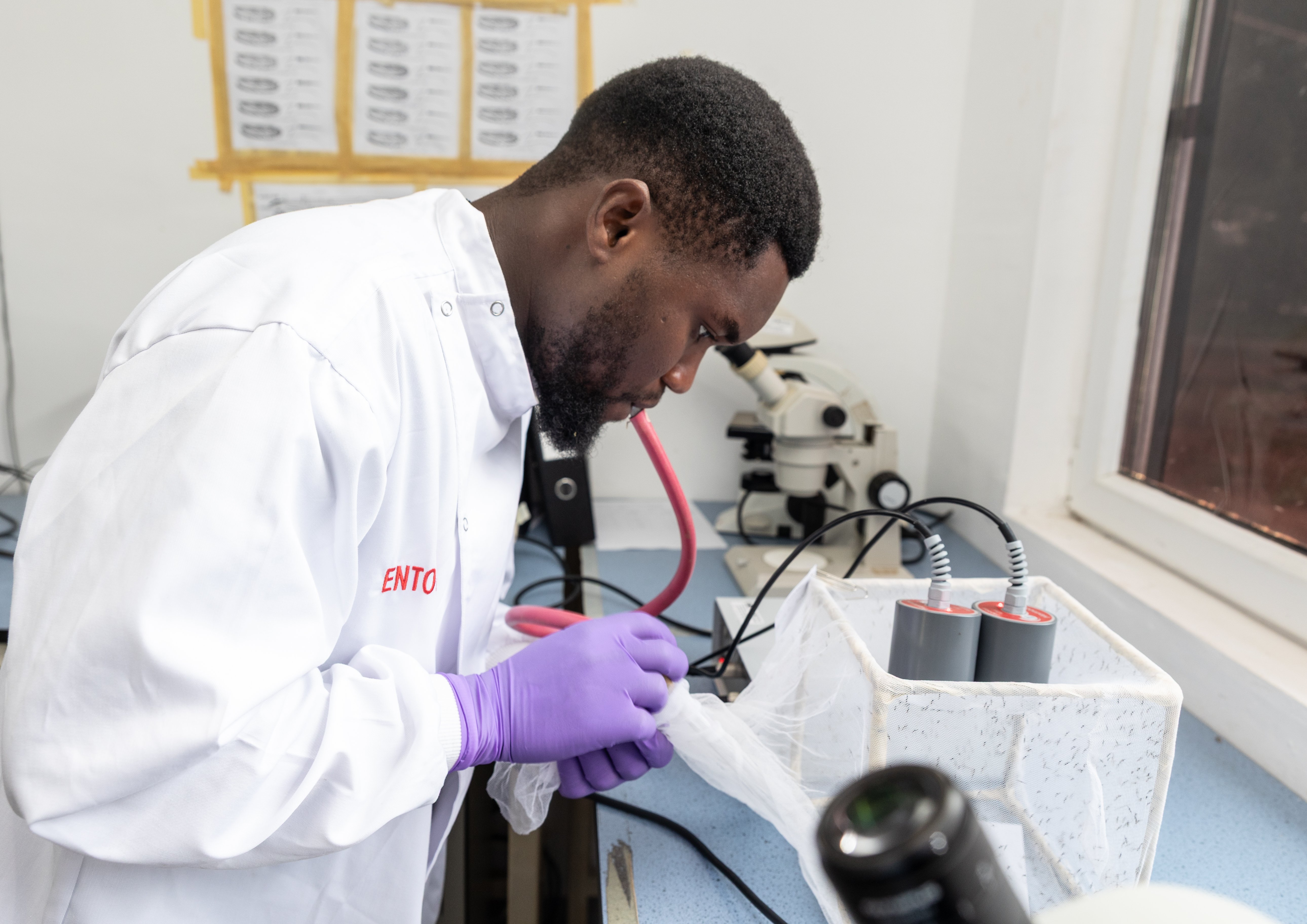
This combination of laboratory and community-based research means scientists can study mosquitoes under controlled conditions while also understanding what is happening where malaria transmission occurs.
Researchers can examine when and where mosquitoes bite, rest and breed, monitor insecticide resistance and investigate mosquito genetics and their ability to support the development of malaria parasites. This evidence can help identify transmission patterns and inform the development and use of interventions including insecticide-treated nets and other vector control tools.
Beyond their role in malaria transmission, mosquito behaviour continues to fascinate researchers. Only female mosquitoes generally take blood meals because they need the nutrients to develop their eggs, while both males and females can survive on sugar. Some people also really do seem to attract more mosquito bites than others, with genetics and differences in our skin microbiome thought to contribute to the complex mixture of scents mosquitoes use to find us
This World Mosquito Day, Mariana is encouraging people to remember that individual action and continued research both have a role to play.
“For those travelling to endemic regions, taking prescribed antimalarials, using insect repellents, and sleeping under treated nets remain vital measures,” she said.
She added that combining everyday prevention with sustained support for scientific research is essential to staying ahead of evolving mosquito-borne disease threats and saving lives.
This work forms part of LSHTM's wider commitment to tackling malaria globally. Founded in 1998, the LSHTM Malaria Centre is a global network bringing together researchers across LSHTM, MRC Unit The Gambia and partner institutions to advance malaria research and control. Alongside research and teaching, the Centre is committed to engaging communities and inspiring the next generation of scientists and global health professionals.
For Amie, the research taking place in insectaries and communities is part of a much bigger ambition.
“Eradicating malaria is not an abstract dream but an engineering problem we are actively solving together.”
If you enjoyed this article and would like to build a career in global health, we offer a range of MSc programmes covering health and data, infectious and tropical diseases, population health, and public health and policy.
Available on campus or online, including flexible study that works around your work and home life, be part of a global community at the UK's no.1 public health university.