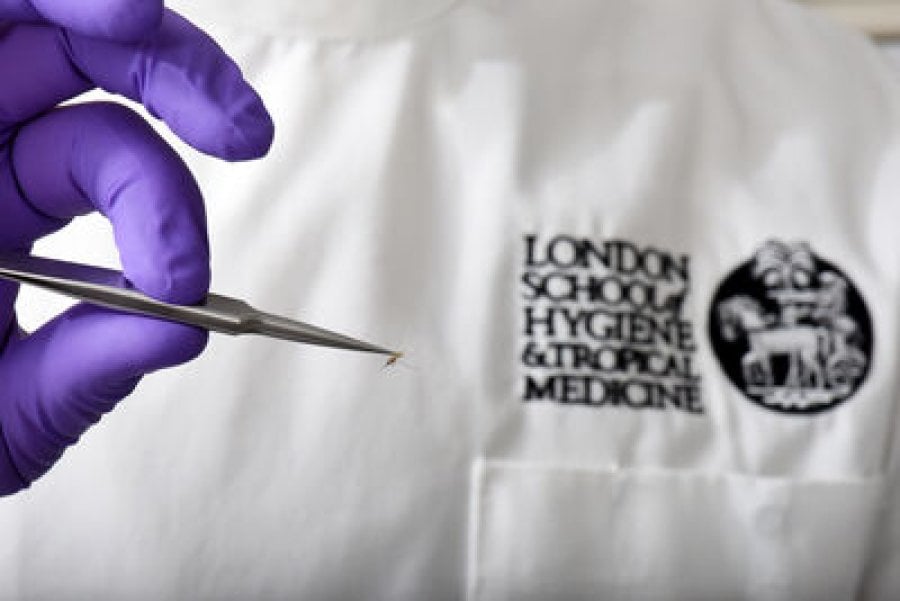
Every year on August 20, World Mosquito Day is commemorated to recognise the groundbreaking discovery by Sir Ronald Ross in 1897 that female Anopheles mosquitoes transmit malaria between humans. Since then, this day has become more than just a historical milestone. It’s a reminder of the ongoing global fight against mosquito-borne diseases such as malaria, dengue, Zika, chikungunya, and yellow fever, which still impact millions of people worldwide.
More than 125 years later, mosquito-borne diseases still kill over one million people and infect nearly 700 million each year, almost one in 10 people. While Anopheles mosquitoes transmit malaria, another species – Aedes - transmits other diseases such as dengue. Dengue reached record levels in 2024 with over 14 million reported cases and nearly 12,000 deaths. This year alone, 3.6 million cases and more than 1,900 deaths have already been reported across 94 countries. The Pacific has been particularly hard hit in 2025, with Samoa, Fiji, Tonga and the Cook Islands all declaring outbreaks.
We often talk about the diseases mosquitoes carry, but today, we highlight the people working behind the scenes, the faces behind the mosquitoes.
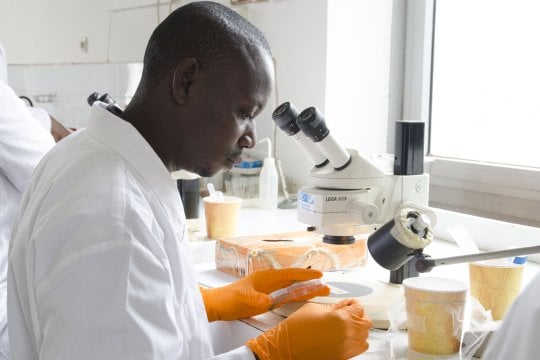
Harouna Dit Massire Soumare is the Entomology Laboratory Manager at the Medical Research Unit The Gambia at LSHTM. Inspired by his childhood in Mali, where malaria is endemic, his work focuses on vector bioecology, malaria transmission, and potential control interventions.
Speaking on raising awareness and malaria control, Harouna said: “The most important thing I wish the public to understand is the value of prevention, using bed nets and indoor spraying, and taking simple steps like clothing and screening homes to keep mosquitoes out.”
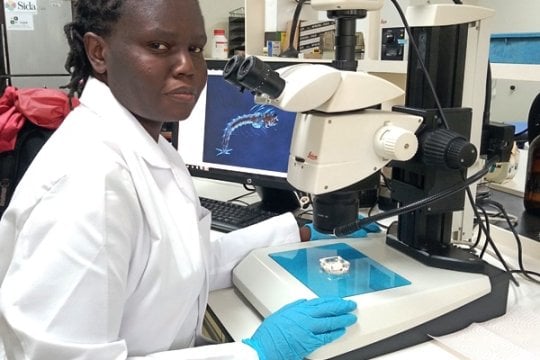
Similarly motivated by personal experience, Milugo Teresa Koyi, a postdoctoral fellow at LSHTM, grew up along the shores of Lake Victoria in Kenya, where malaria shaped her family’s life. Her research now focuses on mosquito genomics, resistance, and population diversity.
She said: “This day takes vector biologists out of the lab and into the community. It is a chance to share our progress, reflect on challenges, and raise awareness of diseases like dengue and other arboviruses, which often lack the attention malaria receives.”
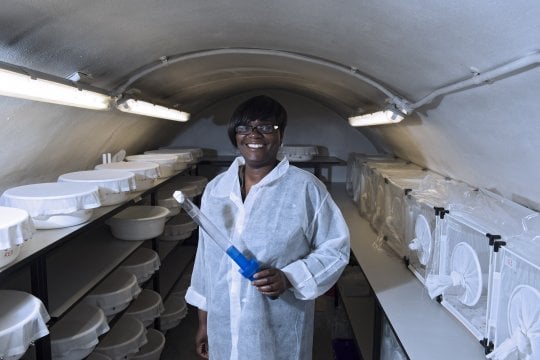
Raising awareness of malaria’s ongoing toll is also central for Patricia Aiyenuro, Senior Technician and Research Assistant based in the LSHTM insectaries in Keppel Street.
She said: “Malaria is widespread and still takes too many lives, especially children under five. It’s vital to promote prevention and highlight the work being done to create affordable, sustainable solutions.”
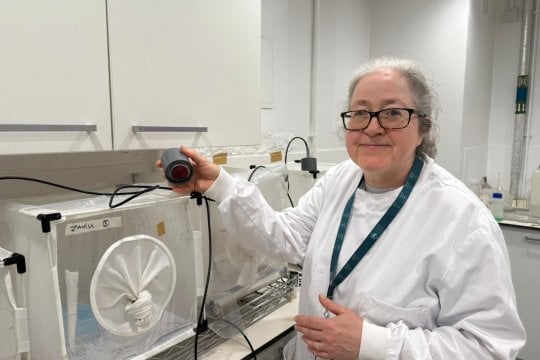
Principal Scientific Officer at LSHTM, Cheryl Whitehorn, has nearly 30 years of experience in medical entomology, from mosquito identification to training the next generation of researchers.
Highlighting the challenges in mosquito related research, Cheryl said: “Mosquito-borne diseases require a multidisciplinary approach. Too often, people focus only on the parasite or the illness, but understanding and controlling the mosquito is just as essential.”
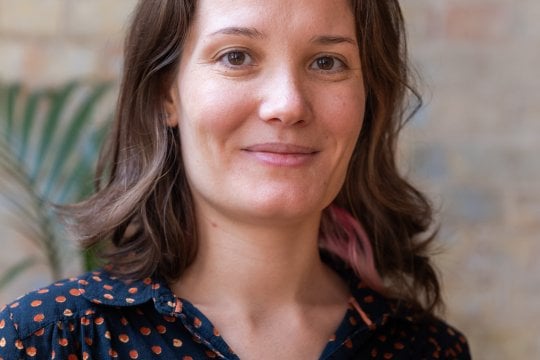
At the Human Malaria Transmission Facility at LSHTM, Mariana Reis Wunderlich provides crucial technical support by rearing Anopheles mosquitoes and conducting infection studies that help reveal how parasites develop and spread.
Mariana said: “I’m hopeful that advances in mosquito biology and transmission research will lead to innovative, sustainable control methods. Whether through better tools, vaccines, or genetic approaches, progress combined with strong public health efforts can bring us closer to eliminating these diseases.”
If you enjoyed this article and would like to build a career in global health, we offer a range of MSc programmes covering health and data, infectious and tropical diseases, population health, and public health and policy.
Available on campus or online, including flexible study that works around your work and home life, be part of a global community at the UK's no.1 public health university.