Chikungunya – what you need to know
London School of Hygiene & Tropical Medicine https://lshtm.ac.uk/themes/custom/lshtm/images/lshtm-logo-black.png Wednesday 13 August 2025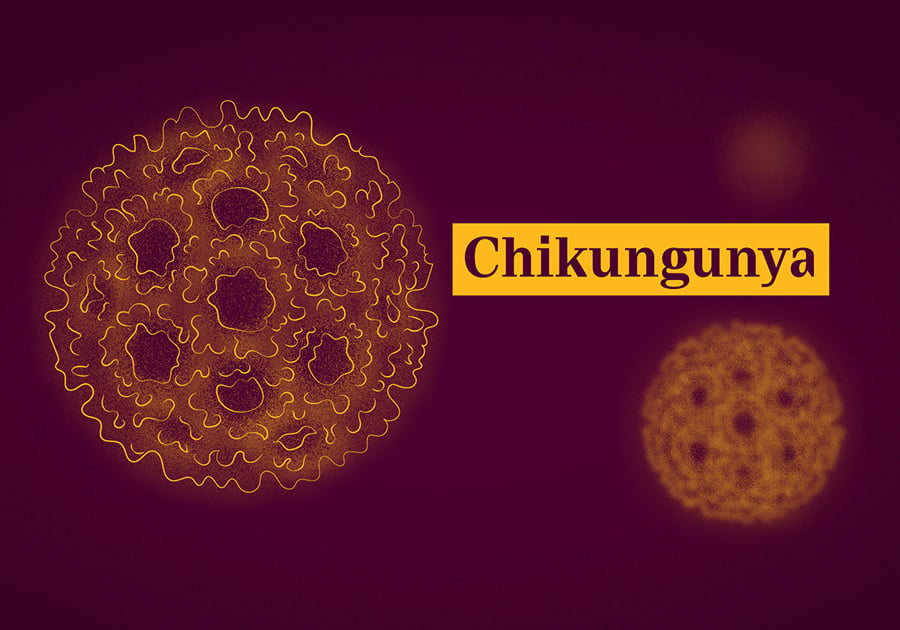
2025 has seen a surge in chikungunya globally. There have been outbreaks of the mosquito-borne virus in Indian Ocean islands, and further transmission to countries such as Madagascar, Somalia, Kenya and India, as well as more than 7,000 cases reported in China as of July 2025.
Doris Kemunto Nyamwaya is an Assistant Professor and a Peter Piot Fellow for Global Health Innovation: Epidemic Preparedness and Response at the LSHTM Centre for Epidemic Preparedness and Response. She is based at The Medical Research Council/Uganda Virus Research Institute and London School of Hygiene & Tropical Medicine Uganda Research Unit within the Viral Pathogens Research theme, where she studies the epidemiology of alphaviruses including Chikungunya and Onyong’nyong. She receives additional supervision through the Medical Research Council Unit, The Gambia at the London School of Hygiene & Tropical Medicine.
We asked Dr Nyamwaya about chikungunya and why we are seeing outbreaks.
What is chikungunya and how is it spread?
Chikungunya is an acute illness caused by mosquito-borne chikungunya virus. The infection typically presents with a sudden onset of fever and debilitating joint pain. Other symptoms include headache, rash, muscle pain, nausea and in some cases, prolonged joint symptoms or neurological complications.
It can be difficult to diagnose chikungunya because its symptoms closely resemble those of other co-circulating febrile (involving fever) illnesses such as dengue fever and malaria.
First identified in Tanzania in 1952, it is now found in over 110 countries across Africa, Asia, the Americas and Europe.
Most commonly, the chikungunya virus is transmitted by Aedes aegypti and Aedes albopictus mosquitoes, known as yellow fever and tiger mosquitoes respectively.
Is there any treatment for the virus?
There is currently no specific antiviral therapy for chikungunya. Management focuses on supportive care, including pain relief and the use of paracetamol to reduce fever. In rare instances, the infection can be fatal.
Although two chikungunya vaccines have gained regulatory approval in some countries, they remain unavailable for widespread use and are yet to be broadly accessible in affected regions.
How can it be prevented?
Prevention relies on reducing exposure to mosquito bites through measures such as applying insect repellent, wearing long-sleeved clothing and trousers, fitting screens to windows and doors, and eliminating standing water where mosquitoes breed.
What factors may be contributing to the emergence of cases in new areas?
Several interlinked factors are likely driving the emergence of chikungunya in new regions. These include:
- Climate change: Warmer temperatures and shifting rainfall patterns have expanded the geographic range and seasonal activity of Aedes mosquitoes, making transmission possible in areas previously unaffected.
- Increased global travel: The movement of infected individuals facilitates the introduction of the virus into new settings where suitable vectors are present.
- Urbanisation and land-use changes: Rapid, unplanned urban growth creates ideal conditions for mosquito breeding, particularly in peri-urban (ie between rural and urban areas) and informal settlements.
- Decline in global surveillance investment: Over recent years, funding for arboviral surveillance and vector control has diminished, particularly after the Zika epidemic. Many countries now lack the capacity for routine vector monitoring and early outbreak detection, leading to delayed responses.
Importantly, surveillance within Africa, where chikungunya was initially confined and remains endemic, has also declined. The virus continues to circulate in ancestral forest transmission cycles involving non-human primates and mosquitoes. Repeated spillovers from this enzootic cycle, where the disease is constantly present within animals in a region, may be sustaining transmission and seeding infections into new geographical areas via travel.
Furthermore, there is an urgent need to understand the implications of co-circulating alphaviruses in Africa, such as Igo-Ora and O’nyong’nyong viruses, which to date have not emerged outside the continent. Their interaction with chikungunya in co-endemic regions may influence viral dynamics, immunity, and disease presentation.
Is the 2025 outbreak in China of particular concern?
Yes, the outbreak in southern China is of concern, particularly given that chikungunya is not typically endemic to this region. The detection of cases suggests that either the virus is being imported and finding favourable conditions for local transmission, or there may be gaps in surveillance that have previously missed earlier introductions. The presence of mosquito vectors that can spread chikungunya virus (particularly Aedes albopictus) in the region, combined with favourable climatic conditions, raises the potential for wider local spread if not swiftly contained.
Are there any differences or similarities at this stage to the 2004–2005 epidemic, which primarily impacted small island territories, affecting nearly half a million people, before spreading globally?
There are both similarities and differences between the current outbreak and the 2004–2005 epidemic. The latter began in coastal Kenya and quickly spread to the Indian Ocean islands and Asia, largely driven by the emergence of the E1-A226V mutation in the chikungunya virus, which enhanced transmission by Aedes albopictus.
At this stage, there are no confirmed reports of a similar mutation in the current outbreak. However, genomic sequencing data will be essential to determine whether viral adaptation is contributing to its spread. Both outbreaks highlight the critical role of ecological change, vector distribution, and increased human mobility in the emergence and global transmission of arboviral diseases.
What’s the situation with vaccine access and approval?
It is a concern that countries most affected by chikungunya do not yet have access to vaccines. While vaccines such as Valneva’s IXCHIQ and Vimkunya have shown promise, receiving approval in the United States for travellers, neither is yet WHO-prequalified or widely licensed in low- and middle-income countries where the disease burden is highest.
Regulatory hurdles, limited production capacity, unclear demand forecasting, and pricing challenges continue to delay equitable access. Rapid acceleration of approval processes and international coordination on vaccine distribution are urgently needed, particularly as the virus expands into new territories.
Moreover, the currently approved vaccines have not been fully evaluated across diverse populations, particularly in endemic settings. Different chikungunya virus genotypes are known to cause varying clinical severity. Notably, the East/Central/South African (ECSA) genotype has been associated with more severe disease, in contrast to the milder presentations typically seen with the Asian genotype. Vaccine performance across genotypes and population subgroups remains a critical area for further study.
If you enjoyed this article and would like to build a career in global health, we offer a range of MSc programmes covering health and data, infectious and tropical diseases, population health, and public health and policy.
Available on campus or online, including flexible study that works around your work and home life, be part of a global community at the UK's no.1 public health university.