Expert Comment: Chikungunya outbreak in China
11 August 2025 London School of Hygiene & Tropical Medicine London School of Hygiene & Tropical Medicine https://lshtm.ac.uk/themes/custom/lshtm/images/lshtm-logo-black.png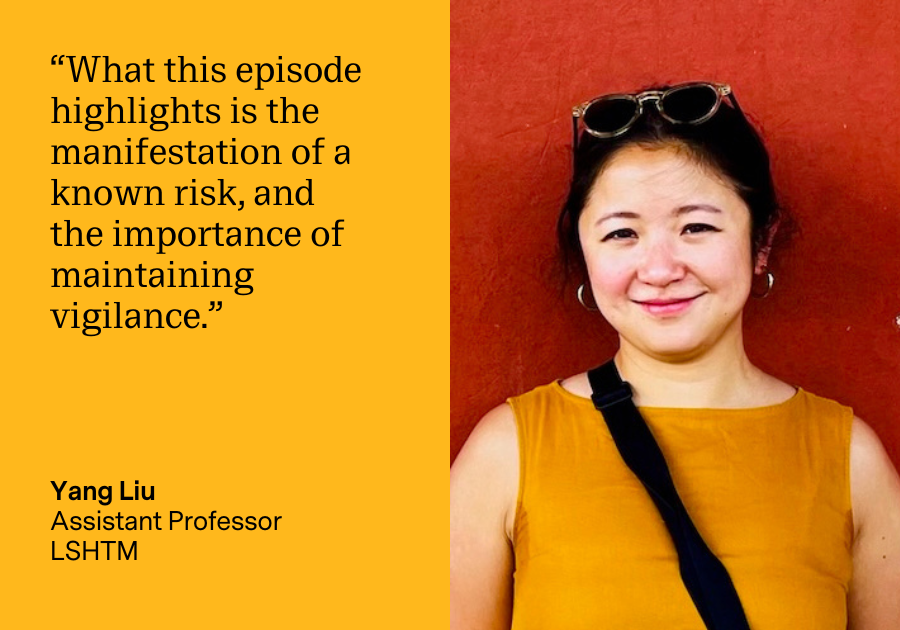
Health officials in China are tackling an outbreak of chikungunya virus, which has resulted in more than 7,000 reported cases since June 2025.
This follows an earlier surge in chikungunya cases in other parts of the world, with major outbreaks in Indian Ocean islands including La Reunion, Mayotte and Mauritius, and further transmission to countries such as Madagascar, Somalia, Kenya and India.
The China outbreak is currently affecting an area in the south of the country. As of the end of July 2025, nearly 90% of reported cases were concentrated in Shunde District, Foshan City, Guangdong Province.
Yang Liu, Assistant Professor at the London School of Hygiene & Tropical Medicine (LSHTM), works on modelling vaccine preventable and climate sensitive infectious diseases, with most of her research focused on Asia, including China.
Dr Liu said: “Ongoing surveillance is crucial across the remaining 20 cities of Guangdong, as well as in neighbouring provinces, or where the environment is suitable for Aedes mosquitoes and there is a history of vector-borne disease transmission.
“Aedes mosquitoes, especially Aedes albopictus, have been established in Guangdong for many years. Dengue, which is transmitted by the same mosquito, occurs almost annually in the province. The climatic conditions that support vector proliferation are also long-standing.
“In this context, the importation of chikungunya followed by local transmission is not unexpected. What this episode highlights is not the emergence of a new risk, but the manifestation of a known one — and the importance of maintaining vigilance, even in regions with historically strong vector control systems.”
Dr Liu highlighted that according to a recent report in China CDC Weekly, whole-genome sequencing of 190 cases indicated they belonged to the Central African Clade of the East-Central-South African (ECSA) genotype. However, it did not mention evidence of any specific recent mutations that might have increased the pathogen’s ability to transmit, or clinical severity.
She said: “Based on the available data, I would suggest the current outbreak appears to be driven more by ecological suitability than by viral adaptation although further genomic and entomological data is needed to confirm this.”
As well as having the right climate in Guangdong for the Aedes mosquitoes to breed, a range of factors may be increasing the risk of chikungunya, according to Dr Liu. These include high levels of global travel and import and export activities in the region, potential decreased investment in global arbovirus surveillance, and clinical challenges associated with emerging climate-sensitive infectious diseases.
She said: “In the early stages, chikungunya often shows non-specific symptoms, making it difficult for medical professionals to distinguish it from other fever-causing illnesses, particularly in regions where dengue outbreaks occur sporadically. There is an urgent need to strengthen training of healthcare professionals to recognise and respond to emerging infectious diseases linked to climate change and human mobility, to better prepare local health systems for evolving threats.”
If you enjoyed this article and would like to build a career in global health, we offer a range of MSc programmes covering health and data, infectious and tropical diseases, population health, and public health and policy.
Available on campus or online, including flexible study that works around your work and home life, be part of a global community at the UK's no.1 public health university.