The space theme explores the mathematical and statistical research methods used to analyse the role of space and geography, in the spread of infectious diseases. Spatial dimensions may be intrinsic to the fundamental transmission mechanisms. For example, cholera may spread along the water networks after heavy rainfall due to increased runoff.
These dimensions may be the foundation or medium of additional social and behavioural factors that could affect the transmission of infectious diseases. The spread of seasonal influenza relies on physical contact, commuter activities, and mobility networks (e.g. highways, train/ airlines), all of which are embedded in the natural or built environments they occupy.
The space theme provides a venue for members to:
- Shine lights on cutting-edge technologies, mathematical and statistical techniques, and data stream use cases that could be applied to infectious disease modelling research
- Exchange ideas/ seek feedback on research design or work-in-progress related to the applications of #space related methods;
Using spatial quantitative methods, members of space are working on:
- Assessing how the environmental factors (e.g. rainfall, humidity, temperature) and connectivity influence the spread of infectious diseases
- Quantifying the accessibility (i.e. walking, driving, public transportation) of vaccination and immunisation services
- Identifying social determinants (e.g. SES, urbanicity, demographics) of vaccine uptake decisions
- Understanding how surveillance mechanisms vary over space and what this means for measuring disease burden
- Projecting and forecasting into the future of outbreaks (e.g. vector-borne diseases or respiratory diseases)
- Using fine-scale mapping and forecasting to identify transmission hotspots, surveillance gaps, and intervention targets for enhanced disease control and prevention strategies (e.g. vector-borne diseases or respiratory diseases)
Theme leads

Yang Liu
Assistant Professor

Ahyoung Lim
Assistant Professor
Highlighted Publications
- Nightingale, E. S. et al. Inferring the regional distribution of Visceral Leishmaniasis incidence from data at different spatial scales. Commun Med (London) 4, 240 (2024).
- Harish, V. et al. Human movement and environmental barriers shape the emergence of dengue. Nat. Commun. 15, 4205 (2024).
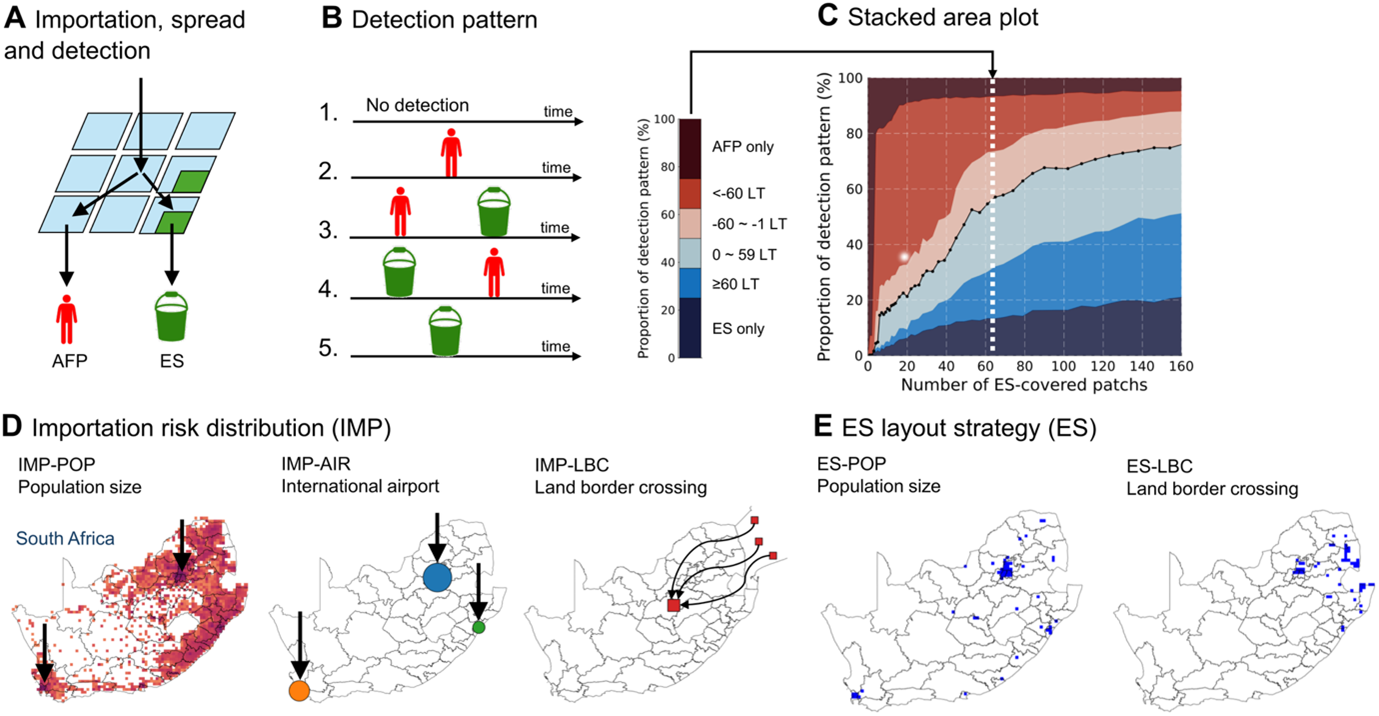
- Asakura, T. R. & O’Reilly, K. M. Assessing early detection ability through spatial arrangements in environmental surveillance for poliovirus: a simulation-based study. medRxiv (2024). doi:10.1101/2024.08.17.24312151
We explored the influence of the spatial arrangement of environmental surveillance (ES) sites on the early detection ability of poliovirus in a simulation-based approach. We show when importation risks are confined, a modest number of strategically positioned ES sites can achieve a high early detection ability while if importation risks are dispersed, the effectiveness of ES diminishes.