
Typically, conducting an evidence synthesis encompasses nine steps which you can see below.
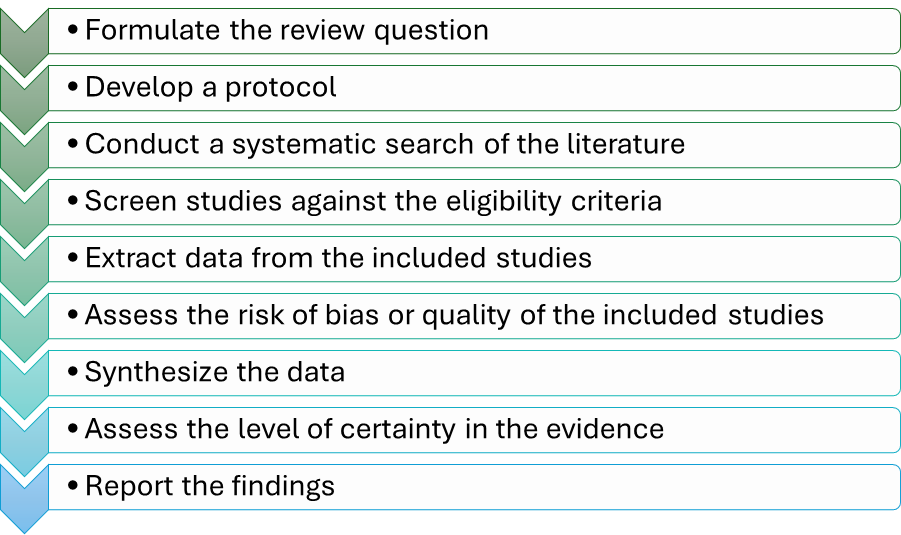
Here is a summary of each of these steps:
- Formulate the review question: Clearly define the question you aim to answer through your review. This often involves specifying the population, intervention, comparison, and outcomes (PICO) of interest.
- Develop a protocol: Outline the rationale, hypothesis, and methodology for the synthesis. This protocol acts as a roadmap for the entire process. It is best practice to register or publish protocols in advance of starting a review to ensure transparency and reduce the risk of bias. This step includes designing a search strategy and identifying relevant databases/ sources of information.
- Conduct a systematic search: using pre-specified search terms, search and retrieve relevant studies from various databases and sources, including grey literature.
- Screen studies: Assess the identified studies for relevance and eligibility based on predefined criteria outlined in the protocol.
- Extract data: Collect relevant data from the studies for analysis according to the data extraction fields identified in the protocol.
- Assess risk of bias or study quality: Evaluate the quality and potential biases of the included studies. Various tools exist to assess the risk of bias of studies, depending on the types of studies included in reviews.
- Synthesise data: Combine the data using appropriate methods, such as meta-analysis or narrative synthesis.
- Assess the level of certainty in the evidence using the GRADE (Grading and Recommendations Assessment and Evaluation) framework (or CERQual for qualitative reviews), where applicable.
- Report the findings: Present the results in a structured format, often following guidelines like PRISMA (Preferred Reporting Items for Systematic Reviews and Meta-Analyses).