
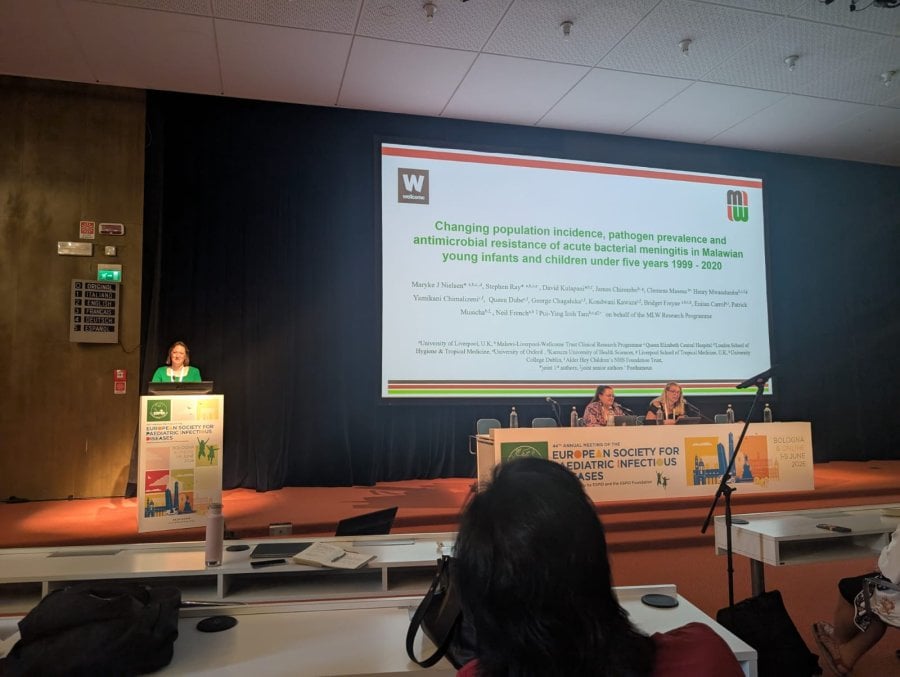
Clinicians, scientists, policymakers and industry representatives from across the world gathered in Bologna, Italy, last June for the 44th Annual Meeting of the European Society for Paediatric Infectious Diseases (ESPID). The meeting brought together more than 3,000 attendees from 111 countries to discuss advances in the research, treatment and prevention of infectious diseases in children.
Newborns and children are disproportionately affected by the adverse effects of antimicrobial resistance (AMR) globally, making AMR a major focus of the meeting. Throughout the conference, LSHTM researchers highlighted the scale and impact of AMR in these vulnerable groups, as well as potential approaches to improve diagnosis and treatment.
Diagnostics are a critical tool for improving outcomes and optimising antimicrobial use in newborns and children. Novel host-response signatures developed by the Horizon 2020-funded DIAMONDS consortium could help transform the management of children presenting to emergency departments by distinguishing between bacterial, viral and inflammatory causes of illness at initial presentation.
Associate Professor Gabrielle Bonnett, on behalf of a team of researchers which also included, Clinical Research Fellow Dr Maryke Nielsen and Professor Shunmay Yeungfrom LSHTM, presented the results of an innovative in silico trial of the DIAMONDS multiplex test. The study demonstrated changes in antimicrobial use among clinicians across Europe when the test was used. Understanding how this point-of-care test could influence clinical decision-making will be important for informing its ongoing development and implementation.
Dr Nielsen also presented findings from a 22-year epidemiological study examining changing trends in meningitis among children under five presenting to a tertiary hospital in Malawi. Using laboratory data from the Malawi-Liverpool-Wellcome Trust, the study demonstrated the sustained impact of conjugate vaccines, while also identifying a concerning rise in antimicrobial resistance.
Another highlight was a research session on innovations in neonatal sepsis diagnosis and management across different resource settings. Early career researchers from Tanzania, Zimbabwe and India presented research highlighting rising AMR, the challenges of improving blood culture diagnosis and the potential role of artificial intelligence.
An interactive panel discussion explored the particular challenges of tackling AMR and sepsis among newborns and emphasised the importance of global collaboration.
Dr Nielsen said, “ESPID 2026 highlighted both the progress being made and the challenges that remain in addressing AMR in newborns, children and young people. By bringing together researchers and clinicians from across the world to share knowledge, discuss emerging research and strengthen collaborations, meetings such as this play an important role in advancing child centred approaches to improve the diagnosis, treatment and prevention of infectious diseases.”
If you enjoyed this article and would like to build a career in global health, we offer a range of MSc programmes covering health and data, infectious and tropical diseases, population health, and public health and policy.
Available on campus or online, including flexible study that works around your work and home life, be part of a global community at the UK's no.1 public health university.