
Using whole-genome sequencing to track drug-resistant infections could provide good value for Tunisia’s health system, particularly when results are delivered quickly enough for infection control teams to act, according to research led by the London School of Hygiene & Tropical Medicine (LSHTM) and partners in Tunisia and the UK.
Published in The Lancet Regional Health – Eastern Mediterranean, the research assessed the cost, cost-effectiveness, and affordability of using whole-genome sequencing (WGS) to track drug-resistant Klebsiella pneumoniae, a major cause of healthcare-associated infection in hospitals.
WGS can help identify whether infections in different patients are genetically linked, allowing possible transmission within hospitals to be identified or ruled out. Conventional laboratory testing can identify bacteria and their resistance profile but provides less information about how infections may be spreading between patients.
Using data from Tunisia’s national AMR surveillance system, the researchers assessed the cost of sequencing alongside its potential to prevent infections and reduce hospital costs. At the National Reference Laboratory, WGS was estimated to cost US$232 per test before overheads when 500 tests were processed each year.
How quickly WGS results reached hospitals and could be acted on was one of the strongest drivers of value. If results were delivered and acted on within four days, rather than seven days, WGS became cost-saving. However, if results took ten days to reach the hospital and inform infection control action, the benefits diminish substantially, and WGS was no longer considered cost-effective.
Other drivers also affecting economic value, including how efficiently sequencing runs were used, the number of cases within transmission clusters, proportion of downstream infections amenable to intervention, and how effectively infection control teams could respond to the results.
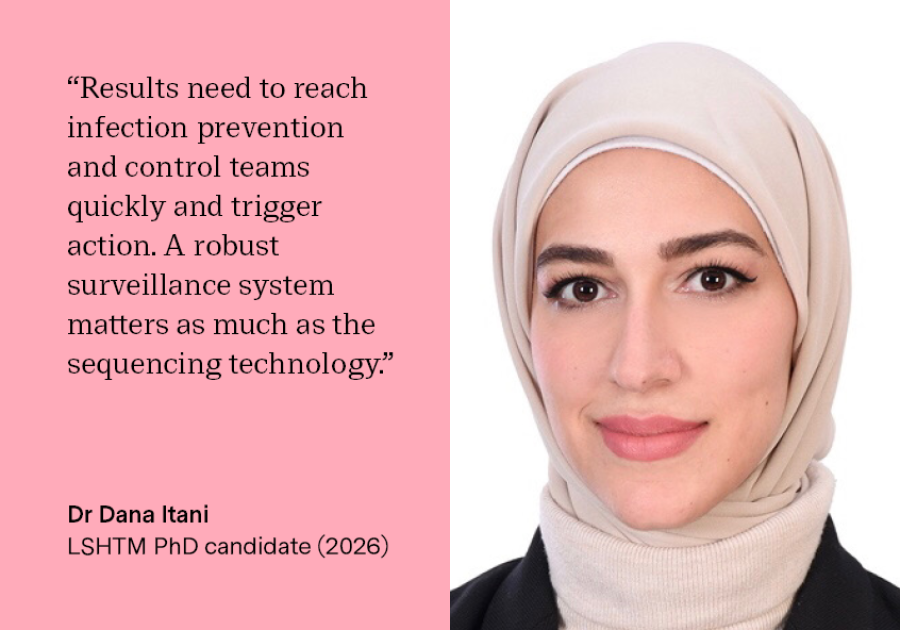
Dana Itani, Public Health Microbiologist and first author of this study said: “ Our findings show that the economic value of genomic surveillance does not come from sequencing alone. Results need to reach infection prevention and control teams quickly and trigger action. For surveillance systems with limited resources, investment in sample referral, rapid reporting, targeted use of sequencing, IPC readiness, and sustainable financing is as important as investing in the sequencing technology”.
WGS remained affordable when its use was modelled at a larger scale. Across the hospital, National Reference Laboratory and national surveillance network scenarios, the budgets remained below 1% of the relevant annual budgets.
However, the analysis highlighted an important financing problem: sequencing costs in centralised hub-and-spoke models are largely borne by the National Reference Laboratory, while many potential benefits such as avoided bed-days, antibiotic use, isolation and cleaning, accrue to hospitals.
The research is the first comprehensive economic evaluation of WGS for K. pneumoniae within a national AMR surveillance system in the Eastern Mediterranean Region and in a low- and middle-income country (LMIC) setting. The authors support a phased approach to WGS integration in AMR surveillance, with rapid sample referral and reporting, targeted sequencing to improve the identification of transmission, efficient use of sequencing capacity, infection control teams able to respond quickly to genomic findings, and financing mechanisms that align laboratory costs with realised benefits at hospital level
Publication:
Itani D, al. Whole genome sequencing for Klebsiella pneumoniae in the Tunisian antimicrobial resistance surveillance system: micro-costing, pragmatic cost-effectiveness, and budget impact evaluation. The Lancet Regional Health – Eastern Mediterranean (2026) DOI: 10.1016/j.laneme.2026.100005
If you enjoyed this article and would like to build a career in global health, we offer a range of MSc programmes covering health and data, infectious and tropical diseases, population health, and public health and policy.
Available on campus or online, including flexible study that works around your work and home life, be part of a global community at the UK's no.1 public health university.