




In January 2024, Pharmacy First was launched across England. This new service enables community pharmacists to supply prescription-only medicines, including antibiotics, to treat seven common health conditions. The programme aims to ensure faster care and reduce pressure on general practitioners (GPs).
This National Institute of Health Research (NIHR) funded evaluation involves research teams from five institutions, examining how the new programme is being implemented across England; its impact on prescribing, case mix of GP consultations, Accident & Emergency (A&E) and hospital use, equity of access and cost for different groups of patients in different contexts.
Our research is led by a team at LSHTM, working in collaboration with the Universities of Nottingham, Manchester and the Bennett Institute at the University of Oxford, as well as the UK Health Security Agency. The mixed methods evaluation will include quantitative, economic and process evaluations, as well as an analysis of policy impact.
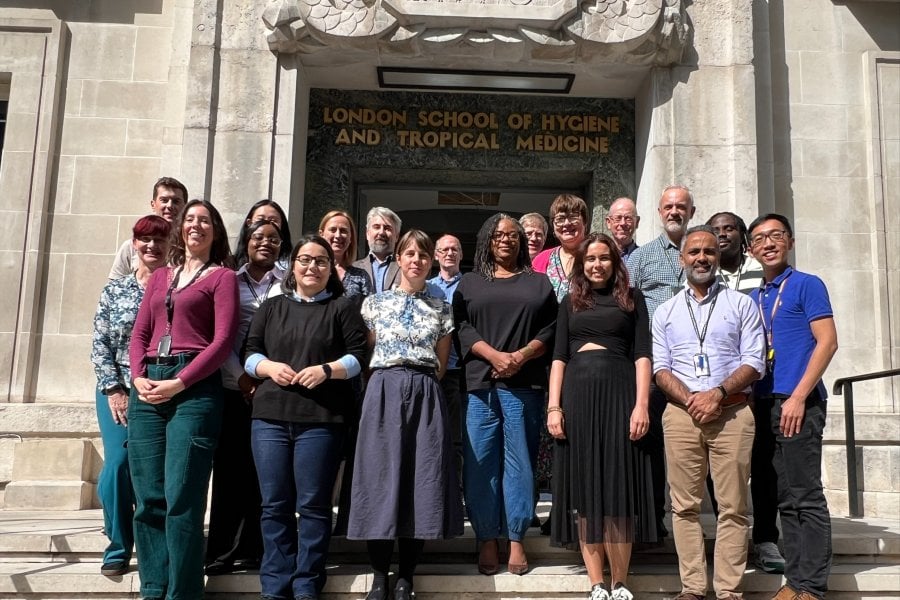
We were commissioned by the National Institute for Health and Care research to conduct a mixed-method impact and implementation evaluation of Pharmacy First Services. The evaluation is led by a team at LSHTM working in collaboration with researchers at the University of Nottingham, the University of Manchester, the Bennett Institute at the University of Oxford and the UK Health Security Agency (UKHSA).
The Pharmacy First service was launched in January 2024 with an aim to ease pressure on GP and A&E services by widening the range of medicines people can receive from pharmacists without seeing their GP first if they have one of seven common illnesses. This is an expansion to an existing service called NHS Community Pharmacist Consultation Service (CPCS) in which patients registered with a GP can be referred to community pharmacists for advice and treatment for certain health problems.
The new service will be evaluated to see whether it has the intended effect and at what cost. It will check to see how many medicines are being dispensed and whether this increases or decreases. We also want to understand if the service is helping people to access treatment for the seven common illnesses in a more timely manner and if this reduces their risk of the condition getting worse. Given the potential risk that increased use of antibiotics might encourage antimicrobial resistance the research will monitor antibiotic use carefully.
Meet the research team
- Nick Mays - Joint Principal Investigator

My role is to take academic strategic responsibility for the evaluation working closely with my Joint-PI Rebecca Glover, and co-lead work package 5, a mixed-methods analysis, consolidation of findings and identification of policy implications.
Nick Mays profile page.
- Rebecca Glover - Joint Principal Investigator

My role is to take academic strategic responsibility for the evaluation, provide day-to-day leadership of the evaluation working closely with my Joint-PI Nick Mays, and co-lead work package 5.
Rebecca Glover profile page.
- Tommy Allen - Co-Investigator, University of Manchester

My role as a health economist is to analyse large health datasets to understand the impact of Pharmacy First. This derives from my interest in pharmacy policy, prescribing, and quality and safety, and ensuring NHS resources are spent on safe and effective services to make sure patients get the best value for money from their healthcare.
Tommy Allen profile page.
- Claire Anderson - Co-Investigator, University of Nottingham

My role is to contribute to Work Package 1 and qualitative research across Scotland and Wales, as well as to contextualise the English findings in the history of the expansion of PGDs.
Clare Anderson profile page.
- Diane Ashiru-Oredope - Co-Investigator, UKHSA

My role will be to lead UKHSA’s contribution to the evaluation including dissemination of findings; ensuring that the evaluation is integrated with national AMR policy; and contributing pharmacy and AMR policy expertise across all Work Packages.
- Tony Avery - Co-Investigator, University of Nottingham

My role as Co-Lead is to provide academic and clinical leadership for Work Package 2.
Tony Avery profile page.
- Isaac Chu - Co-Investigator, LSHTM

My role as a physician-scientist and post-doctoral researcher has been to facilitate qualitative research in Work Package 1, Work Package 4 and co-productive patient and public involvement and engagement.
Isaac Chu profile page.
- Rachel Elliot - Co-Investigator, University of Manchester (UoM)

My role is as the lead economist on Work Package 3 of the Pharmacy First evaluation. The economics team consisting of four health economists at UoM & LSHTM is estimating the national budget impact of Pharmacy First, and also estimating the overall changes in NHS costs and patient health in an economic evaluation.
Rachel Elliot profile page.
- James Goulding - Co-Investigator, University of Nottingham

My role is to oversee the data science component of the evaluation focusing on analysing local population-level factors that influence the uptake and effectiveness of the initiative across the UK's 42,619 LSOA neighbourhoods. This work involves leveraging an AI-driven, hypothesis-generating approach to model the relationships between key initiative metrics and a wide range of socio-demographic, cultural, and behavioural factors, such as deprivation, mobility, ethnicity, and health metrics.
James Goulding profile page.
- Hannah Higgins - Co-Investigator, UKHSA

My role as a senior epidemiologist in antimicrobial resistance surveillance at UKHSA will be to extract and analyse surveillance data to evaluate any changes in antimicrobial prescribing and resistance following the roll-out of Pharmacy First in England.
- Basharat Hussain - Co-Investigator, University of Nottingham

My role is as a qualitative researcher focused on Work Package 1 undertaking scoping interviews with stakeholders of similar schemes in Scotland & Wales. My research interests are in the fields of implementation science, health inequalities, health and social innovations, health technologies and inclusivity, policy analysis, reviews and realist evaluations.
Basharat Hussain profile page.
- Stacey Johnson - Co-Investigator, University of Nottingham

I lead on ensuring that equality, diversity and inclusion issues are embedded in all aspects of evaluation methodology and methods. In this project, the aim is to use participatory approaches capitalising on diversity of people, diversity of thought and diversity of methods. In this way the plan is to understand how a range of people and communities experience Pharmacy First. Stacy will be using interventions like inclusive mentoring and reverse mentoring to build capacity in the team.
Stacey Johnson profile page.
- Mirza Lalani - Co-Investigator, LSHTM

My role as an experienced health and care researcher with a specific interest in the evaluation of implementation of policy initiatives in the NHS, has been to lead WP1 (interviews with policymakers, national sector leaders and frontline community pharmacists and GPs). This focuses on examining the factors that affect implementation of PF and similar services. I led the convening of the evaluation’s Study Steering Committee for the evaluation and will be involved in the qualitative work planned for Work Package 4.
Mirza Lalani profile page.
- Brian MacKenna - Co-Investigator, University of Oxford
My role is to lead a team software developers and data scientists at the Bennett Institute in the development of the software infrastructure, and preparation of the PF data flows, development of an OpenSAFELY (OS) PF variables library and descriptive epidemiological dashboard in OS. A co-pilot service will be provided to researchers to enable them to analysis of changes using OS data in healthcare usage following the introduction of PF.
Brian MacKenna profile page.
- Ayodeji Matuluko - Co-Investigator, LSHTM

My role as a Research Fellow on Work Packages 1, 4 and 5 is focused on the qualitative research aspects of the evaluation. Some of my recent tasks since commencing my role include analysis of qualitative data from interviews with policymakers and frontline pharmacists, stakeholder analysis, and write-up of findings for publication.
Ayodeji Matuluko profile page.
- Berit Muller-Pebody - Co-Investigator, UKHSA
My role will to be responsible for the UKHSA analysis plan and data analysis, working closely with Hannah Higgins who will extract data across datasets, undertake analysis and draft reports.
- Stephen O’Neill - Co-Investigator, LSHTM

My role is to provide econometric expertise, and support to the team conducting an economic evaluation of Pharmacy First in Work package 3. My main research interest are novel causal inference and machine learning approaches that can be applied within policy evaluation and health economics. My current work focusses on the estimation of heterogeneous effects of treatments/interventions.
Stephen O’Neill profile page.
- Agata Pacho - Co-Investigator, LSHTM

My role is to co-develop the qualitative components of the evaluation, embedding a focus on inequalities. I also co-lead the public involvement and oversee knowledge translation aspects of the evaluation.
Agata Pacho profile page.
- Kim Sonnex - Co-Investigator, University of Nottingham

My role as Deputy Co-Lead for Work Package 2 is to lead the following aspects of the project: describing the uptake of Pharmacy First, evaluating the impact it has on usage of other healthcare resources (such as visits to the GP and hospitals) and evaluating the safety of the service. I am also co-ordinating all researchers at University of Nottingham.
Kim Sonnex profile page.
- Fanyi Su - Co-Investigator, University of Manchester

My role as a health economist on the project is to focus on the health economic modelling for seven PF conditions.
Fanyi Su profile page.
- Lisa Szatkowski - Co-Investigator, University of Nottingham

My role as a medical statistician is to provide statistical expertise to Work Package 2. This derives from expertise in Interrupted Time Sereies Analysis (ITSA) and analysing quantitative data ranging from small local survey datasets to extremely large datasets of routinely-collected primary and secondary care medical data.
Lisa Szatkowski profile page.
- Amy Taylor - Co-Investigator, University of Nottingham

My role as Deputy Co-Lead for Work Package 2 is as a quantitative researcher, using my experience of Quasi experimental design and Interrupted Time Series Analysis. I will work with the team to develop the work package protocols and complete the analysis and reporting.
Amy Taylor profile page.
- Tracey Thornley - Co-Investigator, University of Nottingham

My role as Co-Lead is to work with Work Package 2 colleagues on the quantitative evaluation components.
Tracey Thornley profile page.
- Elizabeth Dolan - Co-Investigator, University of Nottingham

Dr Elizabeth Dolan is a Research Fellow in Health Data Science at NLAB, University of Nottingham, specialising in the application of artificial intelligence and commercial data for public health surveillance and early diagnosis, particularly using pharmacy sales data. For the Pharmacy First evaluation, she leads the development of AI driven models to uncover patterns in service uptake and identify whether access differs across population groups and areas. Her work integrates complex multilevel datasets, including demographic, pharmacy, geographic and behavioural indicators, to support analysis of equity in the use of Pharmacy First services.
Elizabeth Dolan profile page.
- Weiyao Meng - Co-Investigator, University of Nottingham

Dr Weiyao Meng is a Research Fellow at NLAB, University of Nottingham, specialising in the application of AI and data science.
For the Pharmacy First evaluation, she focuses on the quantitative evaluation of the service within Work Package 2. Her work focuses on analysing national administrative and electronic health record datasets to investigate patterns of service uptake, utilisation and geographic variation across England, and to assess how the introduction of Pharmacy First influences healthcare utilisation within the wider health system.
Weiyao Meng profile page.
- Patrick Bidulka - Co-Investigator, LSHTM

My role is to provide expertise on the databases and statistical methodology we will use to conduct the Pharmacy First evaluation. My main research interest is causal inference using routinely collected health data.
Patrick Bidulka profile page.
- Charlotte Stevens - Co-Investigator, UKHSA

My role as a senior epidemiologist in antimicrobial prescribing surveillance at UKHSA will be to extract and analyse surveillance data to evaluate any changes in antimicrobial prescribing and resistance following the roll-out of Pharmacy First in England.
- Arnaud Iradukunda - Co-Investigator, LSHTM

For Pharmacy First Evaluation, my role is as a Quantitative Researcher on Work Package 2 (WP2), where I focus on analysing antimicrobial prescribing patterns across England using the OpenSAFELY platform.
We are conducting a mixed-method impact and implementation evaluation of Pharmacy First Services. The evaluation is led by a team at LSHTM working in collaboration with researchers at the University of Nottingham, the University of Manchester, the Bennett Institute at the University of Oxford and the UK Health Security Agency (UKHSA).
Pharmacy First (PF) was launched across England in January 2024. It enables community pharmacists to supply prescription-only medicines, including antibiotics, to treat seven common health conditions: earache, uncomplicated urinary tract infections in women, sore throat, sinusitis, impetigo, shingles and infected insect bites, after consultation with a community pharmacist. It is hoped that the service will provide faster care and reduce pressure on GPs. This is an expansion to an existing service called NHS Community Pharmacist Consultation Service (CPCS) in which patients registered with a GP can be referred to community pharmacists for advice and treatment for certain health problems.
Research aim
Our research aims to evaluate the new guidance and practice for the treatment of these seven common conditions (Patient Group Directives, PGD) and their effect on volume of prescribing, case mix of GP consultations, A&E and hospital use, equity of access and cost for different groups of patients in different contexts, acceptability, and fidelity.
The evaluation will see whether Pharmacy First:
- Has the intended effect and at what cost
- Check to see how many medicines are being dispensed and whether this increases or decreases
- Is helping people to access treatment for the seven common illnesses in a timelier manner
- If the service reduces their risk of the condition getting worse
- Monitor antibiotic use carefully, given the potential risk that increased use of antibiotics might encourage antimicrobial resistance (when infections, sometimes called 'superbugs', become harder to treat with the drugs we have)
Given the broad interest in the new service, from policymakers, the NHS and the wider public, we will aim to respond to any changes or developments in the roll-out of the PF service. Our team will publish interim and final reports. We expect this research to have implications for health, research and policy beyond England.
The findings should contribute to improvements in access to primary health care, better antimicrobial use and refinements to PF (if PF is judged cost-effective). As well as publishing in appropriate journals, we will disseminate findings through scientific meetings, pharmacy and general practice networks, patient organisations and mass media. Public engagement and knowledge translation activities will also be integral to the evaluation, including using podcasts to disseminate findings.
- Methods
This three-year, mixed-methods evaluation combines quantitative and qualitative data and spans five work streams. Methods comprise evidence synthesis, semi-structured interviews, focus groups, interrupted time series analysis (ITSA) and an economic evaluation. Findings will be brought together and interpreted using an implementation science framework, the Consolidated Framework for Integration Research (CFIR), supplemented by Proctor's implementation outcomes framework.
- Work package 1: Literature review, scoping and Theory of Change
Led by Mirza Lalani, LSHTM and Rebecca Glover, LSHTM.
The team will undertake an initial orientation and scoping of the programme and policy environment by (i) conducting interviews with English policy officials, national GP leaders and frontline pharmacists; (ii) conducting interviews with Scottish and Welsh policy advisers, GP leaders and frontline pharmacists; and thereby (iii) contributing to the development of a Theory of Change and other work packages.
- Work package 2: Development of data linkages, and analysis of uptake and impact on consultation patterns, workload and patient safety, including antimicrobial resistance
Co-Led by Tony Avery, and Tracey Thornley, University of Nottingham
Deputy Co-Led by Kim Sonnex and Amy Taylor, University of Nottingham
This work package will involve the development of data linkages, and analysis of uptake and impact on consultation patterns, workload and patient safety, including antimicrobial use. Specifically, the package is designed to address the following:
(i) Establish data access and linkage
There will be two main sources of routine data: GP electronic records, linked to A&E department and acute hospital admission data from the OpenSAFELY platform; and England-wide pharmacy-level data captured as a Pharmacy First (PF) consultation record at the point of service use from anonymised pharmacy datasets from NHS BSA data.
(ii) Describe the uptake of PF nationally and regionally
This workstream will describe the uptake of PF at national and regional levels at monthly intervals for each of the seven PF pathways and associated minor illness consultations with the costs associated with the provision of this service. It will specifically identify areas and patient groups with a high (and low) uptake of PF.
To help explain these patterns, the analysis will also consider factors such as local deprivation levels, population demographics, pharmacy-level characteristics, and community health behaviours. It will examine whether these characteristics can predict which pharmacies are likely to have higher or lower uptake, helping to identify opportunities to improve equity.
(iii) Describe how health care use changes after the introduction of PF and the impact of PF on access to health care
This workstream will explore the changes in the rates of consultations overall and for each of the seven PF conditions recorded in the GP data comparing rates before and after the introduction of PF. It will explore the change in rates of consultations by patients and practice characteristics including consultation type (nurse/ GP etc), region, gender, age, IMD and ethnicity.
This work will also assess whether PF results in changes in A&E contacts and hospital admissions for the conditions covered by the scheme. Some important questions this will aim to answer are: Who is using PF? Do different groups of patients use PF compared to GP or in A&E for FP conditions? What is the impact of PF on healthcare costs?
(iv) Evaluate safety outcomes following introduction of Pharmacy First
This workstream will evaluate changes in indicators of patient safety. It will evaluate if care provided via PF is as safe as the care provided by other pathways prior to the introduction of PF, or if PF has improved safety, by providing better access to care. This will be evaluated by comparing the rates of hospitalisation and indicators of consequences of delayed treatment for patients who access PF care with usual care provided by GPs.
Some important questions this will aim to answer are: Does PF improve safety for patients by providing more access to treatment, to be treated sooner? Is PF as safe as care by GPs? Is the Patient Group Direction (PGD) being used appropriately?
(v) Describe the impact of PF on antimicrobial use and resistance (AMR) trends
This workstream will evaluate the impact of PF on trends in the number and type of antimicrobials dispensed in the community, including those approved for the seven PF conditions using UKHSA’s national antimicrobial usage surveillance data.
It will use UKHSA’s Second Generation Surveillance System (SGSS) data to quantify community-associated positive urine/respiratory samples and urine/respiratory isolates antimicrobial resistance (AMR) rates by causative organism. Quasi-experimental analyses will be conducted using interrupted time series analysis (ITSA). Changes in antimicrobial prescribing associated with the seven PF conditions will also be evaluated using the OpenSAFELY data to evaluate whether the introduction of PF has changed prescribing.
- Work package 3: Economic Evaluation
Led by Rachel Elliot, University of Manchester.
The economic evaluation will assess the economic impact of PF. It will: (i) assess the national budget impact of PF from the NHS and personal social services (PSS) perspective; and (ii) estimate the impact of PF on patients' health and costs from an NHS and PSS perspective to generate estimates of cost-effectiveness/net benefit. The team will also conduct further research to compare areas where PF was implemented, areas where it was not implemented, and areas with fewer versus more participating pharmacies.
- Work package 4: Implementation and fidelity of the roll-out
Lead – Rebecca Glover & Mirza Lalani, LSHTM.
This work package will find out whether PF was implemented well, including its strengths and weaknesses. It will involve interviews with pharmacists, GPs and policymakers and interviews and focus groups with service users to assess implementation and fidelity of the roll out. Specifically this will include (i) interviews to understand how and why PF is and is not taken up including the fidelity of the scheme to the original specification; (ii) to evaluate the effects of PF on the access to, and acceptability of, community pharmacy services to populations historically marginalized in terms of primary health care access; and (iii) to assess pharmacists' and GPs' perceptions of the safety of the scheme.
- Work package 5: A mixed-methods analysis, consolidation of findings and identification of policy implications
Led by Nick Mays & Rebecca Glover, LSHTM.
This work package has two objectives: (i) to undertake an integrated evaluation of the implementation of PF structured using the Consolidated Framework for Integration Research and Proctor's outcomes framework; and (ii) to provide insight as to how to improve the PF scheme, assuming it is sufficiently cost-effective to be continued. Finally, the team will combine all these findings and make recommendations.
Co-production
The evaluation of Pharmacy First is co-produced with six public contributors who actively advise on the research process. They participate in activities such as conducting interviews and focus groups with service users, community pharmacists and GPs, contributing to data interpretation, and assisting with writing up findings for policymakers, the research community and wider audiences.
The evaluation team are engaging with a broader range of members of the public by organising public fora in six different locations across England, including those particularly affected by closures of community pharmacies and with a low uptake of Pharmacy First. These forums enable us to gain insights into public perceptions of Pharmacy First and, more broadly, their experiences of accessing healthcare.
Why and how is Pharmacy First being evaluated?
This animation provides an introduction to the evaluation, explaining why it is needed and the most effective ways to carry it out. Public contributors co-wrote the script and offered guidance on the images used in the animation. They ensured the evaluation was represented fairly as an independent research project and highlighted the crucial issues of care equity that need to remain central to the evaluation. Enjoy watching!
- How have patients and the public been involved in developing this research?
We involved service users as a part of the evaluation of the Antimicrobial Resistance (AMR) National Action Plan. We conducted focus groups and in-depth interviews to understand experiences of accessing care, including through pharmacies, and preferences for linking self-care to antibiotic access. This work highlighted the value of getting a diagnosis even if no antibiotic is dispensed and has informed our understanding of the potential benefits of Pharmacy First (PF) since it expands access to primary care.
- Who to contact for further information?
Please contact us via email and we will come back to you as soon as possible: [email protected].
Meet the public contributors
We are a group of public contributors passionate about the impact of Pharmacy First on health care access and quality. It is important to us that the evaluation amplifies the voices of marginalised groups, especially those that have been underrepresented in research and underserved by health care services. We believe it is essential for the diverse perspectives of our communities to be included in discussions with the wider research teams.
- Adrian Brown - Public Contributor, Sussex

Adrian had a board level career in the engineering and construction industry, including being part of a team that delivered 8 acute hospitals using the Private Finance Initiative (PFI) route. There followed a 20+ year spell as a non-executive director in the NHS including as chair of a large acute hospital trust and chair of audit committees at Clinical Commissioning Groups, before retiring in 2022.
He understands from first-hand experience the NHS capacity issues in both primary and secondary care and believes the Pharmacy First initiative is an opportunity to better utilise the skills of pharmacists and relieve some of the pressure on primary care, specifically at GP level.
He hopes that as a member of the Patient and Public Involvement and Engagement (PPIE) group he will have some oversight and possibly input into this wide-ranging study evaluating the impact and uptake of the PF initiative. As chair of his Surgery’s Patient Participation Group (PPG), he regularly sees issues of workload and service access affecting both doctors and patients.
- Alex Horvath - Public Contributor, Halifax

Alex is a graduate with a Bachelor’s degree in Business Management. He is currently working as a community support worker at Davren: Community Solutions, an organisation that facilitates the integration, empowerment and aspiration of the Roma in West Yorkshire. He specialises in health and well-being, supporting people to make positive choices, supporting and encouraging people to manage their own responsibilities.
His role is to support vulnerable families in the community, who struggle because of the language barrier to access local and national services or need to help with general home management. He is involved with recreational activities and projects that focus on meeting individual service user needs.
- David Horvath - Public Contributor, Halifax

David holds a Bachelor’s degree in Business and Management and is currently pursuing a Master’s degree in Organisational Psychology to expand his knowledge and skills. He is a professional with a strong background in Business, Finance, and Community work.
He currently works as Project and Finance Manager at Davren: Community Solutions, an organisation that facilitates the integration, empowerment, and aspiration of the Roma in West Yorkshire. Here he manages financial operations and oversees projects that aim to make a positive impact. He also works as a Community Liaison Officer at a Secondary School, connecting the school with its wider community and helping foster strong relationships.
In his over 10 years of working with the Roma community he has gained invaluable insights into the challenges they face and developed a passion for supporting them through various initiatives. He is committed to making a difference in the community and using his expertise to create opportunities for growth and connection.
- Faizo Wambede - Public Contributor, Bradford

Faizo got involved in the evaluation of Pharmacy First because she thinks it's a great idea to make health care more accessible for common everyday problems. In her opinion, the most vital aspect of the research is figuring out how patients experience and engage with the service, so we can be assured that it actually does work for them.
One of the best aspects of being on the PPIE group thus far is the variety and the energy of the people on team – she has learnt something from each and every one. When not involved with Pharmacy First, Faizo enjoys giving back to my community, diving headfirst into research projects, or keeping up with the latest in health and wellness.
- Public Contributor, East London
This public contributor’s motivation for feeding into to this evaluation stems from her academic/research background in psychology and lived experience as a young person from a minority ethnic group that has faced challenges in accessing health care services. This fuelled her passion to advocate for improved access and representation within the healthcare system. She believes it is crucial for the research to understand the barriers that underrepresented/unserved communities face in accessing pharmacy services and to identify ways to overcome them.
She particularly enjoyed the creative process of co-producing an animation to introduce the evaluation of Pharmacy First. This gave her the unique chance to collaborate with fellow public members and researchers to express a shared vision in an engaging format. Outside of the project, she seeks opportunities to broaden her knowledge and make impactful contributions in various fields.
- William Friggens - Public Contributor
Will is a member of the Patients Participation Group [PPG] at Horsham Park Surgery in West Sussex.
He noticed an advertisement for the Pharmacy First Scheme outside the Superdrug store in Horsham town centre in the early months of 2024. He felt sceptical about some of the claims the scheme made about reducing GP workloads and improving access to services, having seen early more cautious reports from Healthwatch on its potential. He felt that there was a need for an evidence-based, independent and rigorous evaluation of the Pharmacy First Scheme, and he welcomed the opportunity to be involved in this through the PPIE group and to help shape its future development.
As a member of the PPG, he understands that GPs are under unremitting pressure, but he is concerned that the policy might shift the bottleneck from one place to another, and that it might have unintended consequences in antibiotic prescribing and the benefits of the scheme may not be equally distributed. He thinks it's important that the evaluation examines the policy and that questions are fully addressed before it is extended.
As a PPIE team member he has enjoyed contributing to the content of the animation that explains the Pharmacy First evaluation to ensure that it is non-promotional, addresses the issue of accessibility for “minority groups”, and others who are underrepresented, and disenfranchised .
Public Forums
As part of our public engagement activities, we organise events in local communities in a range of different regions. In these events, we ask people about their experiences with primary healthcare services, how they utilise local pharmacies and any barriers towards accessing healthcare they may be experiencing in their local areas.
- Halifax Forum – 23 May 2025
Researchers from the LSHTM and representatives from Davren Community Solutions, an organisation supporting Roma communities, held a public forum in Halifax (23 May 2025) with local Roma residents. The event was attended by 34 participants, who shared their experiences of accessing primary care, highlighting both their preferences and the challenges they encounter.
The forum revealed a range of persistent challenges faced by Roma communities in accessing healthcare, including experiences of discrimination, language barriers, and limited access to up-to-date information about available services. These insights are vital to deepening our understanding of the context into which initiatives such as Pharmacy First are introduced by reminding us of the need to remain attentive and responsive to the barriers experienced by diverse communities across England.
Davren were essential to this forum's success. Thanks to their multilingual team providing live translation, we were able to include individuals who preferred to communicate in languages other than English for more inclusive discussions. Since the establishment of the first Roma Centre in West Yorkshire in 2024, Davren has supported approximately 350 families in Halifax.
Although Roma people represent the largest ethnic minority in Europe, they continue to experience widespread discrimination and marginalisation, which significantly affects access to healthcare and their health outcomes. Our research will aim to learn directly from Roma communities about the specific difficulties they face in using pharmacies services.
- Horsham Forum – 13 June 2025
Horsham is a town in West Sussex, England, with a population of just over 146,800 and a growing proportion of older residents. Research indicates that individuals living in rural areas and small towns, particularly older adults, are most affected by pharmacy closures and irregular opening hours.
In light of this, we visited Horsham to explore how residents access primary care services. At our forum on 13 June 2025, we welcomed twelve residents to hear about their experiences into the services available and the strategies they use to navigate them.
several participants mentioned deliberately delaying contact with their GP until later in the week to avoid the high demand typically experienced on Mondays following the weekend. Participants also highlighted notable differences in how accessible or reliable various pharmacies due to differences in their opening hours and how busy they tended to be.
- Tower Hamlets Forums – 18 June and 18 July 2025
Tower Hamlets is a borough in East London characterised by significant diversity with 43% of residents born outside of the UK, comprising over 200 different countries of birth. It is one of the most densely populated areas in the UK, and ranks among the most deprived areas nationally.
These factors have a direct impact on health outcomes with notable disparities across the borough for a range of conditions, which are closely linked to ethnicity and levels of deprivation. Given this context, we wanted to hear from residents about the challenges they face in managing their own health and those in their care, as well as the barriers to accessing healthcare services.
On 18 June 2025, we held forum at a local community centre, attended by 14 residents. Following this forum, on 18 July 2025, we were invited to join a Patient Participation Group (PPG) at the Health Homeless Medical Centre, attended by 11 patients with experience of homelessness or who were vulnerable migrants. Members of both forums expressed concerns and frustrations found in broader research on health and healthcare in the borough.
Participants reported frequent difficulties in accessing the care they needed. Several attendees highlighted the need for clearer signposting to services available through pharmacies, noting that these services vary between locations and are not always well communicated. They were also keen to know whether they would still be able to access the free medication to which they were entitled, even if they did not follow the usual care pathway.
- What is health policy?
Health policy refers to the decisions, plans, and actions to achieve specific health goals in society. It covers many areas, including protecting people from health risks, strengthening prevention and care, ensuring that health care is accessible to all and of high quality, and supporting health care workers.
- What is an evaluation of health policy?
Health policy evaluation examines whether a policy works as intended and identifies any unexpected effects. Researchers assess its benefits, impact on fairness, safety risks, and how it is received by those implementing and affected by it. The goal is to inform future policies and improve how policymakers approach health and health care.
Increasing the role of Community Pharmacists, for example, enabling them to provide vaccinations and treat minor ailments as in the case of Pharmacy First, can be regarded as a health policy. Here is an example of a government policy document on confronting antimicrobial resistance.
- What is research co-production, and why is it important?
Co-production in research is a collaborative approach where researchers and members of the public work together to develop research. It’s based on the idea that those impacted by the research are best placed to shape it, ensuring the results meet the needs of individuals and communities involved.
- How do we work toward inclusive co-production?
We work flexibly, offering both group and one-to-one meetings, including options outside of regular working hours. Our meetings are held online. We recognise that some topics may be emotionally or mentally taxing, so participants are always welcome to take comfort breaks as needed. We also provide BSL interpreters and can send hard copies of documents typically shared online upon request.
- How will this research be used and influence policy?
We are hoping that the results of our evaluation will be considered by policymakers when deciding on the future of Pharmacy First.
- Why is this evaluation being undertaken?
We are evaluating Pharmacy First to see whether it has the intended effect and at what cost. We are checking to see how many medicines are being dispensed and whether this increases or decreases. We also want to understand if the service is helping people to access treatment for the seven common illnesses in a more timely manner and if this reduces their risk of the condition getting worse. Given the potential risk that increased use of antibiotics might encourage antimicrobial resistance (when infections, sometimes called ‘superbugs’, become harder to treat with the drugs we have) the research will monitor antibiotic use carefully.
- Where can I find out more about Pharmacy First?
To learn about what Pharmacy First is, visit this webpage.
- How do you ensure this is an independent evaluation?
We are independent researchers, not affiliated with the Department of Health and Social Care. Our study employs a variety of methods to thoroughly assess the strengths and weaknesses of the Pharmacy First service.
We analyse different types of data, including service usage patterns, the types and quantities of medicines dispensed, and the overall cost of the service. Additionally, we conduct observations in pharmacies and interview pharmacists, GPs, other healthcare professionals, and service users to gain a comprehensive understanding of the service's impact.
- Who to contact for further information?
Please contact us via email and we will come back to you as soon as possible: [email protected].
- How can members of the public, participate in research and future events?
You can participate in this research by joining a focus group or taking part in an interview. During the session, we will ask about your experiences with using Pharmacy First and how you access health care more generally. If your community is especially affected by Pharmacy First, positively or negatively, you can help us organise a local public forum.
Email us with a brief introduction about yourself and your interest in the research to get involved. We’ll arrange a call to introduce you to the team. Email: [email protected].
We offer flexible options, including one-to-one meetings, evening, and weekend calls. Participants will be reimbursed for their time.
- How will public contributions be used?
The opinions you share with us may influence how we conduct the research and may also be incorporated into reports for policymakers, academic articles, and other publications.
England’s Pharmacy First service at two years: A focus on UTIs
As England’s Pharmacy First service reaches its second year, Rebecca Glover reflects on questions that remain about how new care pathways for common infections are experienced and taken up in practice.
Pharmacies in England may be twice as likely to supply antibiotics for sore throat than in Wales
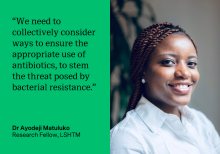
Pharmacies in England may be twice as likely to supply antibiotics for sore throat than in Wales
This study is the first to evaluate data collected over the initial six months of NHS England’s Acute Sore Throat Pharmacy First service
- Pharmacy First: resources to promote the service - Community Pharmacy England
- Pharmacy First: what you need to know - Department of Health and Social Care Media Centre
- Pharmacy First: resources to promote the service - Community Pharmacy England
Summaries of Pharmacy First Public Forums
As part of its research, Pharmacy First organises regular public forums in different regions of the UK to understand people's perspectives and experiences with primary healthcare services. We publish summaries, updates and (where available) recordings of these forums on our 'Patient and Public Engagement' page in the Public Forum section.