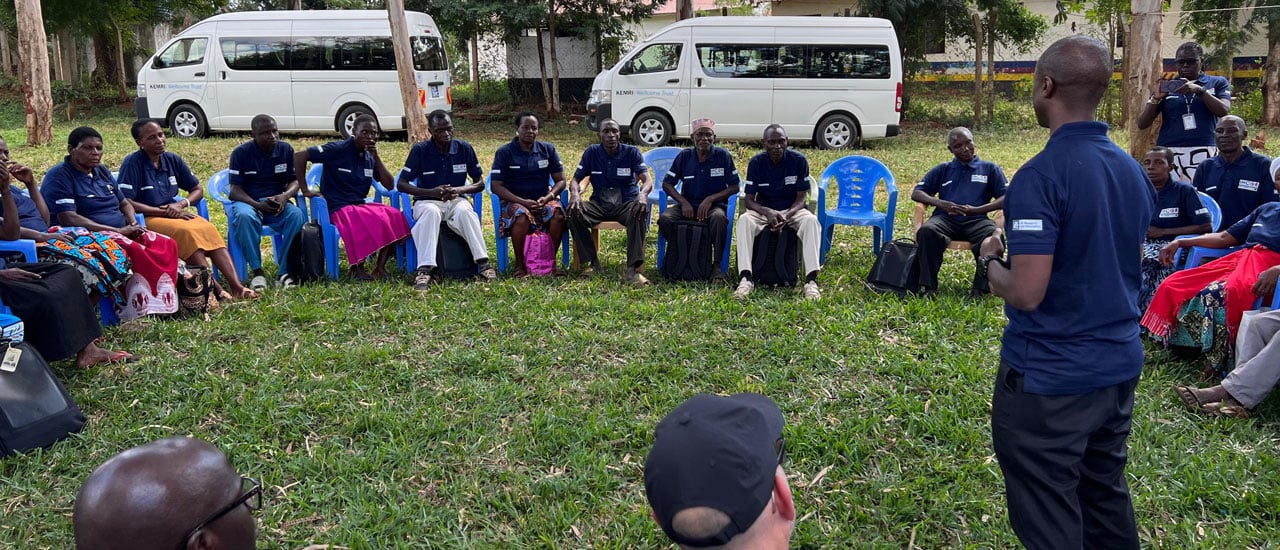



Cardiovascular disease risk reduction in sub–Saharan (CARisSA) is a five-year NIHR-funded Research and Innovation for Global Health Transformation (RIGHT) Programme. Our main aim is to design and test a community-centred intervention to reduce the overall risk of cardiovascular disease in sub-Saharan Africa.
CARisSA is a collaboration between the London School of Hygiene & Tropical Medicine (LSHTM) in the UK, KEMRI-Wellcome Trust Research Programme (KWTRP) in Kenya, and the Medical Research Council Unit The Gambia.
CARisSA is co-led by Professor Pablo Perel at the LSHTM and Professor Anthony Etyang at KWTRP. Dr Modou Jobe is the MRCG lead.
CARisSA research consists of four linked work packages with the aim to design and test a community-centred intervention to reduce the overall risk of cardiovascular disease in Sub-Saharan Africa. Within these work packages, we will work to integrate a peer support strategy and point-of-care (POC) testing to enhance diagnosis and lifestyle management of people at high risk of cardiovascular disease.
CARisSA is a five-year National Institute for Health and Care Research (NIHR) Research on Interventions for Global Health Transformation (RIGHT), which aims to design and test a community-centred intervention to reduce the overall risk of cardiovascular disease in Sub-Saharan Africa.
Research
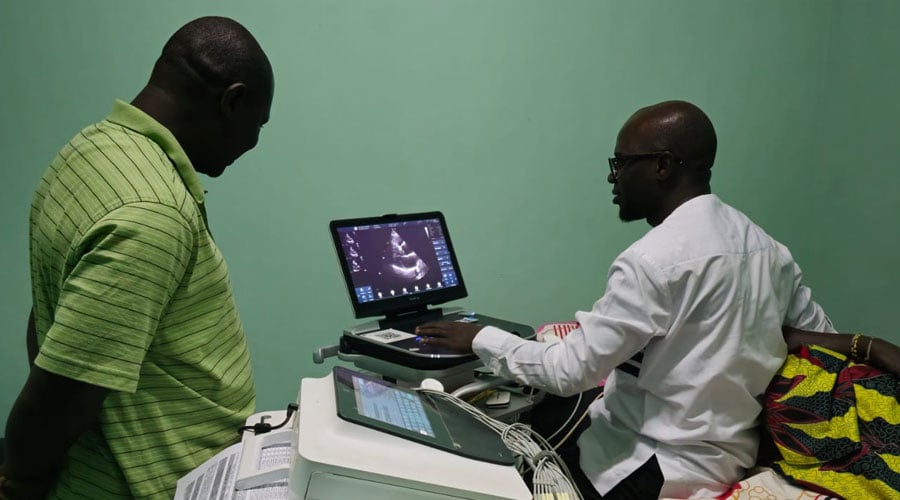
CARisSA aims to design and test a community-centred intervention to reduce the overall risk of cardiovascular disease in Sub-Saharan Africa.
The research activities will take place in Kilifi, Kenya, and Kiang West, The Gambia. Through this, CARisSA will use the intervention to
- draw on existing evidence, including our own studies, and the experiences of those on the frontline in Sub-Saharan Africa, including patients, caregivers, nurses, doctors, and policymakers.
- test the feasibility of the intervention with a small cluster trial. This will guide us in improving the intervention and help us plan a full-scale trial to assess its impact on key risk factors, including blood pressure and cholesterol, as well as the overall risk of cardiovascular disease.
- evaluate the implementation of the intervention in the full-scale trial to guide its use beyond our research context.
The CARisSA project implementation will be conducted in four work packages.
- WP1: Co-design a community-centred intervention for reducing overall CVD risk
WP1 involves working with stakeholders to design a community-centred intervention to manage risk factors for cardiovascular disease. We will adopt a participatory approach, by engaging participants across workshops in both English and the local languages (Mandinka in Kiang West, The Gambia, and Swahili and Mijikenda in Kilifi, Kenya). These participants will include individuals living with CVD risk factors, caregivers, advocacy group members, healthcare workers, and decision-makers. Proposed intervention components include task-sharing, digital technologies for clinical management support, combination therapy, and peer support.
- WP2: Cluster Randomised Feasibility Trial
We will implement a 6-month feasibility trial of the co-designed intervention, involving four clusters (two intervention and two control) for participants at the community and primary care levels. We will use a mixed-methods approach to analyse quantitative trial data alongside qualitative interviews with participants and healthcare workers.
- WP3: Cluster Randomised Effectiveness Trial and Economic Evaluation
The qualitative and quantitative outcomes of the WP2 trial will inform the effectiveness trial for WP3. We will conduct an open-label, parallel-group, cluster-randomised superiority trial comparing the intervention with standard care in adults at high overall CVD risk. We will randomise 22 clusters and evaluate the intervention’s cost-effectiveness and budget impact relative to standard care.
- WP4: Process Evaluation
We will conduct a process evaluation to explore for whom, how, and why our intervention had (or did not have) an impact on trial outcomes.
- International Advisory Committee (IAC)
- Professor Irene Agyapong (Ghana College of Physicians and Surgeons)
- Professor Karen Sliwa (Director of the Cape Heart Institute, University of Cape Town, South Africa
- Professor Jaime Miranda (Head of Public Health, University of Sydney)
- Dr George Mensah – observer (Director of The Center for Translation Research and Implementation Science at the National Heart, Lung, and Blood Institute, United States)
- Kenya
- Prof Anthony Etyang is the head of the Department of Epidemiology and Demography at KWTRP and an Associate Professor at the Nuffield Dept of Medicine, University of Oxford. He is the Co-Principal Investigator overseeing all CARisSA activities.
- Dr Benjamin Tsofa, co-leads the Health Systems Governance Research group at KWTRP. He co-leads WP1 and WP4
- Prof Samson Kinyanjui is the director of the Initiative to Develop African Research Leaders (IDeAL) and is head of training and capacity building at KWTRP. He co-leads the training component of CARisSA.
- Ms Noni Mumba heads the public engagement department at KWTRP. Noni leads on stakeholder and Community Engagement and Involvement (CEI).
- Prof Edwine Barasa is the Executive Director of KWTRP and head of its Health Economics Research Unit, and Professor of Health Economics at the University of Oxford. He co-leads the economic evaluation component (WP4).
- Dr Nancy Kagwanja is a health policy and systems researcher at KWTRP. She will contribute to WP1 and WP4.
- Mercy A Odhiambo is a postdoctoral researcher within the Department of Epidemiology and Demography at KWTRP. She is the co-lead for the clinical components of WP2 and WP3.
- Vallery Obure is a Research Officer within the Department of Epidemiology and Demography at KWTRP, with primary responsibility for the project’s qualitative components. She will contribute to WP1 and WP4.
- Catherine Kalu is an assistant research officer within the Epidemiology and Demography Department at KWTRP responsible for the project coordination.
- Juliet Awuor Odhiambo is a community liaison officer within the Epidemiology and Demography Department at KWTRP responsible for community engagement and involvement.
- Labour Tinga Gambo is a data manager within the Epidemiology and Demography Department at KWTRP responsible for the project’s data
- Dr Jemima Kamano is a physician and lecturer at the Moi University School of Medicine in Western Kenya, where she leads several community-centred research projects for people with CVD risk factors in Kenya. She provides key inputs to WP1 and WP2.
- Dr Violet Naanyu is Associate Professor of Sociology at Moi University and Director of the Qualitative Research Core at AMPATH, as well as chair of Oxford University’s Africa Ethics Working Group. She contributes to WP1 and WP4.
- James Abuje, Project Manager
- The Gambia
- Dr Modou Jobe is a cardiologist and Clinical Research Fellow at MRCG. He leads and oversees all activities in The Gambia and specifically co-leads WP2 and WP3.
- Prof Andrew Prentice is Professor of International Nutrition and Nutrition Theme Leader of MRCG. He supports all research activities in The Gambia.
- Dr Brahima Diallo is a medical anthropologist and health systems researcher at MRCG. He co-leads WP1 and WP4 and Community Engagement in The Gambia.
- Prof Assan Jaye is Head of Research Training and Career Development at MRCG. He co-leads training and capacity-strengthening activities.
- Mr Gilleh Thomas is Head of Applications Development & E-health Department at MRCG. He leads the development of digital technologies for clinical management support.
- Mrs Amie Ceesay is a Scientific Officer - Social Science at MRCG. She provides support on stakeholder and community engagement aspects of the project.
- Mr Sampa Sanneh is a Field Coordinator at MRCG and supports the coordination of field activities, including overseeing participant recruitment and follow-up.
- Saidina Babucarr Ceesay, Project Manager
- UK
- Prof Pablo Perel, Professor of Clinical Epidemiology at LSHTM and Senior Science Advisor to the World Heart Federation, is the Co-Principal Investigator overseeing all CARisSA activities.
- Prof Anoop Shah, Cardiologist and Clinical Associate Professor and Co-Director of LSHTM’s Centre for Global Chronic Conditions, Co-leads WP2 and WP3.
- Dr Adrianna Murphy, Associate Professor of Health Systems Research and Policy, and co-Director of LSHTM’s Centre for Global Chronic Conditions, co-leads WP1 and 4.
- Prof Ellen Nolte, Professor of Health Systems and Services Research, supports all health system research components of CARisSA.
- Prof Dave Leon, Professor of Epidemiology with expertise in cardiovascular epidemiology, contributes his epidemiological knowledge and experience in coordinating an international cardiovascular research programme.
- Dr Melanie Morris, Associate Dean of Education, has expertise in epidemiology and mixed-methods research. She co-leads the CARisSA capacity-strengthening and training component.
- Mr Alexander Perkins, Research Fellow and Deputy Director of the LSHTM Centre for Global Chronic Conditions, supports activities related to WP2 and WP3.
- Prof Tim Clayton, Professor of Applied Statistics, with over 30 years’ experience in leading landmark clinical trials among people with CVD. He provides statistical and clinical trial support.
- Dr Zia Sadique, Associate Professor of Applied Health Economics, has extensive experience in cost-effectiveness analyses of healthcare interventions alongside large multicentre trials. He oversees, in collaboration with Professor Barassa, the economic
- evaluation of the intervention (WP3).
- Dr Éimhín Ansbro, Assistant Professor and a primary care physician with expertise in primary care models for management of CVD risk factors (including peer support groups) in LMICs. She advises on clinical primary care aspects and peer support activities.
- Rachel Greenley is a Nurse and Research Fellow of Health Systems Research and Policy and Global Mental Health and Supports activities related to WP1 and WP2.
- Mavis Foster-Nyarko, Project Manager
- Collaborators
- Moffat Nyirenda
- Elijah Ogola
- Lilian Mbau
- Robert Peck
- Francisco Lopez Jimenez
- Beatrice Vetter
- Georg Ehret
- Maria Lazo Porras
- Richard Hayes
- Tolib Mirzoev
- Institutional partners
Governments
- Ministry of Health, Kenya
- Ministry of Health, The Gambia
- County Department of Health, Kilifi
- Regional Health Directorate, Mansa Konko
NGOs
- Pan African Society of Cardiology (PASCAR)
- Medical and Dental Association of The Gambia
Private Sector
- AliveCor
- Tascom
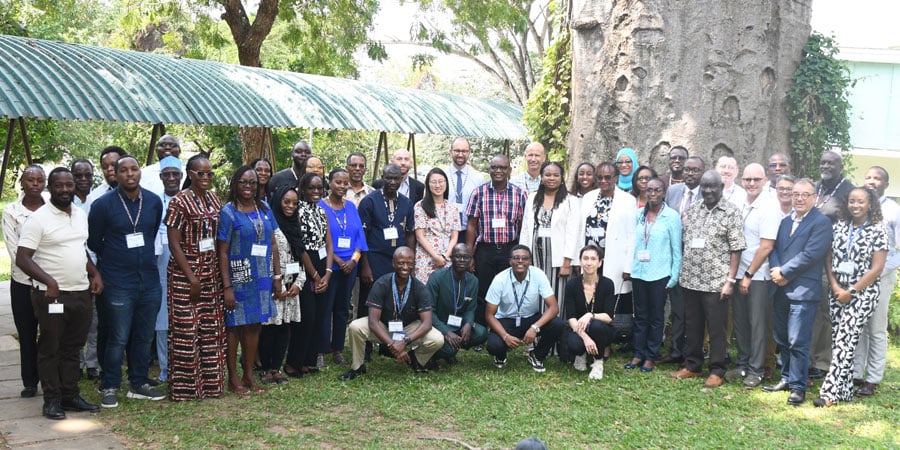
Training and capacity strengthening is an important focus of CARisSA. Drawing on the extensive and globally respected teaching experience of each partner institution, we will deliver activities tailored to the needs of CVD researchers in Sub-Saharan Africa at all levels of their careers.
Through discussions with key stakeholders in Kenya and The Gambia and building on the capacity strengthening activities conducted by IHCoR-Africa Group, another NIHR-funded project ending in January 2026, CARisSA will focus on enhancing technical skills, leadership and networking opportunities among cardiovascular researchers (early, middle and senior level) in Kenya, The Gambia, Ghana, Nigeria, Burkina Faso, and Sub-Saharan Africa more generally. This portfolio consists of four components.
To achieve this, we will:
- Provide training on diverse methodological skills to early-career researchers.
- strengthen skills to develop and run research projects to mid-career researchers;
- foster networking, collaboration and sharing of best practices among Sub-Saharan Africa CVD researchers; and 4) fund academic posts in Kenya, The Gambia, and the UK.
These activities will be conducted in collaboration with the NIHR STOP-NCD Centre and organisations from Sub-Saharan Africa, such as the Pan African Society of Cardiology.
Methodological skills training (led by LSHTM)
- Online training for research skills in CVD with a focus on Sub-Saharan Africa
- Run three times in 2026-27, 2027-28, and 2029-30 with 100 attendees per course (300 in total)
- Eight weeks long with weekly live sessions
Research skills strengthening (led by MRC The Gambia)
- Face-to-face workshops in the Gambia on leadership and proposal development
- Held annually from 2026-2029 with 15 mid-career researchers per workshop (60 in total)
- Three-day peer workshop
Kilifi Dialogues (led by KEMRI)
- Face-to-face think tank in Kenya
- Run three times in 2025, 2027, 2029 with 40 senior researchers from across Sub-Saharan Africa
- Live translation in English and French to increase access
Academic posts (led by KEMRI, MRC The Gambia and LSHTM)
- Six post-doctoral positions (two in each partner country)
- Several PhD positions will be generated from this project
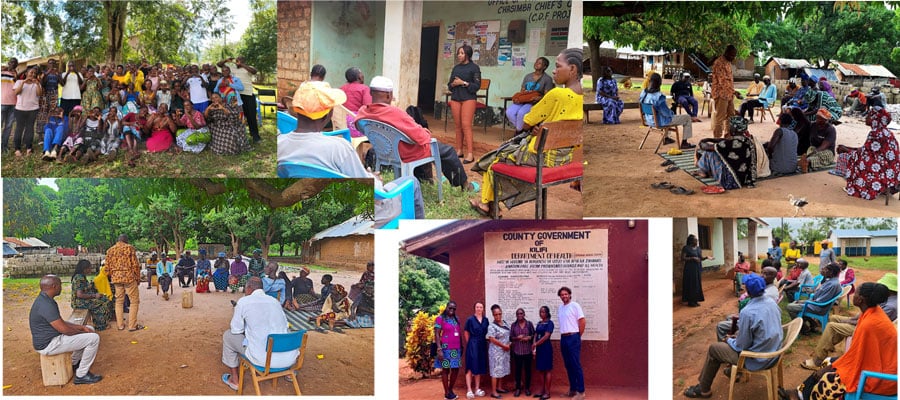
We will aim to build an understanding of the CARisSA project, collect early input into project activities in Kenya and the Gambia, and work with communities and stakeholders to update the study engagement plans/approaches regularly. We will also support the co-development process of the project's community-based intervention and its implementation through working with CVD peer support groups, local health stakeholders, and policymakers. We will also share project results/findings with all relevant research stakeholders, communities, and patient groups.