Obesity rates levelling off and even declining in many nations
15 May 2026 London School of Hygiene & Tropical Medicine London School of Hygiene & Tropical Medicine https://lshtm.ac.uk/themes/custom/lshtm/images/lshtm-logo-black.png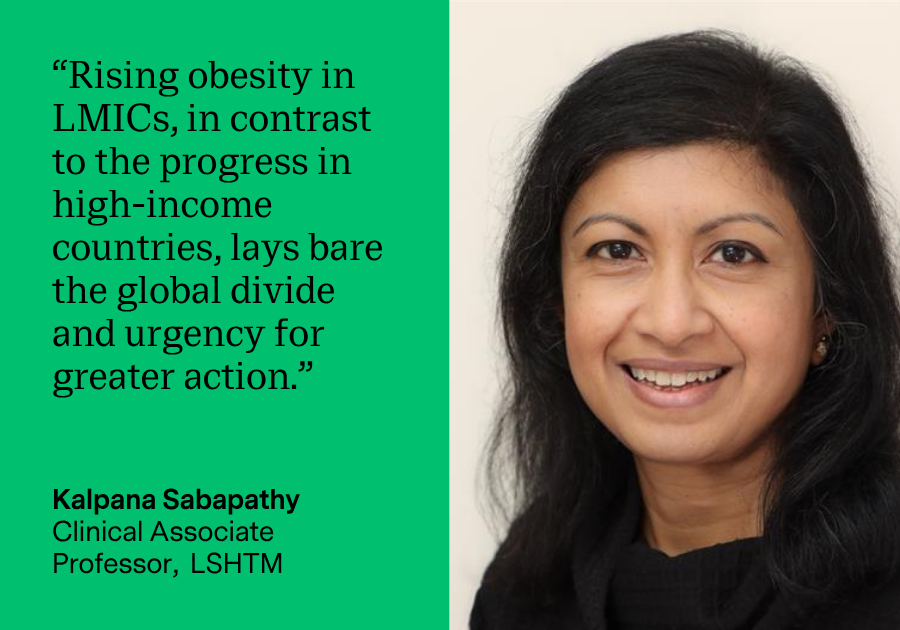
A new analysis of global obesity trends since the 1980s reveals rising levels of obesity have slowed, stabilised and possibly even reversed in many nations, challenging the idea of a ‘global epidemic’ of obesity.
The work, led by researchers from Imperial College London via the NCD Risk Factor Collaboration (NCD-RisC) and published in the journal Nature, looked at more than four decades of health data from 200 countries and territories, covering the period from 1980 to 2024.
The findings come as experts from around the world meet at the European Congress on Obesity (ECO 2026) in Istanbul this month, and provide a more optimistic picture of progress than previously reported.
They show that the increase in obesity rates has slowed or levelled off in most high-income countries despite rapid rises at the end of the 20th century, slowing first in school-aged children followed by a slowdown in adults about a decade later. In some high-income countries (including France, Italy and Portugal) rates may have begun to decline.
According to the researchers, these latest findings suggest that previous claims of a ‘global epidemic’ of obesity are likely an oversimplification and mask the huge diversity seen across countries – which can be driven by a range of factors, especially the availability and affordability of healthy foods.
However, they highlight that obesity prevalence continues to rise in many low‑ and middle‑income countries (LMICs), particularly in Africa, Asia, Latin America, and Pacific and Caribbean island nations.
Kalpana Sabapathy, Clinical Associate Professor at LSHTM, said: “The rise of obesity in LMICs, in contrast to the progress in high-income countries, lays bare the global divide and urgency for greater action in resource-limited settings, especially among children and young people.
“My colleagues and I from LSHTM and The Health Research Unit in Zimbabwe have conducted research on young people for several years and contributed to this important study. Our work continues with further studies underway, involving research across the life course, to help mobilise action against the potentially burgeoning crisis of NCDs in our setting.”
The researchers say that by focusing on the pace of change in obesity over time, rather than just the prevalence, we can learn where urgent action is needed, including robust health and food policies to help nations adapt and manage public health during economic, technological and nutritional transitions.
Majid Ezzati, Professor of Global Environmental Health at Imperial College London and Academic Director of Imperial Global Ghana, said: “We’ve been analysing obesity trends for decades and have shown that on the whole, obesity has increased – with more people being affected by overweight and obesity.
“This latest analysis suggests that the rate of growth in obesity is slowing and stabilising, and may even be reversing, in many countries. This offers a more optimistic picture that progress is being made and challenges the widely accepted view that we’re experiencing a global epidemic of obesity – which may be an oversimplification of the diversity of the situation in different countries.
“Ultimately, this analysis shows that the trend towards obesity is not inevitable, and that it is possible for policy makers to intervene to stop and even reverse growing obesity.”
The authors hope that further research can analyse the cause behind differences in obesity rates between different countries, and apply these to public health initiatives to tackle obesity.
The research was funded by the UK Medical Research Council and UK Research and Innovation (UKRI), and supported by funding through the European Union.
This story was adapted from a press release by Imperial College London.
If you enjoyed this article and would like to build a career in global health, we offer a range of MSc programmes covering health and data, infectious and tropical diseases, population health, and public health and policy.
Available on campus or online, including flexible study that works around your work and home life, be part of a global community at the UK's no.1 public health university.