Reflections from Professor Richard Hayes
12 November 2025 London School of Hygiene & Tropical Medicine London School of Hygiene & Tropical Medicine https://lshtm.ac.uk/themes/custom/lshtm/images/lshtm-logo-black.png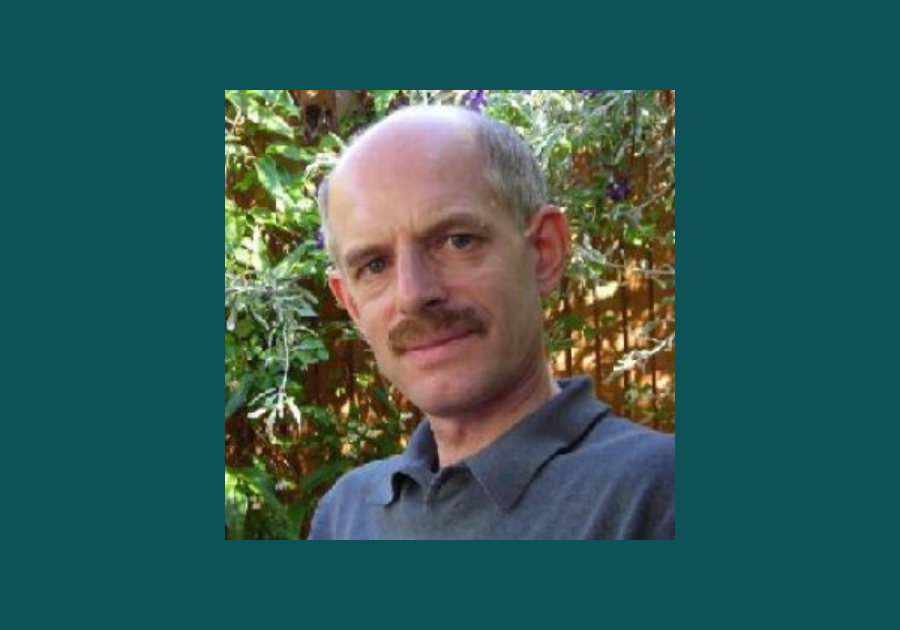
Following Richard’s retirement lecture earlier this year, reflecting on his 46 year career at the London School of Hygiene & Tropical Medicine, we caught up to learn more about his lecture and life’s works. He discussed some important concepts for epidemiology and evaluative research, as well as advice to new scientists.
Congratulations on your retirement lecture earlier this year. What was the focus of your talk?
Thank you. It was a good opportunity to look back over my 46 years working at the School. I obviously couldn’t mention all the projects I’ve been involved in. But I tried to present snapshots of work from different phases of my career, and also to thank some of the wonderful colleagues I’ve worked with.
What have been the key research topics of your career?
When I first joined the School, I worked for several years on sickle cell disease with colleagues at the MRC Unit in Jamaica. But from the early 1980s, most of my work was on the epidemiology of infectious diseases. Firstly, on malaria, schistosomiasis and other tropical parasitic infections with MRC Unit The Gambia. And later on the epidemiology and control of HIV (human immunodeficiency virus), tuberculosis (TB) and related infections.
Most of my research has been done in collaboration with colleagues based in sub-Saharan Africa. I have always had a special interest in intervention trials, and particularly methods for cluster-randomised trials, which play a very important role in evaluation research.
You spoke a lot about the importance of negative results, despite the disappointment researchers feel when they receive them. Could you tell us more about negative studies, and why they're important?
Most people who have worked on intervention trials will be familiar with the disappointment arising from negative results. This is perhaps especially true of cluster-randomised trials, which are often carried out to evaluate complex interventions, where it is often difficult in advance to predict the likelihood of success. These trials are often challenging to implement with high uptake and fidelity.
However, I have always told my colleagues that we often learn more from negative trials than positive ones. Firstly, a negative result prevents us from wasting precious resources and time on an intervention that is ineffective. Secondly, negative results often challenge our current understanding of disease processes, and methods of disrupting such processes. This can sometimes result in a paradigm shift and help us design more effective interventions that can be evaluated in subsequent trials.
Could you define process data and explain why it’s important?
In a trial of a public health intervention, the term “process data” refers to any systematic information that is collected on the delivery and uptake of the intervention. This is usually essential in interpreting the results of the trial and whether the intervention was effective, since those results reflect the effects of the intervention as delivered in that particular setting.
I think process data are especially important for trials of complex interventions, which have multiple components – some of which may be delivered more effectively than others. And process data are key in the interpretation of negative trials, and understanding why the intervention was not effective. Was it because the intervention is intrinsically ineffective, or because it was not delivered adequately?
You’ve also worked extensively with mathematical modellers. How has mathematical modelling been important to your research?
My work with modellers dates from our work in the mid-1990s.
In a landmark trial in Mwanza, we demonstrated that improved STD (sexually transmitted disease) services reduced HIV incidence in the general population by 43%. However, two subsequent trials in Uganda found no significant effect. Working with Richard White, we set up a modelling project together with the PIs of the Ugandan trials, in which mathematical models were fitted to the observed data and used to better understand the differential effects reported. This work concluded that the Ugandan trials were conducted at a later stage of the epidemic, when HIV had already spread beyond high-risk groups (with high rates of STDs) into the general population. This meant that the effects of STDs on HIV transmission were less significant.
Several subsequent trials have involved modelling in different ways, such as the PopART trial. This included: a modelling component that informed the design of the trial; the interpretation of the results; and future projections that estimated the effects of the intervention if it were to be sustained over a long time period. Some of our TB projects have also incorporated important modelling components.
Your lecture also referenced your work with social scientists throughout your career. How has working with social scientists been important for your research?
As a mainly quantitative epidemiologist, I was initially quite sceptical about the contribution of social science to intervention trials. But my mind was changed decisively during the MEMA kwa Vijana trial of an adolescent sexual health intervention in Tanzanian primary schools.
The trial found a significant impact on reported behaviour, but no effect on HIV or STI incidence. We had a wonderful social sciences team, who had field assistants living in the homes of adolescents for several months. Their careful research revealed the many social, economic and cultural factors that underpinned adolescent sexual behaviour, as well as self-reporting of behaviour, and they played a key role in correctly reporting the study results.
As with mathematical modelling, social science can also play an important role in the design of interventions and studies, as well as underpinning work on community engagement, which is essential in ensuring its successful delivery.
In the PopART trial we were again fortunate to have an outstanding social science team, who made important contributions in these and other areas. This emphasises that epidemiology is a multi-disciplinary field with important contributions from clinical medicine, statistics, social science, economics and mathematics. Working closely with colleagues from these disciplines has been one of my greatest pleasures as a statistical epidemiologist.
What do you consider to be the proudest achievement of your career?
If I am allowed two, one would be leadership of the PopART trial of Universal Testing and Treatment. The trial demonstrated a 20% reduction in HIV incidence in the general population, helping to inform global efforts aimed at elimination of HIV as a public health problem.
The other would be my methodological work on cluster-randomised trials, including co-writing a textbook which is widely used and praised for its clarity.
What advice would you give to those just starting their career in research?
My main advice to any young researcher would be to follow your interests. The best research is generally done by scientists who are fascinated by the questions they are researching. While there has been increasing emphasis on impact and policy relevance, “scientific curiosity” remains a key driving force for innovative research.
Have you got any plans post-retirement?
Yes. To continue working and (hopefully) making a useful contribution for as long as possible!
If you enjoyed this article and would like to build a career in global health, we offer a range of MSc programmes covering health and data, infectious and tropical diseases, population health, and public health and policy.
Available on campus or online, including flexible study that works around your work and home life, be part of a global community at the UK's no.1 public health university.