Mapping the path to dengue control against the headwinds of global change with Professor Oliver Brady
Inaugural lecture of Professor Oliver Brady

Dengue is one of the fastest growing tropical diseases worldwide with its spread further accelerated by climate change, urbanisation and global travel. But an ever-expanding range of new vaccines and mosquito control interventions now provide an opportunity to reverse these trends. Can modern data science, AI and modelling help us use these new interventions in more targeted ways to avoid the reactive, fragmented, and ultimately unsustainable control strategies of the past?
Professor Oliver Brady will guide us through the rise of dengue as a global public health challenge, interwoven with the trajectory of his own career from biologist to epidemiologist to disease modeller. His lecture will cover how an expanding range of environmental, climate and health data from satellites, censuses and hospitals allow us to predict where and when dengue outbreaks will happen and how to respond. He will also reflect on how the boom-and-bust dynamics of arboviral research funding, mirroring the epidemics themselves, have shaped both his career and the broader field.
The lecture will take place from 17:30 - 18:30, followed by a 1-hour in-person drinks reception in the Pumphandle Social.
Speaker
Professor Oliver Brady
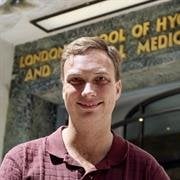
Oli’s research uses computational models to better understand and predict the geographic spread of mosquito-transmitted viruses and optimise the use of different interventions for their control. Key to his work is close collaboration with ministries of health and a partnership with WHO that enables his work to influence national strategies and guidelines to improve arboviral control.
Joining LSHTM in 2016, his research has been supported by two successive prestigious research fellowships from the Wellcome Trust and the UK Medical Research Council. He leads the Dengue Mapping and Modelling Group and is the current Head of Department for one of the largest disease modelling departments in Europe (Infectious Disease Epidemiology and Dynamics).
Admission
Contact