Using maths to make an impact in health: Adrija’s journey
10 July 2026 London School of Hygiene & Tropical Medicine London School of Hygiene & Tropical Medicine https://lshtm.ac.uk/themes/custom/lshtm/images/lshtm-logo-black.png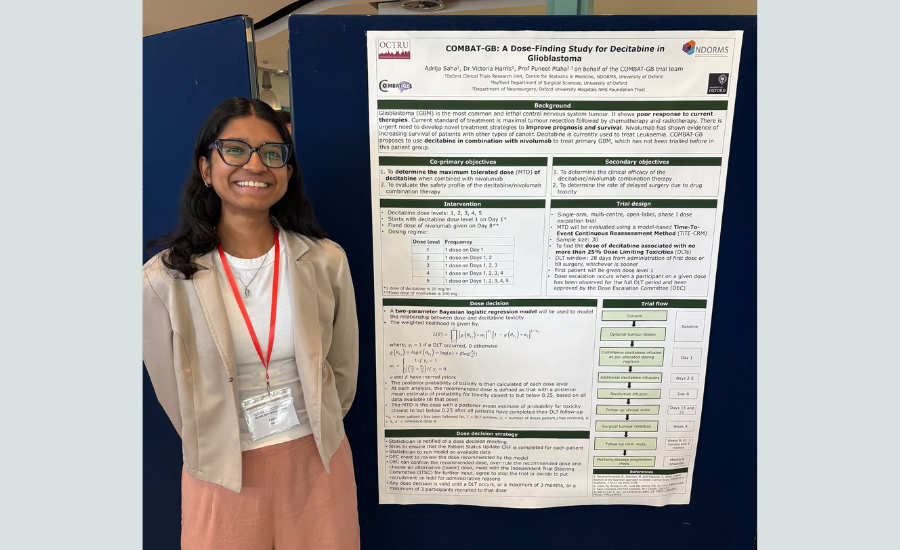
From statistics in India to medical statistics at LSHTM
Originally from Kolkata in India, I completed my undergraduate degree in statistics in India. Towards the end of my second year of studies, I completed a module in biostatistics which I found really interesting, and I started looking into options for a master’s programme in this area.
I wanted to explore the field further and began researching universities that specialised in medical statistics, and hat was when I first came across LSHTM. The more I researched LSHTM, the more I realised how prominent it was in the field of public health and I reached out to a few student ambassadors to ask about their experiences and received really positive feedback.
Choosing LSHTM and MSc Medical Statistics
In India, there are very few programmes specifically focused on medical statistics, and I soon realised that such master’s programmes are more commonly offered abroad.
I knew I wanted to focus specifically on medical statistics rather than statistics more broadly as I had already pursued my undergraduate degree in statistics. LSHTM stood out because of its reputation in public health and the structure of the MSc Medical Statistics programme really appealed to me.
Finding a practical and impactful use for statistics
When I first decided to study statistics as an undergraduate student, the field of medical statistics wasn't something I knew much about. I began to learn more about it during my studies, which was also when COVID-19 hit. At that time, clinical trials and medical research were being discussed much more widely, and I realised that statistics had an important role to play in this area.
I had always loved maths, but I wanted to use it in a more practical and impactful way.
Applying statistical and machine learning methods to tuberculosis drug resistance
My MSc project was related to machine learning and was based in the Department of Epidemiology. My primary supervisor was a professor from that department, so the project was slightly different from my core medical statistics modules and had a more computational focus. I compared machine learning models and their ability to predict resistance to tuberculosis drugs. It was quite a novel project, and at the time, those comparisons had not been done before. I worked on it for two months, and both my supervisors were very supportive throughout.
Getting involved with the Centre for Data and Statistical Science (DASH)
During my studies, I engaged with the Centre for Data and Statistical Science (DASH), attending the Centre’s annual event and helping out on the day, which also gave me the opportunity to listen to all the talks. I really recommend attending talks and seminars at LSHTM - they are eye-opening and a great way for statisticians to get involved in other areas of study.
Securing my first job
I am now working as a Medical Statistician at the Oxford Clinical Trials Research Unit.
Everything I learned during the MSc applies to my current role, so it was a very straightforward transition from studying medical statistics at LSHTM to working as a medical statistician.
Some of the content covered in our modules even came up in the test for my interview, so the course was very directly related to what I do now.
I now work as a trial statistician at the clinical trials unit based within the Nuffield Department of Orthopaedics, Rheumatology and Musculoskeletal Sciences and this means that I work on lots of different trials. I mainly work on trials related to brain cancer, osteoarthritis and shoulder injuries, which is an interesting mix of areas. My day-to-day work is very varied, and I am involved in the trials at every stage.
How the MSc supported my career
I secured my current role before I had finished my MSc. Our Programme Director, Melissa Neuman, would email us whenever she found new job vacancies and there is also a UK-wide mailing list for statistician jobs that I joined (called AllStat), where lots of jobs are posted. I saw the role in one of Melissa’s emails, applied in March, had my interview in April and received an offer in early May!
Advice for future prospective students
Quite a few people have contacted me to ask about my experience of the MSc, and I always say that the course content is very good, and very relevant.
If you're apprehensive about the interview part of the application - don't be! The questions are absolutely achievable if you have a quantitative background, and the process is mostly to ensure your level of statistical knowledge will stand you in good stead for the programme and to help the application team learn more about you as a student.
For my current role, and probably for many others in the field, the MSc provides really useful preparation. I always recommend and promote it. I wish more people knew about the programme, and that LSHTM offers a broader range of programmes than many people realise.
- Explore the MSc in Medical Statistics
- Contact our student and alumni ambassadors
- Discover more programmes in health and data
- Read Adrija's Reasons to study Medical Statistics at LSHTM