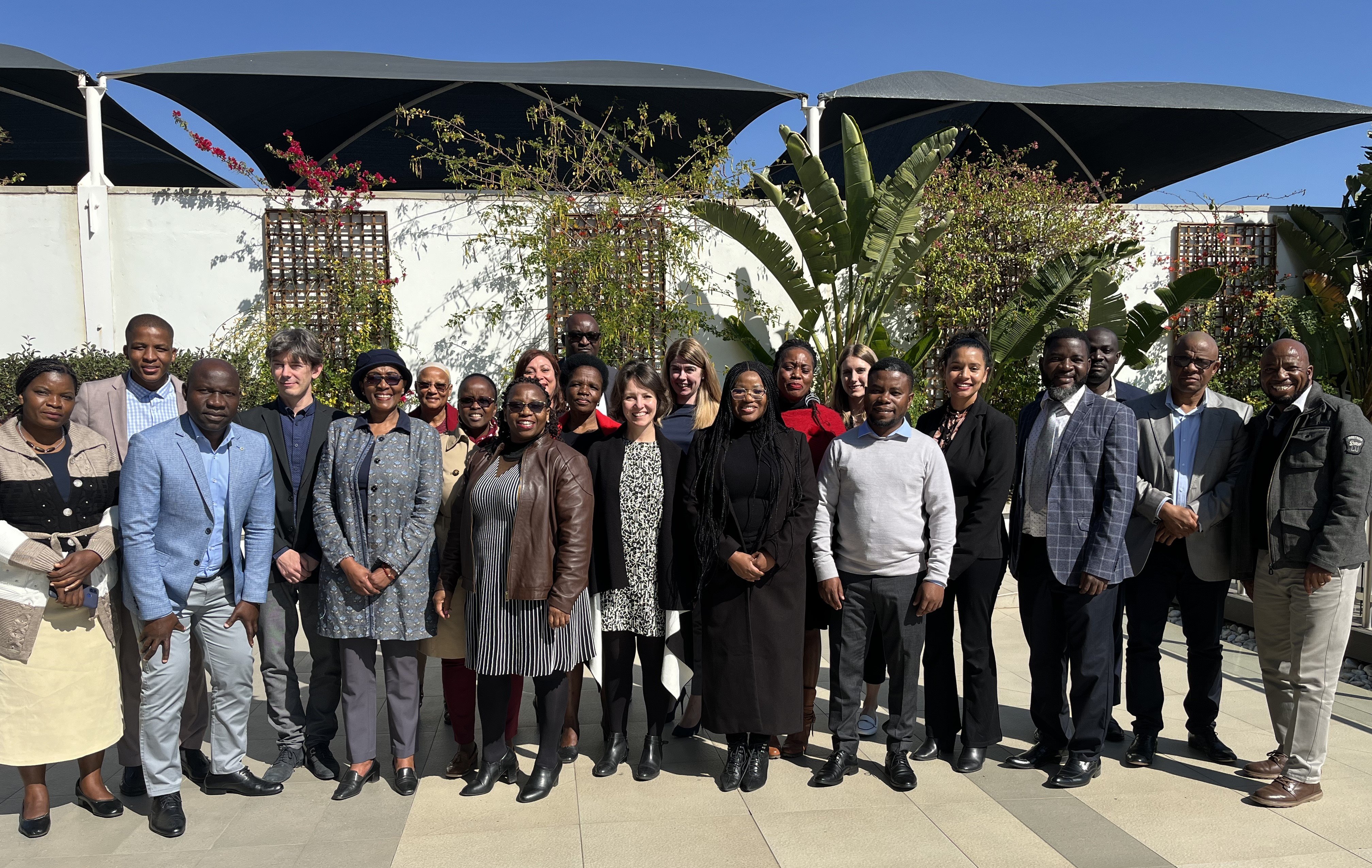
A new commentary from our Analytics & Metrics Community of Practice critically reflects on some of the major implementation challenges for the expansion of school feeding to universal levels in low- and middle-income countries. This report has come out of a meeting organised by the Community of Practice, 'School Health and Nutrition Research including Value-for-Money of National Programs', which took place in Gaborone, Botswana in July 2023 (pictured above).
There is still an unacceptably large proportion of malnourished children and adolescents globally, especially in sub-Saharan Africa. Different forms of malnutrition are directly implicated in limitations of access to and performance in school, which has a major human capital impact, particularly among young adolescent girls and within the world’s poorest countries. In this context, the strengthening of national school feeding programmes can represent a unique opportunity to mitigate this enormous dual education, food insecurity and malnutrition gap.
The paper puts particular emphasis and gives concrete illustrations on the context of southern Africa.
If you enjoyed this article and would like to build a career in global health, we offer a range of MSc programmes covering health and data, infectious and tropical diseases, population health, and public health and policy.
Available on campus or online, including flexible study that works around your work and home life, be part of a global community at the UK's no.1 public health university.