
Researchers at the London School of Hygiene & Tropical Medicine (LSHTM), in collaboration with Association Mutualis in Djibouti and the Swiss Tropical and Public Health Institute (Swiss TPH), will evaluate the potential of genetically modified mosquitoes to control malaria in Djibouti.
The spread of Anopheles stephensi, an invasive mosquito species, has been linked to rising malaria transmission in Djibouti over the past decade. Unlike many other malaria-carrying mosquitoes, this species can thrive in urban environments, raising concerns its continued spread across Africa could lead to malaria outbreaks in cities.
The PHARE project will evaluate an approach developed by Oxford-based company Flyttr, using genetically modified male mosquitoes designed to mate with wild female mosquitoes. The males carry a self-limiting gene that is passed to their offspring, preventing female offspring from surviving to adulthood. Over time, this could reduce the mosquito population and potentially lower malaria transmission.
Small-scale releases are planned to begin in Djibouti City this year through a collaboration between Flyttr and Djibouti's Ministry of Health.
Researchers will assess the intervention's impact by monitoring malaria cases recorded at health facilities, comparing malaria-positive and malaria-negative patients through a test-negative study design, and collecting data on mosquito populations. They will also engage with communities and stakeholders through focus group discussions to understand their views on the approach.
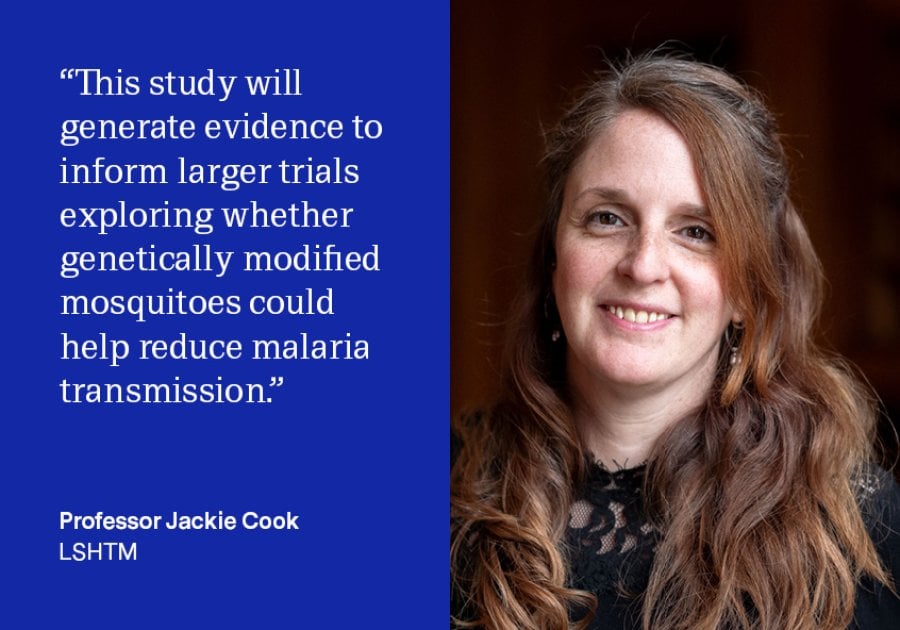
Jackie Cook, Professor of Infectious Disease Epidemiology and the study lead said: ”The PHARE project will independently evaluate the early releases of Flyttr’s self-limiting mosquitoes, assessing their potential impact on malaria transmission.
“The findings will help inform larger studies exploring whether genetically modified mosquitoes could offer a new approach to malaria control. Community engagement is essential to the success and acceptability of these approaches, and insights from our social scientists, alongside the wider study findings, will help shape recommendations for future research and evaluation.”
If you enjoyed this article and would like to build a career in global health, we offer a range of MSc programmes covering health and data, infectious and tropical diseases, population health, and public health and policy.
Available on campus or online, including flexible study that works around your work and home life, be part of a global community at the UK's no.1 public health university.