New research from the London School of Hygiene & Tropical Medicine and partners in Brazil and Spain shows that people who had TB were much more likely to die from health problems, even over a decade after treatment.
Results found there were almost 3-fold greater risk of death for those who had been diagnosed with TB, and 2-fold more for those who had been treated for TB. This was linked to other health conditions such as cancer, as well as deaths related to social stigma.
Published in Nature Medicine, the study uses nationwide data from Brazil (between 2004-18) to look at the long-term health of people after both being diagnosed and successfully treated for TB. This was compared to health outcomes for those who have never lived with TB.
Results showed that there was a significantly higher risk of mortality for both groups throughout the 14 year period. People diagnosed with TB had 15,168 more deaths per 100,000 people than those without TB. Even following treatment, there were a lower but substantial increase of 8,206 more deaths per 100,000 people for those with TB.
People with prior cases of TB had an increased risk of death from cancer, which supports growing concerns around TB and cancer. This could be partly explained by shared lifestyle factors (smoking, alcohol) that trigger both diseases. But researchers have also noted that this association can be subject to reverse causality, as individuals in the initial stages of cancer could be more susceptible to TB infection.
There were also a notable increased risk of deaths from endocrine, cardiovascular and respiratory conditions. Existing research has shown molecular links for TB triggering and accelerating these health conditions, and this study further supports these connections. This shows the need for long-term assessment for these conditions after treating TB.
Results found an increase in deaths from ‘non-biological causes’, like violent crime, showing how societal stigma for people living with TB could lead to isolation and worse socioeconomic outcomes that increase the risk of death. This was possible as these data provided more detailed socioeconomic information than previous studies on the topic.
Though there could be other factors partly affecting this (residual confounding), the authors note that the increased risk for this type of deaths were similar between those diagnosed with, and those treated for, TB. This suggests that social stigma from TB, or other social phenomena, are causing these deaths.
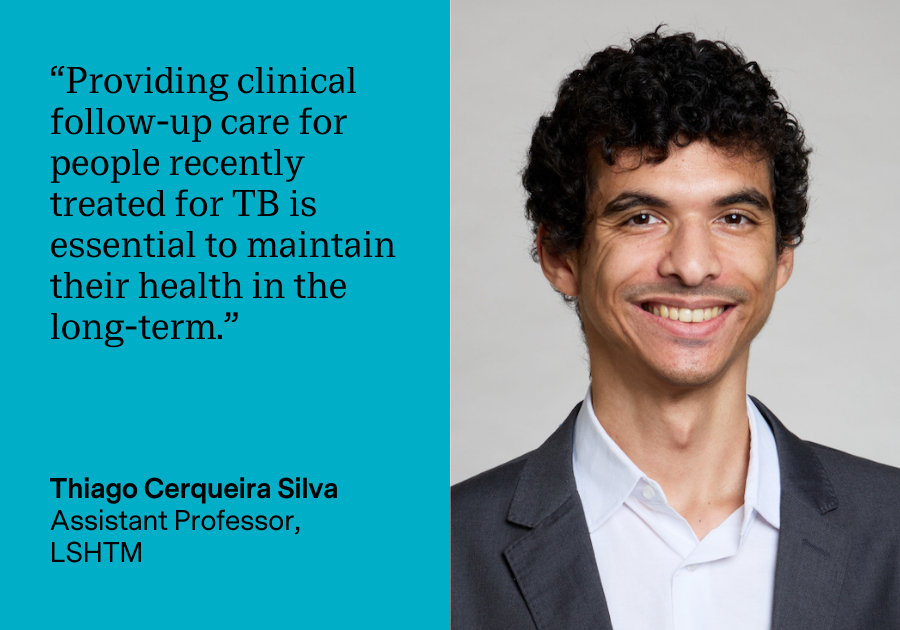
Dr Thiago Cerqueira Silva, Assistant Professor at LSHTM, said: “For decades, the global response to TB has focused on diagnosing and providing antibiotic treatments as a complete return to health. This has meant overlooking the burden of post-TB medical problems, costing lives and people’s livelihood.
“Our research makes a compelling case for clinicians to provide long-term follow-up care following successful TB treatments. This will be more important as global reductions in funding threatens the progress that has been made against TB.”
This research was led by members of LSHTM with collaborators based at the Federal University of Bahia, University of Brasília, and the Barcelona Institute for Global Health (ISGlobal).
Publication
Cerqueira Silva T, Boaventura V, Paixão E, et al. Long-term risk of death after tuberculosis diagnosis and treatment. Nature Medicine, 2026. DOI: https://doi.org/10.1038/s41591-026-04294-w
If you enjoyed this article and would like to build a career in global health, we offer a range of MSc programmes covering health and data, infectious and tropical diseases, population health, and public health and policy.
Available on campus or online, including flexible study that works around your work and home life, be part of a global community at the UK's no.1 public health university.