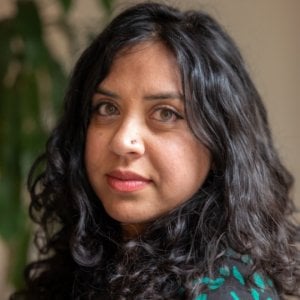
Dr Neha Singh
Associate Professor
London School of Hygiene andTropical Medicine
15-17 Tavistock Place
London
WC1H 9SH
United Kingdom
I conduct interdisciplinary and mixed methods health policy and systems research, aiming to improve the health of populations in crisis (armed conflict, natural disaster) settings. I work on a range of topics including sexual and reproductive health, maternal and child health, and vaccination in crisis settings.
I am also co-Director of the Health in Humanitarian Crises Centre (https://www.lshtm.ac.uk/research/centres/health-humanitarian-crises-cen…), and co-Programme Director of the distance learning programme in Health in Humanitarian Crises (https://www.lshtm.ac.uk/study/courses/masters-degrees/health-humanitari…).
Affiliations
Centres
Teaching
I am the co-Programme Director of the distance learning programme in Health in Humanitarian Crises (https://www.lshtm.ac.uk/study/courses/masters-degrees/health-humanitari…). I also teach on the Family Planning Programmes and Conflict and Health modules at LSHTM.
I supervise PhD, DrPH and MSc students. Unfortunately, I am not able at present to take on any more research degree students.
Research
My research includes a range of studies focused on health policy and systems research to improve women's, children's and adolescent health in humanitarian crises settings. I spend my time between academic research and technical support to humanitarian health actors, including UN agencies and NGOs, at local, national and global levels. For example, my research has focused on:
- Co-leading the sexual and reproductive health-focused work package in the Afya Consortium (https://www.lshtm.ac.uk/research/centres-projects-groups/afya-consortium), which conducts research on public health threats in populations affected by crises in Somalia, Sudan, South Sudan and Democratic Republic of Congo
- Asessing the governance (including decision-making and financing) and delivery of vaccines for children in humanitarian settings, to improve the equitable delivery of vaccines to zero-dose children in crises-affected settings. This work was done as part of the RAISE project (https://www.lshtm.ac.uk/research/centres-projects-groups/raise), which I led.
- Assessing health financing arrangements and service delivery for sexual and reproductive health interventions for South Sudanese refugee and host populations in Northern Uganda as part of the RECAP project (https://www.lshtm.ac.uk/research/centres-projects-groups/recap)
- Supporting government and partners in strengthening the ability of health systems to meet the mental health needs of Syrian refugee and host communities in Lebanon, as the health financing work package lead in the GOAL project (https://www.lshtm.ac.uk/research/centres-projects-groups/goal) project.
- Assessing the implementation of key health interventions for women and children in Syria as part of the BRANCH consortium (https://www.branchconsortium.com/). As part of this consortium, I also led a study on analysing the implementation of key interventions for women, children and adolescents in 10 conflict-affected countries in Africa, the Middle East, and Latin America which was published in the first Lancet series on women's and children's health in conflict settings.
- Conducting research on the impacts of COVID-19 on sexual, reproductive, maternal, newborn and child health in humanitarian settings.
- Revising Afghanistan's basic package of health services (https://gh.bmj.com/content/8/9/e012508).
- I have also led a series of evidence reviews of sexual, reproductive and newborn health interventions in humanitarian settings.
My research experience has made me keenly aware of inequities present in current research structures and health responses in humanitarian contexts. My vision is to develop and operationalise more respectful and gender-transformative ways of working in humanitarian settings and on sensitive issues (e.g. sexual and reproductive health). Working with humanitarian actors and academics, I led the first guidance document on conducting feminist and decolonial research in forced displacement settings (https://www.thelancet.com/journals/lancet/article/PIIS0140-6736(21)0002…), and with the help of the FAIR Network and members of Health in Humanitarian Crises Centre, launched the Centre's charter, committing all Centre members to decolonise our work including research, teaching and partnerships (https://www.lshtm.ac.uk/research/centres/health-humanitarian-crises-cen…). With a generous donation from the Reproductive Justice Initiative (formerly Decolonising Contraception), I have co-founded the Sexual and Reproductive Health and Rights Equity Fund at LSHTM, which consists of a prize and scholarships aiming to encourage MSc students to conduct research on the sexual and reproductive health and rights of marginalised communities in the UK.
A full list of my publications are available here: https://scholar.google.com/citations?hl=en&user=ij0s_0QAAAAJ&view_op=li….
Selected Publications