Vaccinating entire communities could help reduce malaria infections, study finds
20 November 2026 London School of Hygiene & Tropical Medicine London School of Hygiene & Tropical Medicine https://lshtm.ac.uk/themes/custom/lshtm/images/lshtm-logo-black.png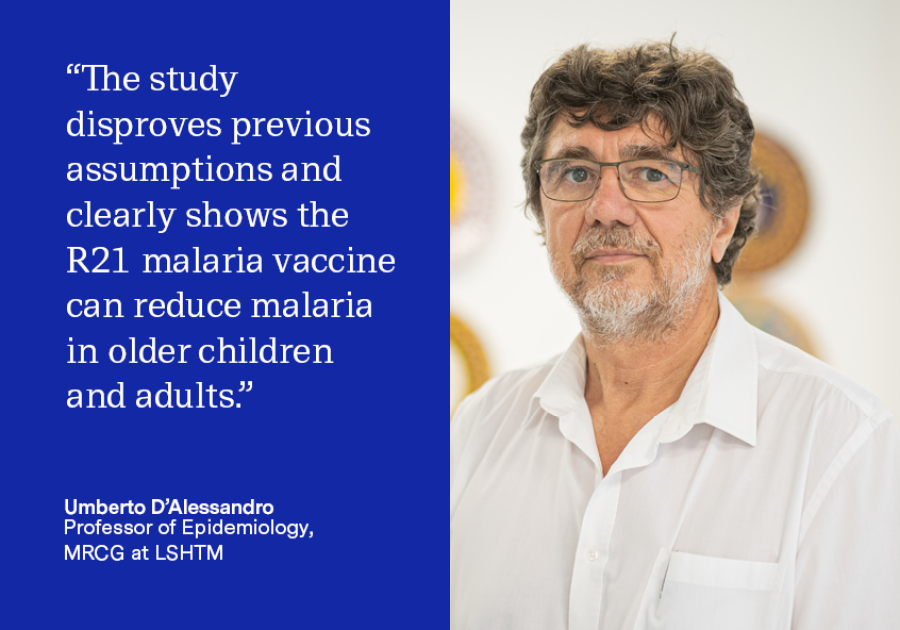
Vaccinating people across different age groups before the rainy season could help reduce malaria infections and illness, according to new research published in The Lancet.
The SERVAL study, conducted by researchers at MRC Unit The Gambia at the London School of Hygiene & Tropical Medicine and partners in Burkina Faso, found that offering the R21 malaria vaccine to eligible residents alongside existing prevention measures reduced the odds of malaria infection by 70% in The Gambia and 25% in Burkina Faso, compared with communities receiving standard malaria prevention measures alone.
The findings offer new evidence that malaria vaccination which is currently recommended for young children could provide additional protection when extended to wider communities.
The study is the first randomised controlled trial to investigate whether vaccinating entire communities before the rainy season can reduce infections and cases of malaria illness across different transmission settings.
The trial involved around 20,000 people across 54 villages in The Gambia and Burkina Faso, two countries with different levels of malaria transmission: low to moderate in The Gambia and intense in Burkina Faso. Approximately 8,000 people were involved in The Gambia and 12,000 in Burkina Faso. All villages continued to receive standard malaria prevention measures, including mosquito nets and preventive medicines. In half of the villages, eligible residents aged five months and older were also offered three doses of R21 ahead of the 2024 rainy season.
Researchers found the benefits differed between the countries. In The Gambia, reductions in infection were observed across all age groups. In Burkina Faso, the strongest effect was seen among children under five.
The study also found vaccination reduced the incidence of clinical malaria. Across all age groups, the rate of clinical malaria episodes was 47% lower in The Gambia and 30% lower in Burkina Faso, compared with villages that did not receive community-wide vaccination.
Professor Umberto D'Alessandro, Principal Investigator of the SERVAL study at MRC Unit The Gambia at LSHTM, said: “The study clearly shows that R21 can decrease malaria in older children, adolescents and adults, disproving previous assumptions that the vaccine would not be effective in these age groups. This is important as it can provide, besides an additional intervention against malaria, some insights on the mechanisms of immunity against malaria infection.”
The vaccine was generally well tolerated, with most reported adverse events being mild or moderate, and one serious event relating to the vaccination.
Further evidence is needed to understand how long the protection lasts and whether booster doses are required. A booster dose was administered in June 2025, and the ongoing trial will help determine whether this approach could be considered for wider malaria control efforts.
Despite major advances in malaria prevention and treatment, progress towards eliminating the disease has slowed in recent years. Existing interventions, including insecticide-treated mosquito nets, preventive medicines and vaccines for young children remain essential, but additional approaches are needed to further reduce the malaria burden.
The findings suggest that community-wide vaccination could complement these measures, particularly in areas where malaria transmission is seasonal.
The study was funded by the UK Medical Research Council and the UK Foreign, Commonwealth & Development Office.
Publication
Edgard D Dabira et al: Seasonal mass vaccination with R21/Matrix-M against malaria in The Gambia and Burkina Faso: an open-label, cluster-randomised, controlled trial. The Lancet. DOI: 10.1016/S0140-6736(26)01562-X
If you enjoyed this article and would like to build a career in global health, we offer a range of MSc programmes covering health and data, infectious and tropical diseases, population health, and public health and policy.
Available on campus or online, including flexible study that works around your work and home life, be part of a global community at the UK's no.1 public health university.