Understanding Klebsiella pneumoniae strains to protect newborns from sepsis
13 January 2026 London School of Hygiene & Tropical Medicine London School of Hygiene & Tropical Medicine https://lshtm.ac.uk/themes/custom/lshtm/images/lshtm-logo-black.png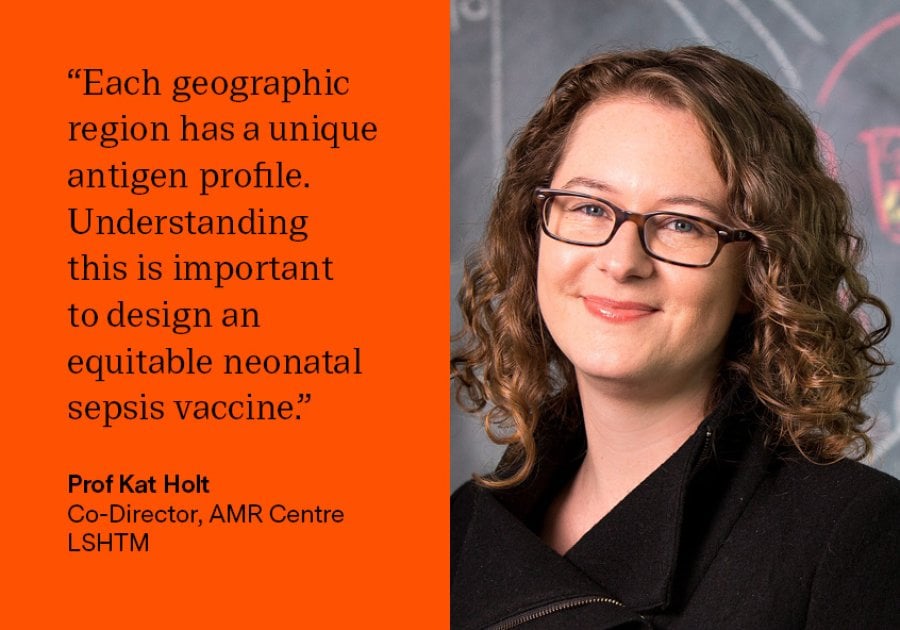
The large-scale meta-analysis, recently published in PLoS Medicine, aims to understand how different serotypes of Klebsiella pneumoniae are distributed across East Africa, Southern Africa, West Africa and South Asia. Neonatal sepsis, bloodstream infection in newborns, leads to an estimated 670,000 newborn deaths each year, primarily in low-and-middle-income countries (LMICs).
Klebsiella pneumoniae cause about 20% of these cases. Most infections can no longer be treated with easily accessible drugs due to antimicrobial resistance developed by the bacteria. This points to an urgent need for preventative measures, including better infection control and crucially maternal vaccines to protect their babies. The WHO 2024 report on Vaccines for AMR Pathogens identified neonatal sepsis as the key target for a Klebsiella pneumoniae vaccine, which could be given to pregnant women in LMICs to prevent their newborns developing sepsis.
Adhisivam Bethou, Professor at Jawaharlal Institute of Postgraduate Medical Education and Research in India said: "Neonatal sepsis is quite devastating in resource-restricted settings. With increasing antibiotic resistance, we are losing the battle with the bugs. A vaccine against Klebsiella pneumoniae is a long-felt need, and there are rays of hope glistening in this paper on meta-analysis of genome-predicted serotype prevalence and potential vaccine coverage”.
Dr Appiah-Korang Labi from the University of Ghana added: "The burden of Klebsiella pneumoniae infections among neonates in low-resource settings is too great to rely solely on infection prevention and control measures. The widespread presence of antibiotic resistance means that outcomes for affected newborns are unlikely to improve with current approaches. A maternal vaccine could be a crucial tool for protecting neonates during this highly vulnerable period of life.”
The development of a vaccine to protect against Klebsiella pneumoniae however presents unique challenges, as the bacteria display a large number of different serotypes or antigens, more than 80 K serotypes and more than 10 O serotypes, the distribution of which can vary substantially between countries and regions. This means, ideally a vaccine which can protect against this multitude of serotypes, would need to be developed.
Rabaab Zahra, Associate Professor at Quaid-i-Azam University and Trinity College Dublin explained: “Developing a region-specific Klebsiella pneumoniae vaccine could be a game-changer for safeguarding the health of future generations.”
This study analysed data on Klebsiella pneumoniae isolated from blood samples of newborns with suspected sepsis in African and South Asian countries collected from 35 different locations across 13 surveillance studies from the past decade. Using whole-genome sequencing, this study aimed to estimate the prevalence of K and O serotypes and how many cases of newborn sepsis were caused by the two Klebsiella pneumoniae serotypes. Modelling was used to estimate the global and regional prevalence of K and O type infections. The team identified 87 different K antigen types, collectively responsible for almost half of the documented infections. In contrast, only 14 O antigen types were found. Further modelling was then used to estimate the proportion of infections that could have been covered by a vaccine developed to protect against the different specific serotypes.
Kat Holt, Professor of Microbial Systems Genomics at LSHTM, said: “The analysis showed that while a few antigens were common across all studies in East Africa, Southern Africa, West Africa and South Asia, each geographic region has a unique antigen profile. Understanding this is important to design an equitable neonatal sepsis vaccine, to ensure it can have the best chance of being effective across all countries with a high burden of neonatal sepsis.”
The modelling suggests that a 20-valent vaccine, selected to include the most prevalent K antigens found in each of the four regions, could theoretically cover at least 70% of infection per region, providing equitable coverage across diverse geographies. If individual regions were able to manufacture their own locally-tailored vaccines, in principle they could achieve better coverage with fewer K types, however this is difficult from a manufacturing and regulatory point of view as each regional vaccine would need to be developed and tested individually.
These findings have practical implications for vaccine development. Maternal vaccination, which protects newborns from birth through antibodies passed from the mother to the baby, is a promising strategy for reducing sepsis mortality, but vaccine design would need to account for the genetic diversity of the bacteria in different regions.
The authors caution that serotype prevalence and immune responses can vary over time, and further longitudinal studies are needed to validate how stable these antigen profiles are in circulating bacterial populations. They also note that more work is required to understand how well antibodies against these surface structures will protect neonates in real-world settings. To help guide this future work, a recently established WHO Technical Advisory Group on Vaccines against Klebsiella pneumoniae will draw on results from this study and others to develop a Research Roadmap for Klebsiella pneumoniae vaccines.
If you enjoyed this article and would like to build a career in global health, we offer a range of MSc programmes covering health and data, infectious and tropical diseases, population health, and public health and policy.
Available on campus or online, including flexible study that works around your work and home life, be part of a global community at the UK's no.1 public health university.