Closing the gap in women’s cancer care
6 March 2026 London School of Hygiene & Tropical Medicine London School of Hygiene & Tropical Medicine https://lshtm.ac.uk/themes/custom/lshtm/images/lshtm-logo-black.png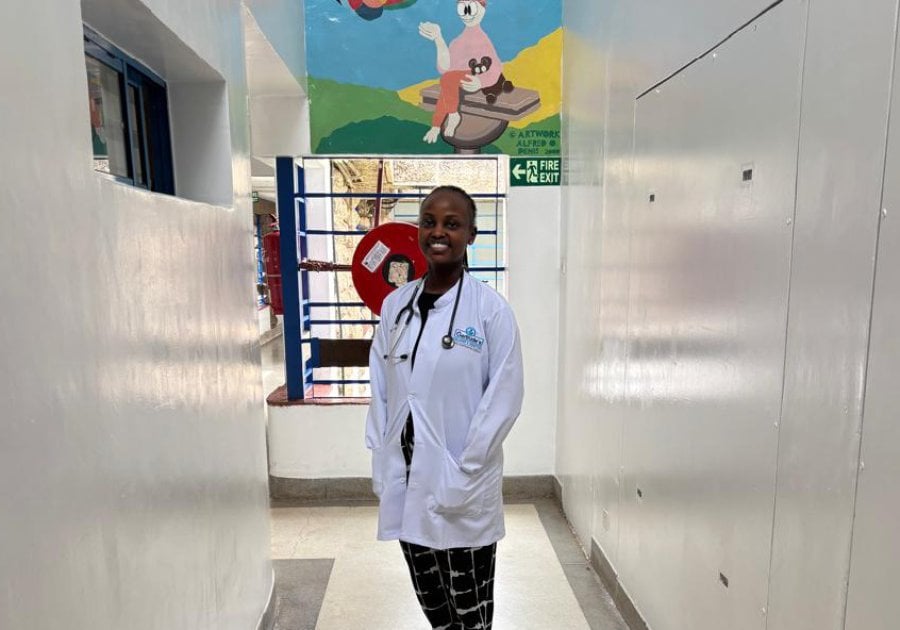
International Women’s Day, celebrated annually on March 8, recognises the achievements of women around the world while highlighting the ongoing need for equity in health, education and leadership. It is also an opportunity to spotlight women whose work is helping shape stronger and more inclusive health systems.
Today, we celebrate, Dr Elizabeth Wangari Mwanika, a Research degree student whose research focuses on understanding and reducing inequalities in cancer and non-communicable disease (NCD) outcomes in sub-Saharan Africa, with particular emphasis on breast and cervical cancer among women.
Elizabeth’s work examines the gap between diagnosis and treatment for women with cancer in Machakos County, Kenya. Many women face significant barriers to starting care in time, including financial constraints, referral delays and limited awareness about disease severity. By studying how women navigate health systems and where delays occur, her research aims to generate evidence that can inform policy and strengthen care pathways.
Alongside her doctoral research, Elizabeth is also involved in developing disease registries designed to improve data systems for non-communicable diseases in Eastern Africa. Through her work with the Clinical Research Health Network in Machakos, she has contributed to initiatives that track patterns of illness, gaps in care and inequalities in access to treatment. These registries aim to provide locally generated evidence that can support more responsive health systems.
Elizabeth’s journey into medicine began in Mitahato, a rural village in Kiambu County, Kenya. The youngest of three children, she grew up in a household where education was deeply valued. Both of her parents were teachers, and from an early age they encouraged curiosity, discipline and a strong commitment to learning.
By the age of ten, Elizabeth had decided that she wanted to become a doctor. Growing up in a rural community made her aware of the inequalities that can shape access to healthcare, an experience that would later influence her interest in public health and research.
She studied medicine at Kampala International University in Uganda before returning to Kenya to complete her internship at the Kenyatta National Hospital. After her training, she spent over a decade working as a general practitioner in a paediatric hospital in Nairobi, caring for children and supporting families through illness.
Over time, Elizabeth noticed that many clinical decisions relied on research produced outside the communities she served. While valuable, it did not always reflect the realities of local health systems. This realisation prompted her to become more involved in research focused on generating locally relevant evidence.
Through her work with the Clinical Research Health Network in Machakos, Kenya, she helped develop population-based registries for non-communicable diseases. These registries provide critical insights into patterns of illness, gaps in care and inequalities in access to treatment.
Her current research focuses on women’s health, particularly breast and cervical cancers in Machakos County. Elizabeth studies the gap between diagnosis and treatment and the barriers that prevent many women from starting care in time. Financial constraints, referral delays and limited awareness about disease severity can all contribute to these challenges. By examining the lived experiences of women navigating these systems, her work aims to generate evidence that can inform policy and strengthen care pathways.
Her broader research has also included collaborations in sexual and reproductive health, urogynecology and maternal health. Through these collaborations, she has contributed to research presented at international conferences, including abstracts published in the conference proceedings of the International Journal of Gynecology & Obstetrics, 2025. One experience that left a lasting impact involved research on the consequences of female genital mutilation in an adolescent girl. The case highlighted the profound physical and psychological effects of harmful cultural practices and reinforced the importance of culturally sensitive and rights-based healthcare for women and girls.
Now a Research Degree Student at the London School of Hygiene & Tropical Medicine, and a member of the Inequalities in Cancer Outcomes Network, Elizabeth values the opportunity to work within a global research community. At LSHTM, she is able to connect locally grounded research with wider discussions on health equity and systems strengthening.
Throughout her journey, Elizabeth draws inspiration from her mother, whose resilience and dedication helped shape her sense of purpose. Her path has also shown her that careers in science do not always follow a straight line.
Her advice to young women considering careers in science, data and public health is simple. “Trust that your perspective has value. The communities people come from often shape how they understand problems and solutions, and that lived experience can strengthen research and policy.”
As we mark International Women’s Day, stories like Elizabeth’s highlight how diverse voices in science help drive research that reflects the realities of the communities it seeks to serve.
If you enjoyed this article and would like to build a career in global health, we offer a range of MSc programmes covering health and data, infectious and tropical diseases, population health, and public health and policy.
Available on campus or online, including flexible study that works around your work and home life, be part of a global community at the UK's no.1 public health university.